Chapter 2 Section 1-4
star
star
star
star
star
Last updated about 2 years ago
20 Nsɛmmisa
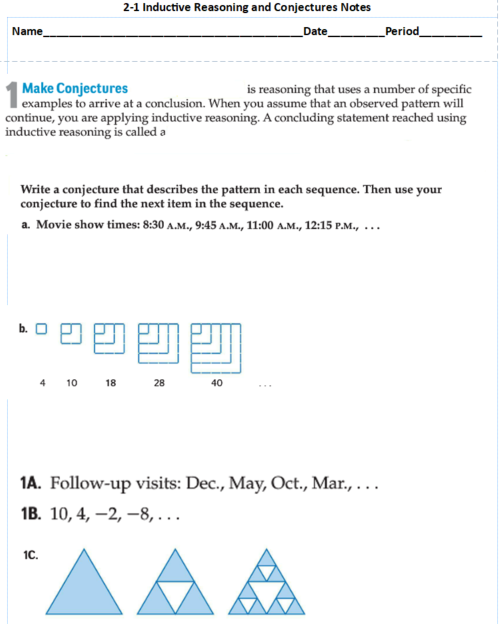

What would the next item be?
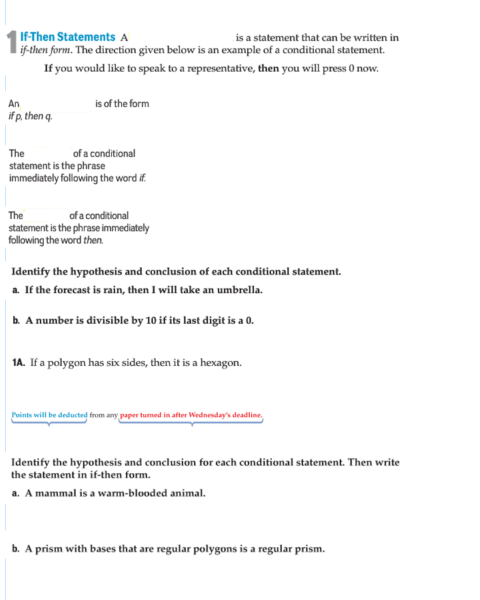

What would the next item be?
What would the next item be?
What would be the next item?
What is the hypothesis of the statement?
A two angles are supplementary
B the sum of the measures of the angles is 180
C If the sum of the measures of two angles is 180, then they are supplementary.
D If the sum of the measures of two angles are not 180, then they are not supplementary.
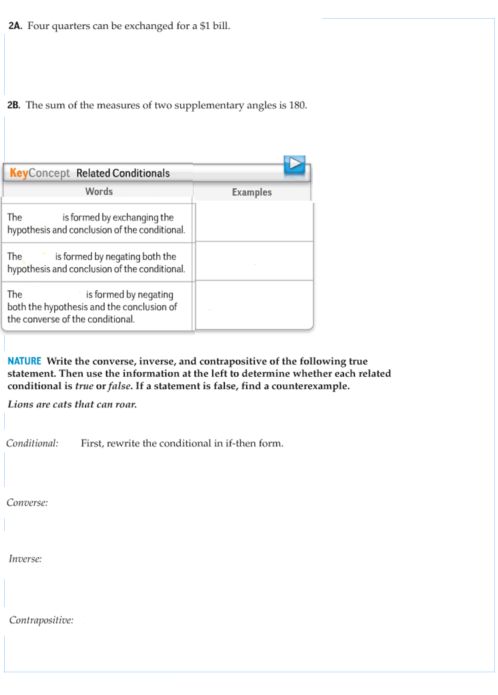
If two angles are supplementary, then the sum of the measures of the angles is 180.
Name the converse statement.
A If the sum of the measures of two angles is 180, then they are supplementary.
B If the sum of the measures of two angles are not 180, then they are not supplementary.
C If two angles are not supplementary, then the sum of the measures are not 180.
D The sum of the measures of the angles is 180.
Name the inverse statement.
A If the sum of the measures of two angles is 180, then they are supplementary.
B If the sum of the measures of two angles are not 180, then they are not supplementary.
C If two angles are not supplementary, then the sum of the measures are not 180.
D The sum of the measure of the angles is 180.
Name the contrapositive statement.
A If the sum of the measures of two angles is 180, then they are supplementary.
B If the sum of the measures of two angles are not 180, then they are not supplementary.
C If two angles are not supplementary, then the sum of the measures are not 180.
D The sum of the measure of the angles is 180.
What is the conclusion?
A two angles are supplementary
B the sum of the measures of the angles is 180
C If the sum of the measures of two angles is 180, then they are supplementary.
D If the sum of the measures of two angles are not 180, then they are not supplementary.
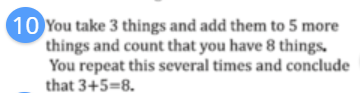
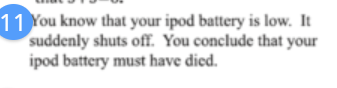
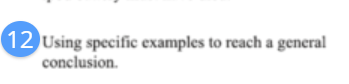
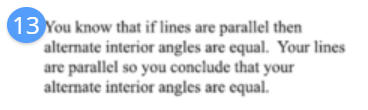
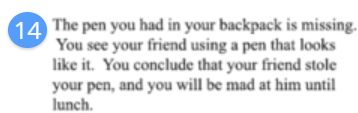
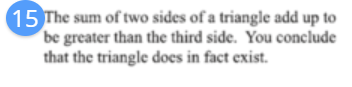
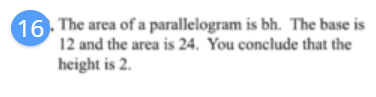
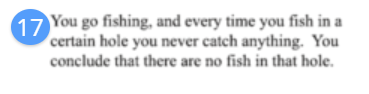
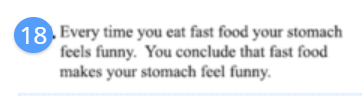
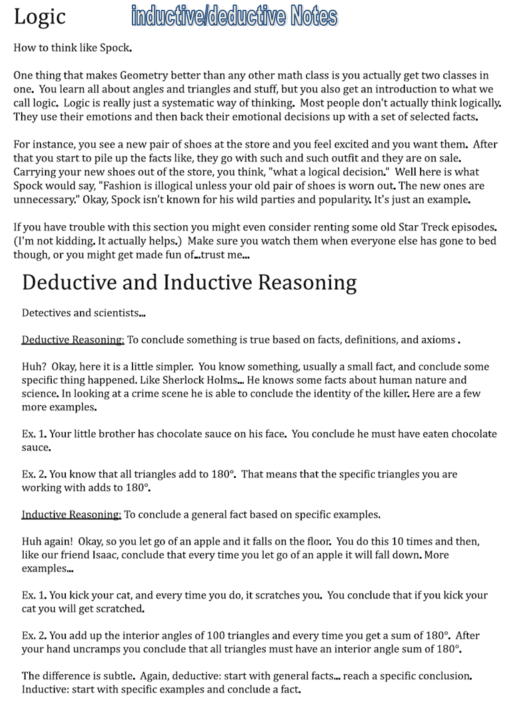
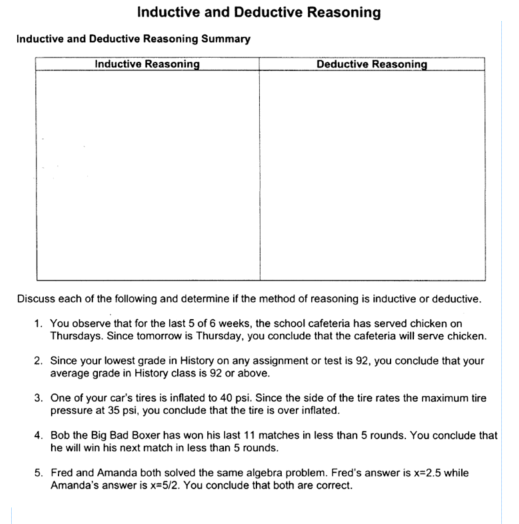
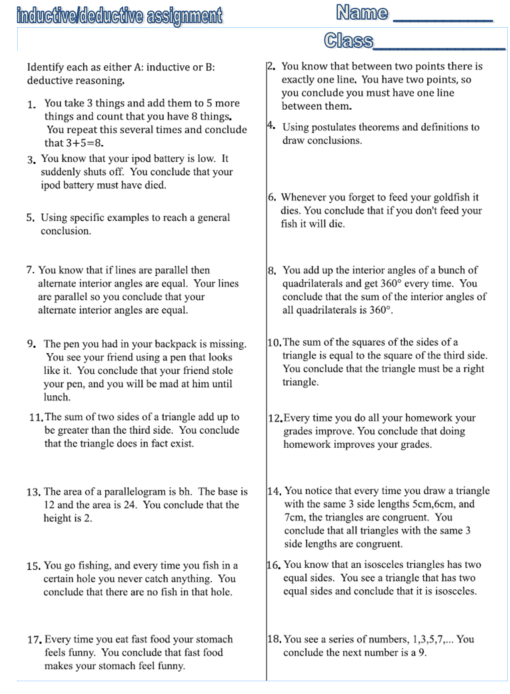
Identify as inductive or deductive Reasoning.
Identify as inductive or deductive Reasoning.
Identify as inductive or deductive Reasoning.
Identify as inductive or deductive Reasoning.
Identify as inductive or deductive Reasoning.
Identify as inductive or deductive Reasoning.
Identify as inductive or deductive Reasoning.
Identify as inductive or deductive Reasoning.
Identify as inductive or deductive Reasoning.
Identify as inductive or deductive Reasoning.
Identify as inductive or deductive Reasoning.