Log in
Sign up for FREE
arrow_back
Library

Forces and acceleration

star
star
star
star
star
Last updated about 11 hours ago
17 questions
1
1
1
1
1
1
1
1
1
1
1
1
0
1
0
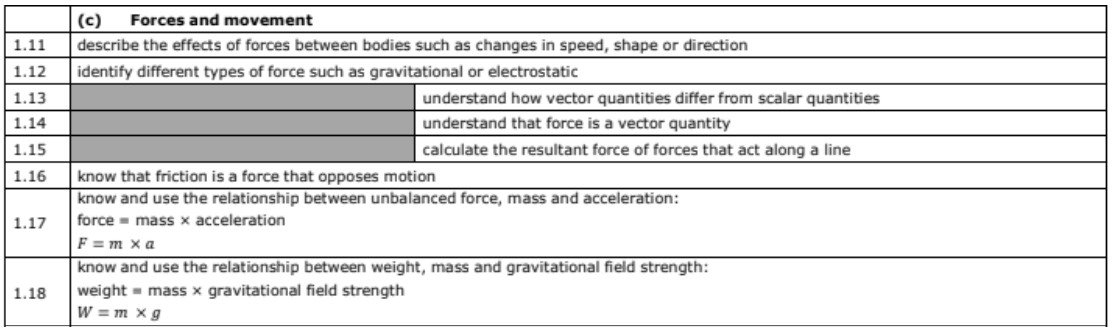
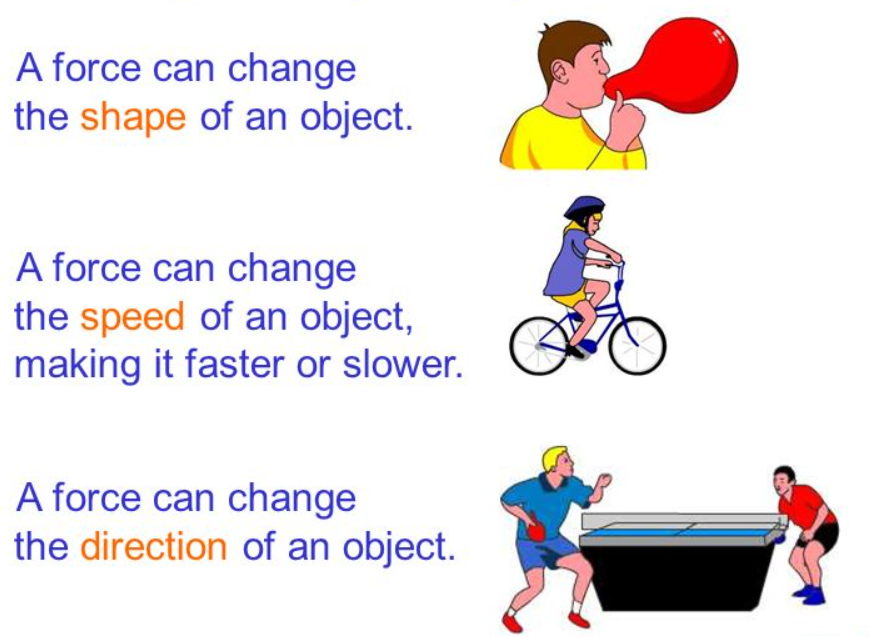
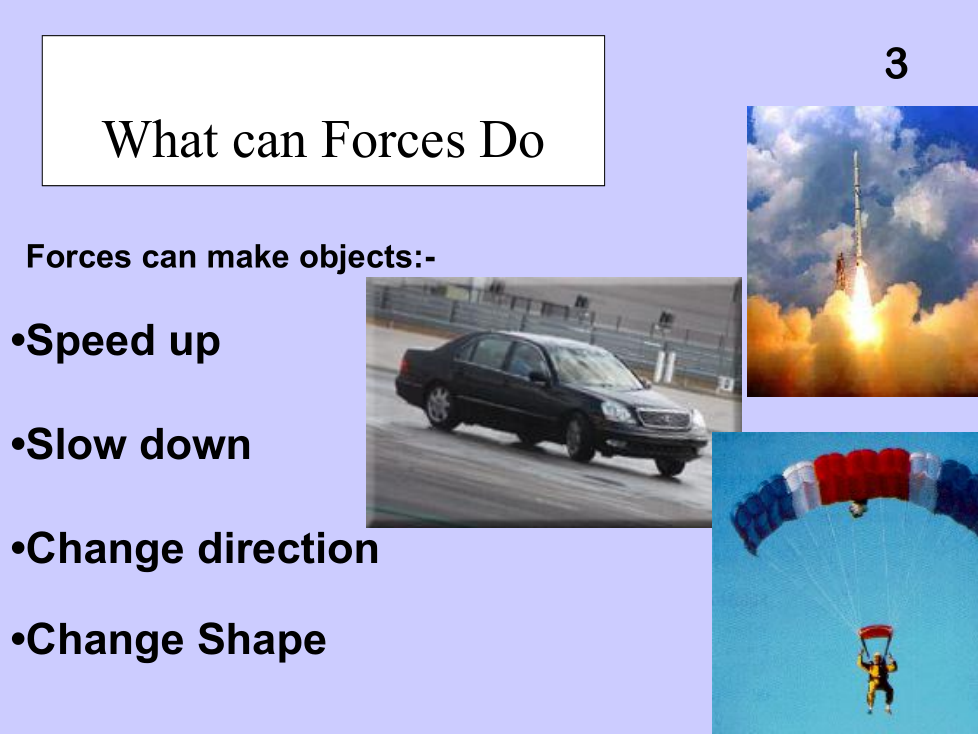
A Force is basically a push or a pull. Forces have three basic effects. They can cause objects to change speed, change direction or change shape.
Question 1
1.

Question 2
2.

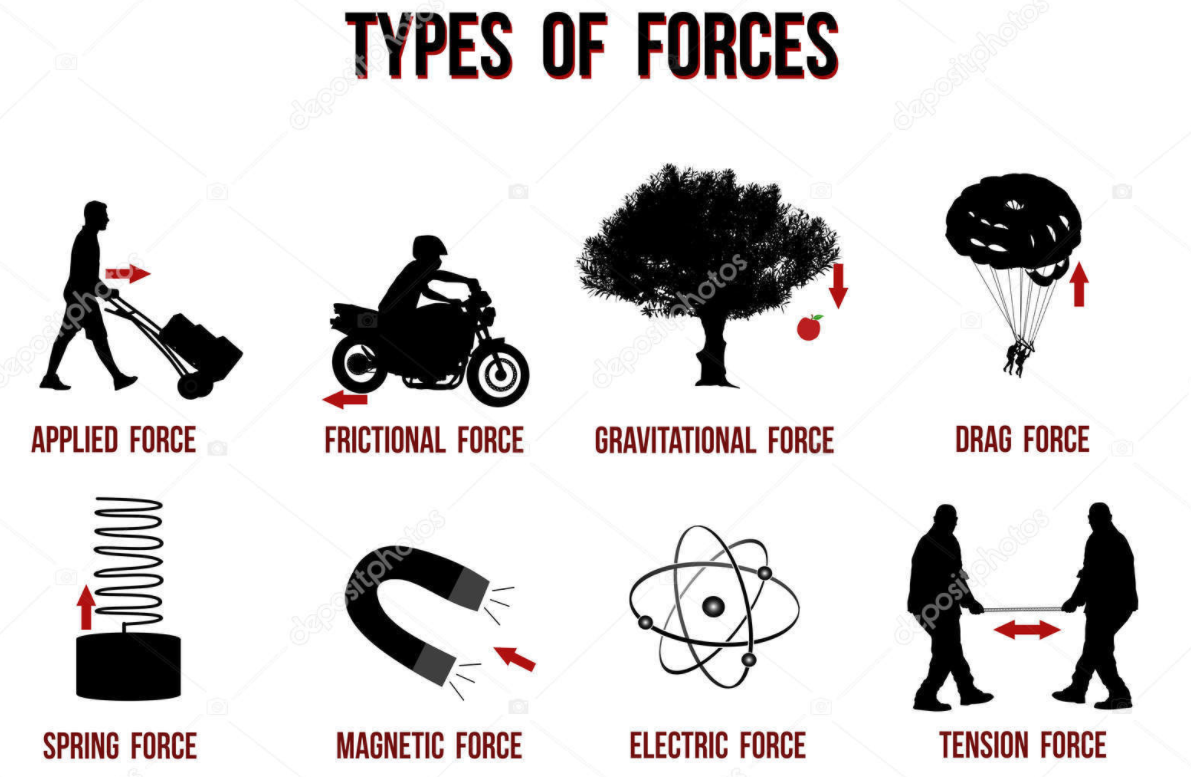
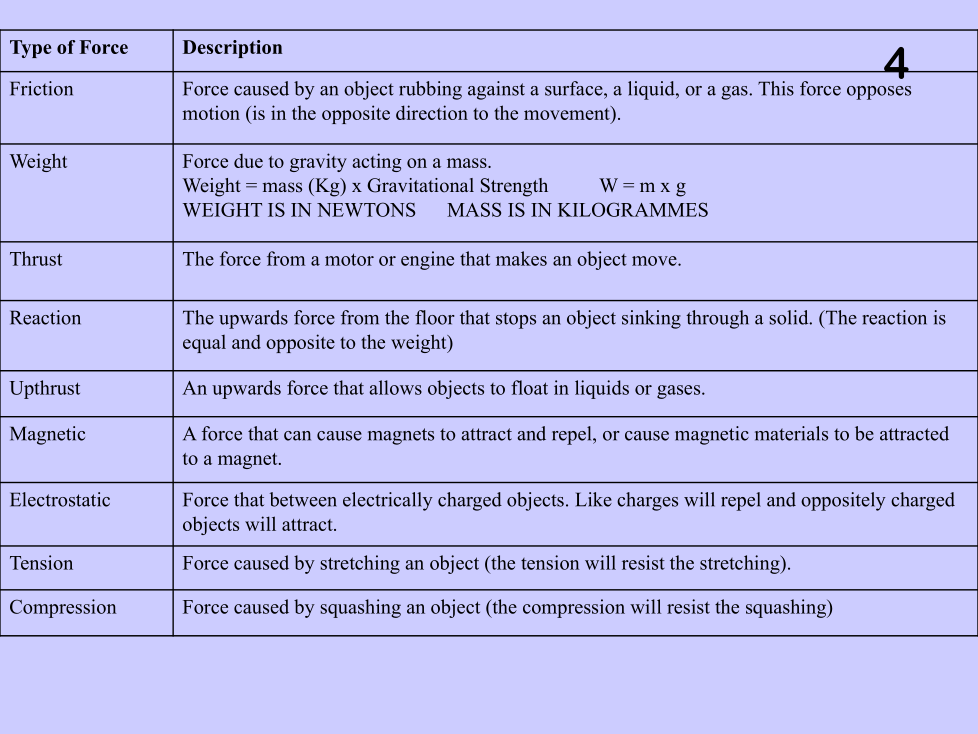
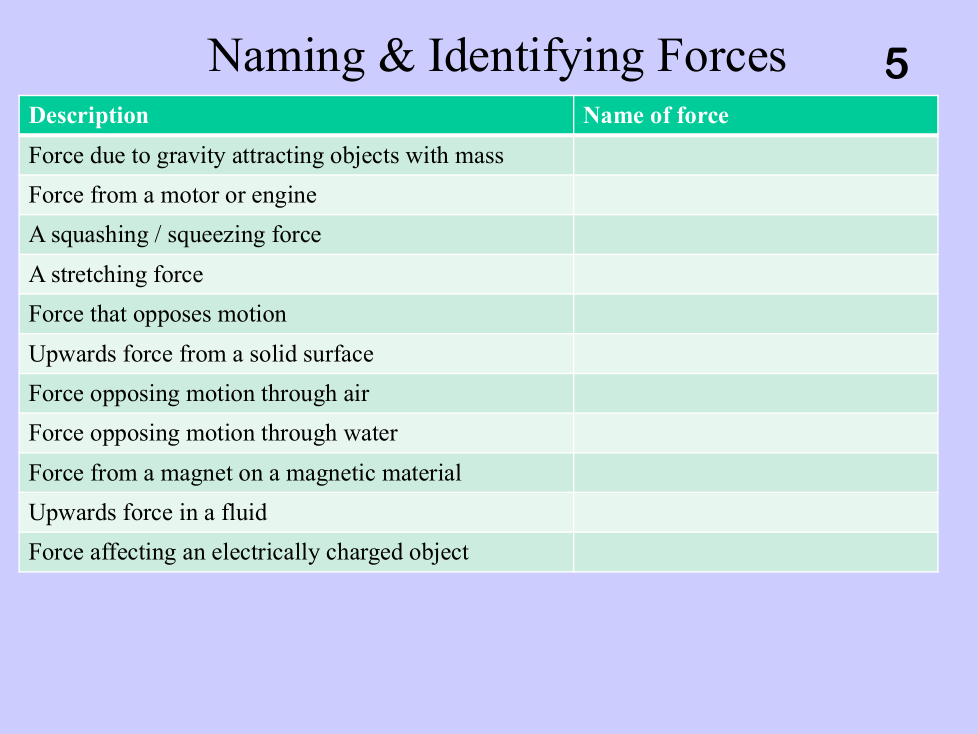
which force is responsible for the orbit of objects in space is:

Question 3
3.

which force is in the opposite direction to movement

Question 4
4.

which force increases the length of stretched spring

Question 5
5.

which force attracts protons and electrons

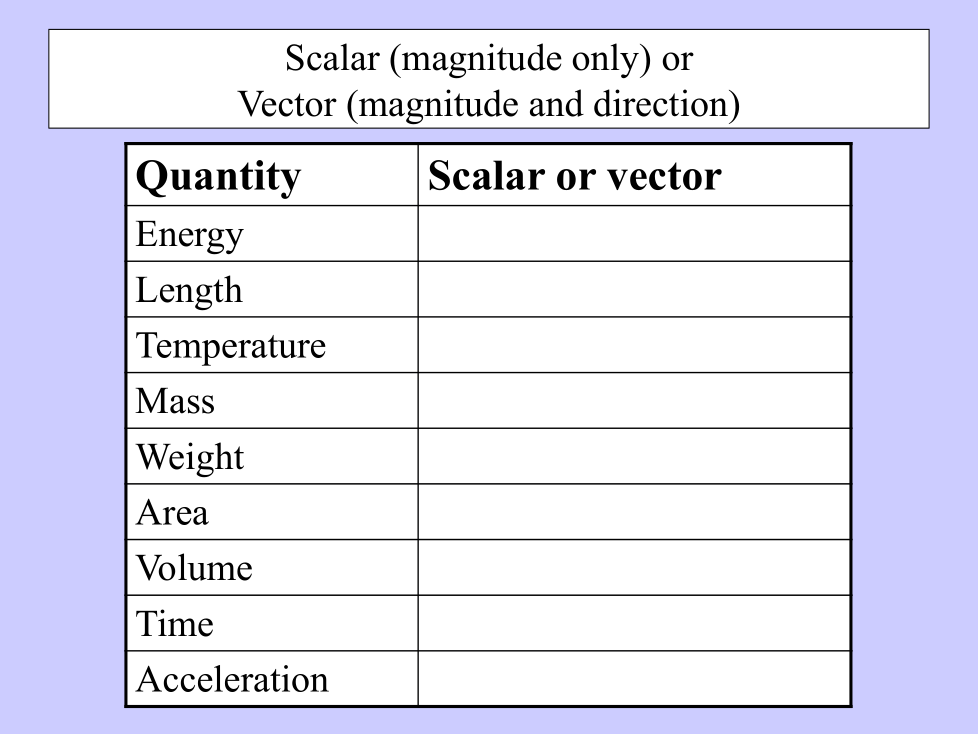
A Scalar quantity is a quantity that has magnitude only and does not have a direction.
A vector quantity is a quantity that has magnitude and direction.

Forces are vector quantities.
This means that they have a magnitude (size or amount) and a direction.

When drawing force diagrams arrows are used to represent the direction and magnitude of a force.
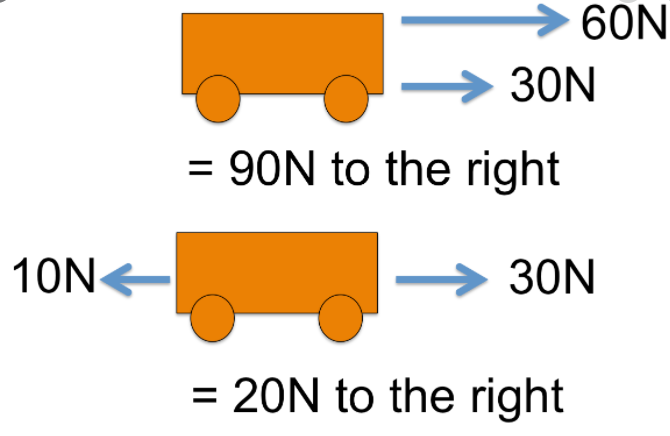
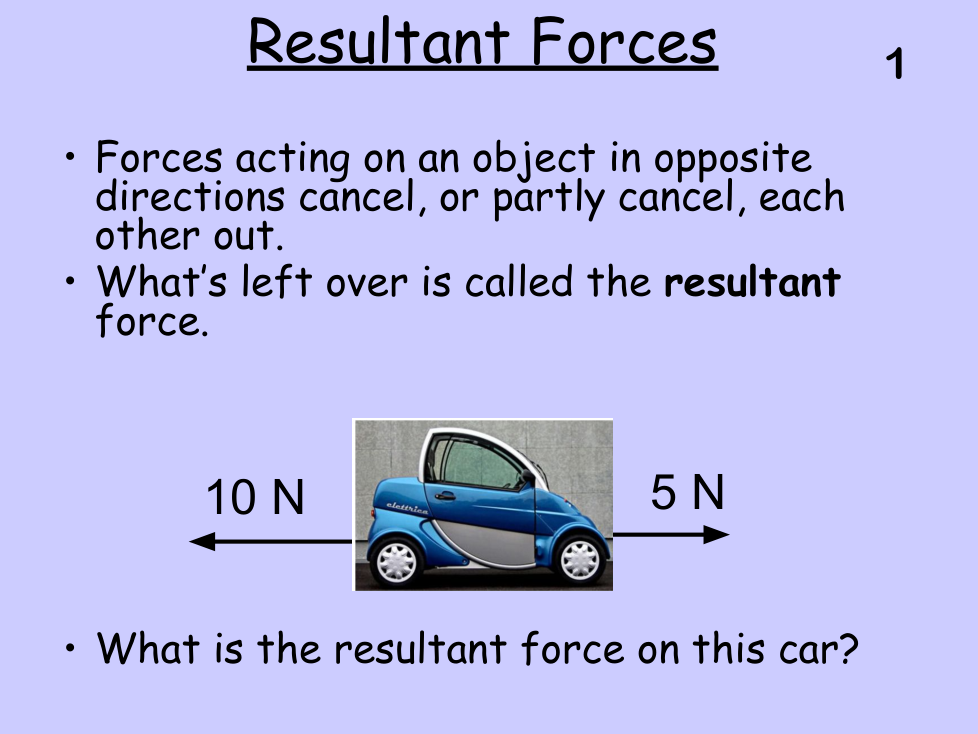
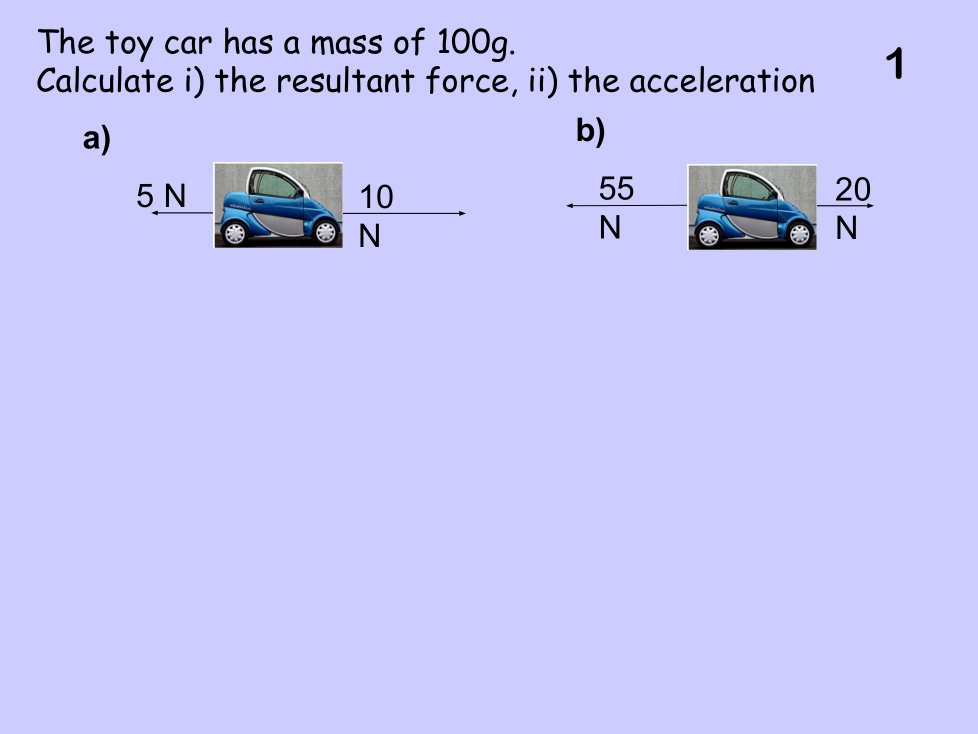
Often there maybe more than one force acting on an object. The resultant force is a single force that represents the combined effect of two or more forces.
At GCSE we generally deal with forces that are either parallel or perpendicular.

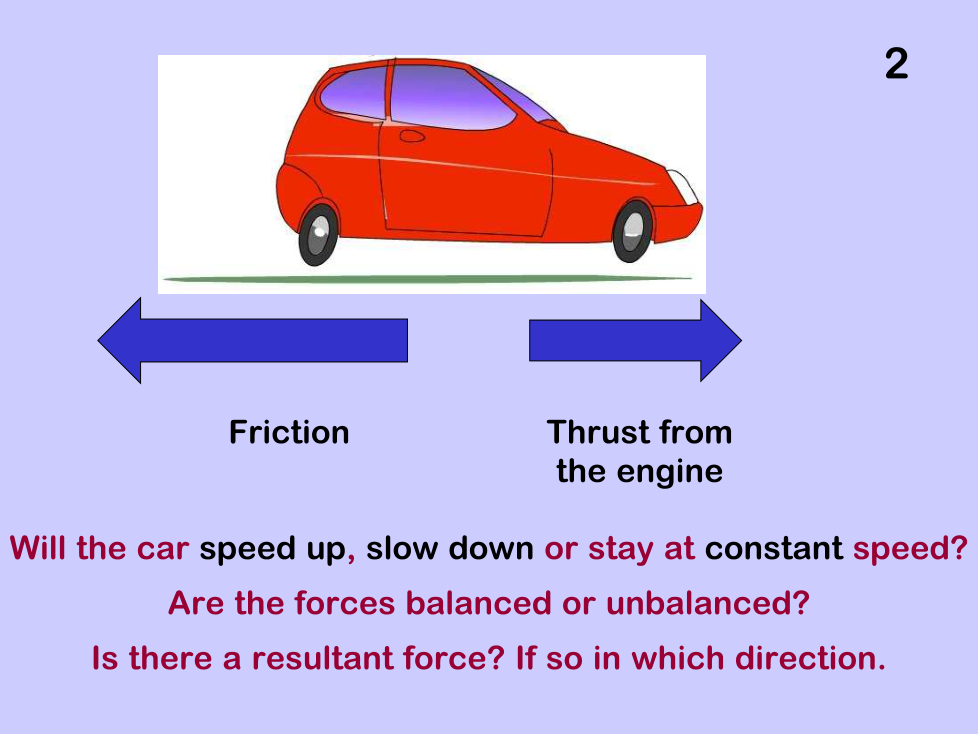
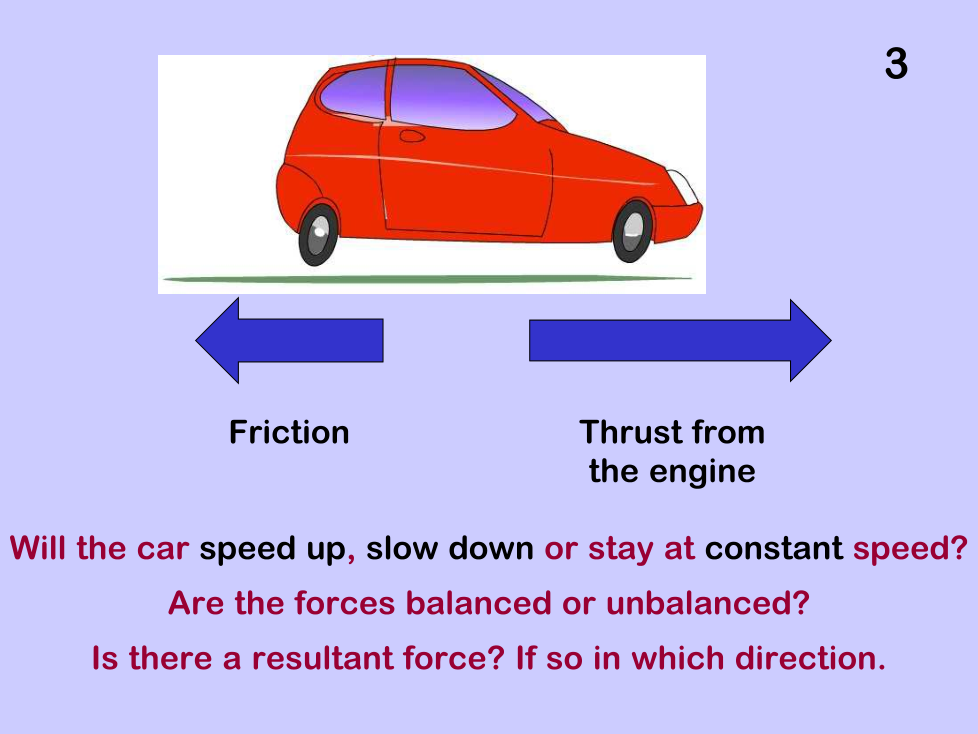
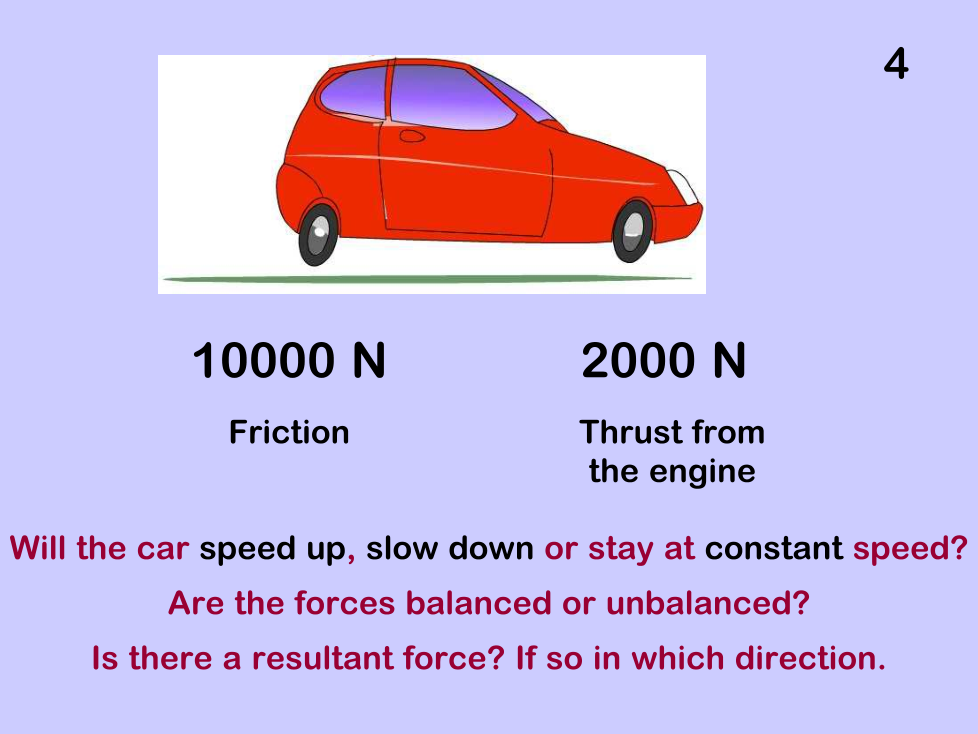
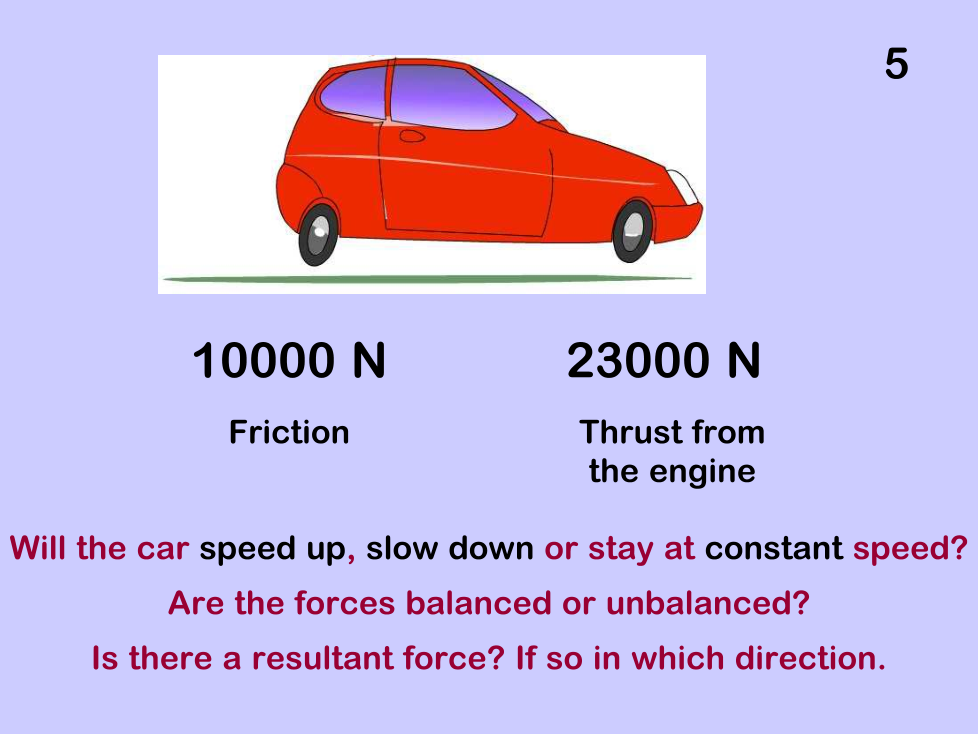
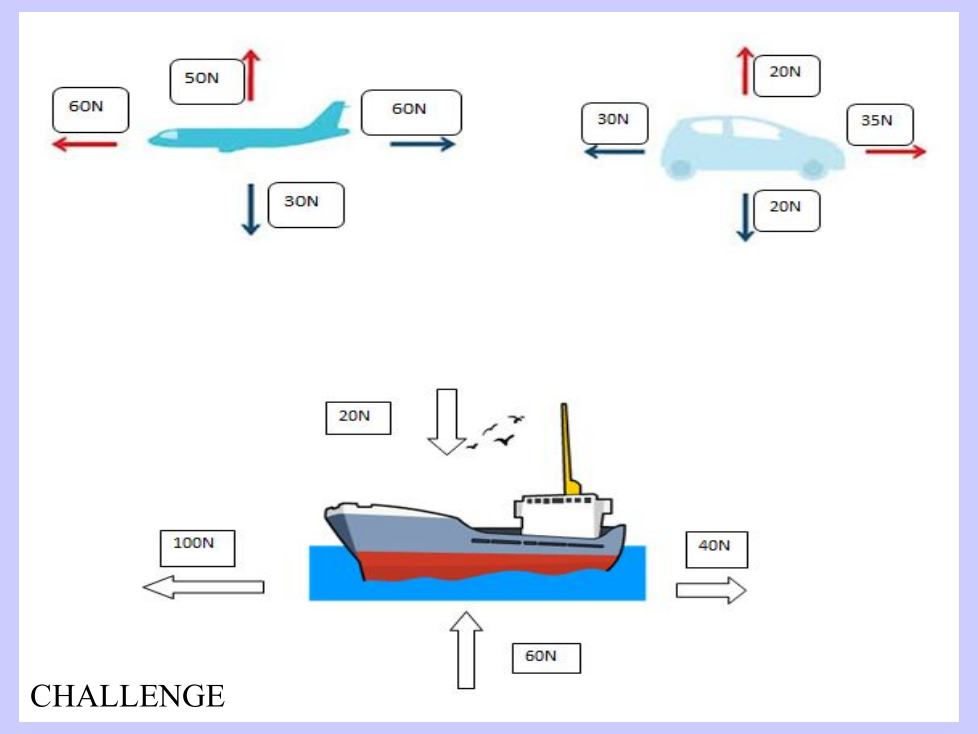
If parallel forces are pointing in the same direction add them together to calculate the size of the resultant.
If parallel forces are pointing in opposite directions subtract them to calculate the size of the resultant force.
SUMMARY VIDEO. You only need to watch upto 3 minutes 15 seconds.
Question 6
6.

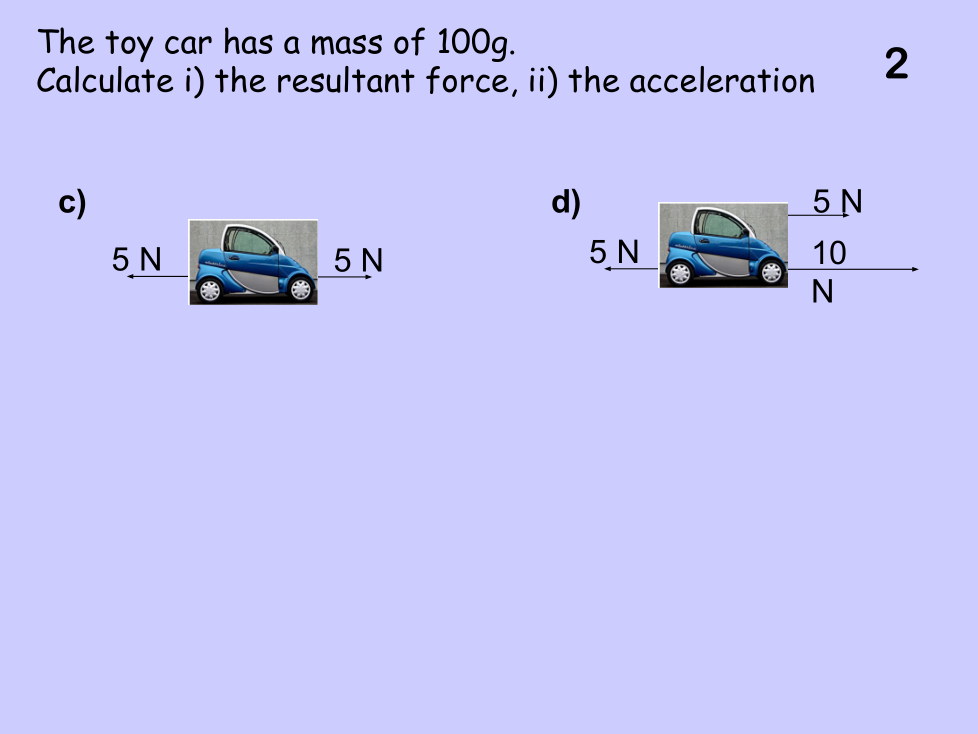
Calculate the resultant force and its direction for example 2 and 3

See this website for a useful summary and to see how the resultant force for forces at an angle are determined which you will cover in year 10:-

https://www.savemyexams.co.uk/gcse-physics-aqa-new/revision-notes/forces/forces-interactions/resultant-forces/
We will now move onto the effects of forces on the movement of an object.

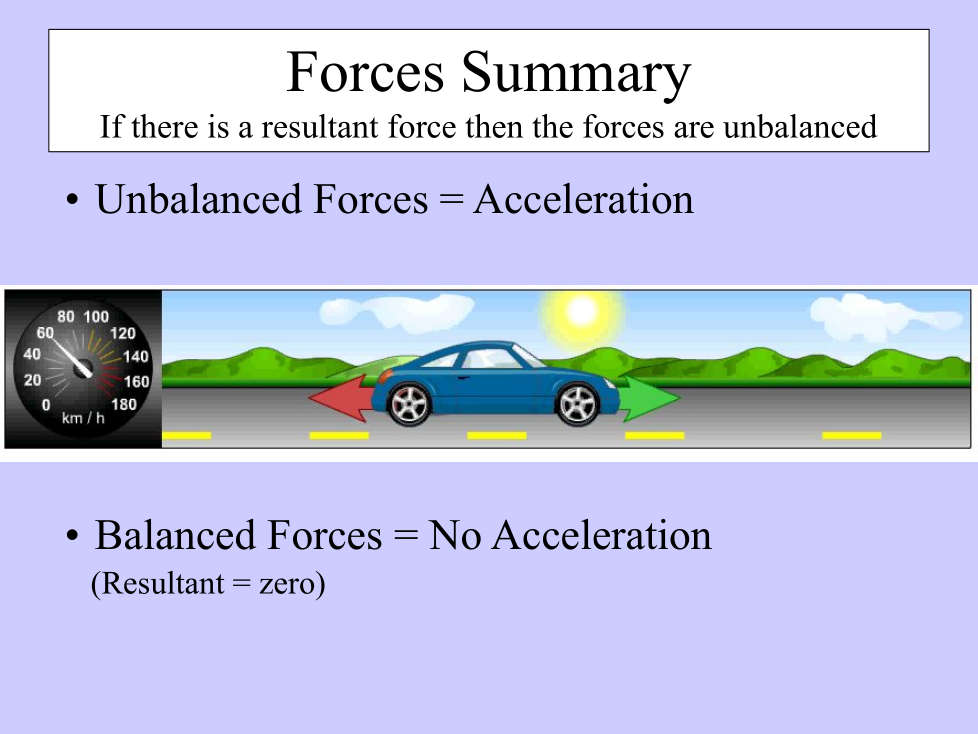
If the forces on an object are balanced then:-
A moving object will continue to move at the same speed and in the same direction.
And
A stationary object will remain stationary.

If the forces on an object are unbalanced the object will accelerate.
(Acceleration can cause an object to speed up, slow down or change direction)
Question 7
7.

What effect does a resultant force have on the motion (movement) of an object

Question 8
8.

What effect does friction have on the motion of a moving object?

Question 9
9.

Why does an ice skater continue to slide much more easily on ice compared to a child sliding wearing socks on a wooden floor

The game 'asteroids' gives a good example of Newton's first law.

https://www.embed.com/arcade/asteroids.html

The spaceship does not move until there is a resultant force from the rocket.
When there is no force the spaceship continues to move at constant speed and direction.
In order to speed up, slow down or change direction of the spaceship there needs to be a resultant force from the rocket.

(The game also demonstrates another physics concept which is the conservation of momentum. When a large asteroid with heavy mass is blasted into smaller fragments which have less mass, the smaller fragments move at higher speed to conserve the momentum).
Question 10
10.

In space there is no friction. What effect does this have on moving obects in space which have zero resultant force

In the video below the presenter mentions 'net force' this is the same as 'resultant force'.

You onlny need to be aware of approximately the first 5 minutes of the video.
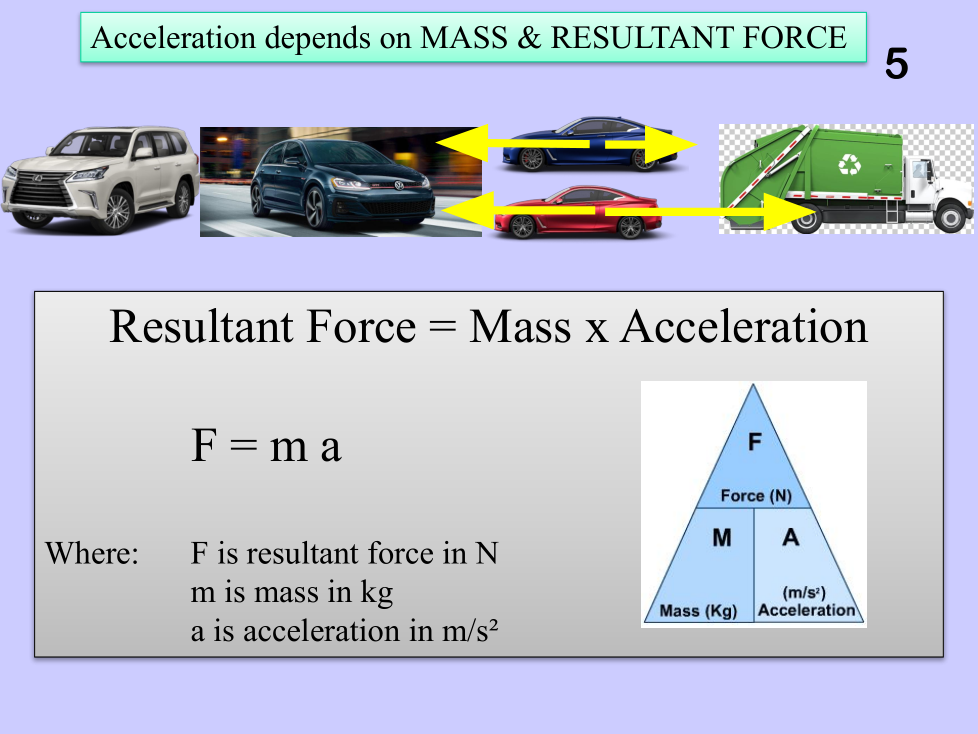
MAIN LESSON FOCUS NEWTON'S SECOND LAW AND THE EQUATION F = m a
1
Question 11
11.

What type of quantity is a force

1
Question 12
12.
Question 13
13.

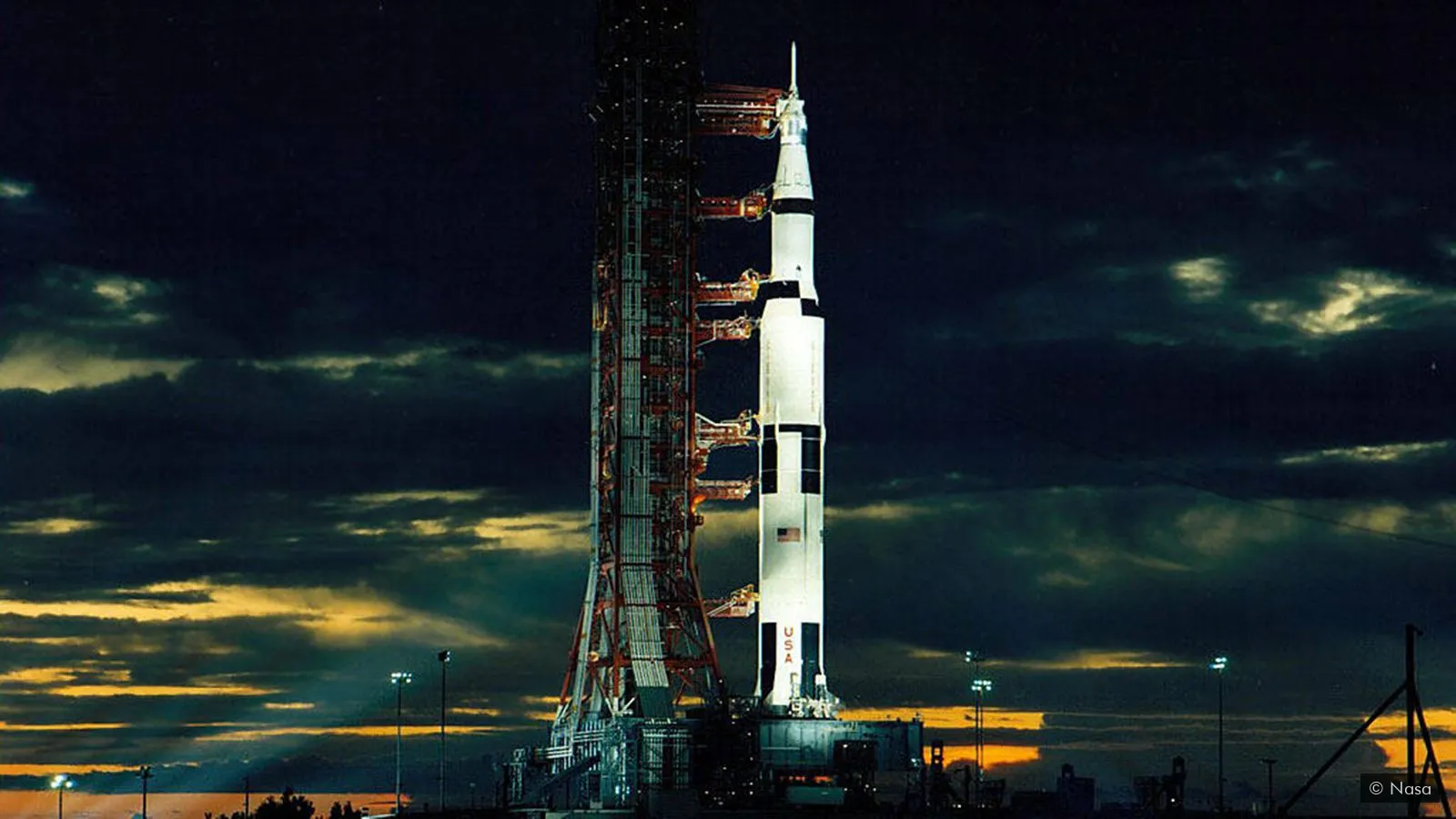
The Saturn 5 rocket was used in the Apollo space missions to launch the spacecraft and crew into space, that landed on the moon.

Question 14
14.

What is the answer to the above question

Question 15
15.

The Saturn 5 rocket was used in the Apollo space missions to launch the spacecraft and crew into space, that landed on the moon.

Question 16
16.

Please take a photo or screenshot and upload in the space below, or use the whiteboard below to answer the questions above.

Question 17
17.
Which statements correctly describe possible effects of forces (choose 5):-
make objects speed up
make objects slow down
make objects change colour
make objects change direction
squash objects
stretch objects
make objects colder
Force = mass x acceleration
1. Calculate the force needed to accelerate a car of mass 1000 kg by 3 m/s2.
2. Calculate the force needed to accelerate a bicycle of mass 20 kg by 4 m/s2.
3. Calculate the force needed to accelerate a car of mass 1500 kg by 5 m/s2.
4. Calculate the force needed to accelerate a bus of mass 4000 kg by 2 m/s2.
5. Calculate the force needed to accelerate a train of mass 20 000 kg by 0.5 m/s2.
6. Calculate the force needed to accelerate a toy car of mass 100 g by 6 m/s2.
7. Calculate the force needed to accelerate a ball of mass 200 g by 15 m/s2.
8. Calculate the force needed to accelerate a bat of mass 500 g by 4 m/s2.
9. Calculate the force needed to accelerate a bee of mass 2 g by 20 m/s2.
10. Calculate the force needed to accelerate a flee of mass 0.005 g by 30 m/s2.
11. Calculate the acceleration of a car of mass 1000 kg when driven by a force of 20 000 N.
12. Calculate the acceleration of a bus of mass 5000 kg when driven by a force of 30 000 N.
13. Calculate the acceleration of a ball of mass 0.3 kg when driven by a force of 21 N.
14. Calculate the acceleration of a train of mass 30 000 kg when driven by a force of 15 000 N.
15. Calculate the acceleration of a toy car of mass 50 g when driven by a force of 4 N.
16. Calculate the mass of a car if a force of 15000 N causes it to accelerate by 5 m/s2.
17. Calculate the mass of a bus if a force of 20000 N causes it to accelerate by 4 m/s2.
18. Calculate the mass of a ball if a force of 50 N causes it to accelerate by 100 m/s2.
19. Calculate the mass of a toy car if a force of 2 N causes it to accelerate by 10 m/s2.
20. Calculate the mass of a car if a force of 15 kN causes it to accelerate by 10 m/s2.
21. Calculate the force needed to accelerate a train of mass 60 000 kg by 0.25 m/s2.
22. Calculate the acceleration of a car of mass 800 kg when driven by a force of 24 k N.
23. Calculate the mass of a car if a force of 30 k N causes it to accelerate by 2 m/s2.
24. Calculate the force needed to accelerate a ball of mass 150 g by 12 m/s2.
25. Calculate the acceleration of a toy car of mass 40 g when driven by a force of 0.8 N.
26. Calculate the force required to accelerate a car of mass 1000 kg from rest to 12 m/s in 3 seconds.
27. Calculate the force required to decelerate a car of mass 1500 kg from 20 m/s to rest in 4 seconds.
28. A car of mass 2000 kg is driven by a force of 40 kN for 5 seconds; how much does its speed change?
29. If a bus accelerates from 10 m/s to 15 m/s in 10 seconds with a force of 3 kN what is its mass?
30. What force is exerted on a ball of mass 100g if it accelerates from rest to 30 m/s in 3 seconds?
Equations to use:
force = mass x acceleration
acceleration = force / mass
mass = force / acceleration
acceleration = change in velocity / time taken