Log in
Sign up for FREE
arrow_back
Library

s1 w4 Astronomy FC Tidal forces, Moon formation,

star
star
star
star
star
Last updated 5 months ago
18 questions
1
1
1
1
1
1
1
1
1
1
1
1
1
1
1
1
1
Question 1
1.

Please read chapter 6 - Skim 6.1-6.2 (ie, you do not need to take notes on vocab from these sections), focus more intently on 6.3-6.6, especially 6.6. What questions do you have?

Question 2
2.

Match the term: rotatation of an object with its orbit.

Draggable itemarrow_right_altCorresponding Item
Tidal bulge
arrow_right_alt
Deformation caused by gravitational forces between celestial bodies
Synchronous rotation
arrow_right_alt
Temporary dimming of one celestial body by another
Eclipse
arrow_right_alt
Gradual slowing down of rotation due to tidal forces
Tidal braking
arrow_right_alt
Rotates at the same rate as orbit
Question 3
3.

How do astronomers believe the moon was formed?

Question 4
4.

The effect of tidal braking of the earth caused by the moon would eventually lead to

Question 5
5.

why will an astronauts' footprint last so long on the surface of the moon?

Question 6
6.

synchronous orbit is the reason that

Question 7
7.

The sun produces a smaller tide than the moon, even though it is significantly larger than the moon. Why?

Question 8
8.

Which is the most accurate way to measure the distance to the moon?

Question 9
9.

Notice that up until the point where man landed on the moon the only information we had about the moon came from light. We had several theories about the origin of the moon, but no way to prove anything. How did the moon landing change the scientific world from many theories to one accepted theory?

Question 10
10.

The explanation of tides in your book is fine. HOwever, everything is a little more complicated that that. What physics teachers get wrong about tides

Do you have any questions

Question 11
11.

The video says that if the center of the earth is the inertial frame of reference, the water at the far side from the moon moves further away from the center. If the inertial frame is the moon, however

Question 12
12.

The tidal force video described tides as more a squeezing caused by pressure at the sides of the planet than stretching along the line from the planet to the moon. Can you define pressure?

Question 13
13.
  • how the moon was formed
  • why we never see the dark side of the moon
  • how bouncing light can measure the distance to the moon
  • what synchronous rotation means
  • how tidal braking works
  • the difference between a solar eclipse and a lunar eclipse
  • what causes the tides
  • Why the tidal force from the sun is less than the moon
  • ive got this
  • im fuzzy
  • so confused
Question 14
14.

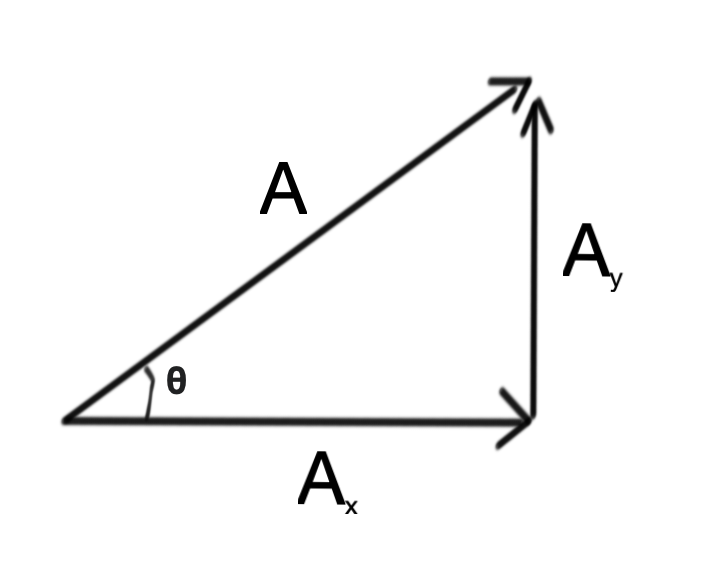
Honors: If you want to decompose a vector into two perpendicular components using what you remember from basic trig back in geometry class, you would use the equations
Question 15
15.

You are in a car with your brother, who is tossing a ball up in the air. You pass your friend on the road. If you choose yourself as the inertial frame of reference do you feel like

Question 16
16.

In order to watch the astronomy video I want you to see, you are going to need some basic physics. First - the idea of frames of reference.
Do you have any questions?

1
Question 17
17.

Spend a little time playing with this phet simulation (you may also want to work on it outside this formative so you can go full screen. here https://phet.colorado.edu/en/simulations/vector-addition/teaching-resources
try to add and subtract vectors in 1 d, add and subtract vectors in 2d.

Question 18
18.

A laser pulse takes 2.56 seconds to travel from earth to the moon and return. Given that the speed of light is 300,000 km per second, how far away is the moon?
Honors: you should be able to do this without the hint.