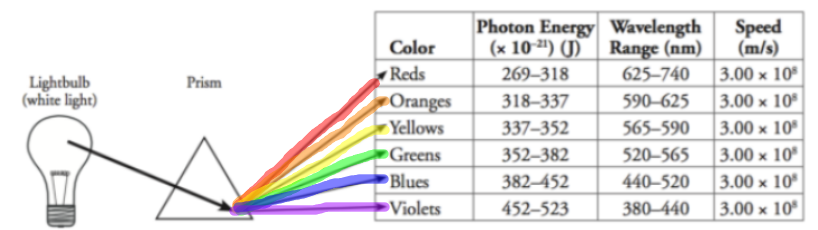
Directions: Use the diagram below to answer questions 1-8.
1
What happens to white light when it goes through a prism?
What happens to white light when it goes through a prism?
1
1
1
1
1
1
1
Unit objective:
Students can develop a model using academic vocabulary to illustrate the life span of the sun and other stars and the processes in stars that release energy that eventually reaches Earth.
Lesson objective
Students can:
describe what happens to light as it goes through a prism.
explain how scientists can use light to figure out what elements make up a star.
Directions: Use the diagram below to answer questions 1-8.
What happens to white light when it goes through a prism?
Use the viewing tool to look at the lights in the classroom. Draw a picture of what you see.
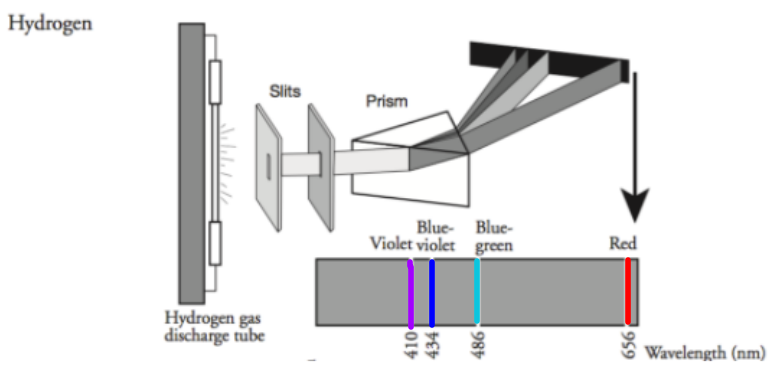
Use the viewing tool to look at the light given off by hydrogen atoms. Draw a picture of what you see.
Use the viewing tool to look at the light given off by helium atoms. Draw a picture of what you see.
Use the viewing tool to look at the light given off by neon atoms. Draw a picture of what you see.
The light you saw was given off or emitted by the atoms of each element. Are the emission spectra of elements identical or different? For example, does the light you see given off by hydrogen atoms look the same as the light you saw given off by neon atoms?
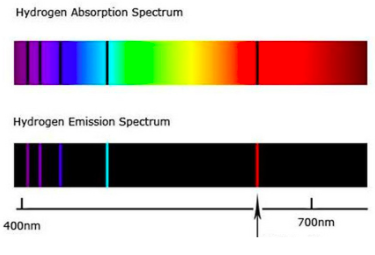
Compare the two pictures below. How is an absorption spectrum different from an emission spectrum?
Star 1
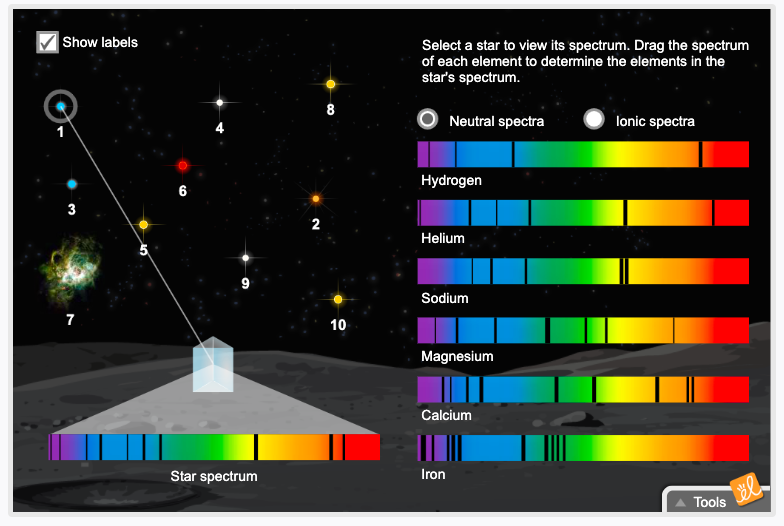
How many dark lines do you see in the star's spectrum?
Drag the Hydrogen spectrum next to the Star Spectrum so that the edges line up. Do some of the lines on the two spectra match up?
Star 2
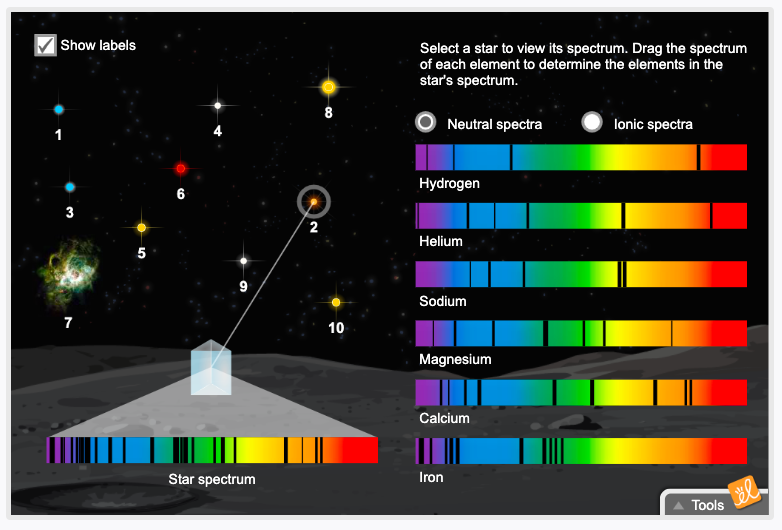
Which elements have contributed to the spectrum of Star 2? Select all that apply
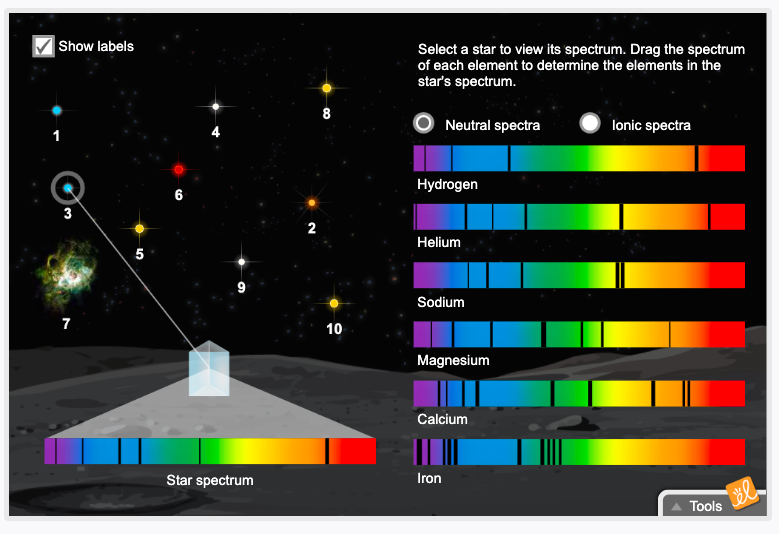
Star 3
Neutral Atoms of Elements
Ions of Element (Ions = atoms with a charge)
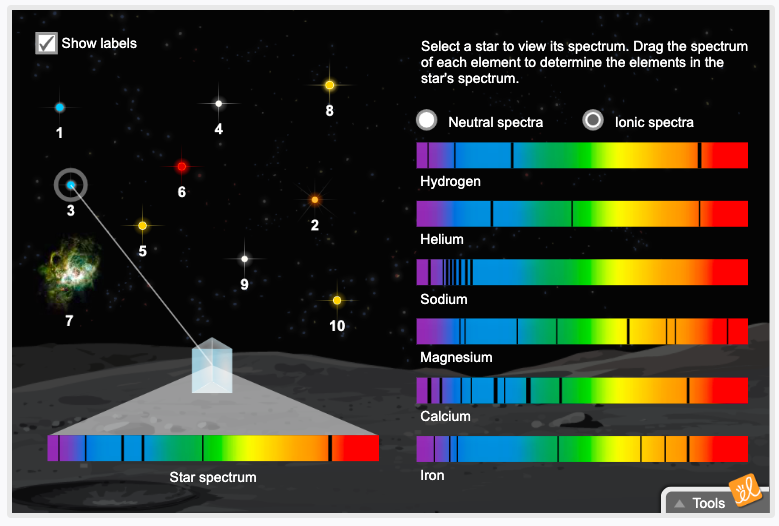
What color is the star?
Star 4
Neutral Atoms of Elements
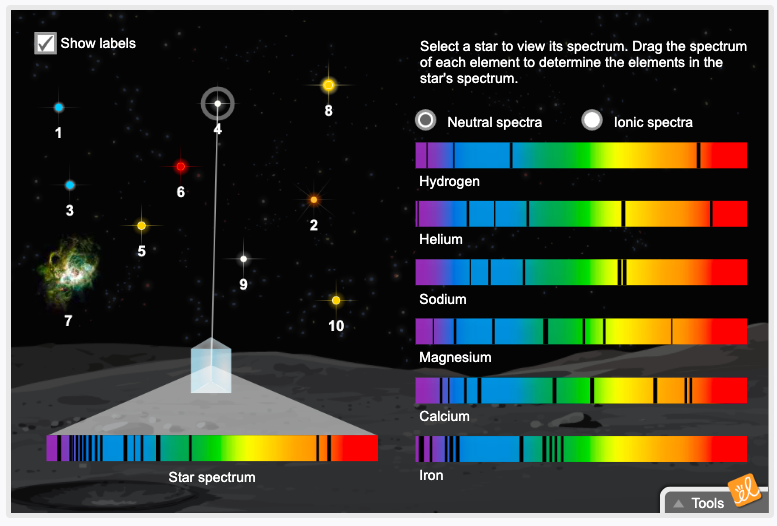
Ions of Element (Ions = atoms with a charge)
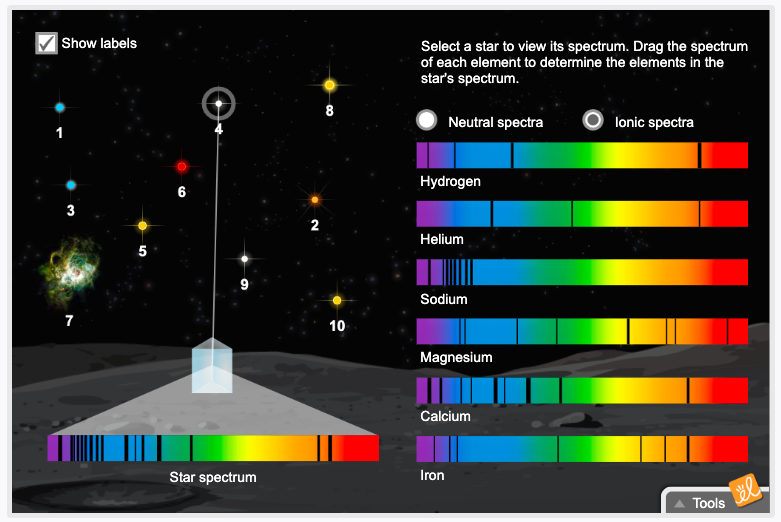
What color is the star?
A student claims, “The absorption spectra for elements are like fingerprints for humans”. Based on what you learned in the activity today, do you agree or disagree with this statement? Justify your answer.
How do we know what elements make up a star?
A rainbow is an example of a spectrum, or a band of colors that forms when light is separated out into the different colors that make up the light. What is the sequence of colors in a rainbow?
orange
blue
red
green
violet
yellow
Do all colors of light travel at the same speed?
Do all colors of light travel have the same energy?
Which color of light has the highest energy?
Which color of light has the lowest energy?
Which color of light has the longest wavelength?
Which color of light has the shortest wavelength?
Drag the Helium spectrum next to the Star Spectrum so that the edges line up. Do some of the lines on the two spectra match up?
Try matching the spectra of the other elements to the Star Spectrum. Do any other elements have lines that match?
Which elements have contributed to the spectrum of Star 1? Select all that apply
What color is the star?
What color is the star?
Which neutral atoms have contributed to the spectrum of Star 3? Select all that apply
Which ions have contributed to the spectrum of Star 3? Select all that apply
Which neutral elements have contributed to the spectrum of Star 4? Select all that apply
Which ions have contributed to the spectrum of Star 4? Select all that apply