Log in
Sign up for FREE
arrow_back
Library
APUSH Chapter 2: The Planting of English America (1500-1733)
By Haiyen Truong
star
star
star
star
star
Share
share
Last updated over 1 year ago
23 questions
Add this activity
1
IIRC.01
1
IIRC.02
1
1
IIRC.01
1
IIRC.01
1
zoom_in
1
Question 1
1.
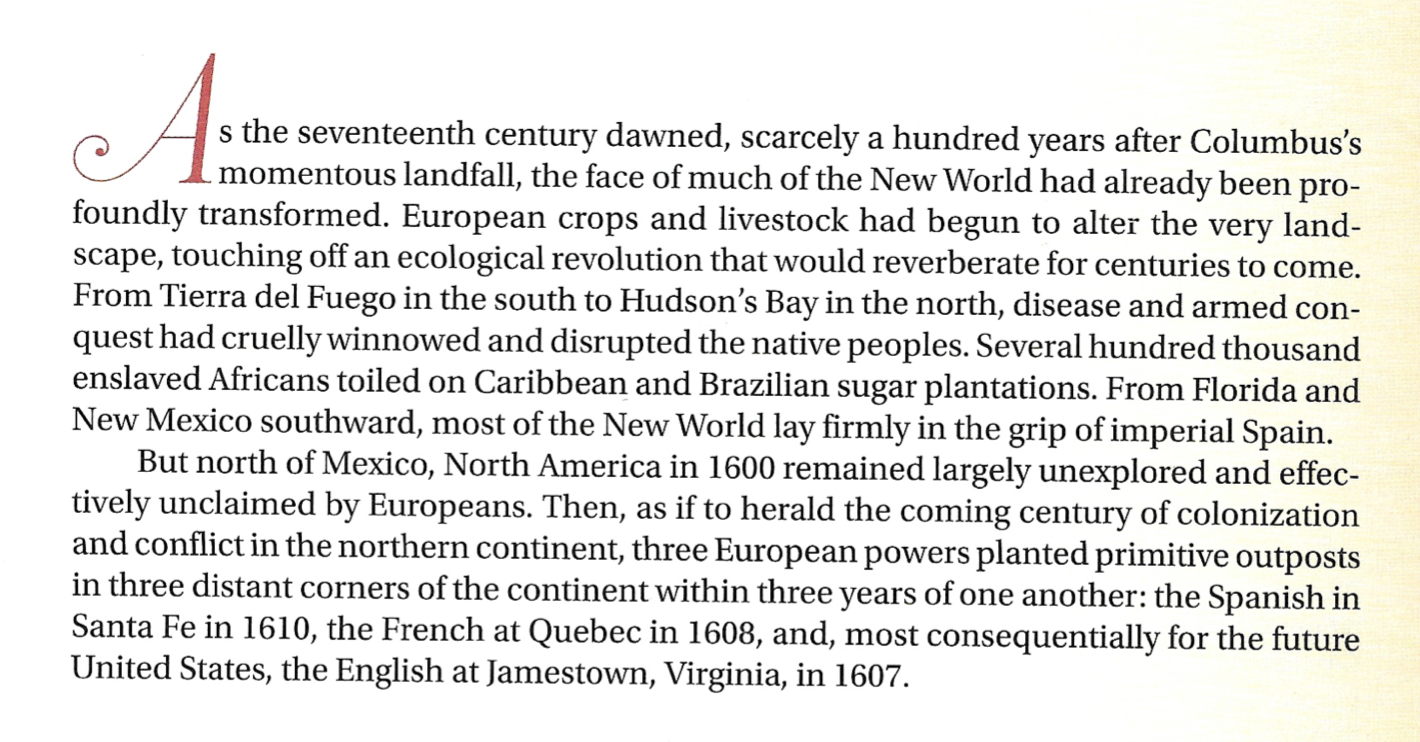
What do you already know about the country of England/Great Britain?
zoom_in
Question 2
2.
Which settlement founded in the early 1600s proved vital to the future of the English
colonies?
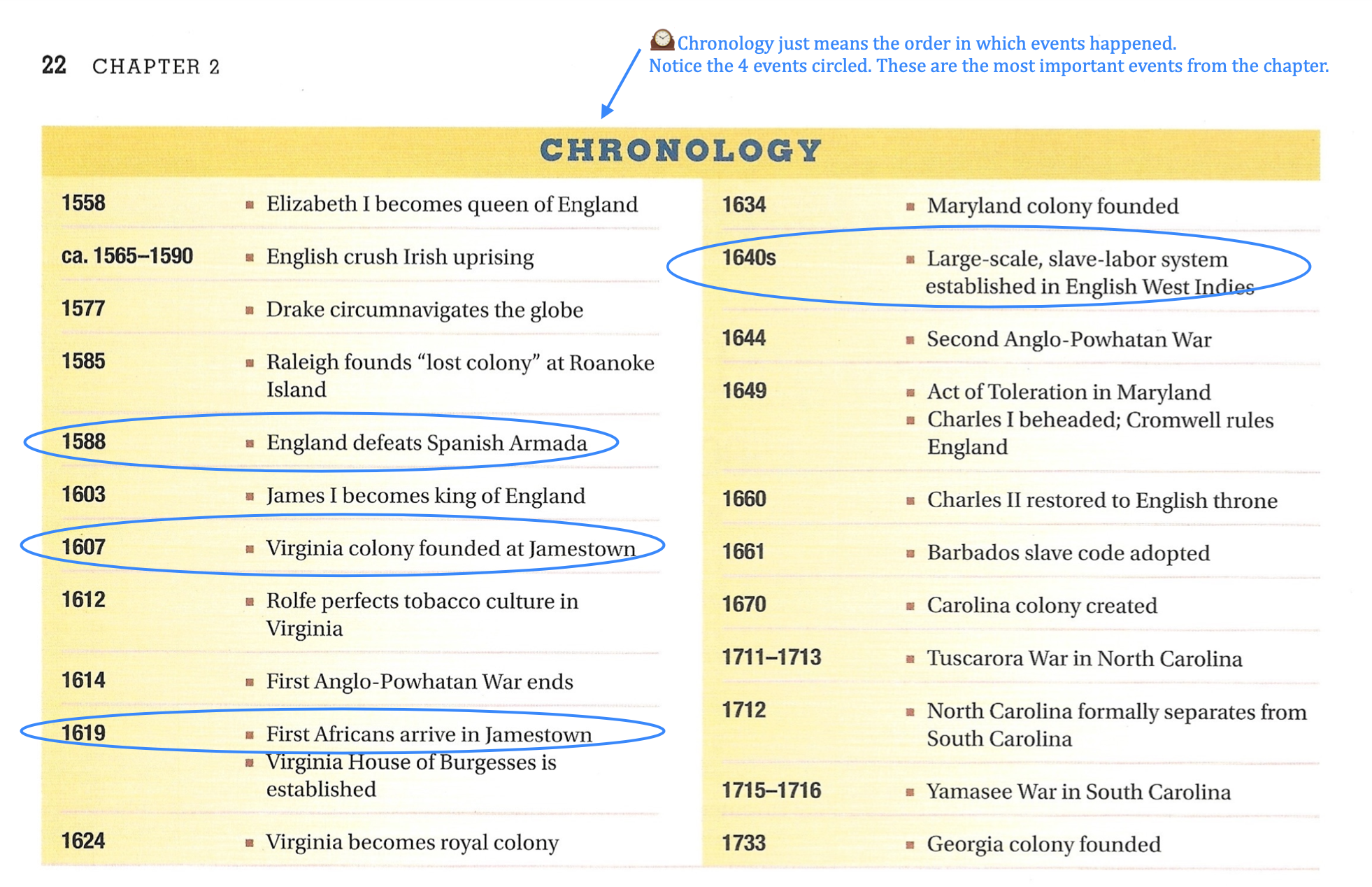
Jamestown
Roanoke
Santa Fe
Quebec
3
zoom_in
1
Question 3
3.
True or False? You have to memorize every single date in order to be successfull in U.S. History.
Explain your answer using the "Show Your Work" function.
True
False
visibility
View drawing
zoom_in
4
zoom_in
1
IIWD.01
Question 5
5.
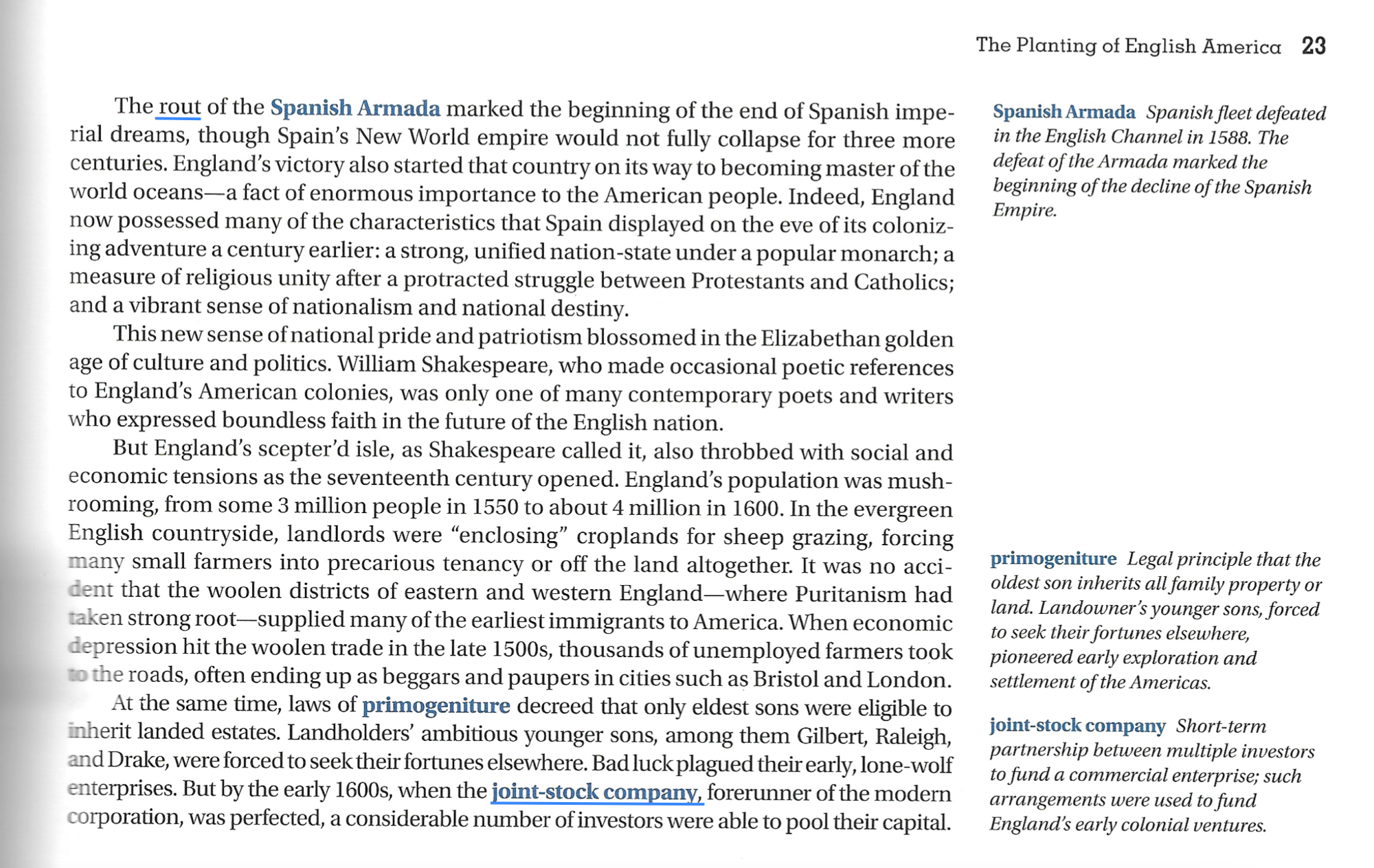
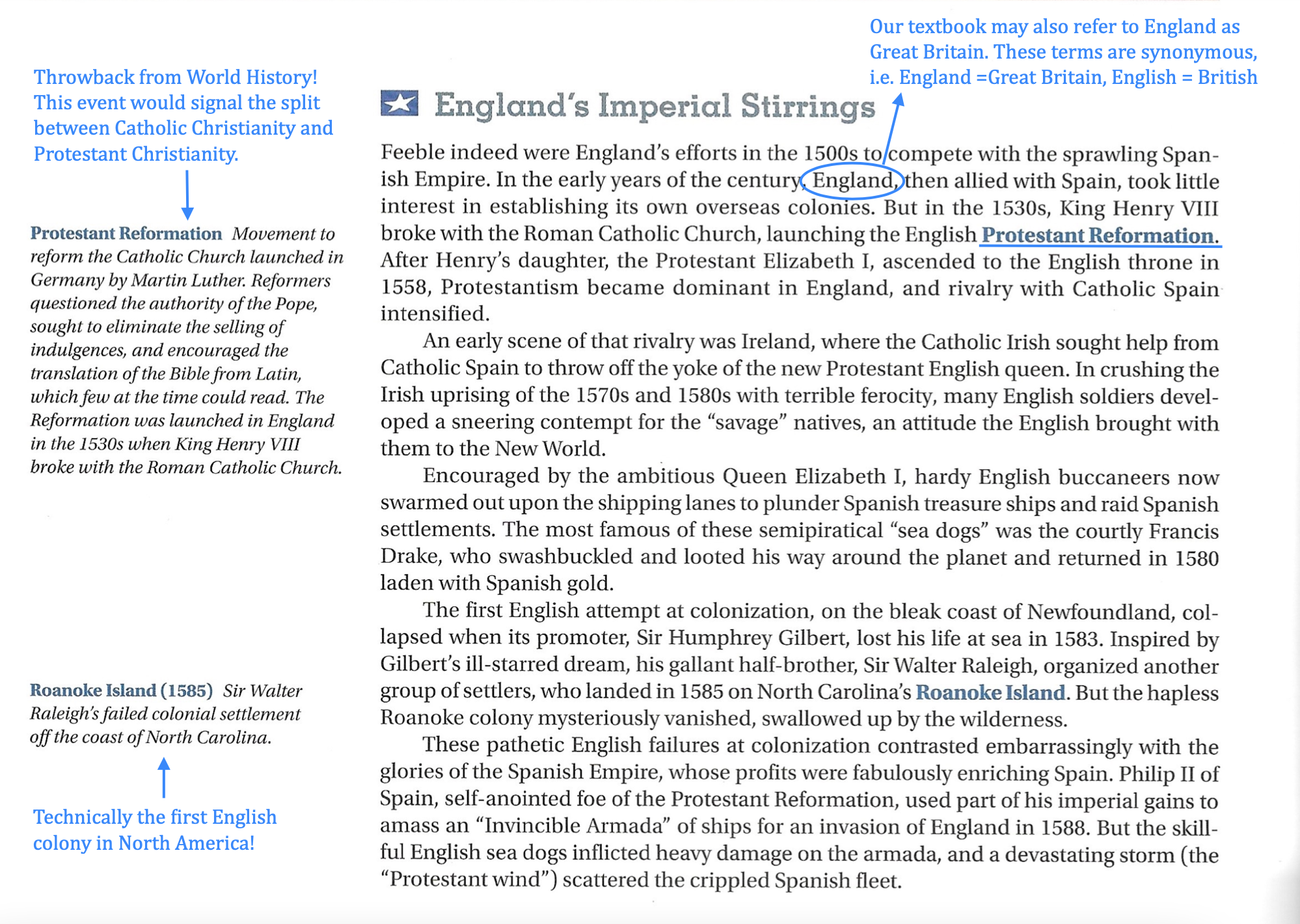
England’s defeat of the Spanish Armada
demonstrated that Spanish Catholicism was inferior to English Protestantism.
led to a Franco-Spanish alliance that prevented England from establishing its own American colonies.
helped to ensure England’s naval dominance in the North Atlantic.
allowed England to take control of Spain’s American colonies.
Question 6
6.
What role did the joint-stock company play in English colonization of America?
It enabled English colonials to create joint ventures with Indian tribes.
It provided a crucial means to finance colonizing ventures by pooling investor resources.
It allowed debtors to escape jail and become investors in colonial schemes.
It channeled royal funds to colonial enterprises.
Question 7
7.
On the eve of its colonizing adventure, England possessed all of the following traits
EXCEPT

a popular monarch.
a sense of nationalism.
a strong desire to spread Christianity in the New World.
a unified national state.
8
zoom_in
0
Question 8
8.
That's all that's due for Tuesday, 9/21/2021! Do you have any questions about the reading?
9
zoom_in
1
Question 9
9.
Despite an abundance of fish and game, early Jamestown settlers continued to starve because they
lacked leaders to organize efficient hunting and fishing parties.
were unaccustomed to fending for themselves and wasted time looking for gold.
had neither weapons nor fishing gear.
were afraid of Native Americans so they did not venture far from town.
IIRC.01
10
title
zoom_in
1
Question 10
10.
Draw a photo of what happened during th "Starving Time" winter of 1609-1610 in Jamestown colony.
visibility
View drawing
The first of the English colonies we will learn about are Virginia and Maryland, which are in the South and sometimes called the
Chesapeake
colonies.
zoom_in
1
Question 11
11.
Relations between the English colonists and the Powhatan were at first conciliatory [appeasing conflict], but remained tense, especially
as the Indians attempted to assimilate into the English culture.
when the English attempted to capture all the Indians from his tribe.
when the Indians joined tribes in what the Powhatan Confederacy to unite against the English.
as the starving colonists took to raiding Native American food supplies.
IIRC.01
Question 12
12.
The Second Anglo-Powhatan War and peace treaty of 1646 resulted in all of the following
EXCEPT
ending the possibility of peaceful coexistence between the European and native peoples.
removing the Chesapeake Indians from their ancestral lands.
halting white settlement on the frontier.
laying the groundwork for the later reservation system.
13
zoom_in
1
IIWD.01
zoom_in
0
Question 14
14.
That's all that's due for Wednesday, 9/22/2021! Do you have any questions about the reading?
15
zoom_in
1
IIRC.01
16
zoom_in
1
IIWD.01
zoom_in
zoom_in
1
Question 17
17.
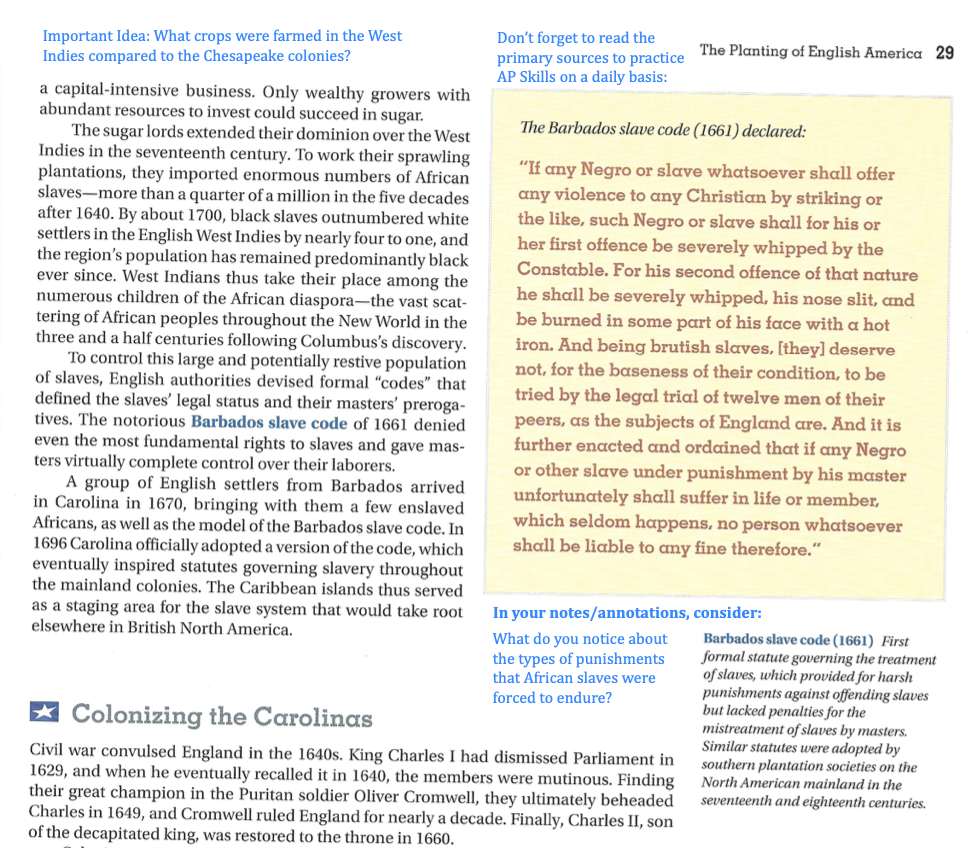
Sugar was called a rich man’s crop for all of the following reasons
EXCEPT
that
it required an elaborate refining process.
it had to be planted extensively.
its commercial version could be purchased only by the wealthy.
it required the clearing of much land.
IIRC.01
18
zoom_in
1
IIRC.01
19
zoom_in
1
Question 19
19.
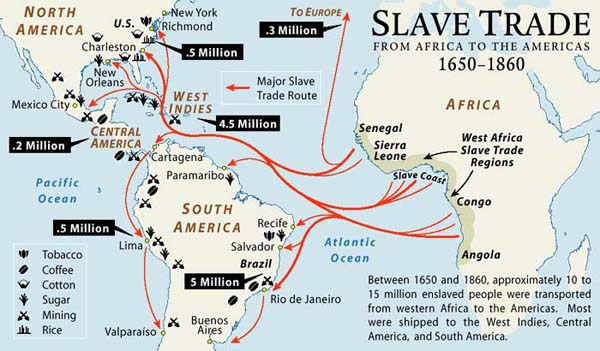
According to the map above, which region of the "New" World imported the most number of slaves?
South America
Central America
West Indies
North America
SQN.01
20
zoom_in
1
Question 20
20.
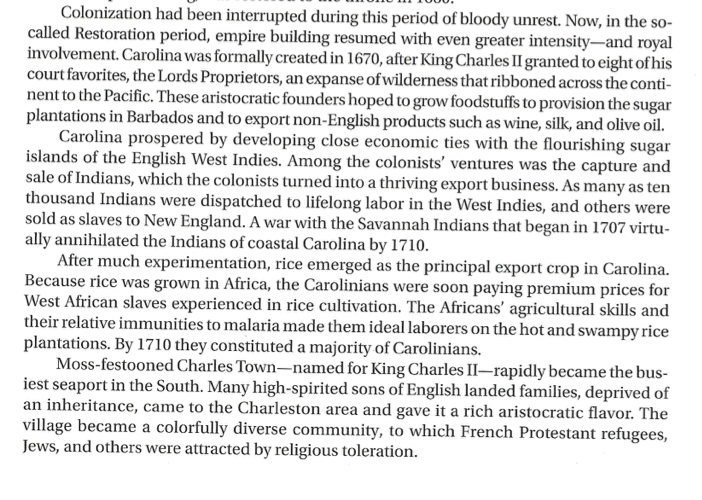
Which word best describes the attitude of Carolinians toward Native Americans?
Hostile
Neutral
Friendly
Tolerant
RPV.01
zoom_in
21
zoom_in
1
Question 21
21.
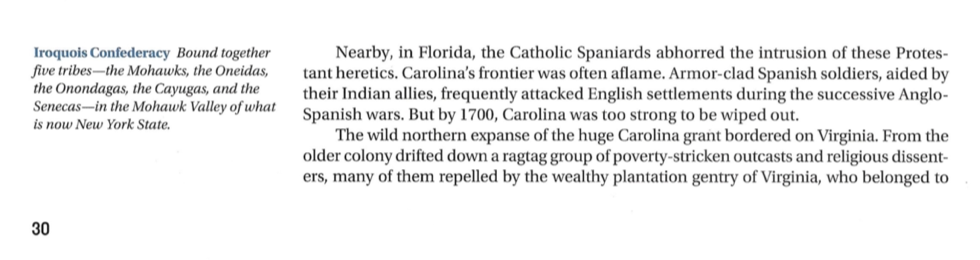
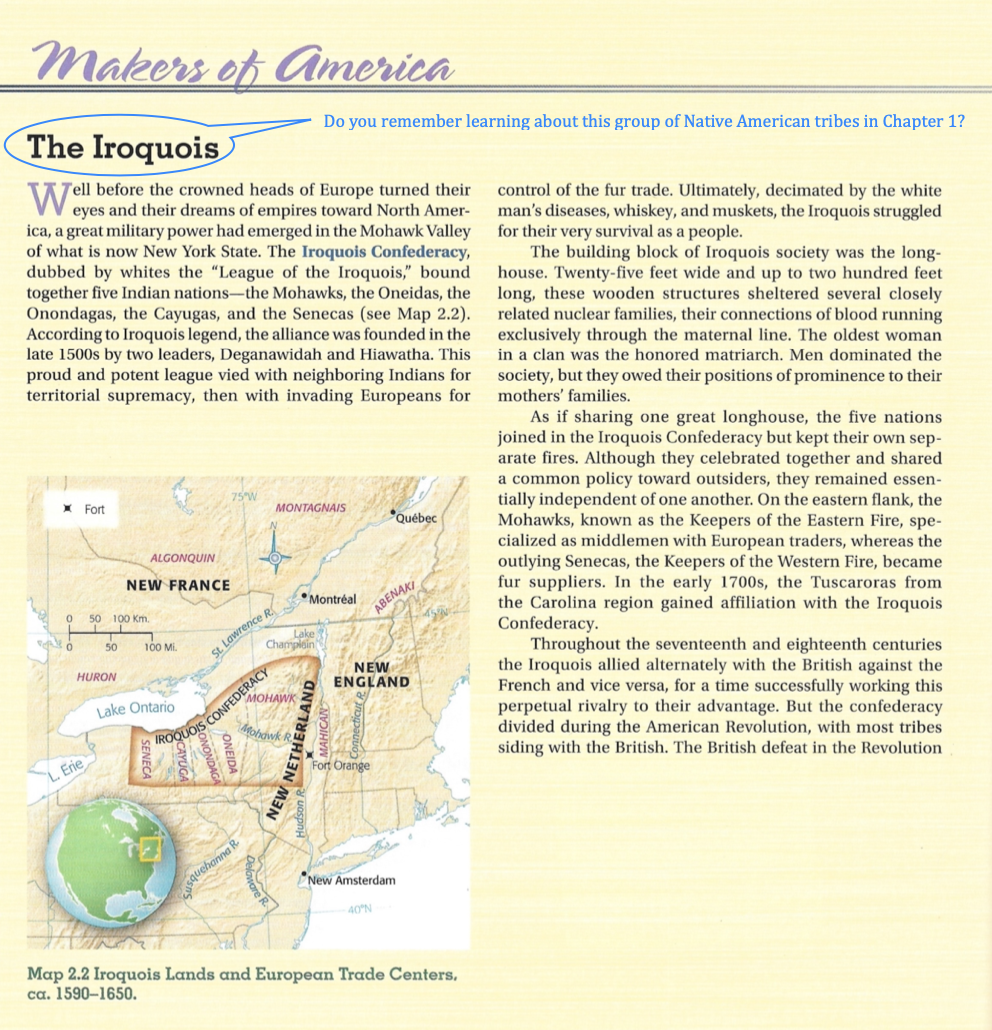
It can be reasonably inferred that the Iroquois Confederacy was created to
merge tribes together to address the death and dislocation caused by European settlement.
create new structures to oversee the peaceful and efficient transfer of land over to Europeans.
gain strength by pitting European powers against one another.
reorganize barter-and-exchange networks to maximize Indian profits.
IIRC.02
zoom_in
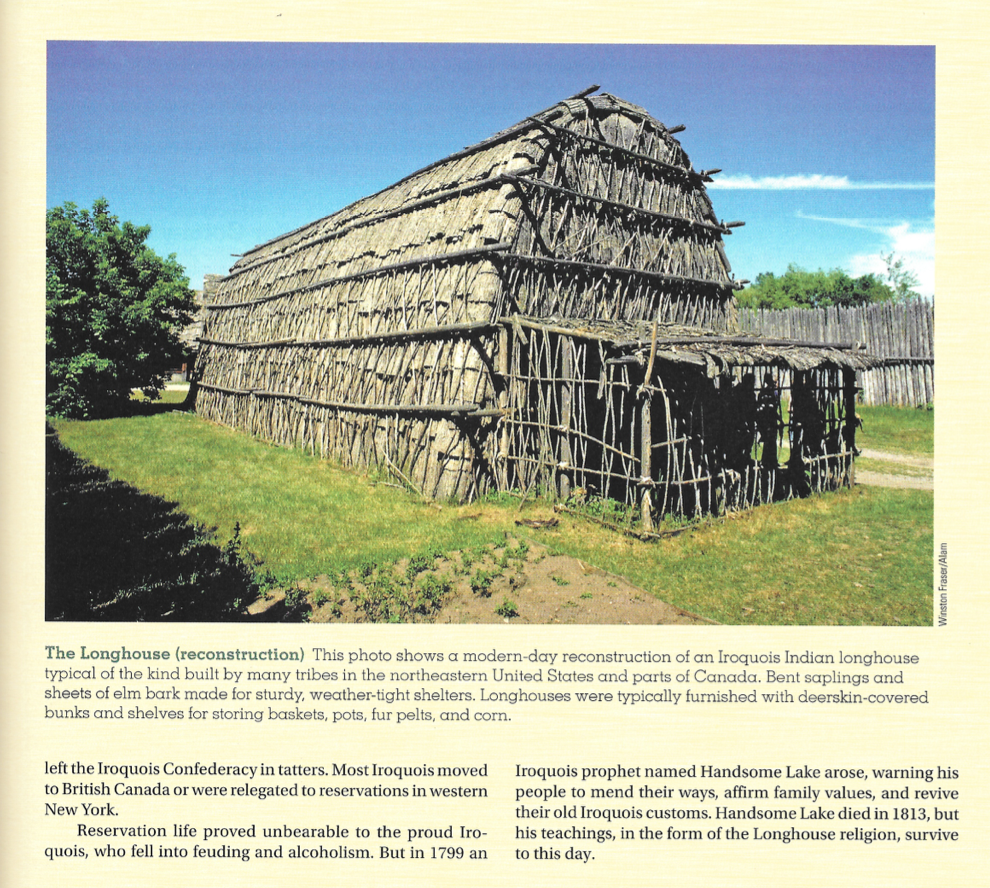
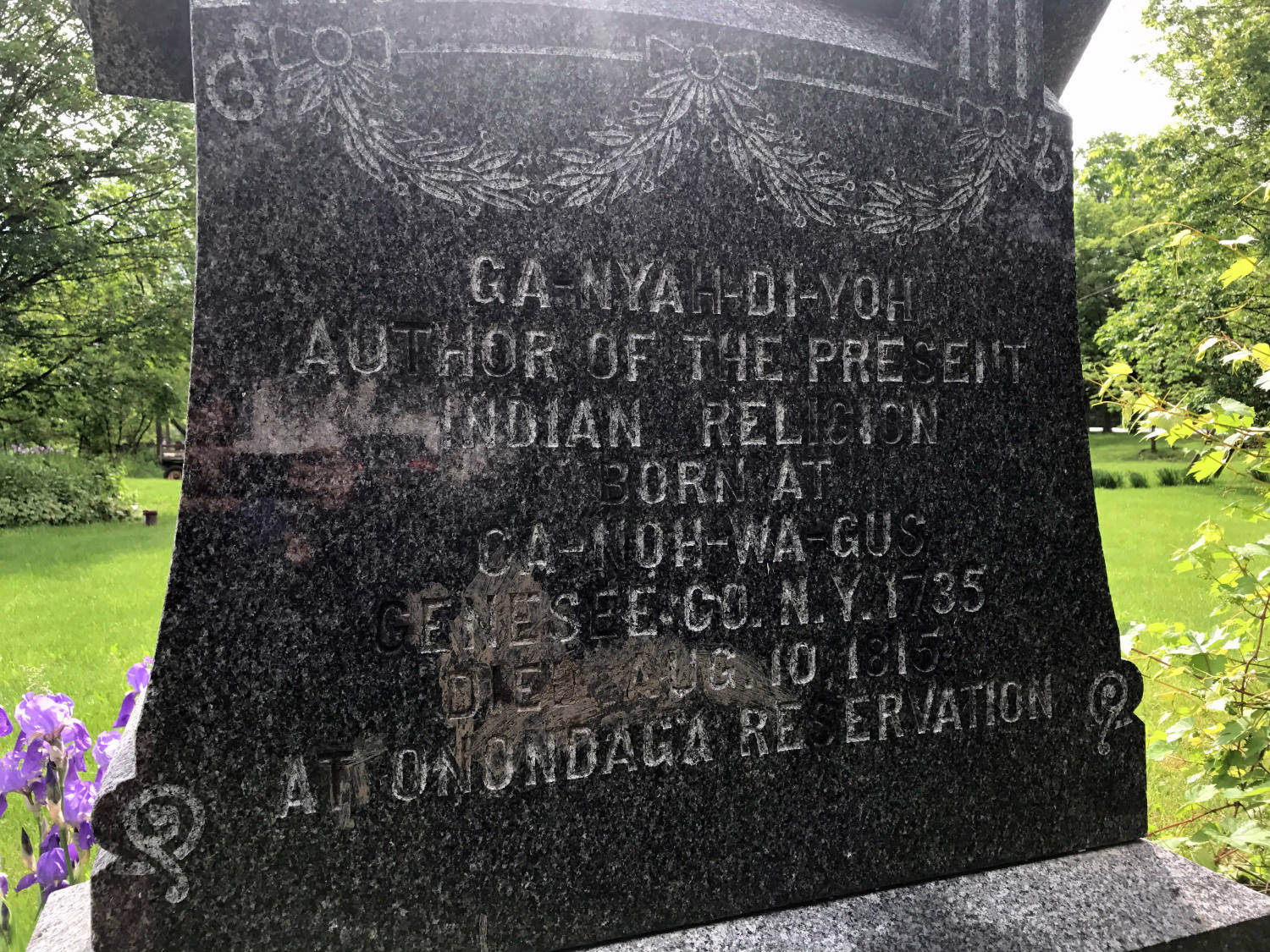
To learn more about Handsome Lake, click here.
22
zoom_in
1
Question 22
22.
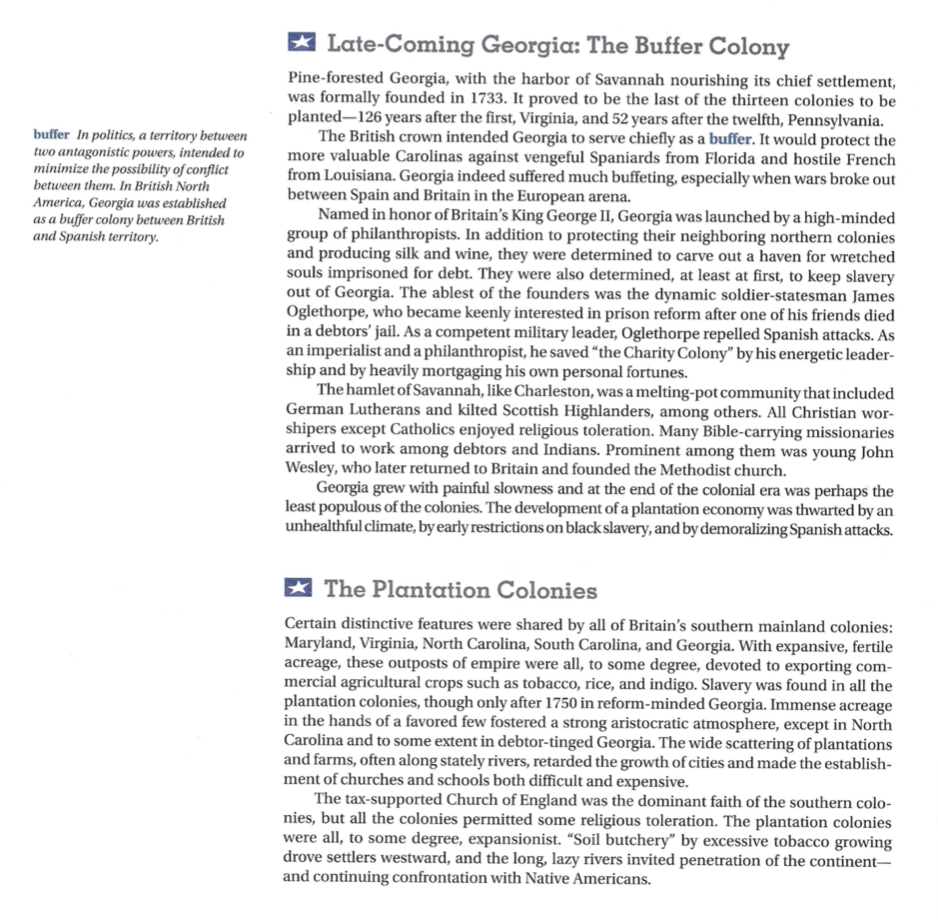
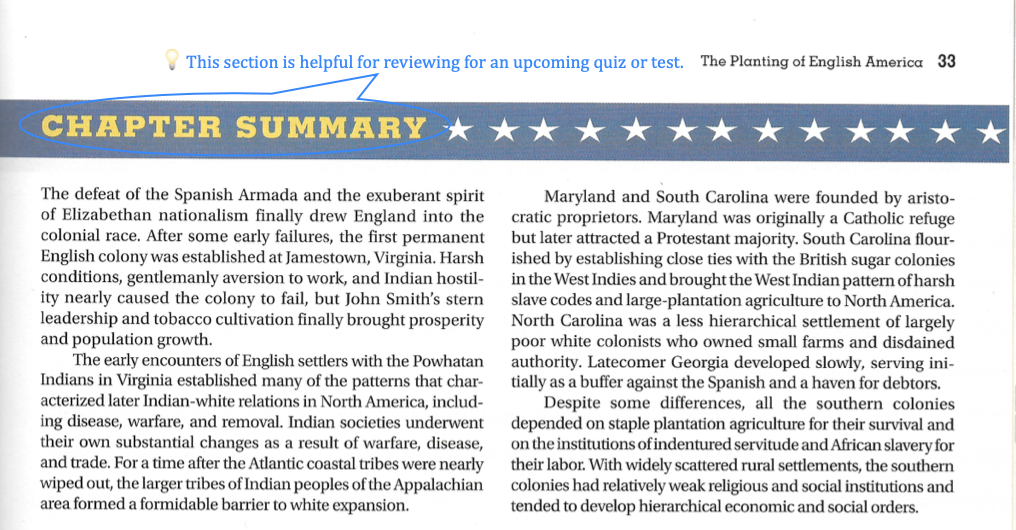
Virginia, Maryland, the Carolinas, and Georgia were similar in that they were all
dependent on the export of commercial agricultural crops.
proprietary colonies.
able to live in peace with the Native Americans.
founded as refuges for persecuted religious sects in England.
IIRC.01
23
zoom_in
0
Question 23
23.
Based on key ideas empasized in class, which
5
key terms or people are most important to recall from Chapter 2?
visibility
View drawing
Hooray! You finished. Don't forget to click "Turn It In" in Google Classroom.
Question 4
4.
As used in line 1, "rout" most nearly means
pathway
defeat
direction
victory
visibility
View drawing
Question 13
13.
As used in line 1 of the second paragraph in this sectiton, "benign" most nearly means
noncancerous
gentle
kindly
harmless
visibility
View drawing
Question 15
15.
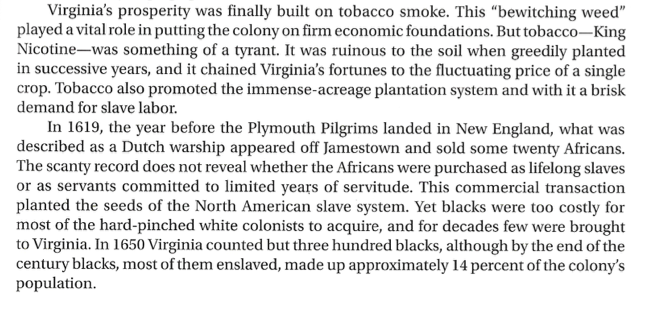
After the first purchase of slaves in 1619 by Jamestown settlers, why were there few
additional purchases of Africans in Virginia's early decades?
Many colonists were morally opposed to slavery.
Africans were considered poor workers.
They were too costly compared to indentured
servants.
Indentured servants refused to work with them.
Question 16
16.
As used in line 5 of the 4th paragraph, "toleration" most nearly means
acceptance
immunity
freedom
persecution
visibility
View drawing
Question 18
18.
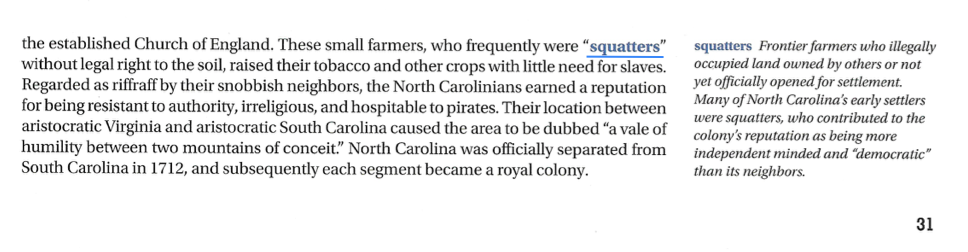
One of the main objectives of the aristocratic founders of Carolina was to
establish sugar plantations without resorting to slave labor.
grow foodstuffs to provision sugar plantations in the West Indies like Barbados.
provide a measure of religious tolerance to Catholics and Protestant
dissenters.
provide a utopian settlement for reformed convicts.