Log in
Sign up for FREE
arrow_back
Library

LNM1 Ch 3 Ex 1

star
star
star
star
star
Last updated over 3 years ago
23 questions
1
1
1
1
1
1
1
1
Question 1 | 00:23
Question 2 | 00:58
Question 3 | 01:58
Question 4 | 03:57
Question 5 | 04:09
00:00/00:00
Question 1
00:23
keyboard_arrow_down
1
Question 2
00:58
keyboard_arrow_down
1
Question 3
01:58
keyboard_arrow_down
1
Question 4
03:57
keyboard_arrow_down
1
Question 5
04:09
keyboard_arrow_down
1
Question 6 | 00:20
Question 7 | 00:29
Question 8 | 00:49
Question 9 | 02:19
Question 10 | 02:24
Question 11 | 02:29
Question 12 | 03:00
Question 13 | 03:47
Questions 14 & 15 | 05:13
00:00/00:00
Question 6
00:20
keyboard_arrow_down
1
Question 7
00:29
keyboard_arrow_down
1
Question 8
00:49
keyboard_arrow_down
1
Question 9
02:19
keyboard_arrow_down
1
Question 10
02:24
keyboard_arrow_down
1
Question 11
02:29
keyboard_arrow_down
1
Question 12
03:00
keyboard_arrow_down
1
Question 13
03:47
keyboard_arrow_down
1
Questions 14 & 15
05:13
keyboard_arrow_down
1
1
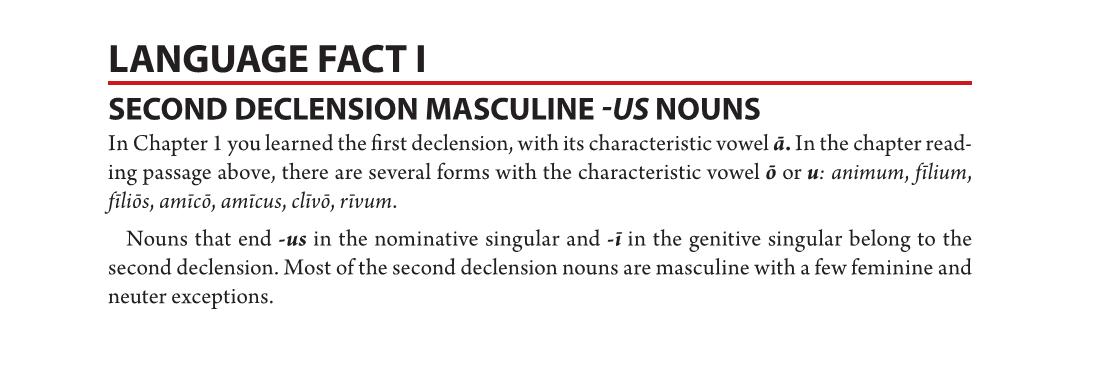
Identify the case and number of each noun. For some, more than one answer is possible.
Example: animum - accusative singular
Question 16
16.

Question 17
17.

Question 18
18.

Question 19
19.

Question 20
20.

Question 21
21.

Question 22
22.

Question 23
23.

Question 1
1.

Which case is used for the subject of a sentence?

Question 2
2.

Why do puella and servus have different endings for the same case?

Question 3
3.

How many declensions can a noun be in?

Question 4
4.

What are the four reasons the video gives for why Latin has declensions?

Question 5
5.

What two things does the controlled variation of declensions add to the language?

Question 6
6.

Latin nouns are grouped into declensions based on the ending of which case?

Question 7
7.

What letter is thematic to the second declension (found in many of the endings)?

Question 8
8.

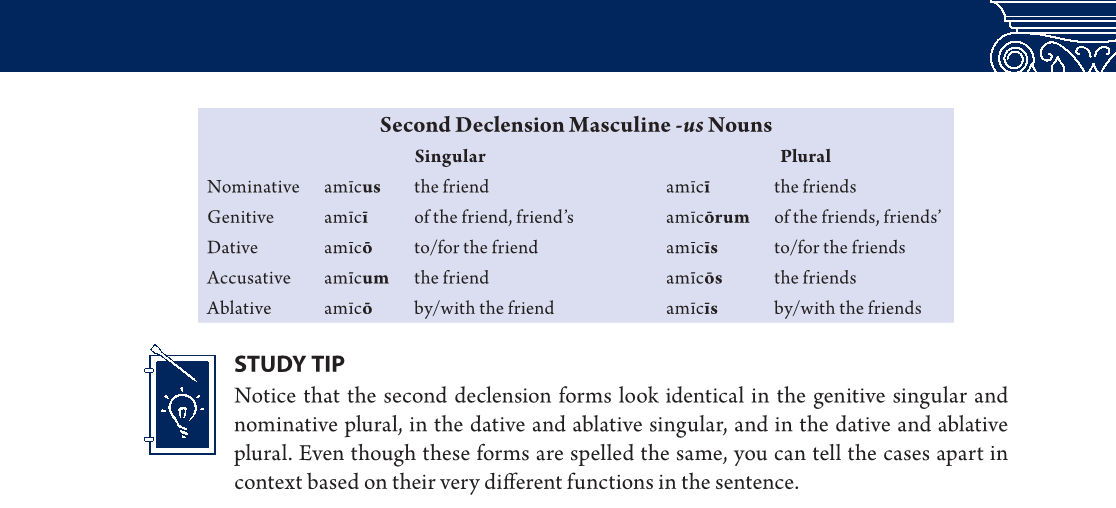
What is the genitive singular ending for all nouns in the second declension?

Question 9
9.

Question 10
10.

Which two cases have the same ending in both the singular and plural forms in the second declension?

Question 11
11.

What is the important tool to use when differentiating these forms?

Question 12
12.

Besides the -us ending, what is another possible nominative ending for the 2nd declension?

Question 13
13.

What is key to finding the stem of a 2nd declension noun?

Question 14
14.

What gender are most 1st declension nouns?

Question 15
15.

What gender are most 2nd declension nouns?

fīlium
nominative singular
genitive singular
dative singular
accusative singular
ablative singular
nominative plural
genitive plural
dative plural
accusative plural
ablative plural
fīliōs
nominative singular
genitive singular
dative singular
accusative singular
ablative singular
nominative plural
genitive plural
dative plural
accusative plural
ablative plural
amīcō
nominative singular
genitive singular
dative singular
accusative singular
ablative singular
nominative plural
genitive plural
dative plural
accusative plural
ablative plural
amīcōs
nominative singular
genitive singular
dative singular
accusative singular
ablative singular
nominative plural
genitive plural
dative plural
accusative plural
ablative plural
animō
nominative singular
genitive singular
dative singular
accusative singular
ablative singular
nominative plural
genitive plural
dative plural
accusative plural
ablative plural
rīvōrum
nominative singular
genitive singular
dative singular
accusative singular
ablative singular
nominative plural
genitive plural
dative plural
accusative plural
ablative plural
fīliī
nominative singular
genitive singular
dative singular
accusative singular
ablative singular
nominative plural
genitive plural
dative plural
accusative plural
ablative plural
animīs
nominative singular
genitive singular
dative singular
accusative singular
ablative singular
nominative plural
genitive plural
dative plural
accusative plural
ablative plural
Accusative
Ablative
Accusative
Ablative
Which two forms in the second declension both end in -ī?
Nominative Singular
Genitive Singular
Dative Singular
Accusative Singular
Ablative Singular
Nominative Plural
Genitive Plural
Dative Plural
Accusative Plural
Ablative Plural
Genitive
Dative
Accusative
Ablative