1
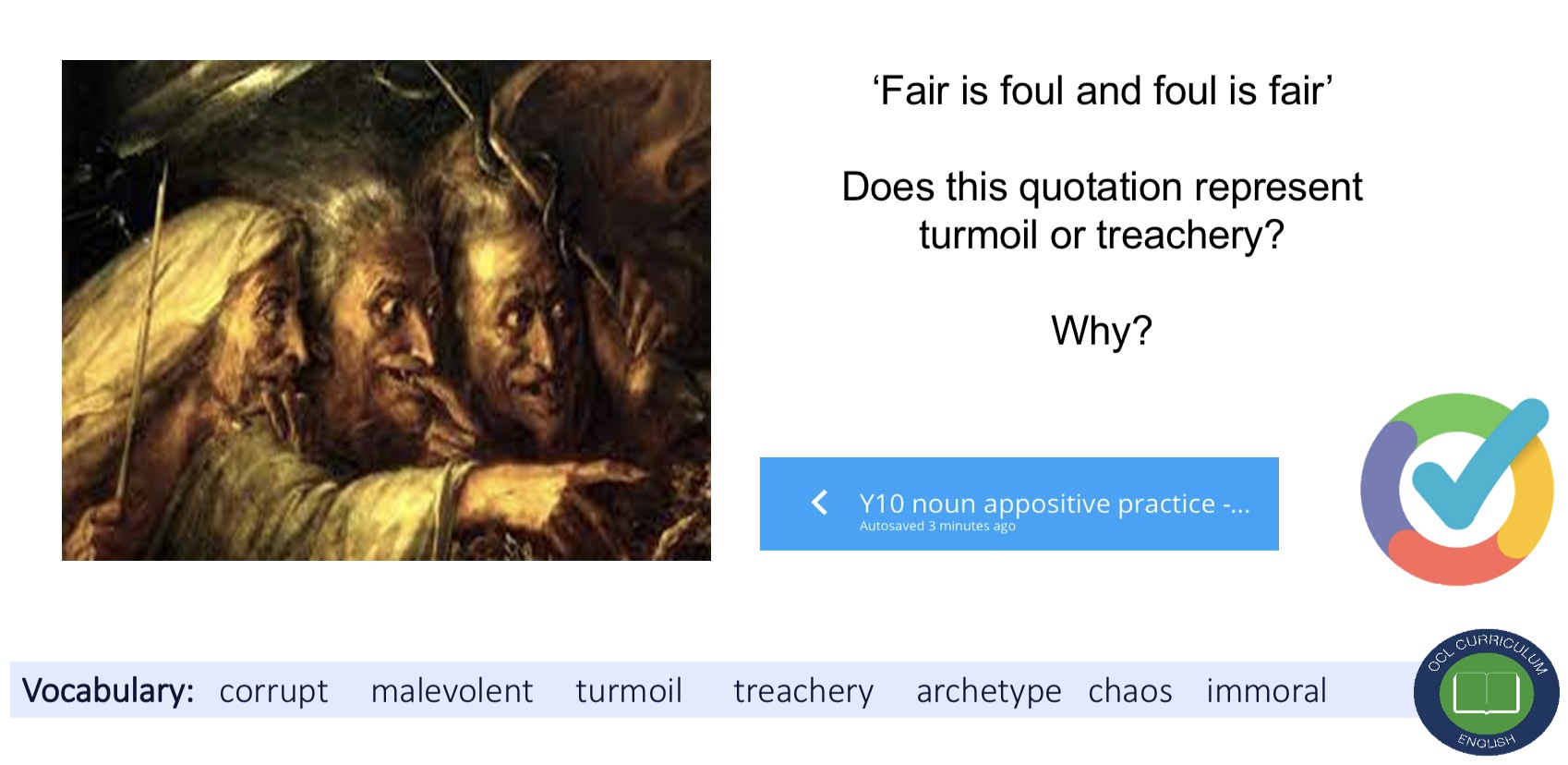
Does this quotation represent turmoil or treachery?M
Does this quotation represent turmoil or treachery?M
1
Why?
Why?
Does this quotation represent turmoil or treachery?M
Why?
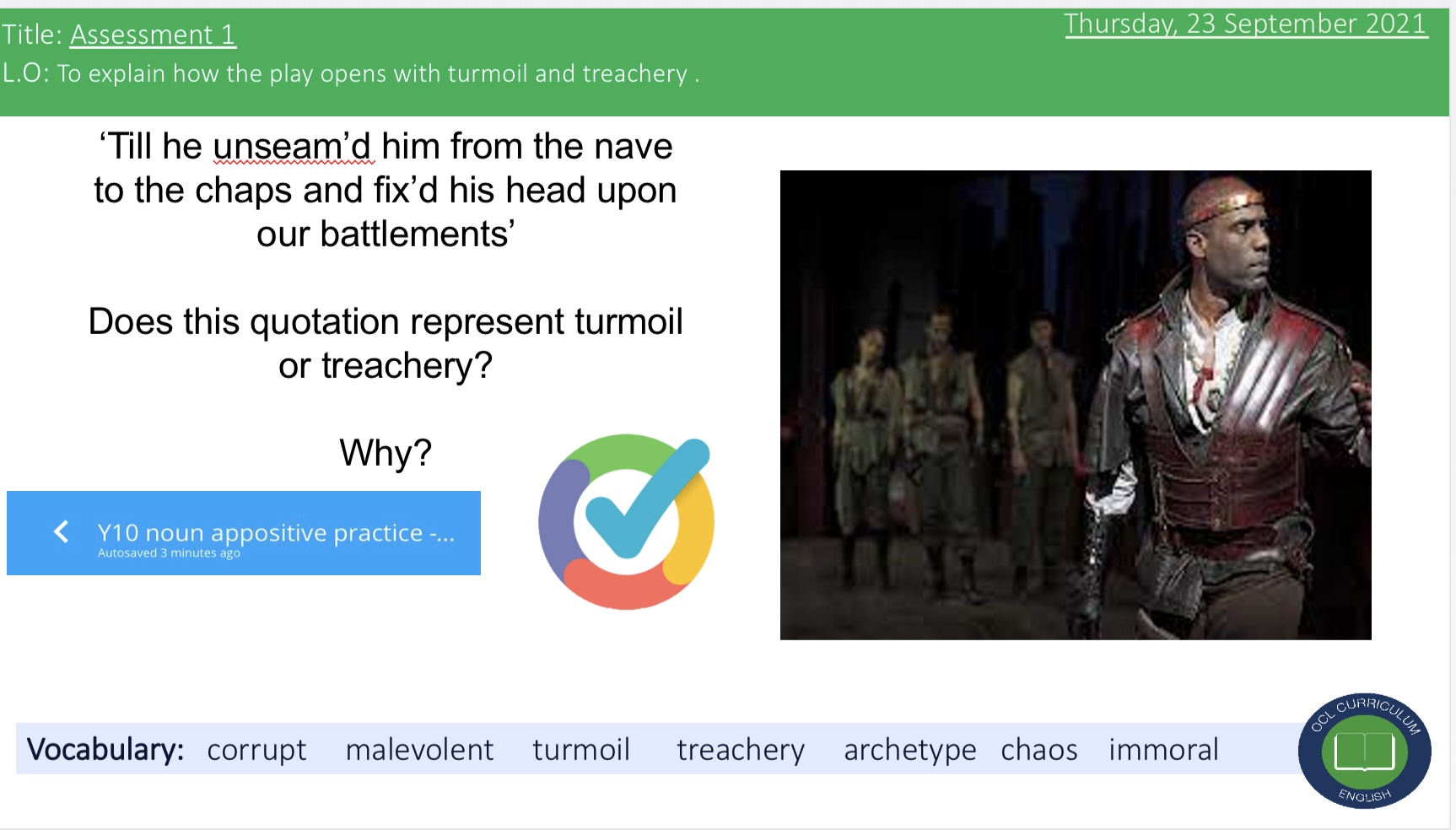
Does this quotation represent turmoil or treachery?
Why?
Which noun appositive best describes Macbeth at the start of the play?
Macbeth, _________________________, defends his country against the traitors who attempt to usurp King Duncan.
A. the duplicitous traitor
B. the loyal and patriotic hero
C. the gullible fool
Which noun appositive best describes Macbeth after he speaks to the witches for the first time?
After talking to the witches, Macbeth, ____________________, is drawn into hubristic thoughts of power.
the duplicitous traitor
the archetypal tragic hero
the gullible fool
Which noun appositive best describes Macbeth at the end of the play?
Ultimately, Macbeth, ____________________, is punished for his treachery.
A. a symbol of the consequences of subverting the divine order
B. the archetypal tragic hero
C. the gullible fool
Which noun appositive best describes the witches?
From the start of the play, the witches, ____________________, set out on a mission to cause chaos.
A. ugly hags
B. evil sisters
C. tumultuous symbols of chaos, malevolence and sin