The Sadler Committee Report (1832)
star
star
star
star
star
Last updated about 4 years ago
14 questions
Note from the author:
activity using testimony from the Sadler Commission
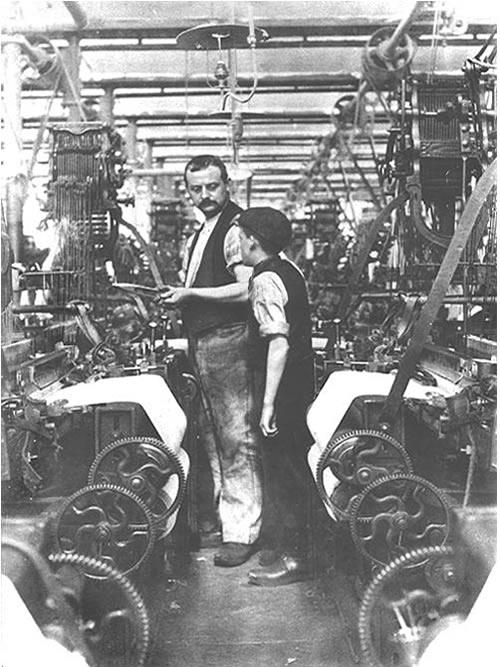
Michael Sadler was a well-known author of pamphlets urging better treatment of factory workers. In 1832 he conducted a parliamentary investigation into the condition of children working in textile mills. Sadler interviewed eight children in an effort to persuade the Parliament to enact new laws to safeguard the rights of child workers. In Britain at the time, children just eight or nine years old regularly worked for twelve to fifteen hours a day in textile mills.
The Sadler Committee report was published in 1832 and provoked public outcry against the practice of requiring young children to work for twelve hours a day. It did not outlaw child labor but it led to new laws that restricted how many young children could work.
Evidence Given Before the Sadler Committee
Joshua Drake, called in; and Examined.
Why do you allow your children to go to work at those places where they are ill-treated or over-worked?
--Necessity compels a man that has children to let them work.
1
Why do parents allow their children to work in the factories?
Mr. Matthew Crabtree, called in; and Examined.
What age are you?
--Twenty-two.
What is your occupation?
--A blanket manufacturer.
Have you ever been employed in a factory?
--Yes.
At what age did you first go to work in one?
--Eight.
How long did you continue in that occupation?
--Four years.
Will you state the hours of labour at the period when you first went to the factory, in ordinary times?
--From 6 in the morning to 8 at night.
Fourteen hours?
--Yes.
With what intervals for refreshment and rest?
--An hour at noon.
When trade was brisk what were your hours?
--From 5 in the morning to 9 in the evening.
Sixteen hours?
--Yes.
With what intervals at dinner?
--An hour.
How far did you live from the mill?
--About two miles.
Was there any time allowed for you to get your breakfast in the mill?
--No.
Did you take it before you left your home?
--Generally.
During those long hours of labour could you be punctual; how did you awake?
--I seldom did awake spontaneously; I was most generally awoke or lifted out of bed, sometimes asleep, by my parents.
Were you always in time?
--No.
What was the consequence if you had been too late?
--I was most commonly beaten.
Severely?
--Very severely, I thought.
..............
At the time when you were beaten for not keeping up with your work, were you anxious to have done it if you possibly could?
--Yes; the dread of being beaten if we could not keep up with our work was a sufficient impulse to keep us to it if we could.
1
What age was Matthew Crabtree first put to work?
1
How many hours did Matthew Crabtree have to work?
1
How did Michael Crabtree wake up in the morning?
1
What happened to the children if they were late?
1
How did managers and overseers keep the children awake to work?
Elizabeth Bentley, called in; and Examined.
What age are you?
--Twenty-three.
Where do you live?
--At Leeds.
What time did you begin to work at a factory?
--When I was six years old.
At whose factory did you work?
--Mr. Busk's.
What kind of mill is it?
--Flax-mill.
What was your business in that mill?
--I was a little doffer.
What were your hours of labour in that mill?
--From 5 in the morning till 9 at night, when they were thronged.
For how long a time together have you worked that excessive length of time?
--For about half a year.
What were your usual hours when you were not so thronged?
--From 6 in the morning till 7 at night.
What time was allowed for your meals?
--Forty minutes at noon.
Had you any time to get your breakfast or drinking?
--No, we got it as we could.
And when your work was bad, you had hardly any time to eat it at all?
--No; we were obliged to leave it or take it home, and when we did not take it, the overlooker took it, and gave it to his pigs.
1
How old did Elizabeth Bentley begin working in a textile mill?
1
Throughout Elizabeth's entire day, how much time was given for meals?
Did you live far from the mill?
--Yes, two miles.
Had you a clock?
--No, we had not.
Supposing you had not been in time enough in the morning at these mills, what would have been the consequence?
--We should have been quartered.
What do you mean by that?
--If we were a quarter of an hour too late, they would take off half an hour; we only got a penny an hour, and they would take a halfpenny more.
The fine was much more considerable than the loss of time?
--Yes.
Were you also beaten for being too late?
--No, I was never beaten myself, I have seen the boys beaten for being too late.
Were you generally there in time?
--Yes; my mother had been up at 4 o'clock in the morning, and at 2 o'clock in the morning; the colliers used to go to their work about 3 or 4 o'clock, and when she heard them stirring she has got up out of her warm bed, and gone out and asked them the time; and I have sometimes been at Hunslet Car at 2 o'clock in the morning, when it was streaming down with rain, and we have had to stay until the mill was opened.
1
How did being fifteen minutes late affect her pay?
1
How early did her mother and Elizabeth have to wake up for work in order for her to be on time?
1
What actions were used to keep the children alert when they were working?
1
Why did parents allow their children to work in these conditions?
1
If you were a member of Parliament at the time of this commission, what types of reform would be good for child labor?
1
Do you think that factory owners would be happy to follow your reforms?