FM: 21-22 EOU (10/6) 1
star
star
star
star
star
Last updated about 3 years ago
6 Nsɛmmisa

1

1
1
1
1
2
Three toy boats with the same mass were in a lake. Two boats were moving and one was stopped. Each boat got bumped by another boat, but not in the same direction. All the boats changed speed as a result of being bumped. Use the information in the diagram to answer.
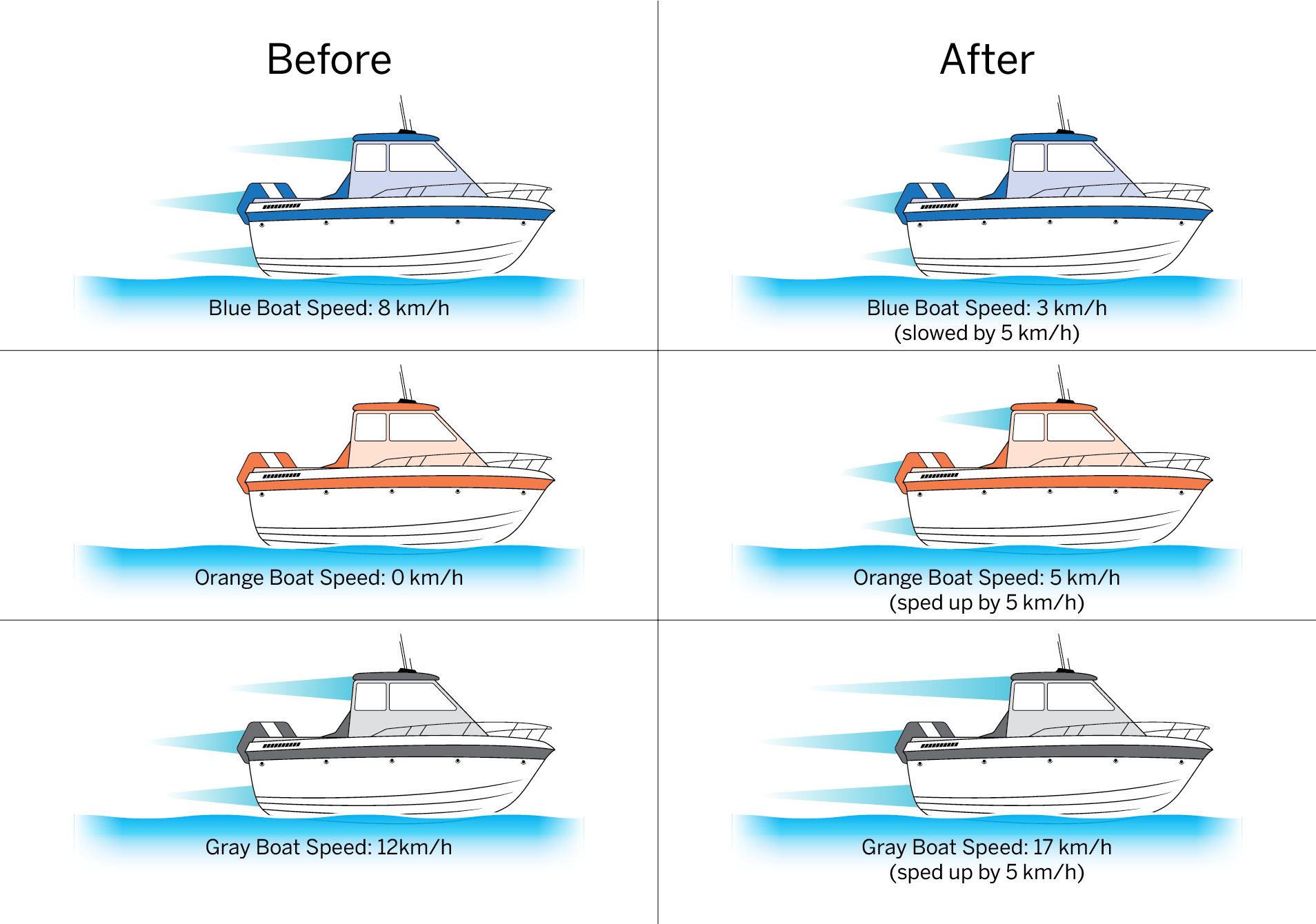
Which toy boat(s) experienced the strongest force when it was bumped? How do you know?
Three chairs were rolling across a flat office floor. The blue and red chairs are the same mass, and they have more mass than the yellow chair. Each chair was hit by another chair, but not from the same direction. Use the information in the diagram to answer.
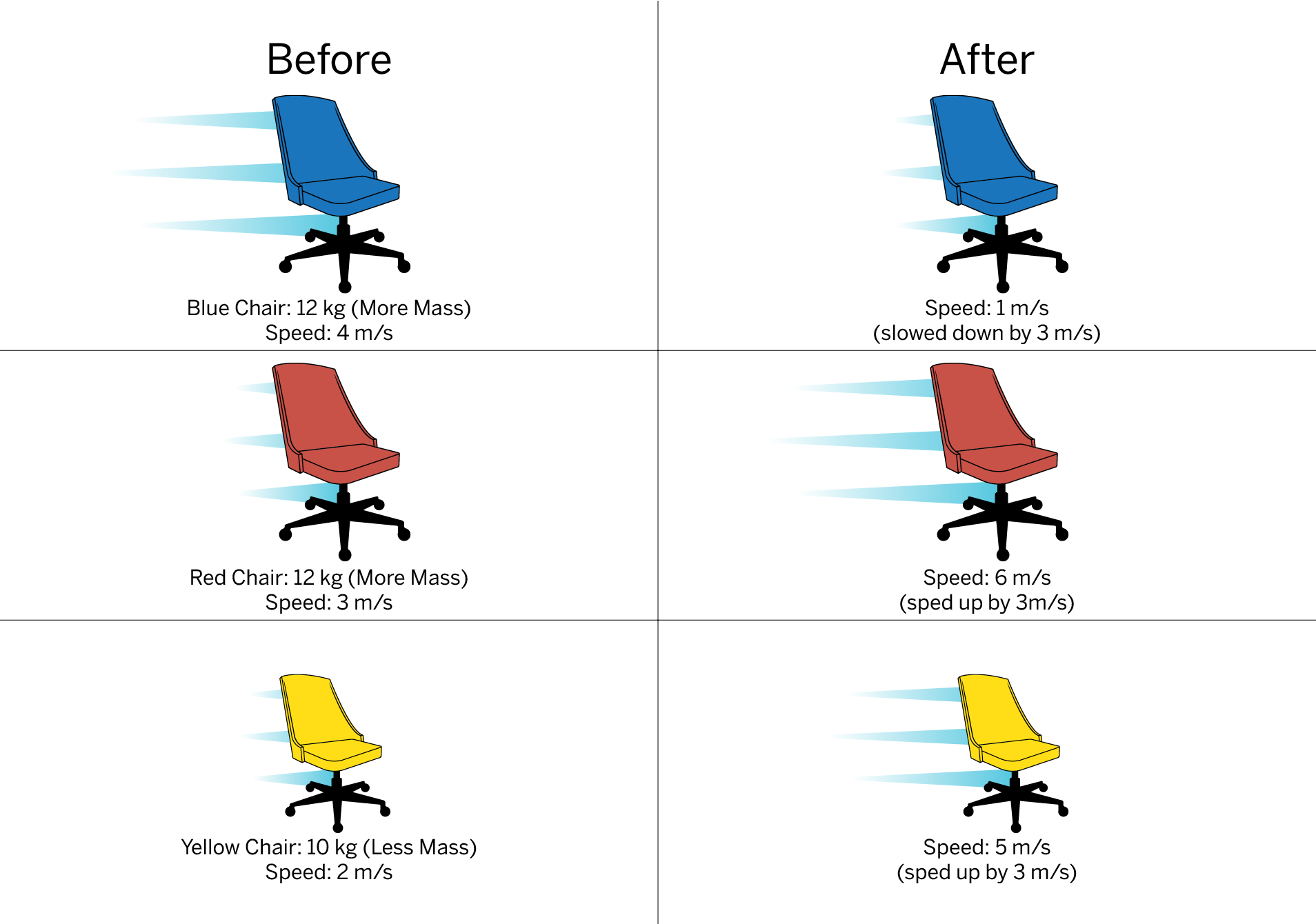
Which chair(s) experienced the strongest force when hit? How do you know?
Scott and James work at a grocery store. After the grocery store closed, they were playing a game with a shopping cart and Scott’s skateboard. They crashed the skateboard and the shopping cart two times. The shopping cart had more mass in Crash 2 than it did in Crash 1. Use the information in the diagram to answer.
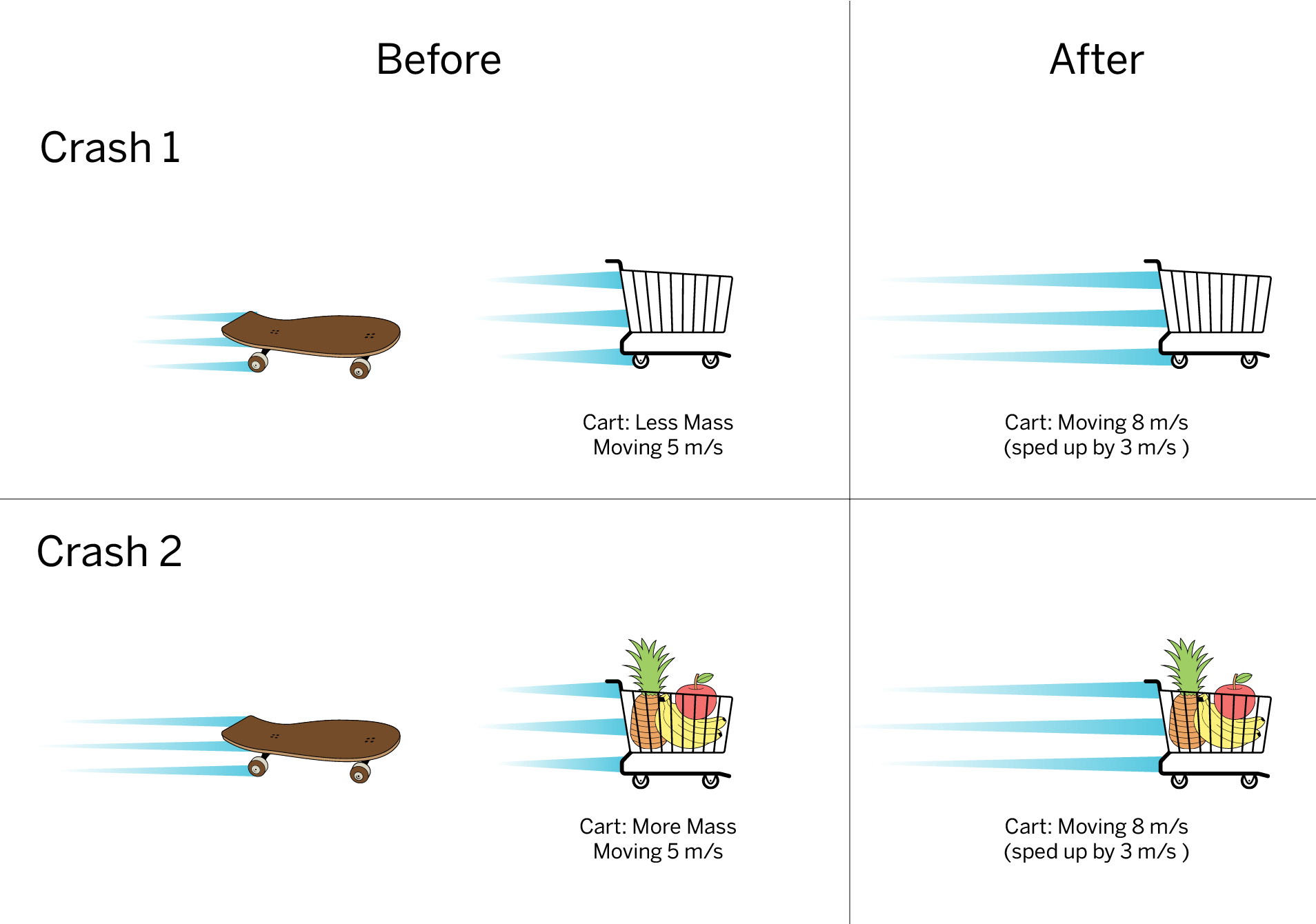
In which crash did the skateboard experience a stronger force? Why?
Sandra pushed a wooden block and it slid across the floor. The wooden block gradually slowed down and stopped after moving 10 meters.
Why did the block stop moving?
A proportional model has been created to analyze the relationship between force, mass and acceleration in the collision. Calculate the force and acceleration of each object below.

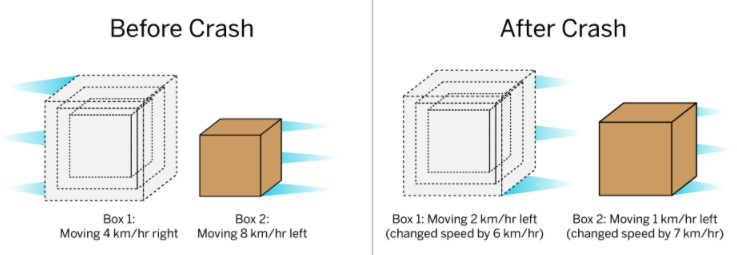
In a warehouse, the workers sometimes slide boxes along the floor to move them. Two boxes were sliding toward each other and crashed. The crash caused both boxes to change speed. Based on the information in the diagram, which statement is correct? In your answer, explain what the forces were like and why the boxes changed speed.
Box 1 has more mass than Box 2.
Box 1 and Box 2 are the same mass.
Box 1 has less mass than Box 2.
CFS:
accurately identifies the changes to each object in a collision
accurately describes the relationship between force, mass AND acceleartion in a collision