Chapter 2: The Planting of English America (1500-1733)
1
GEO 1.0
IIRC.02
KC 2.1.III
1
GEO 1.0
IIRC.02
KC 2.1.II
Question 4
4.
Question 5
5.
Chapter 3: Settling the Northern Colonies (1619-1700)
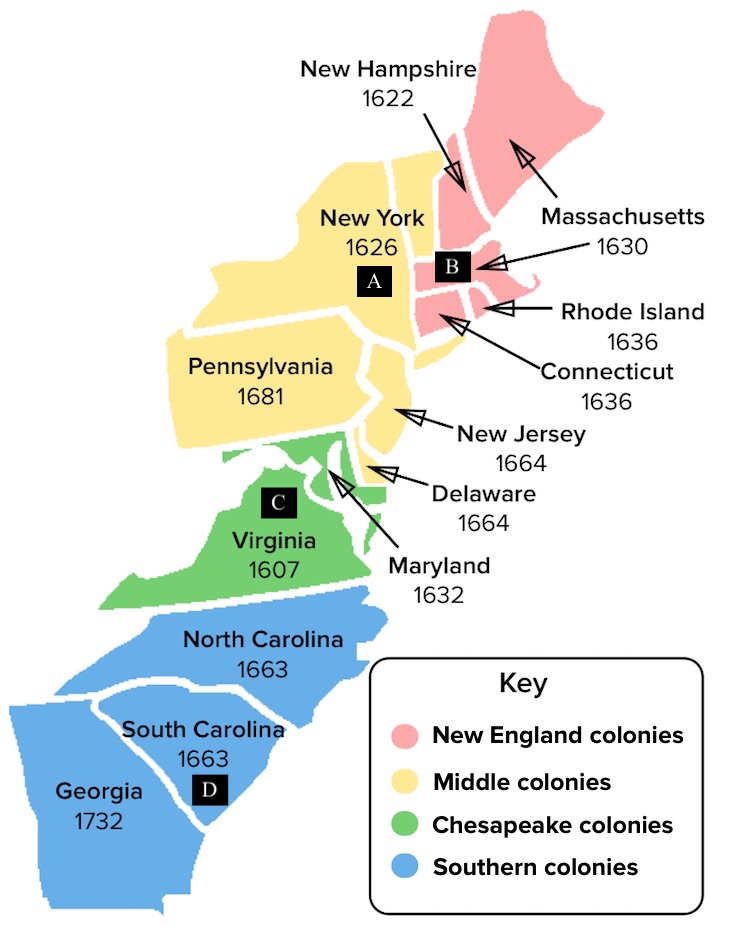
Remember: The Northern colonies are also known as "New England." Think Tom Brady and the Patriots!
1
IIRC.01
KC 2.1.II
NAT 1.0
1
IIUR.01
KC 2.1.III
WOR 1.0
Question 8
8.
1
KC 2.1.II
MIG 1.0
RPU.01
1
IIRC.02
KC 2.1.II
MIG 1.0
Question 11
11.
Third Mastery assessment in the books! We are now done with Period 2 (91607-1754). Draw a picture about how you are feeling.
Review: Under Spanish colonization, men became conquistadores because they wanted to be like Cortes and
gain God’s favor by spreading Christianity.
All of the answers are correct.
satisfy their desire for gold.
seek adventure, as the heroes of classical antiquity had done.
Question 2
2.
Question 3
3.
During the seventeenth century, indentured servitude at first seemed the best solution to the labor shortage. What was NOT one of the underlying reasons for this?
Native Americans were an unreliable source because they had died in such large numbers
African slaves cost too much money.
Many poor Englishmen were willing to mortgage their labor in exchange for passage to America.
Enslaved Africans were very rare and difficult to obtain.
What was the "middle passage"?
A gruesome ocean voyage endured by slaves from Africa to America
The trip from the interior of Africa to the coast
A trip taken in the middle part of a ship
The journey taken by indentured servants to the colonies
Question 6
6.
Question 7
7.
The middle colonies were notable for their
status as the least “American” of the colonies.
unusual degree of democratic control.
established churches.
lack of good river transportation.
Question 9
9.
Question 10
10.
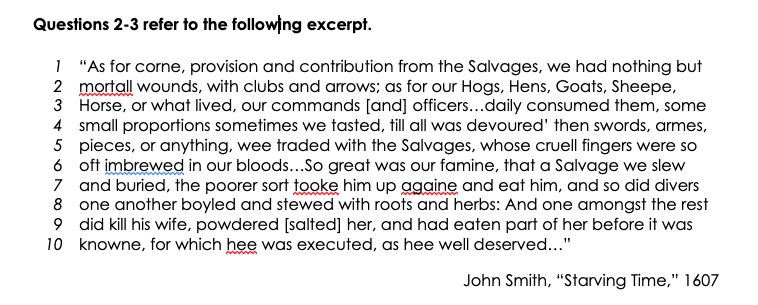
The early years at Jamestown were mainly characterized by
economic prosperity.
starvation, disease, and frequent Indian raids.
peace with the Native Americans.
major technological development.
In writing this journal entry, John Smith implies
a form of execution for heresy [disagreeing with the church].
the cannibalistic nature of the Powhatans.
an acceptable solution to famine.
the desperation of the famished colonists.
As the founder of Rhode Island, Roger Williams
established religious freedom for all but Jews and Catholics.
became a very wealthy man.
established complete religious freedom for all.
supported some types of special privileges.
What was the end result of King Philip’s War?
France’s moving into Canada.
the lasting defeat of New England’s Indians.
the last victory for the Indians.
the Indians formed a powerful alliance to resist the English.
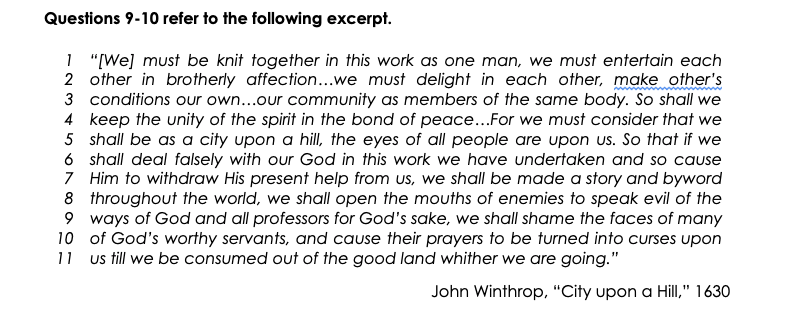
John Winthrop intended to shape the Massachusetts Bay Colony
to inspire piety through personal divine inspiration.
to promote individual profit through commercialism.
in a manner that the settlers would work for the good of the community.
so that the church and state would be separated.
The phrase “…we shall be a city upon a hill” (lines 4-5) refers to
Winthrop’s belief that the Puritans will rise to new heights of financial success.
the notion that no matter what transgressions the Puritans in Massachusetts will make, they will still be superior to those in England.
the argument that Heaven can be attained in Massachusetts.
the belief that the Puritans in Massachusetts will provide a model of Christian faith for the world to see.