IM Alg I Unit 2 Lesson 19: Solutions to Inequalities in One Variable
star
star
star
star
star
Last updated over 3 years ago
26 Nsɛmmisa
1
1
1
1
1
1
1
1
1
1
1
1
1
1
1
1
1
1
1
1
1
1
1
1
1
1
Learning Targets
I can graph the solution to an inequality in one variable.
I can solve one-variable inequalities and interpret the solutions in terms of the situation.
I understand that the solution to an inequality is a range of values (such as
Rewrite the student learning goals in your own words.
If needed, you can use the number line to help them in reasoning about the inequalities.

Write some solutions to the inequality
Write one solution to the inequality
How did you know that the value you chose is a solution?
What do you notice about all the points that are on the line?
On the number line, we can see that the solutions are values that are less than 1. All these values form the solution set to the inequality. Is there a way to write the solution set concisely, without using the number line and without writing out all the numbers less than 1?
Does the solution set have anything to do with the solution to the equation
Why does the solution set to the inequality
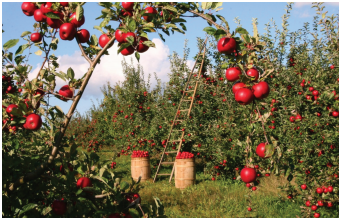
A teacher is choosing between two options for a class field trip to an orchard.
At Orchard A, admission costs $9 per person and 3 chaperones are required.
At Orchard B, the cost is $10 per person, but only 1 chaperone is required.
At each orchard, the same price applies to both chaperones and students.
Which orchard would be cheaper to visit if the class has 8 students?
Which orchard would be cheaper to visit if the class has 12 students?
Which orchard would be cheaper to visit if the class has 30 students?
What does
In this situation, what does the equation
What does the solution to the inequality
To help pay for his tuition, a college student plans to work in the evenings and on weekends. He has been offered two part-time jobs: working in the guest-services department at a hotel and waiting tables at a popular restaurant.
The job at the hotel pays $18 an hour and offers $33 in transportation allowance per month.
The job at the restaurant pays $7.50 an hour plus tips. The entire waitstaff typically collects about $50 in tips each hour. Tips are divided equally among the 4 waitstaff members who share a shift.
The equation
Solve the equation and check your solution.
Here is a graph on a number line. Put a scale on the number line so that the point marked with a circle represents the solution to the equation.
Does one job pay better if the student works fewer hours than the solution you found earlier? If so, which job?
Does one job pay better if the student works more hours than the solution you found earlier? If so, which job?
Here are two inequalities and two graphs that represent the solutions to the inequalities. Match each inequality with a graph that shows its solution.
| Draggable item | arrow_right_alt | Corresponding Item |
|---|---|---|
| arrow_right_alt |
| |
| arrow_right_alt |
|
Solve this equation and check your solution:
Consider the inequality:
Choose a couple of values less than 2 for
Consider the inequality:
Choose a couple of values greater than 2 for
Consider the inequality:
Choose 2 for
Graph the solution to the inequality.
How does solving the equation
Which graph correctly shows the solution to the inequality

