1.9 Particle Simulation
star
star
star
star
star
Last updated almost 4 years ago
13 Nsɛmmisa
Assessment Learning Targets:
Which state of matter is the most dense?
Which state of matter has the most kinetic energy (speed) in its particles?
Hypothesis: Which do you think is a larger factor in heat transfer?
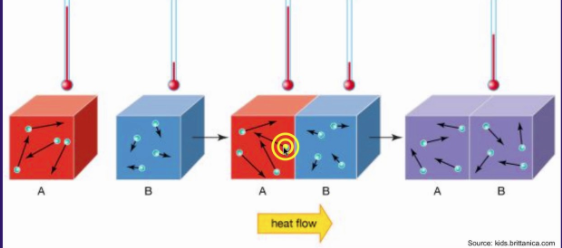
Thermal Equilibrium- Transfer of heat energy from an object with higher temperature to lower temperature until both objects reach the same temperature.
Based on the definition of thermal equilibrium above, which is true?
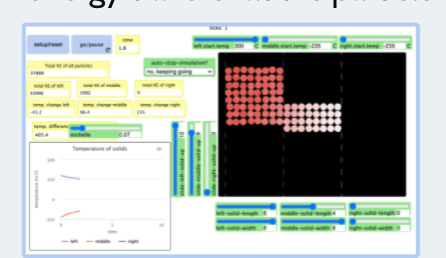
We will now use a simulation to see how heat transfers between two objects that are solids. We can use this to infer how this might work when the objects are in the liquid or gas state.
Go to this simulation and set it up as shown in the picture below, then press the reset button and then go.
*If it doesn't let you change the mass, set everything else up, press reset again and it should work
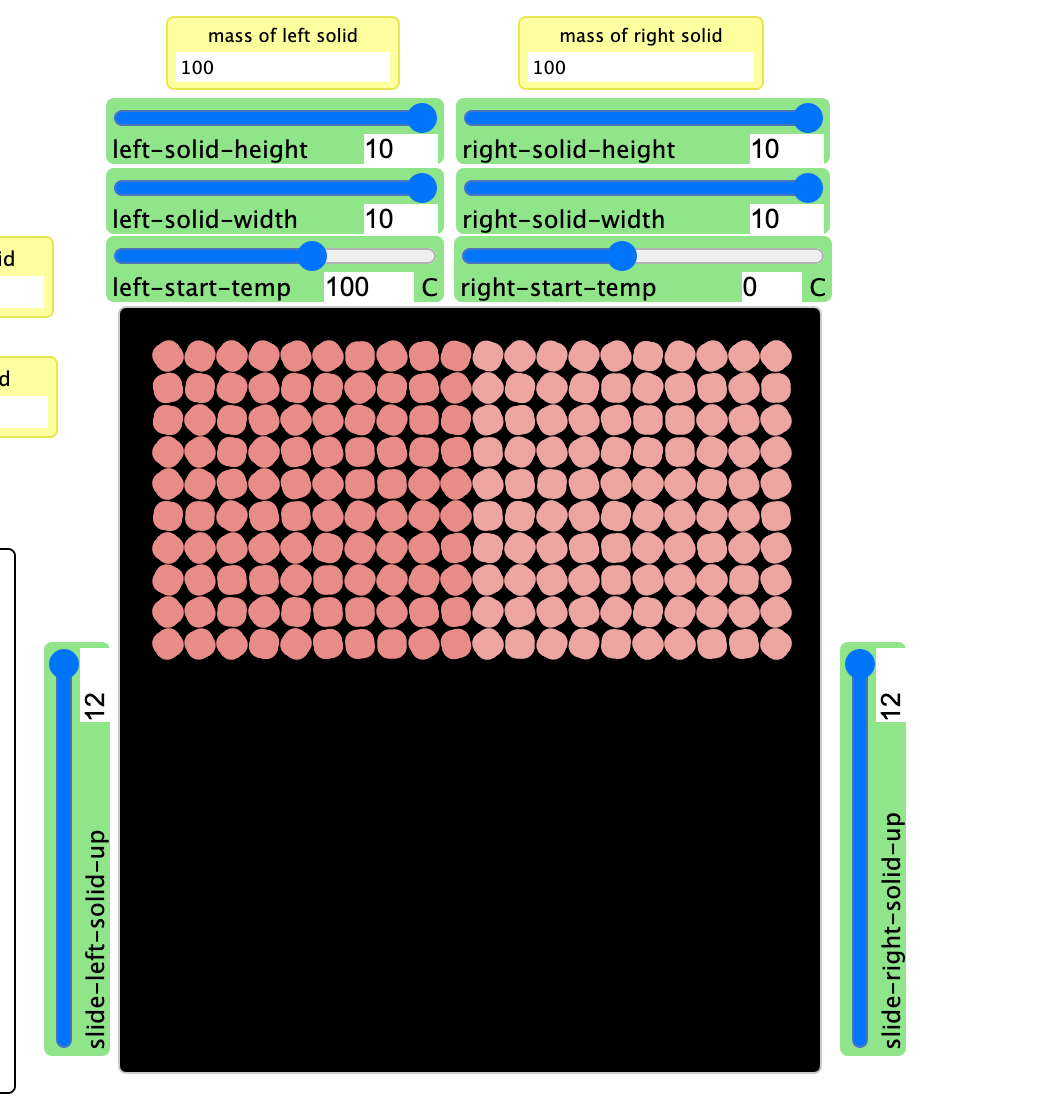
At what temperature was thermal equilibrium reached? How do you know?
Hint: Use the graph to help you
You can click on the graph to get the (X,Y) coordinates
Keep the simulation as shown then press the reset button and then go.
How fast did the two objects reach thermal equilibrium?
Hint: Click on the graph to get the (x,y) coordinates to find the exact time
Keep the simulation as shown then press the reset button and then go.
What was the temperature change between each object? Explain what you think the negative value means?
Set up the simulation as shown then press the reset button and then go.
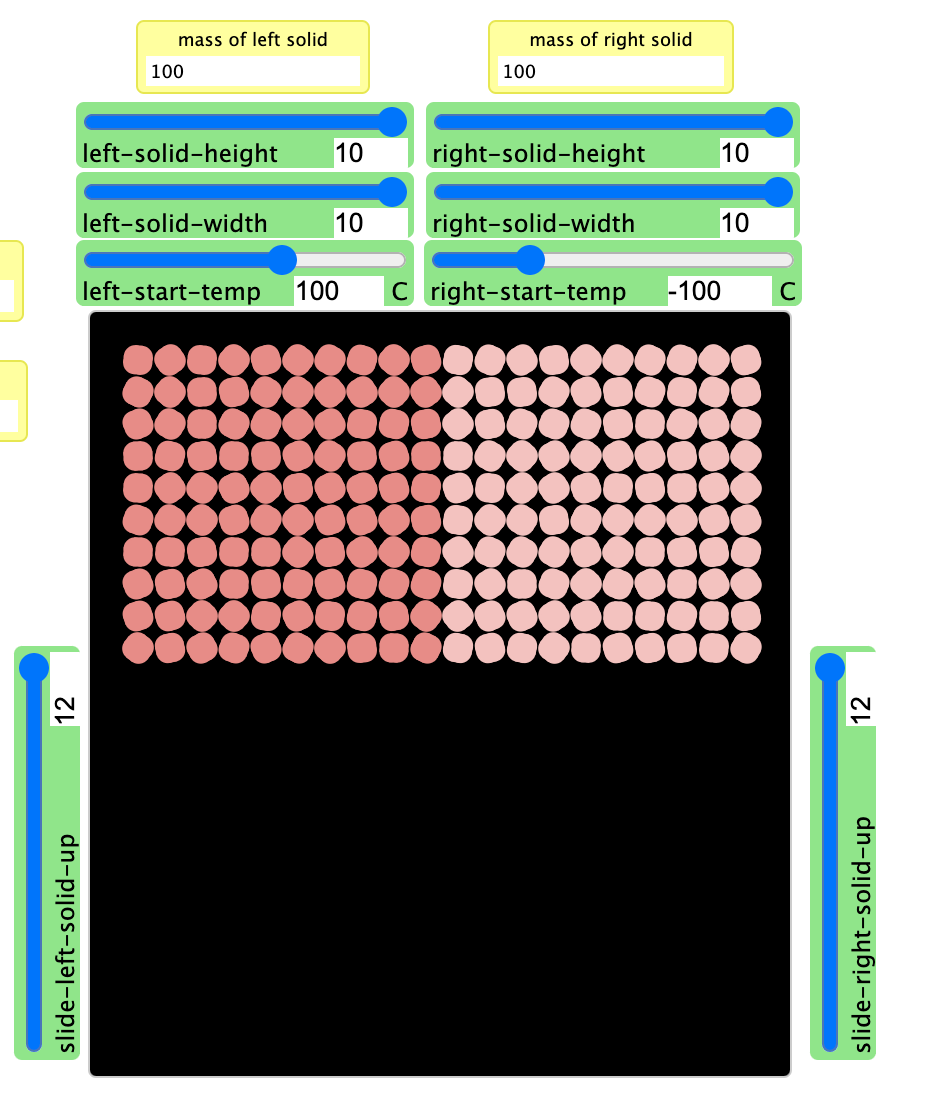
Which was true?
Change the simulation to what is shown below then press the reset button and then go.
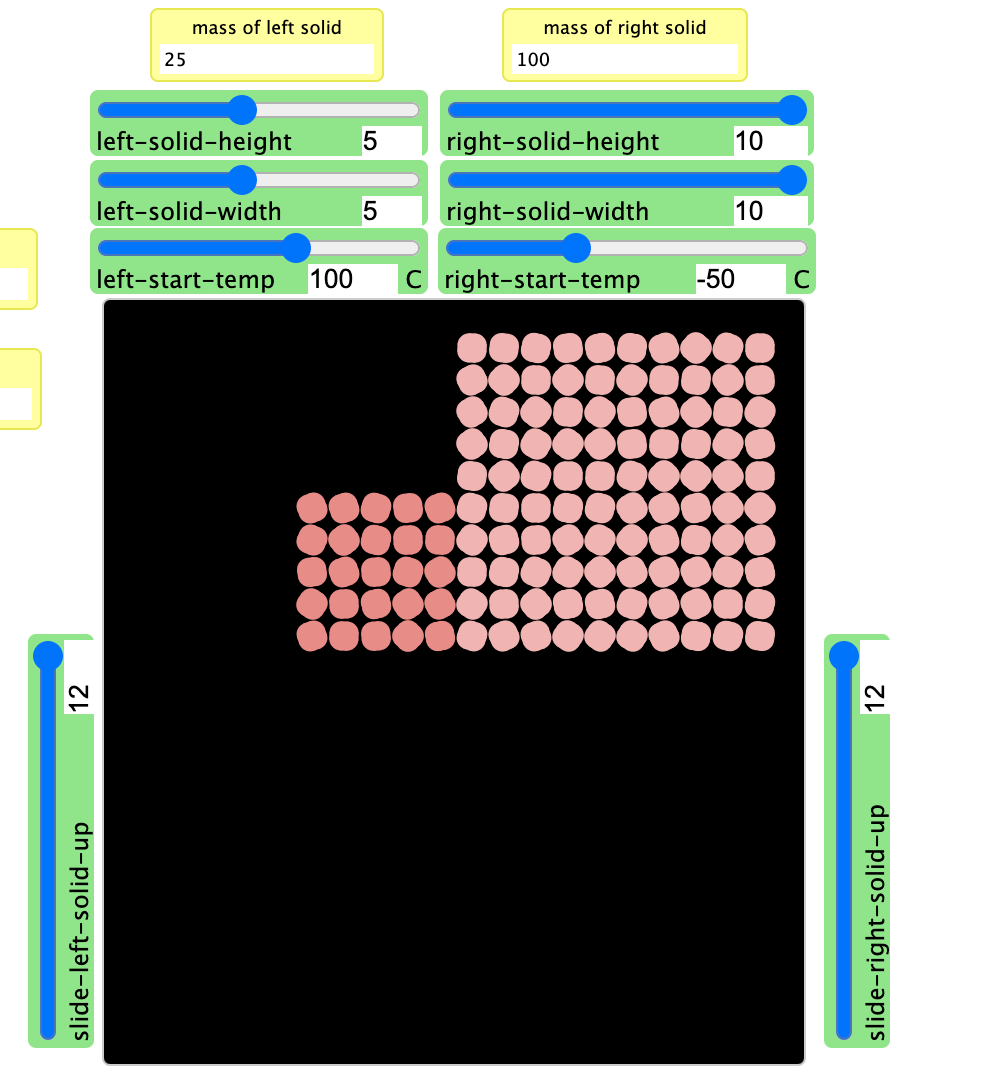
At what temperature was thermal equilibrium reached? How do you know?
Hint: Use the graph to help you
You can click on the graph to get the (x,y) coordinates to find the exact time
Keep the simulation as shown then press the reset button and then go.
How fast did the two objects reach thermal equilibrium?
Hint: Click on the graph to get the (x,y) coordinates to find the exact time
Keep the simulation as shown then press the reset button and then go.
What was the temperature change between each object?
Explain why you think the temperature change was not the same?
Summary: What Patterns did you notice based on your data? Choose all that are true
GOTS AND NEEDS:
Record 1 Got and 1 Need below.
Got- Something you now understand better about how heat transfer works
Need- A question you still have, something you're still trying to figure out