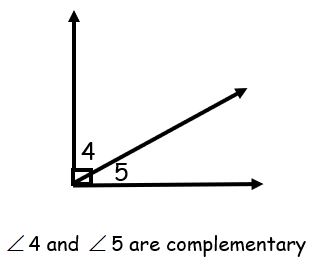
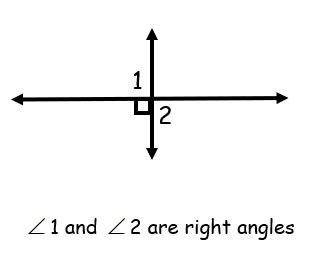
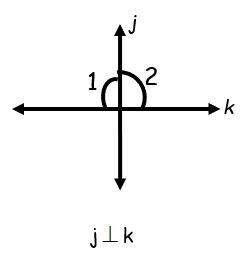
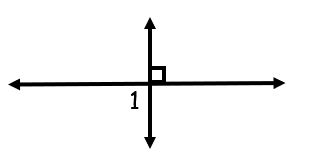
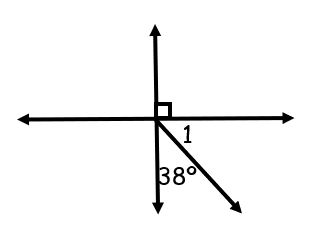
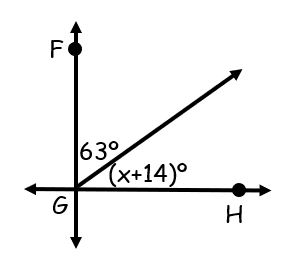
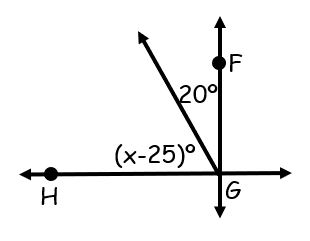
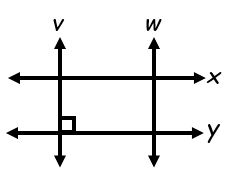
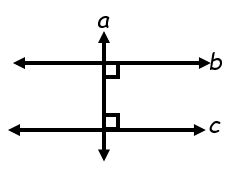
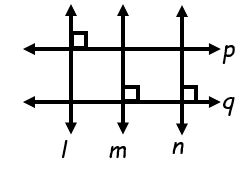
Match the diagram on the left with its corresponding Theorem on the right.
Draggable item
arrow_right_alt
Corresponding Item
arrow_right_alt
Theorem 3.8
arrow_right_alt
Theorem 3.10
arrow_right_alt
Theorem 3.9
1 point
1
Question 2
2.
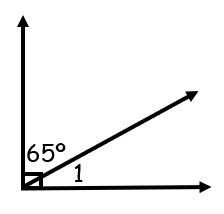
Use the diagram to find m\angle{1}.
1 point
1
Question 3
3.
Use the diagram to find m\angle{1}.
1 point
1
Question 4
4.
Use the diagram to find m\angle{1}.
1 point
1
Question 5
5.
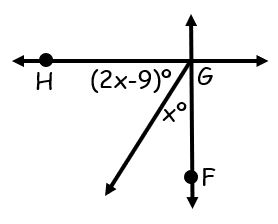
In the diagram below, \overleftrightarrow{FG} \perp \overleftrightarrow{GH}. Find the value of x.
1 point
1
Question 6
6.
In the diagram below, \overleftrightarrow{FG} \perp \overleftrightarrow{GH}. Find the value of x.
1 point
1
Question 7
7.
In the diagram below, \overleftrightarrow{FG} \perp \overleftrightarrow{GH}. Find the value of x.
1 point
1
Question 8
8.
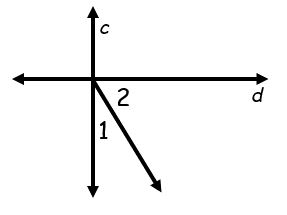
Which statement must be true of c \perp d?
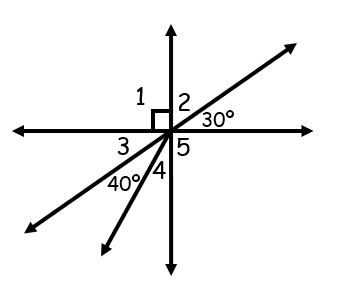
Use the diagram below for the next 5 questions.
1 point
1
Question 9
9.
What is m\angle{1}?
1 point
1
Question 10
10.
What is m\angle{2}?
1 point
1
Question 11
11.
What is m\angle{3}?
1 point
1
Question 12
12.
What is m\angle{4}?
1 point
1
Question 13
13.
What is m\angle{5}?
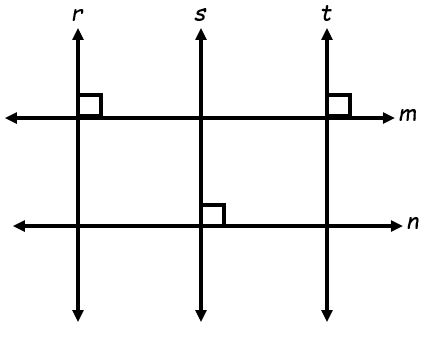
Use the diagram below for the next 4 questions.
1 point
1
Question 14
14.
Is r || s?
1 point
1
Question 15
15.
Is r || t?
1 point
1
Question 16
16.
Is m || n?
1 point
1
Question 17
17.
If r || s and s || t, then ____ || ____. Separate your answers with a comma.
1 point
1
Question 18
18.
Using the diagram below, determine which lines, if any, must be parallel. Separate your answers with a comma. If there are no parallel lines, state "None".
1 point
1
Question 19
19.
Using the diagram below, determine which lines, if any, must be parallel. Separate your answers with a comma. If there are no parallel lines, state "None".
1 point
1
Question 20
20.
Using the diagram below, determine which lines, if any, must be parallel. Separate your answers with a comma. If there are no parallel lines, state "None".