Log in
Sign up for FREE
arrow_back
Library

Balancing Equations PhET

star
star
star
star
star
Last updated over 4 years ago
10 questions
Note from the author:
3
1
4
1
3
2
1
4
2
30
Utilize the online PhET simulation to practice balancing equations.
Ecosystems have many chemical and physical changes happening all at once, and matter is conserved in each and everyone—no exceptions. Consider a stream flowing through a canyon—how many chemical and physical changes are happening at any given moment? What would happen if matter continuously disappeared during these reactions?

You just finished learning how balancing chemical equations is required to uphold the law of conservation of matter. Now it's time to put your knowledge to the test. Using PhET's Balancing Chemical Equations Simulation.

Directions:

  • Enter the PhET Simulation website or use the interactive embedded below.
  • Start with the Introduction section.
1. Check out the simulation's controls.
2. Answer each pre-lab question.
  • Enter the game section, by clicking "Game" on the simulation's bottom black menu bar.
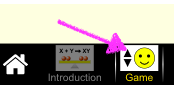
  1. Test your balancing ability at all three levels. Each level requires you to balance 5 equations. You must score at least 4 stars at each level to earn full credit.
  2. Take a screenshot of your Game Results screen with all three levels for the last question.
  3. Add a screenshot of your Game Results screen with all three levels.
Introduction - Beginning Observations

Play around with the simulation and explore what you can or cannot change. Reflect by answering the questions below.
Question 1
1.

Question 2
2.

Question 3
3.

In your own words, describe the purpose fo the balance scale and bar charts from the Tools menu on the right.

Question 4
4.

Question 5
5.

Draggable itemarrow_right_altCorresponding Item
arrow_right_alt
arrow_right_alt
arrow_right_alt
Question 6
6.

Question 7
7.

Question 8
8.

Question 9
9.

The number placed in front of a chemical formula is called a coefficient. The small number within a chemical formula is called a subscript. Why do we adjust coefficients when blancing chemical equations and not subscripts?

Game - Earn 4+ ⭐⭐⭐⭐ at all 3 Levels

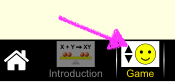
  • Enter the game section, by clicking "Game" on the simulation's bottom black menu bar.
  • Click on any level to begin.
  • Use the up and down arrows in front of each substance to set the coefficient.
  • When balanced, click the check button. You will earn 2 points for each equation balanced correctly on the first attempt and 1 point for balancing correctly on the second attempt.
  • You can restart a level at any time by clicking the Start Over button in the top right corner.
  • On the final level screen, click Continue to return to the Game's Level selection.
  • Repeat until you have scored at least 4 stars (⭐⭐⭐⭐) at each level.
  • Take a screenshot of your Game Results screen with all three levels for the last question.
Question 10
10.

Add a screenshot of your Game Results screen with all three levels.
Wrapping Up


  • Double-check all of your work.
  • Take a screenshot of the bitmoji
  • Submit the worksheet
  • Upload the bitmoji screenshot to the class
What can you change about the simulation?
the coefficients
the types of substances
the type of chemical equation
the number of elements
the amount of molecules of each substance
element subscripts
What law is being demonstrated by the simulation?
The Ideal Gas Law
Boyle's Law
Law of Conservation of Energy
Law of Conservation of Matter
Plank's Law
How does the simulation let you know if the equation is balanced?
smily face at top
congratulations banner
it doesn't
it moves onto the next question
confetti
Match each substance to its correct coefficient to balance the chemical equation for ammonia.
N2 + H2 --> NH3
N2
3
NH3
1
H2
2
Which compounds have a coefficent of 2 to separate water?
H2O2
O2
H2
H2O
It is possible to balance the provided equations by leaving a substance with a coefficient of 0.
True
False
Drag each substance to its correct coefficient to balance the chemical equation for methane.
O2
CO2
CH4
H2O
1
2
3