TR 1.3: Surprising Spider Silk
OBJECTIVE: KWBAT build and analyze physical models of spider silk strands of varying flexibility to investigate how the structure of proteins determines their function —how they connect to form more flexible or less flexible spider silk.
Describe the wheel’s structure.
Think about its shape.
Describe the wheel’s function.
What does it do?
How does the wheel’s structure allow it to perform its function?
What is Dr. Hayashi’s team able to figure out about the spider silk using the machine?

Recap on your knowledge of Metabolism: How are new proteins formed in the cells?

Find a quote that answers this question.
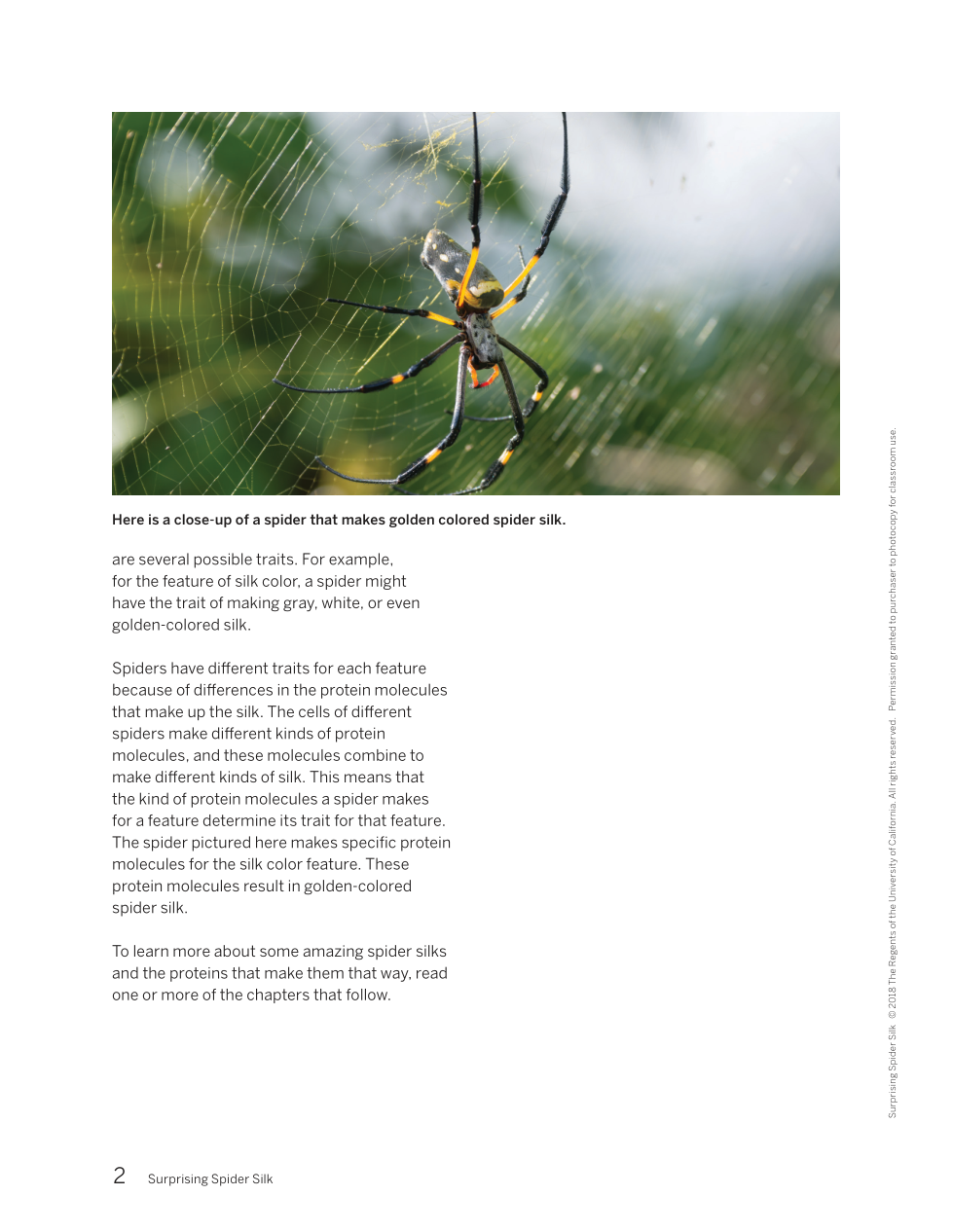
How do you think a spider could have different features for a trait?
True or false:
The kind of protein molecules a spider makes for a feature determines its trait for that feature.

True or False:
The weight of the spider silk is not a feature, it is a trait.

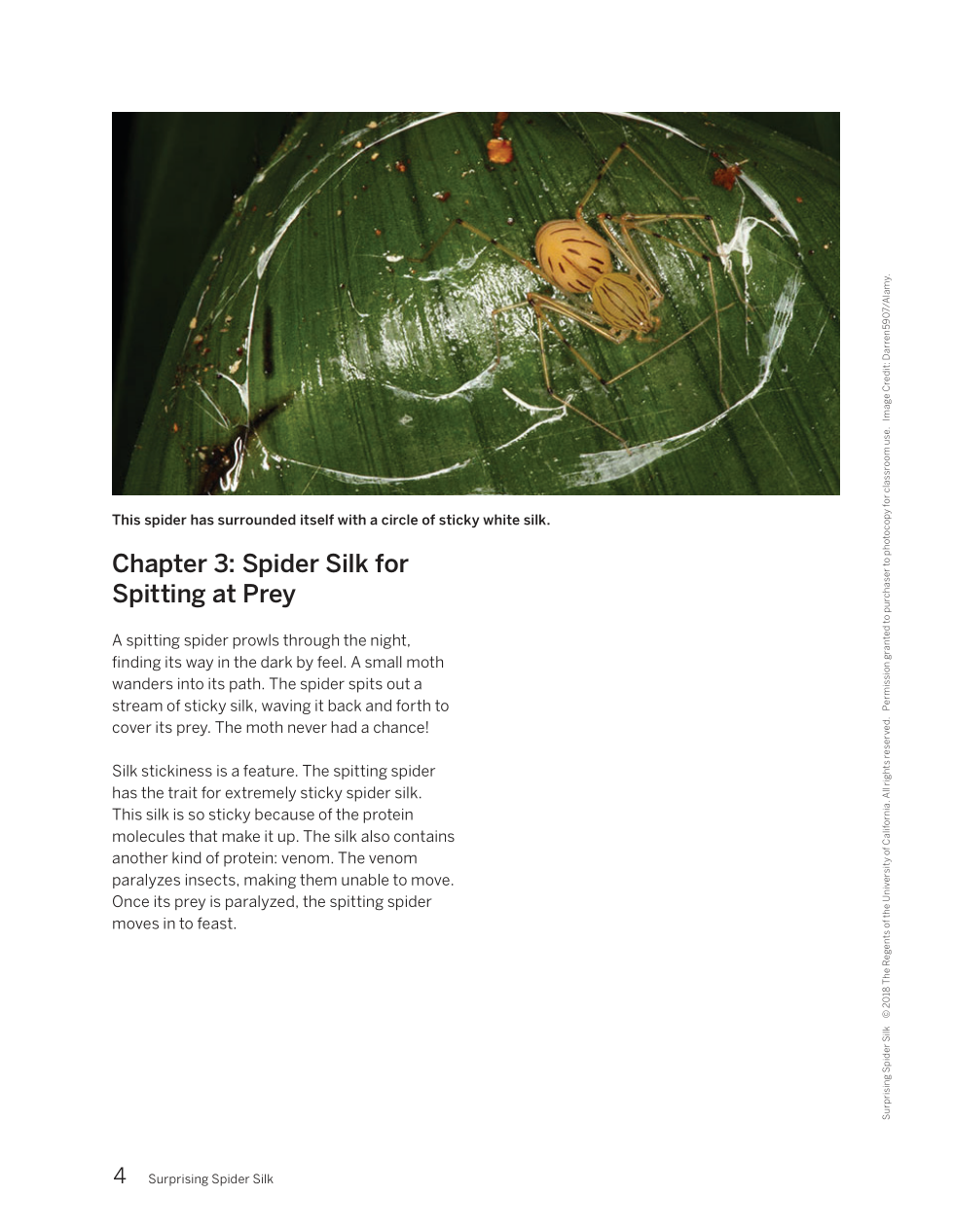
Why do you think this spiders silk had to be sticky?

OPINION:
Can this spider's silk be used for something else? What do you think it can be used for?

Why are scientists so interested in Darwin's Bark Spiders?
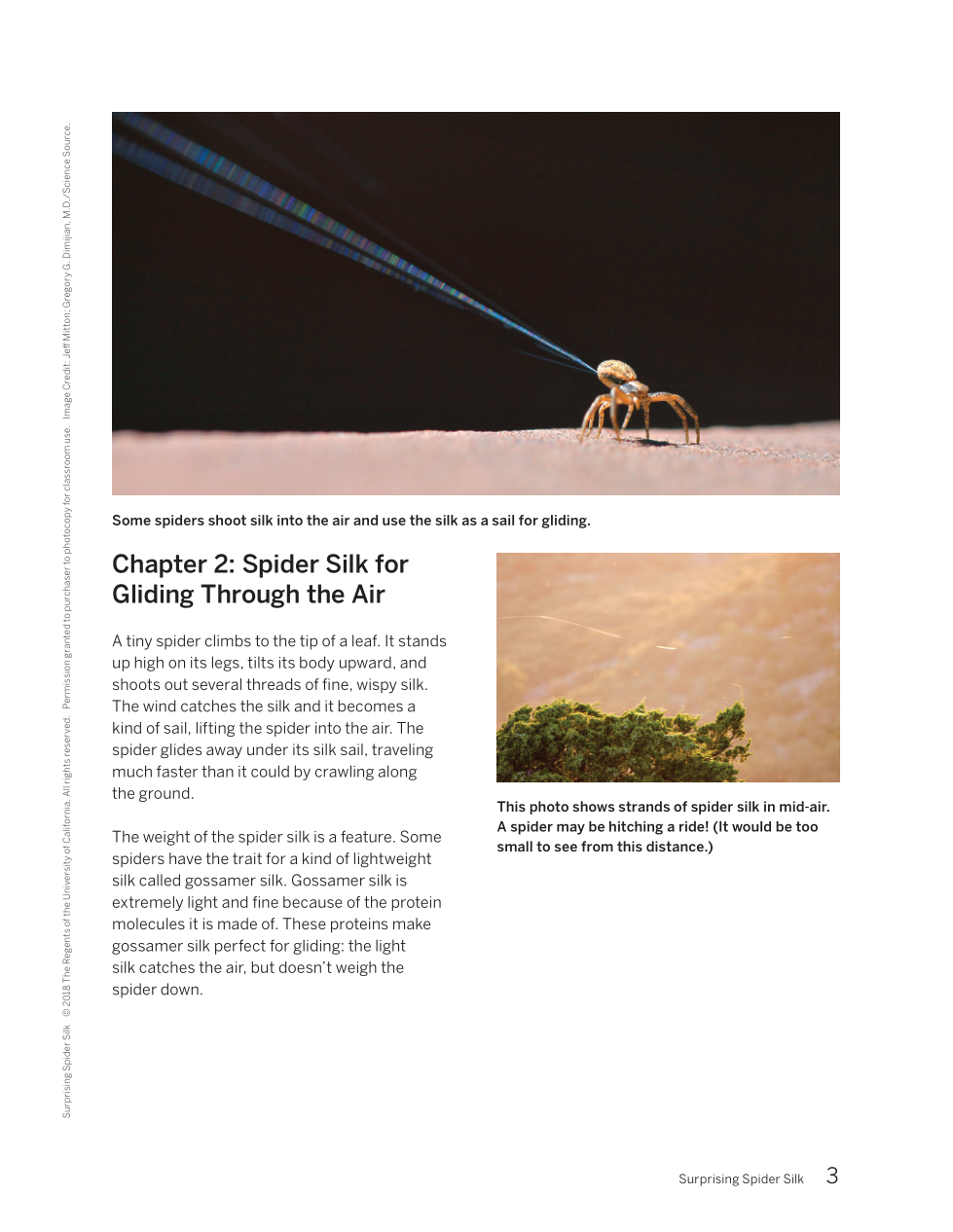
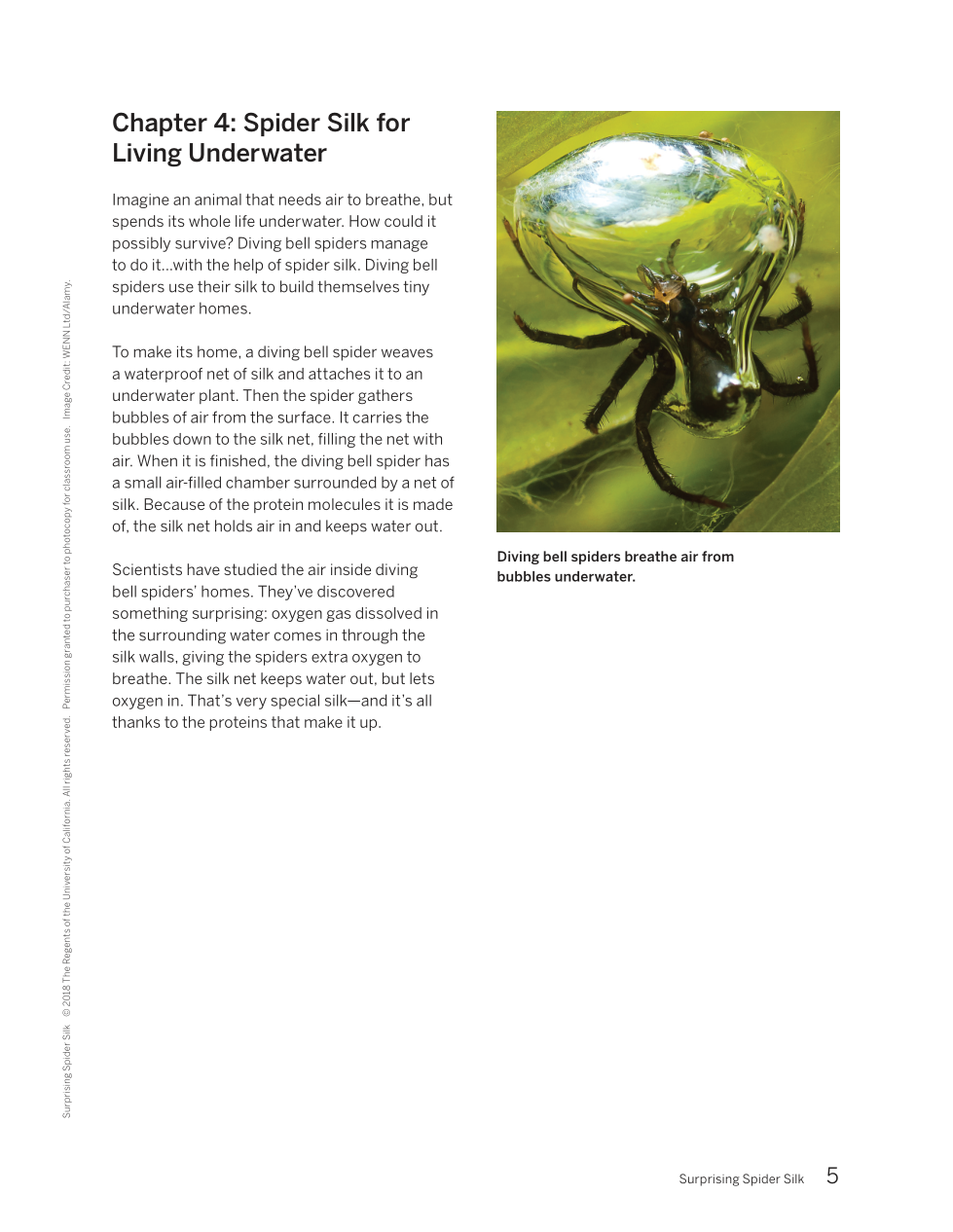
Each chapter in this article discussed a specific feature. What features were discussed?
Find a spider with LOW Silk Flexibility.
Click on the spider to see their cells and what proteins they have.
Use the drawing tool to draw the shape of the protein(s) this spider has.
Find a spider with MEDIUM Silk Flexibility.
Click on the spider to see their cells and what proteins they have.
Use the drawing tool to draw the shape of the protein(s) this spider has.
Find a spider with HIGH Silk Flexibility.
Click on the spider to see their cells and what proteins they have.
Use the drawing tool to draw the shape of the protein(s) this spider has.
Spiders have variations of silk. What does variation mean?
What are some variations of silk?
Select all the variations that you found in the text.