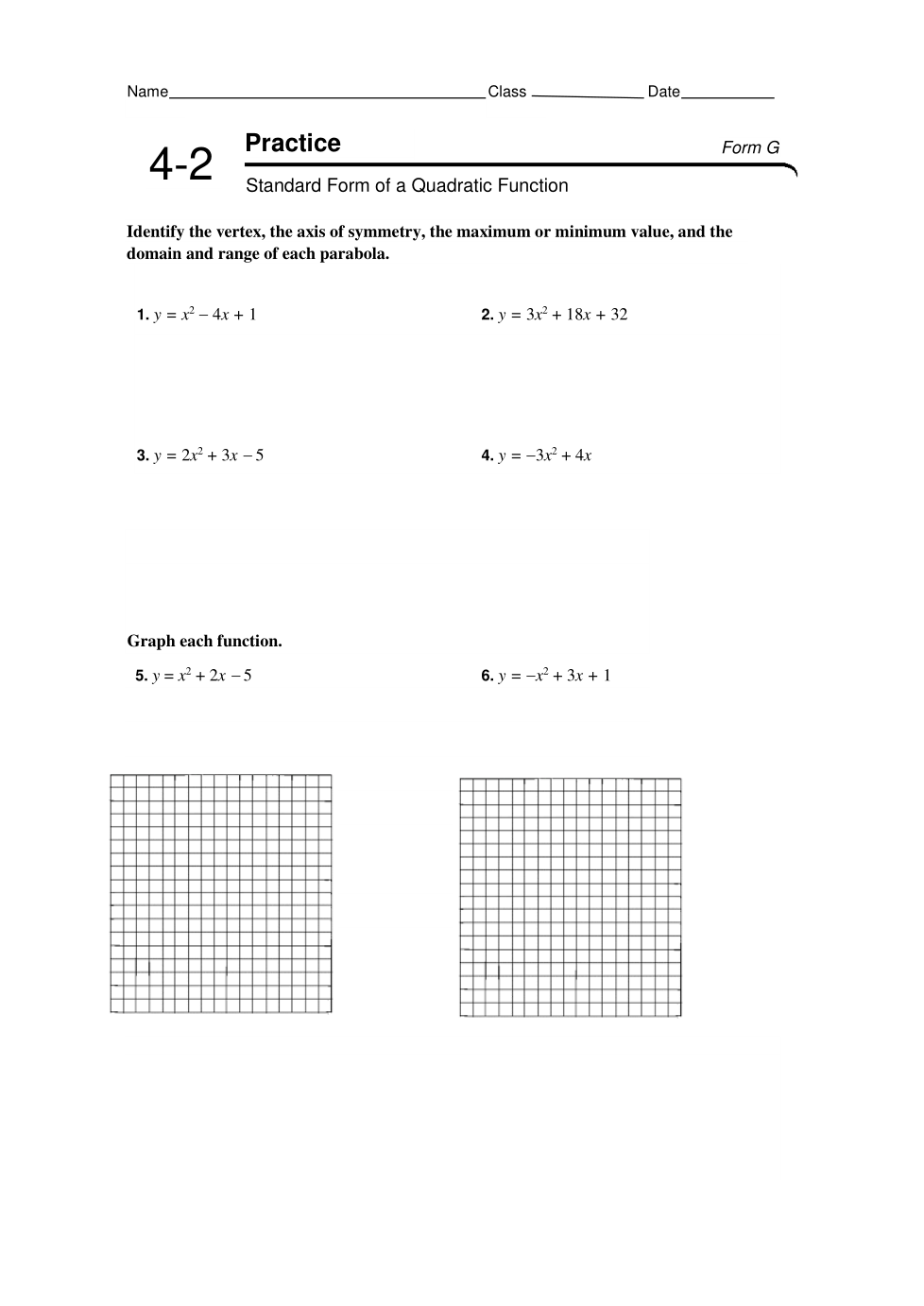
1
1
1
1
1
1
1
1
1
1
1
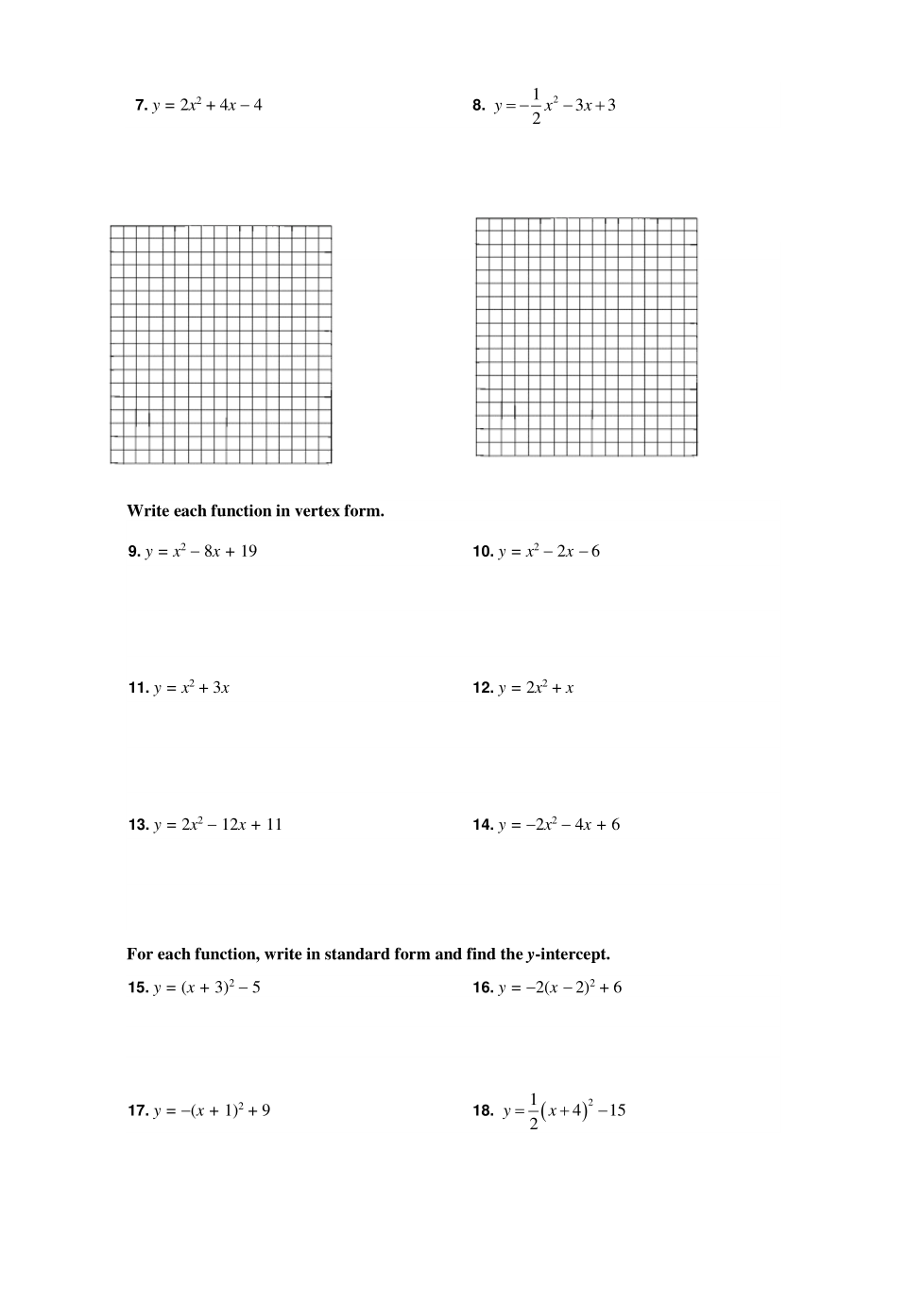
Find the x-value of the vertex. Round up to the nearest whole number.
The x value of the vertex is
What is the axis of symmetry?
Does it have a min or max? What is it? (answer looks like: max y=2)
What is the y-int?
What is the range?
The x value of the vertex is
What is the axis of symmetry?
Does it have a min or max? What is it? (answer looks like: min y=2)
What is the y-int?
What is the range?
Graph this function by finding the vertex. Then plot the y-int and a point on the other side for symmetry.
Graph this function by finding the vertex. Then plot the y-int and a point on the other side for symmetry.
What is the x-value of the vertex? *hint:
What is the vertex? (plug in x and solve for y)
Write the function in vertex form ('a' stays the same)
What is the x-value of the vertex? *hint:
What is the vertex? (plug in x and solve for y)
Write the function in vertex form ('a' stays the same)
What is the x-value of the vertex? *hint:
What is the vertex? (plug in x and solve for y)
Write the function in vertex form ('a' stays the same)
Write the function in standard form
What is the y-intercept? (remember, it's an ordered pair!)
Write the function in standard form
What is the y-intercept?
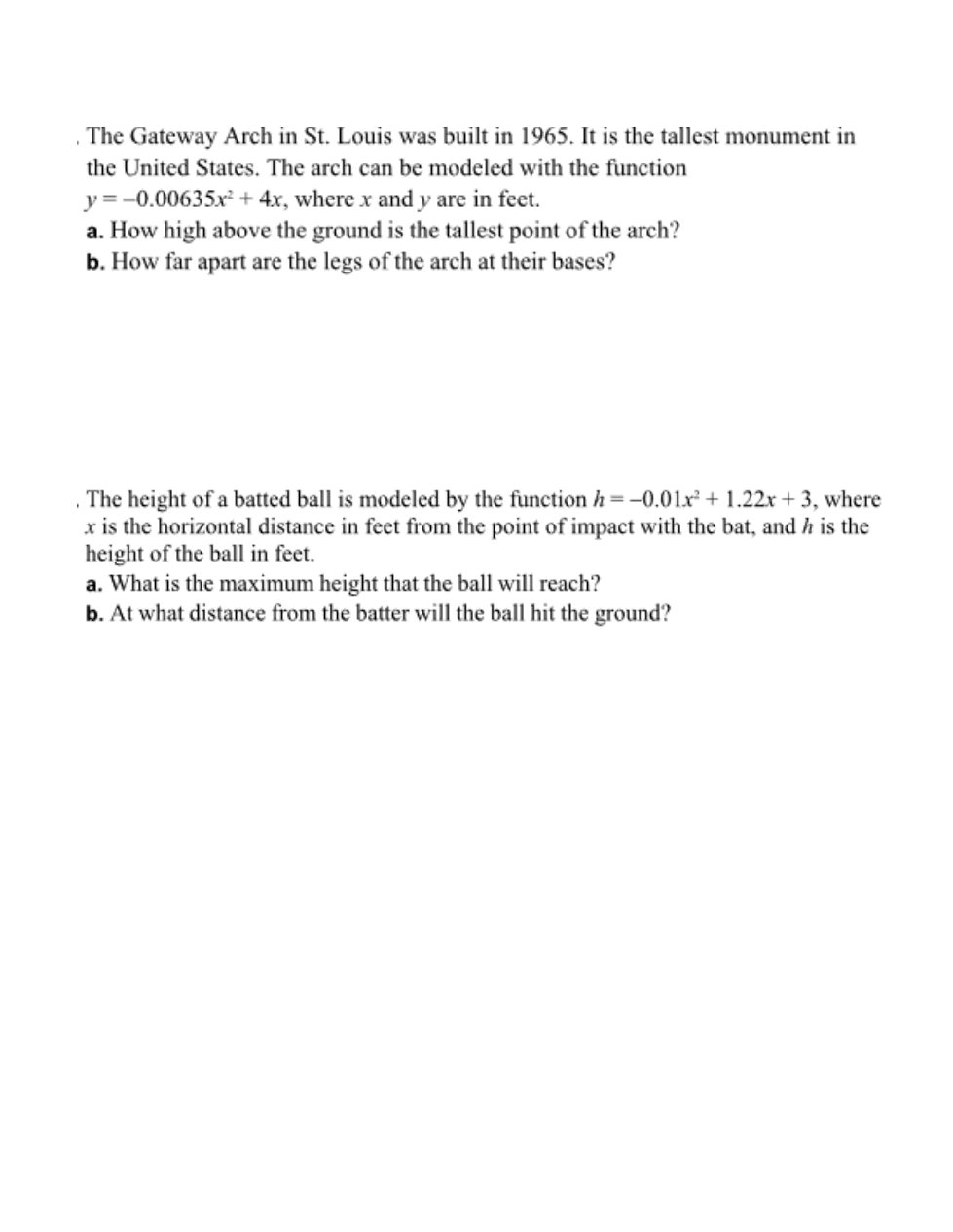
How high above the ground is the tallest point of the arch? (find the y-value of the vertex by plugging in the x-value you found, round up to the nearest whole number)
How far apart are the legs of the arch at their bases? (assume the arch starts at (0,0) on the graph and remember SYMMETRY)
Find the x-value of the vertex. Round to the nearest whole number.
What is the maximum height that the ball will reach?
At what distance from the batter will the ball hit the ground? (the batter is at (0,0))