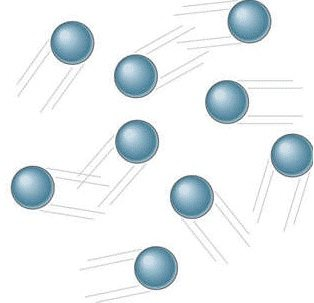
1
What state of matter is this?
What state of matter is this?
Describe the motion of atoms in a liquid.
Describe the motion of atoms in a solid.
Choose ALL examples of physical changes:
Choose ALL examples of chemical changes:
What are the three main states of matter?
What state of matter is this?
Matter is...
Match the phase changes and descriptions
| Draggable item | arrow_right_alt | Corresponding Item |
|---|---|---|
vaporization | arrow_right_alt | gas to liquid |
sublimation | arrow_right_alt | liquid to solid |
deposition | arrow_right_alt | solid to gas |
freezing | arrow_right_alt | liquid to gas |
condensation | arrow_right_alt | solid to liquid |
melting | arrow_right_alt | gas to solid |
Condensation is the opposite of freezing
In order to float in water, a substance must be less dense than the water
The freezing point and melting point of a substance are the same temperature.
Two examples of vaporization are
What happens to the temperature of a substance when it is changing state?
Water heating and turning into steam is a ___________ change.
Iron rusting is a ___________ change.
Blue color is a ______________ property.
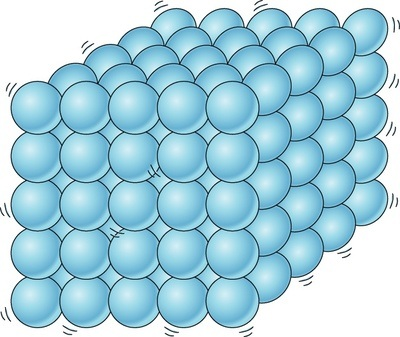
What state of matter is this?
Density is a ____________ property.
Flammability is a _______________ property.
Combustion (reactivity with oxygen) is a ______________ property.
Melting point is a ____________ property.
What is the density of a liquid that weighs 25.0g and a volume of 30.0mL.
What is the density of an object with a mass of 25.5g which displaces 6.2mL of water
How does a solution become supersaturated?
The ______ is the thing being dissolved
The Tyndall effect is used to identify
Match the following
| Draggable item | arrow_right_alt | Corresponding Item |
|---|---|---|
gold (Au) | arrow_right_alt | colloid |
mud puddle | arrow_right_alt | solution |
milk | arrow_right_alt | suspension |
carbon dioxide (CO2) | arrow_right_alt | element |
salt water | arrow_right_alt | compound |
What type of mixture separates upon standing?
If an object has a density of 2.5 g/mL, would it float or sink in water?
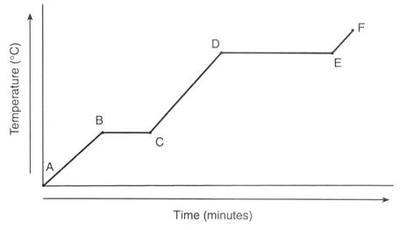
What state of matter is between A and B?
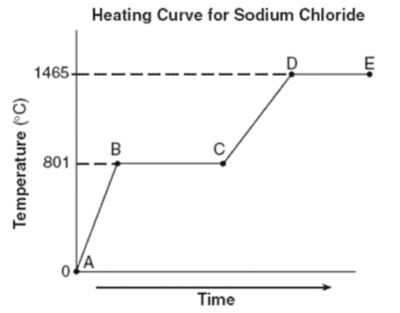
What is the boiling point of sodium chloride?
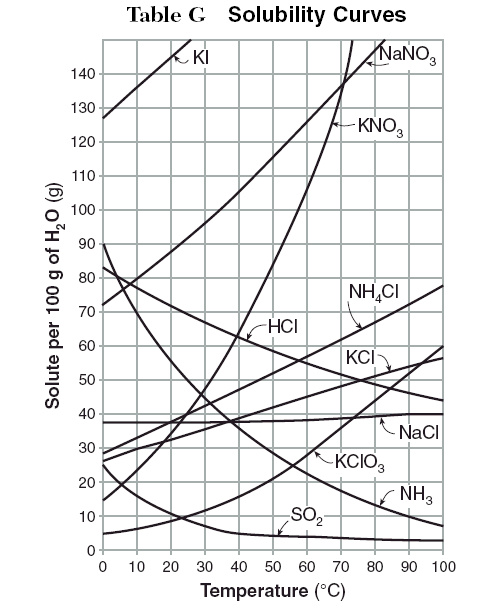
How many grams NaCl can be dissolved at 90°C?
At what temperature can you dissolve 63g HCl? (just enter the number)
What happens moving from D to E?
At which region is only gas found?
Which substance is MOST soluble at 10°C?
If 30 g HCl is dissolved at 50°C, is the solution
If 100 g NH4Cl is dissolved at 90°C, is the solution
If 80 g NaNO3 is dissolved at 10°C, is the solution