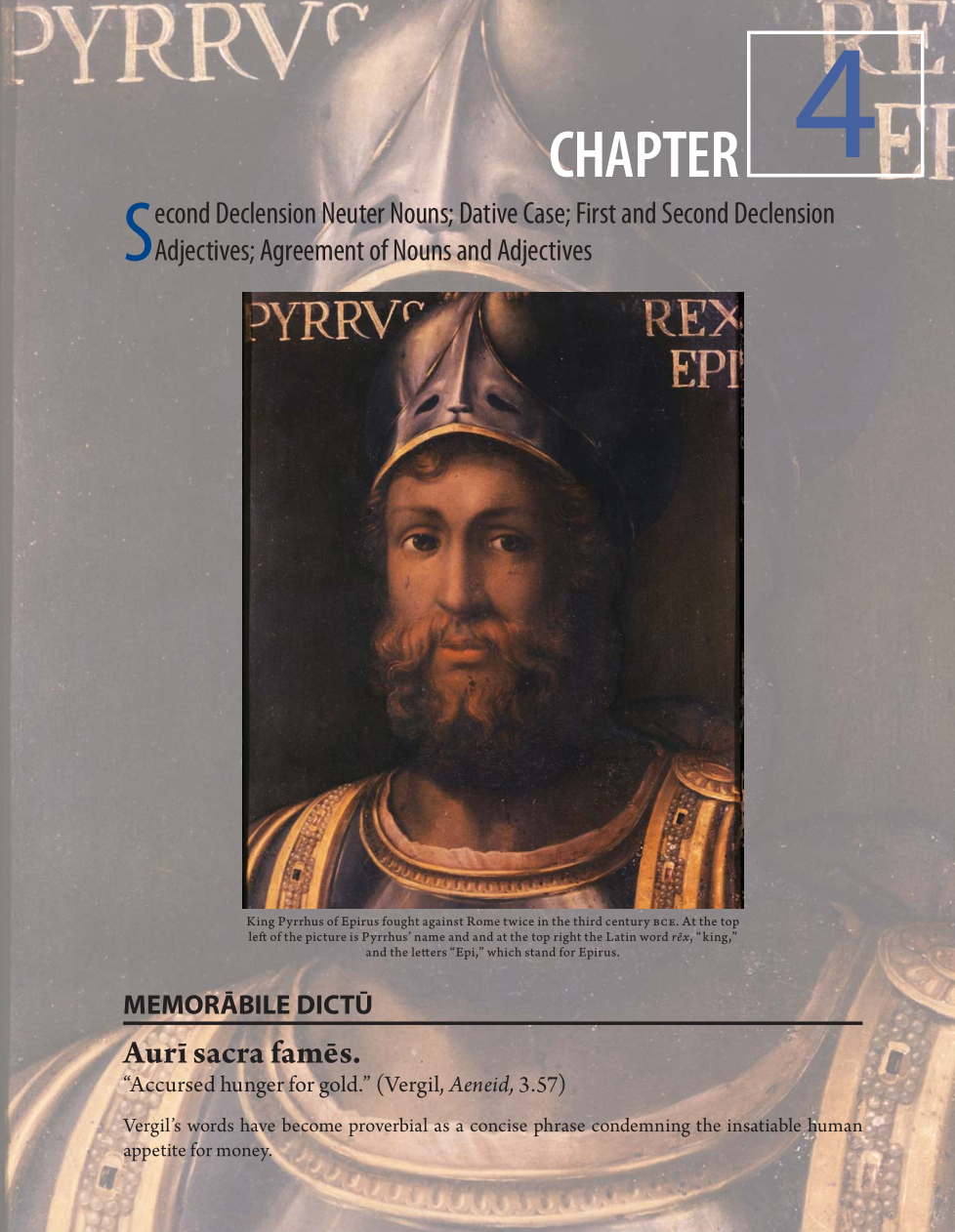
1
What grammar will we learn in chapter 4?
What grammar will we learn in chapter 4?
1
What does "Aurī sacra famēs" mean?
What does "Aurī sacra famēs" mean?
1
Who wrote those words?
Who wrote those words?
1
What do they condemn?
What do they condemn?
What grammar will we learn in chapter 4?
What does "Aurī sacra famēs" mean?
Who wrote those words?
What do they condemn?
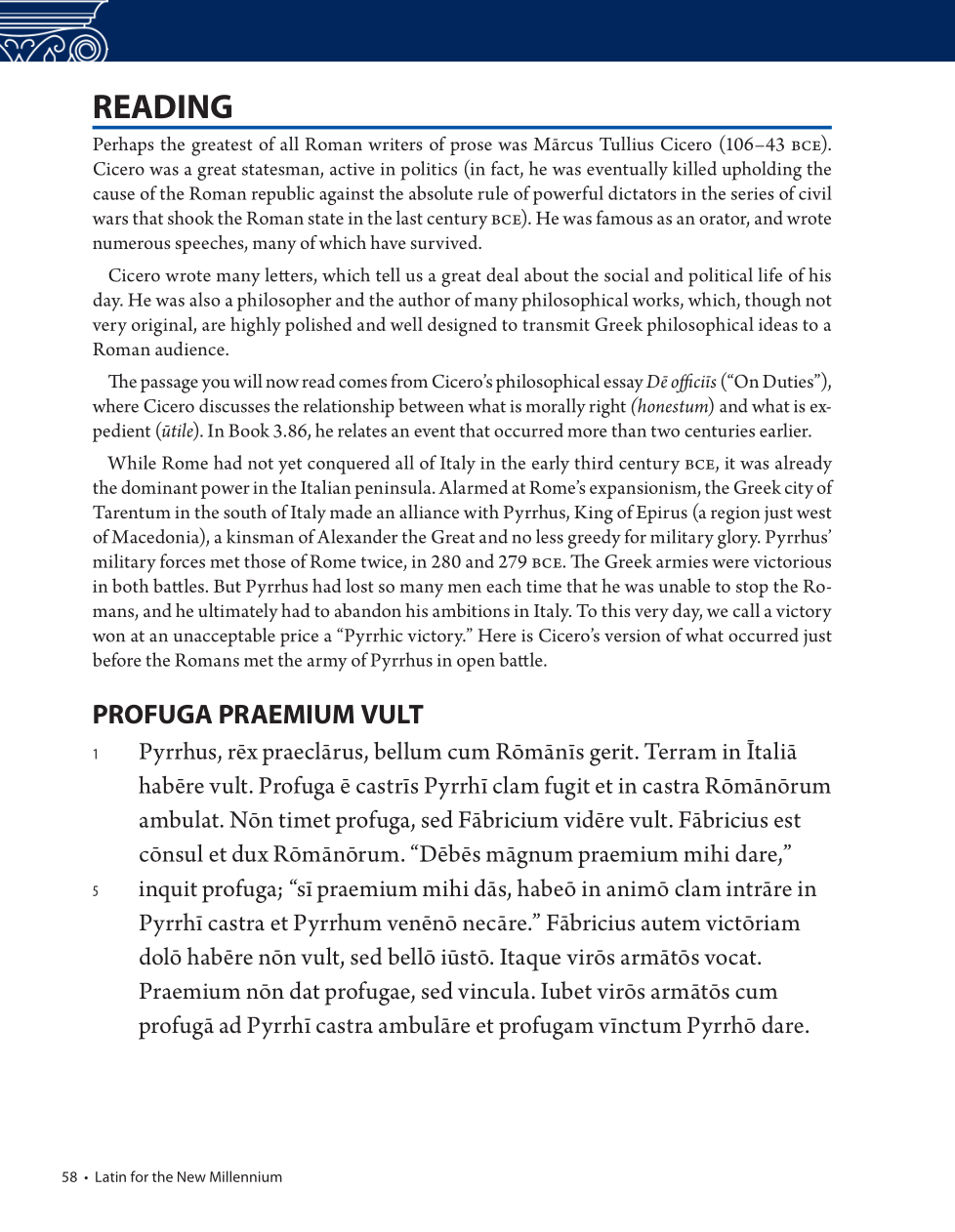
According to the Reading, who was, perhaps, the greatest of all Roman writers of Prose?
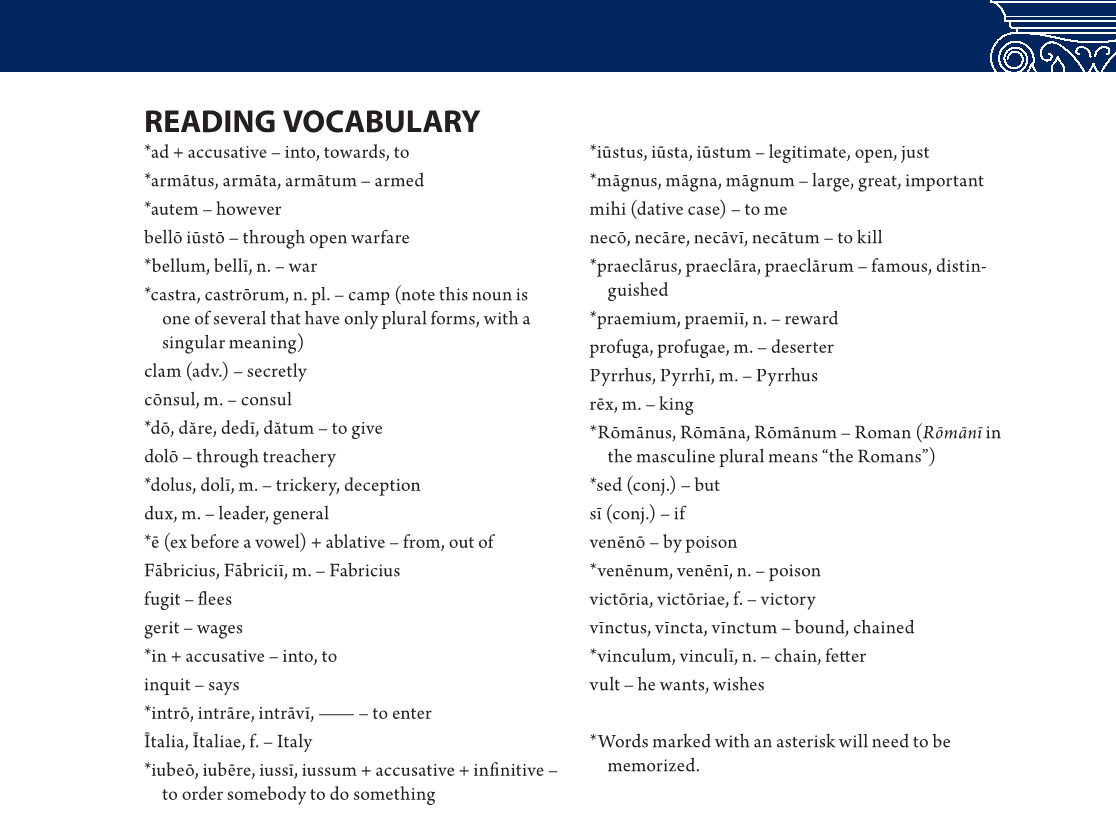
PROFUGA PRAEMIUM VULT
Pyrrhus, rēx praeclārus, bellum cum Rōmānīs gerit.
Terram in Ītaliā habēre vult.
Profuga ē castrīs Pyrrhī clam fugit et in castra Rōmānōrum ambulat.
Nōn timet profuga, sed Fābricium vidēre vult.
Fābricius est cōnsul et dux Rōmānōrum.
“Dēbēs māgnum praemium mihi dare,”
inquit profuga;
“sī praemium mihi dās, habeō in animō clam intrāre in Pyrrhī castra et Pyrrhum venēnō necāre.”
Fābricius autem victōriam dolō habēre nōn vult, sed bellō iūstō.
Itaque virōs armātōs vocat.
Praemium nōn dat profugae, sed vincula.
Iubet virōs armātōs cum profugā ad Pyrrhī castra ambulāre et profugam vīnctum Pyrrhō dare.
With whom are the Romans at war?
What does Pyrrhus want in Italy?
When the deserter comes to the Roman camp, whom does he need to see?
What is the deserter’s plan?
Why doesn’t Fabricius accept the deserter’s proposal?
What was Cicero famous as?
The passage you will read comes from one of Cicero’s philosophical essays. What is the Latin title of that essay? (Not the title the textbook gives the passage - what did Cicero call it?)
In that essay, Cicero discusses the relationship between which two concepts (use the Latin terms)?
When did Cicero live?
When did the event described in the passage happen?
What was the Greek city of
Tarentum alarmed by?
Who did Tarentum make an alliance with?
What do we call a victory won at an unacceptable price?