PanAfricanism

Last updated about 4 years ago
14 questions
What is PanAfricanism or the Pan Africa movement?

According to the world-wide web, Pan-Africanism is a worldwide movement that aims to encourage and strengthen bonds of solidarity (unity) between all indigenous and diaspora ethnic groups of African descent.

In other words, the Pan Africa movement aims to culturally unite all people of African descent, whether they still live in Africa or live somewhere else in the world. This movement started to grow in the 1920's.
1

Pan Africanism means to

A brief history of the movement:
Under colonial rule, educational opportunities in some African nations had grown. These educated Africans started a movement that became known as Pan-Africanism. Global leaders such as American scholar and writer W. E. B. Du Bois helped the movement. This movement had two main goals. Leaders hoped to win independence for African nations. They also wanted to encourage unity or a feeling of togetherness among people all over the world with African ancestors.
1

What were the two main goals of the early Pan African movement? (do not copy and paste from the text! Put the answers in your own words.)

1

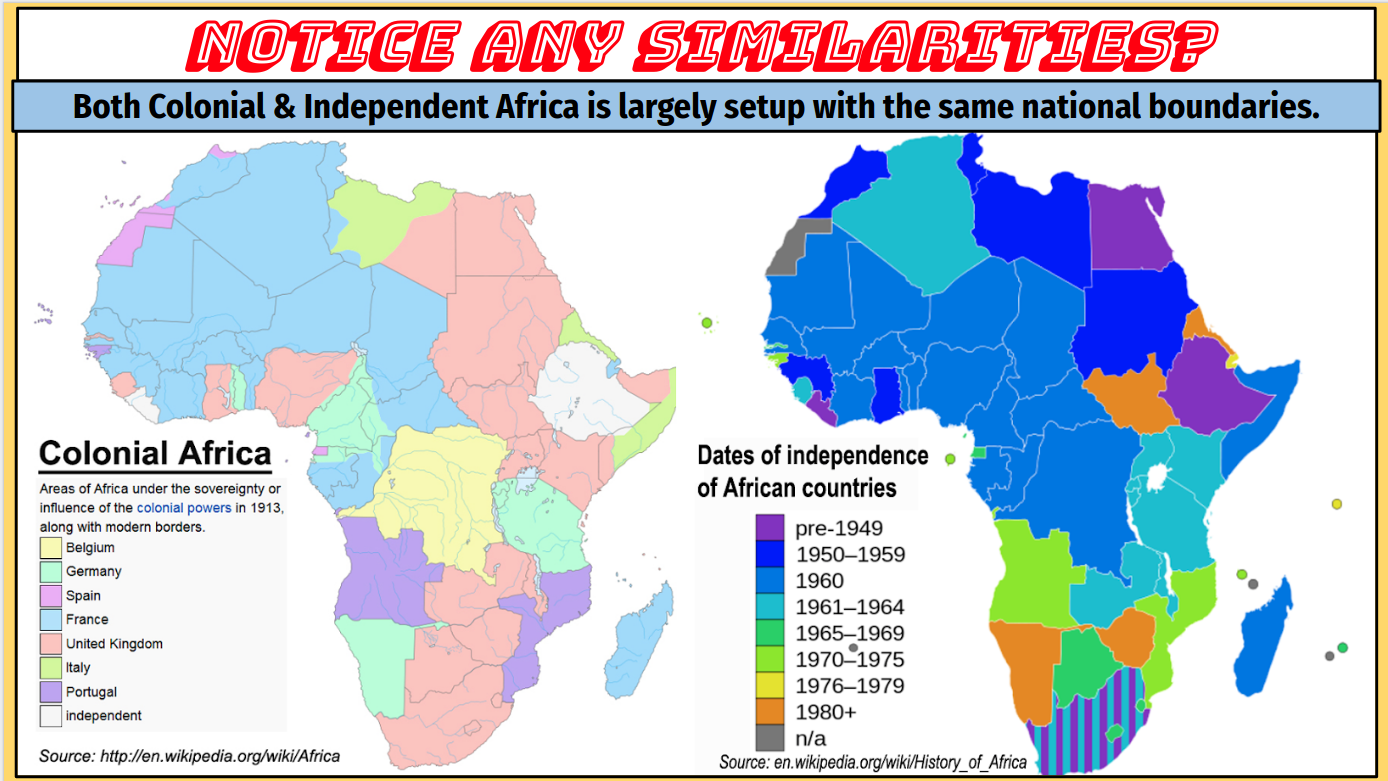
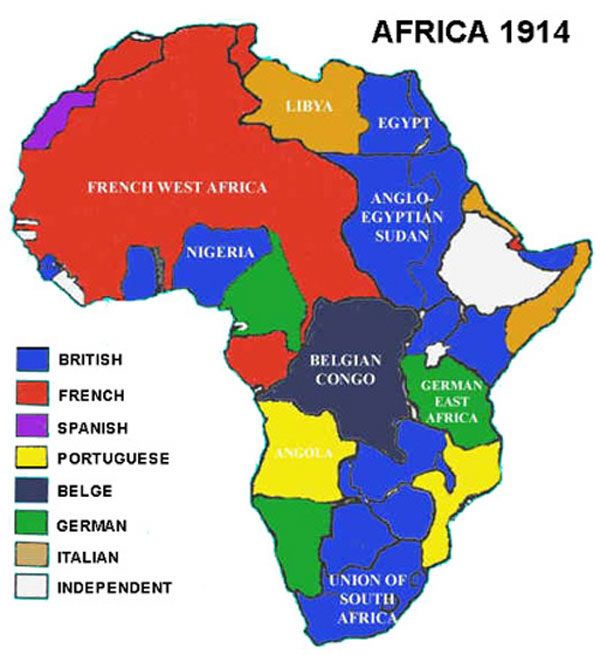
How many colonies did the British have in Africa?

1

How many colonies did France have in Africa?

1

How many areas of Africa were independent before the Pan African movement began?

1

Describe the size or amount of land the independent areas made up for the African continent.

Pan-Africanism began to grow in importance during the 1920s. However, progress was slow. A handful of African countries had moved away from colonial control. South Africa was one of these countries. World War II ended in 1945. Once the war was over, independence movements grew stronger all around Africa. Jomo Kenyatta led a movement in Kenya. Kwame Nkrumah led a movement in Ghana. Nkrumah wanted to see a United States of Africa
1

Who did South Africa gain their independence from?

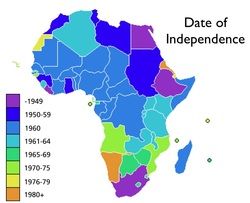
During the mid-1950s, African nations began gaining independence in greater numbers. In the 1950s, Sudan and Ghana were among the first nations to become independent. Over the next few decades, more and more African countries became independent. A decade is 10 years.

Leaders who supported unity, such as Nkrumah, formed the Organization of African Unity. They helped nations win independence and work together. This unity never happened, but the organization turned into the modern African Union.
1

What idea did leaders who wanted independence support?

1

Did their idea work out? How do you know?

Achieving independence was hard to do. For example, the colonial government in the Belgian Congo saw that a war for independence was about to start. So, it gave Congo independence instead of going to war.

Other colonies reached the point of war for their independence. In the Portuguese colony of Angola, a long war for independence did break out. The fighting lasted from 1961 to 1975. A civil war broke out even after independence was won. These challenges made the change to self-government more difficult. So did the problems left over from colonialism.
1

What are two ways that colonies gained independence from their European rulers?

1

In what year(s) did most African nations gain their independence from European rule?

1

In what decade did most African nations gain independence from European rule?

1

What does the title of the map tell us about the Afican nations as they gained independence?

Pan Africaniam today:

"When traveling in many African countries it is often striking to see how many young people feel attached to the concepts of African identity and African unity. In Cí´te d’Ivoire, Senegal and Cameroon, to give just three examples, pan-Africanism has become something close to a religion.

As the power of globalization continues to weaken boundaries of statehood, many young people in Africa are increasingly becoming aware of their own political and economic environment. It is in this regard that pan-Africanism has found a viable niche for renewal in the 21st century among an educated grouping of middle-class Africans.

Rather than focusing only on identity, this “˜new’ pan-Africanism is also a call for democracy, good governance and economic development. The renewal of this pan-African attitude is manifested through increased intra-African trade, increased exchanges within Africa’s universities, continent-wide calls for good governance and the ubiquitous and growing membership of pan-Africanist groups on social media platforms.

Dreaming of a brighter future, most young people are tired of dictatorial leaders who have clung to power since independence."
(Source https://africanarguments.org/2015/06/30/the-rise-and-paradoxes-of-pan-africanism-toda)
1

Based on this passage, what claim can be made about the Pan Africa movement today? Use at least two details to support your response.