What happens to the velocity of the ball in the X direction as it falls?
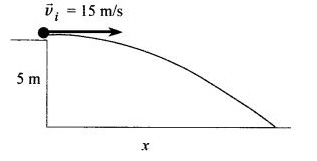
What happens to the velocity of the ball in the X direction as it falls?
What happens to the velocity of the ball in the X direction as it falls?
What happens to the velocity of the ball in the Y direction as it falls?
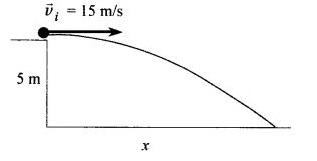
What is the initial velocity in the Y direction?
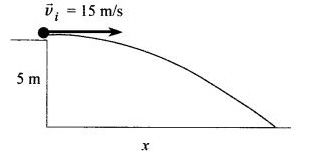
What is the final velocity in the Y direction? On level students - Use the spreadsheet.
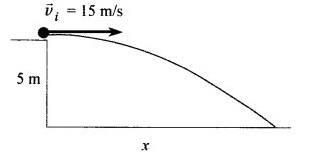
Which is true about the vertical velocity and horizontal velocity?
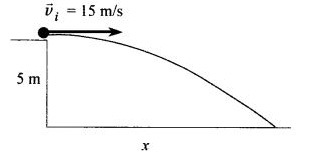
How long does it take the ball to reach the ground? On level students - use the spreadsheet.
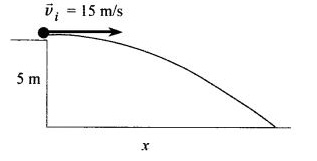
When there is no air resistance, why does the vertical componant of a projectile's velocity change with time where the horizontal componant doesn't?
A ball is launched straight up. When is the velocity of the ball 0?
a projectile is launched vertically at 100 m/s. If you neglect air resistance, when will the projectile return to the same velocity? What about the same speed?
If all these left the table at the last moment, which would be the last to hit the ground?
Consider the following formula
Where F is the force of gravity between two objects
m1 is the mass of one object
m2 is the mass of another object
r is the distance between the two objects
G is a constant.
When the distance between two objects increases, the force of gravity between those objects
Consider the following formula
Where F is the force of drag from air resistance
ρ is how thick and viscous the air is
v is the velocity of the object
C_D, the drag coefficient is a number that is specific to the shape and material an object is made of. The
A is the surface area of object falling. Note - the viscosity of the air, the drag coefficient and the surface area of the object do not change. consider what variables of the equation DO change.
As a skydiver falls, her speed increases due to the acceleration due to gravity. What effect does increasing speed have on the force of air resistance
When you jump upward, your hang-time is the time your feet are off the ground. Does hang-time depend on

How many meters had the ball travelled after 4 seconds?
Compare the time periods 0-2 seconds and 2-4 seconds.

Which statement is true?
Look at the slope, or steepness of the curve on the graph.

What happens to the curve as time passes?

Which statement best describes the ball's speed as it travells down the ramp?
The graph below shows the distance a biker travels over time.

Match three sections of the graph above with the description of the biker's motion during that time period.
| Draggable item | arrow_right_alt | Corresponding Item |
|---|---|---|
stopped | arrow_right_alt | A |
travelling at a constant speed | arrow_right_alt | B |
speeding up | arrow_right_alt | C |

Type your answer here