What is climate?
What is climate?
Which has a higher specific heat?
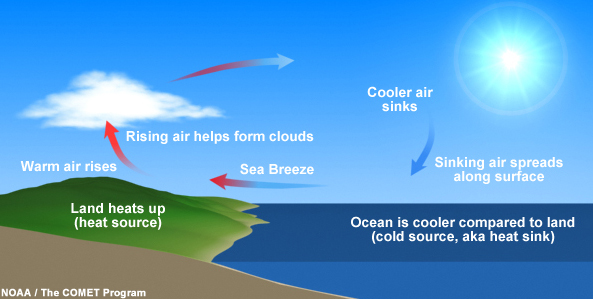
Which step in the water cycle creates more precipitation if you are near a body of water?
Climate is the prevailing patterns of temperature and precipitation across a region. A region’s climate can be tropical or frigid, rainy or arid, temperate, or monsoonal. Geography, or location, is one of the major determining factors in climate across the globe.
Geography itself can be divided into components including distance from the equator, elevation above sea level, distance from water and topography, or the relief of the landscape.
What is climate?
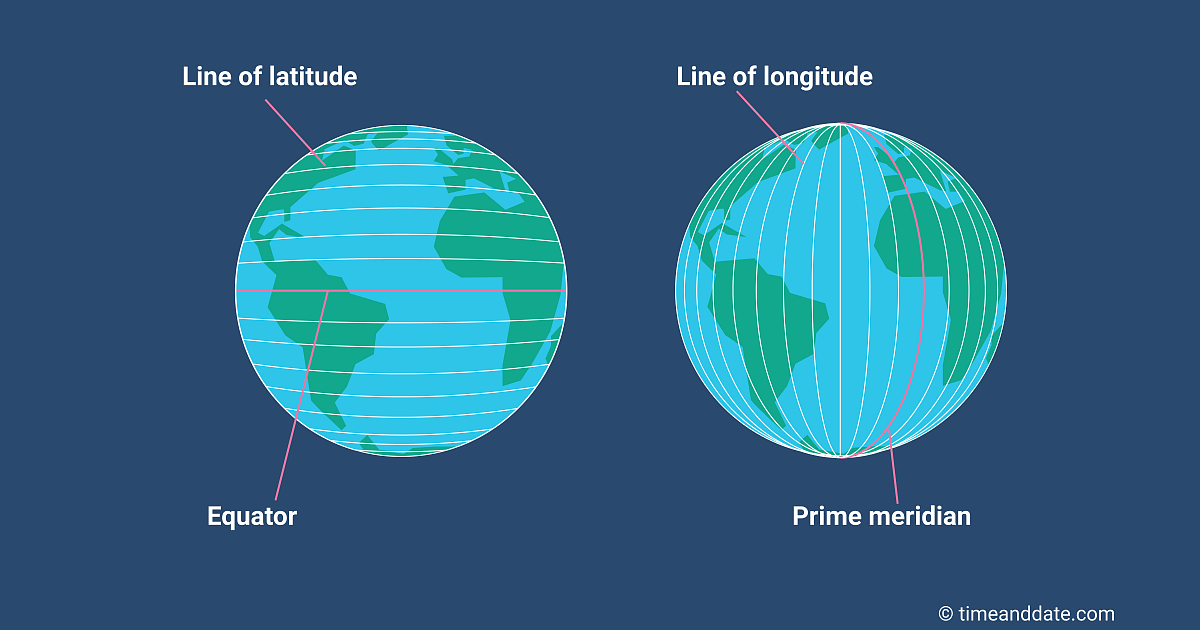
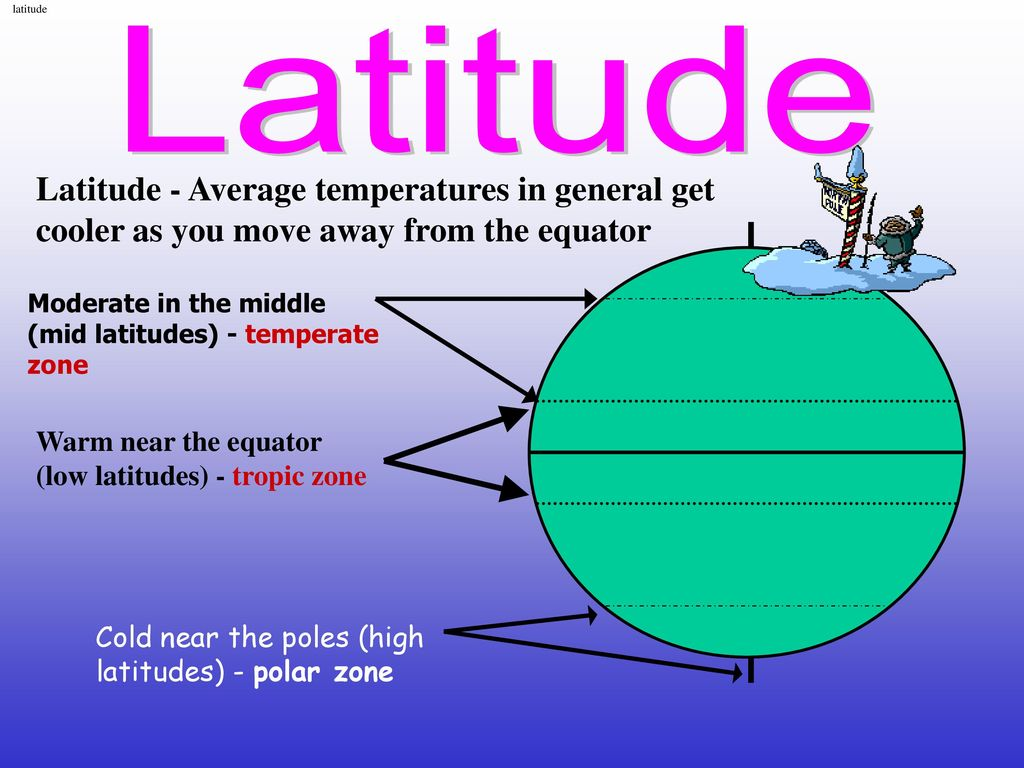
Latitude is a measure of distance from the equator. Locations between the Tropic of Cancer and the Tropic of Capricorn, between 23 degrees north and 23 degrees south latitude, are considered tropical. As you move away from the equator, climates shift incrementally through subtropical, temperate, subarctic, and, finally, arctic at the poles. The tilt of the Earth on its axis means that the further you get from the equator, the longer the area spends tilted away from the sun each year, and the cooler and more seasonal the climate.
What is latitude?
As you move away from the equator you receive
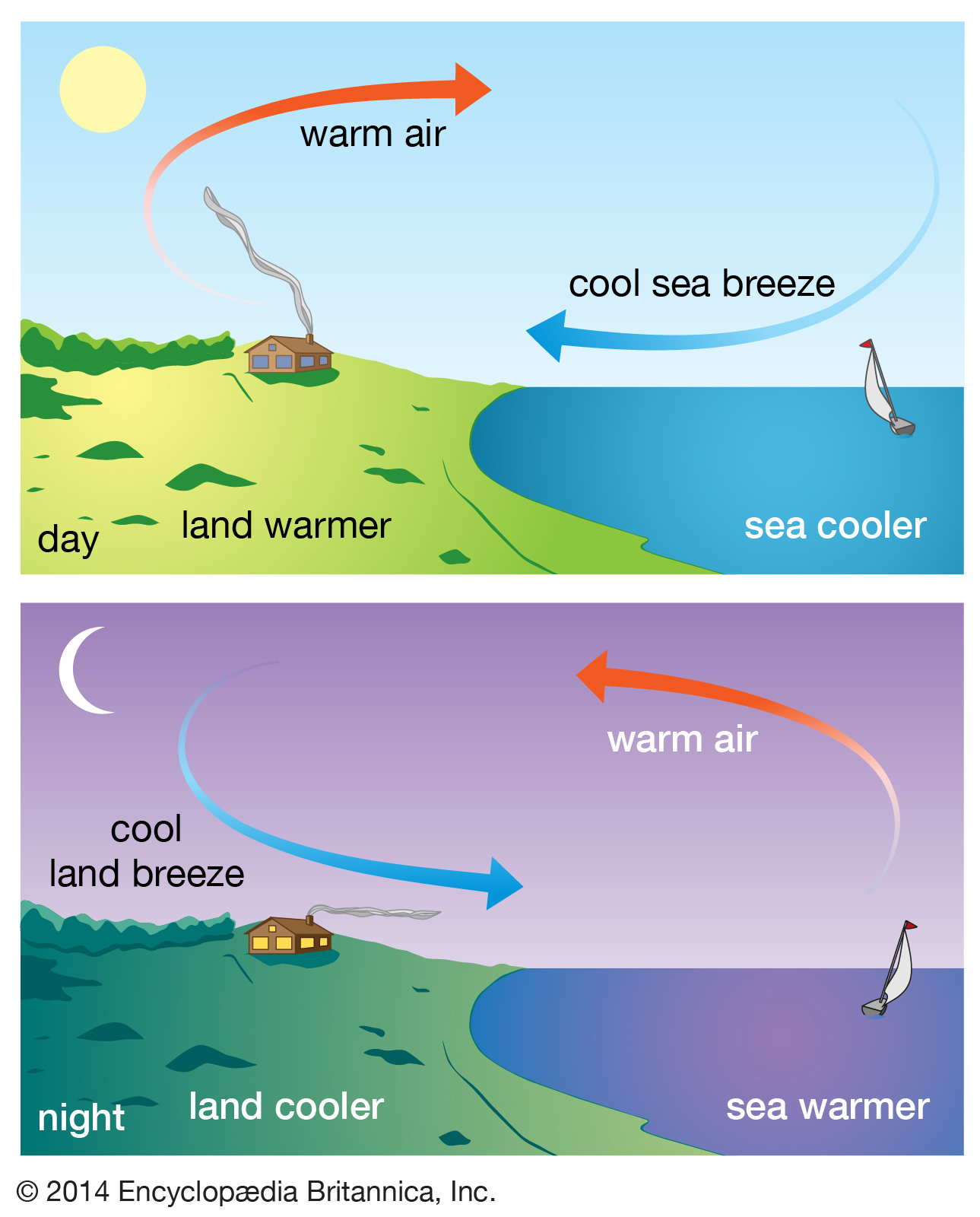
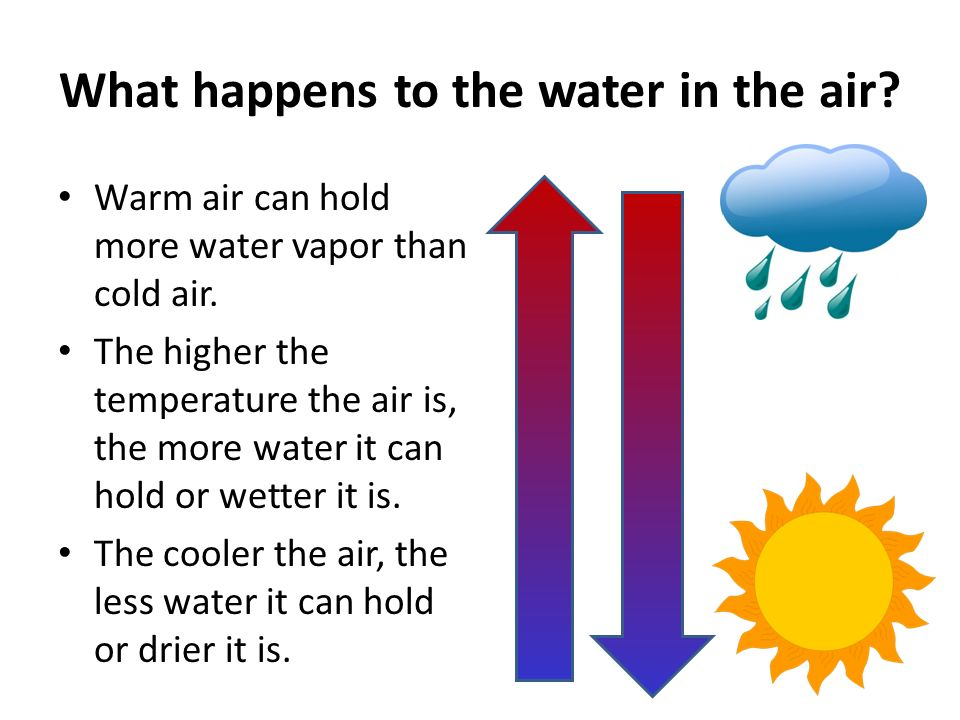
Over 70 percent of the Earth’s surface is covered in water, so it makes sense that water bodies influence climate. Oceans and lakes are very good at storing the heat that is created when the sun’s energy is absorbed by the water. The water heats and adds moisture to the air above it, a process that drives the major air currents around the world. Water bodies also make the climate of adjacent land masses more moderate. They absorb extra heat during warm periods and release it during cooler periods. Warm, moist ocean air drives precipitation patterns around the world when it falls as precipitation as it is carried over cooler landmasses.
Water bodies make the nearby landmasses
Warm, moist ocean air near cooler landmasses causes
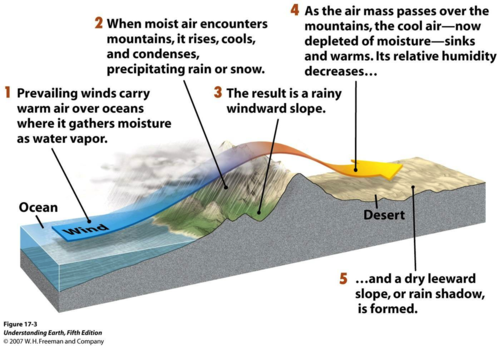
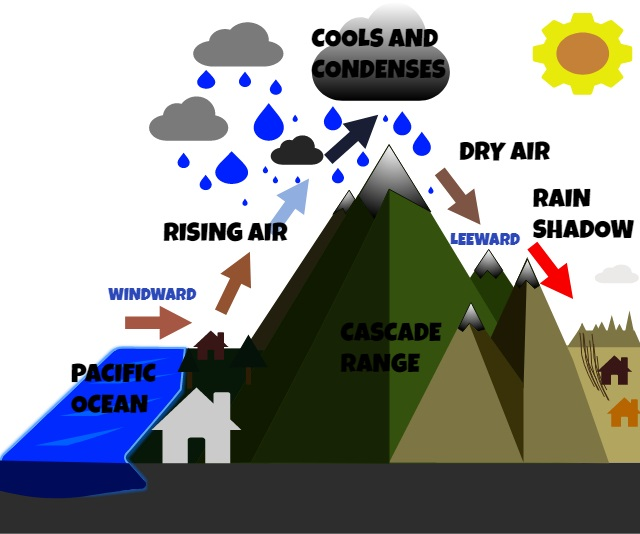
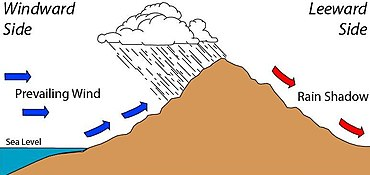
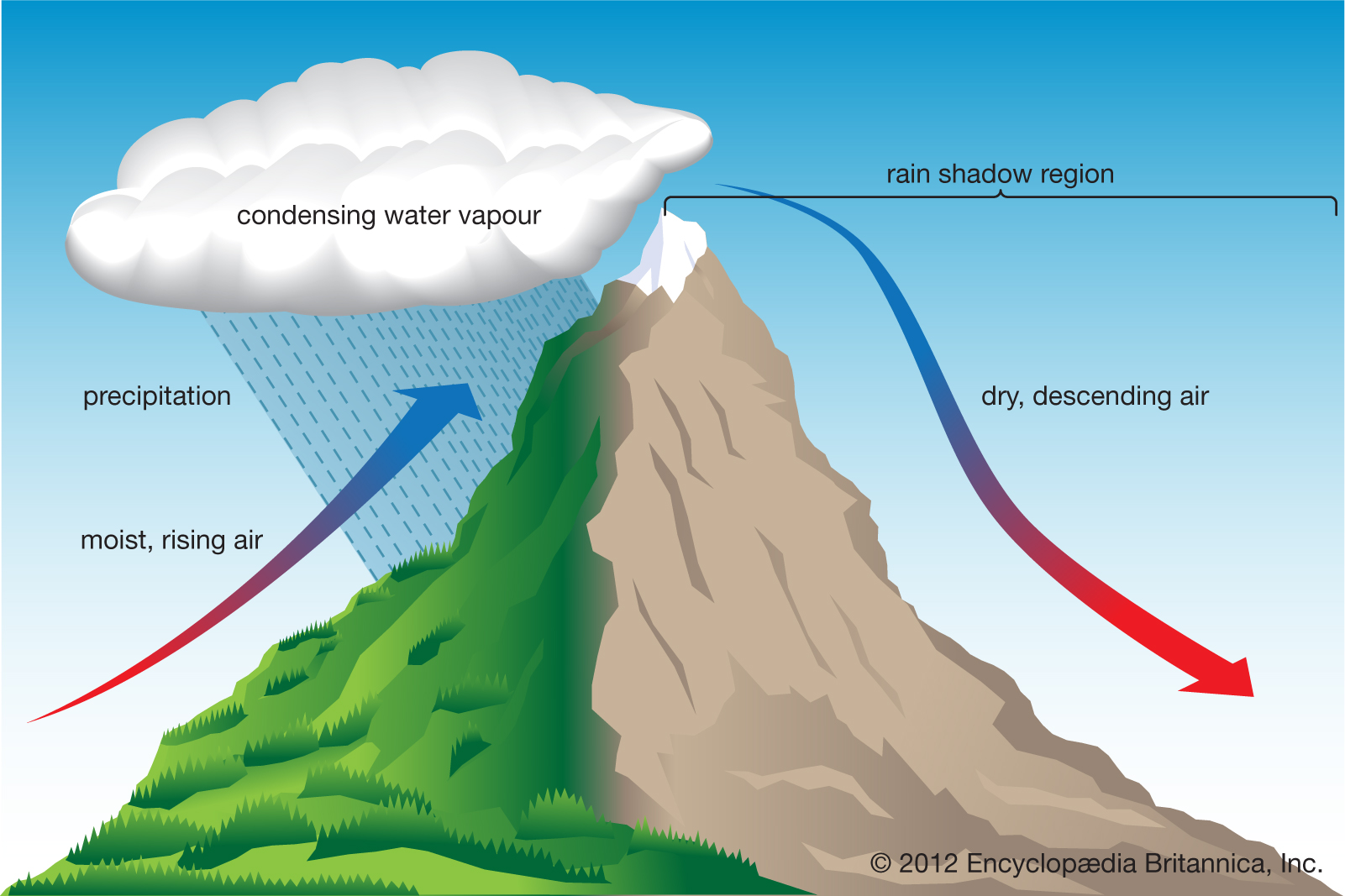
Mountain ranges are barriers to the smooth movement of air currents across continents. When an air mass encounters mountains, it is slowed and cooled because the air is forced up into cooler parts of the atmosphere in order to move over the obstruction. The cooled air can no longer hold as much moisture and releases it as precipitation on the mountain range. Once the air is over the mountain, it no longer has much moisture, and the leeward side of mountain ranges is drier than the windward side.
The cooled air can no longer hold as much moisture and
Once the air is over the mountain the leeward (side away from the water) side of mountain ranges
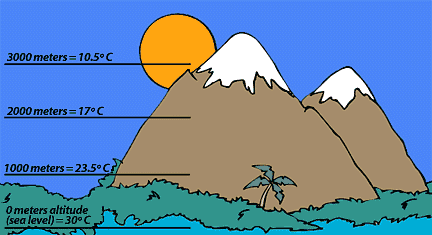
Climates become cooler and the cold season lasts longer as elevation above sea level rises. This holds true for mountains and high-elevation plateaus, such as the steppes of Mongolia. Every 1.61 kilometers (1 mile) in elevation gain is roughly equivalent to moving 1,290 kilometers (800 miles) further from the equator. Mechanistically, higher elevations have lower air pressure, fewer atoms per unit of air to excite, and, thus, cooler temperatures. Mountains frequently receive more precipitation than the surrounding lowlands, but many high-altitude plains are deserts because of their location on the leeward side of a mountain range or continental mass.
As elevation above sea level rises
Many high-altitude plains are deserts because
Describe how the Earth's geography affects weather and climate.
The rain shadow effect causes arid desert conditions on which side of the mountains?