Match each picture to its name.
Match each picture to its name.
Mapping Diagram
Ordered Pairs
Graph
Rule
Table
The domain of a function is represented by...
Select all that apply.
The range of a function is represented by...
Select all that apply.
In order to be a function....
Match each picture to its name.
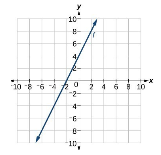
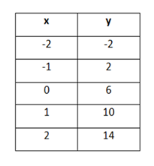
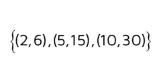
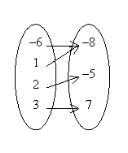
Mapping Diagram
Ordered Pairs
Graph
Rule
Table
Decide if the given relation is a relation or a function.
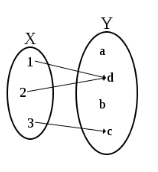
Justify your reasoning for #5. Remember, it will not tell you that you are correct. Once you submit it, it will show you a general correct answer. There are multiple ways to write the correct answer.
Decide if the given relation is a function or not.
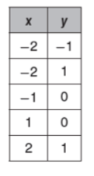
Justify your reasoning for #7. Remember, it will not tell you that you are correct. Once you submit it, it will show you a general correct answer. There are multiple ways to write the correct answer.
Decide if the given relation is a function or not.
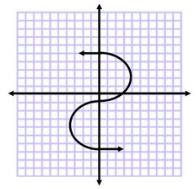
Justify your reasoning for #9. Remember, it will not tell you that you are correct. Once you submit it, it will show you a general correct answer. There are multiple ways to write the correct answer.
Decide if the given relation is a function or not.
Justify your reasoning for #11. Remember, it will not tell you that you are correct. Once you submit it, it will show you a general correct answer. There are multiple ways to write the correct answer.
Decide if the given relation is a function or not.
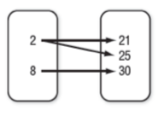
Justify your reasoning for #13. Remember, it will not tell you that you are correct. Once you submit it, it will show you a general correct answer. There are multiple ways to write the correct answer.
Decide if the given relation is a function or not.
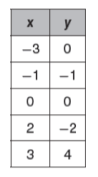
Justify your reasoning for #15. Remember, it will not tell you that you are correct. Once you submit it, it will show you a general correct answer. There are multiple ways to write the correct answer.
Identify the domain of the graph in set builder notation. NO SPACES!
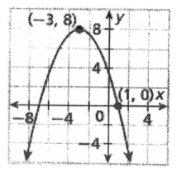
Remember, to make less than or equal to put <=. To make greater than or equal to put >=. For all real numbers put a capital R.
Identify the range of the graph in set builder notation. NO SPACES!
Remember, to make less than or equal to put <=. To make greater than or equal to put >=. For all real numbers put a capital R.
Identify the domain of the graph in set builder notation. NO SPACES!
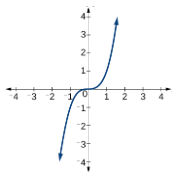
Remember, to make less than or equal to put <=. To make greater than or equal to put >=. For all real numbers put a capital R.
Identify the range of the graph in set builder notation. NO SPACES!
Remember, to make less than or equal to put <=. To make greater than or equal to put >=. For all real numbers put a capital R.
Identify the domain of the graph in set builder notation. NO SPACES!
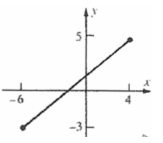
Remember, to make less than or equal to put <=. To make greater than or equal to put >=. For all real numbers put a capital R.
Identify the range of the graph in set builder notation. NO SPACES!
Remember, to make less than or equal to put <=. To make greater than or equal to put >=. For all real numbers put a capital R.
Identify the domain of the graph in set builder notation. NO SPACES!
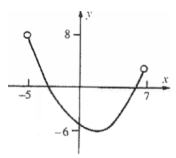
Remember, to make less than or equal to put <=. To make greater than or equal to put >=. For all real numbers put a capital R.
Identify the range of the graph in set builder notation. NO SPACES!
Remember, to make less than or equal to put <=. To make greater than or equal to put >=. For all real numbers put a capital R.
Identify the domain of the graph in set builder notation. NO SPACES!
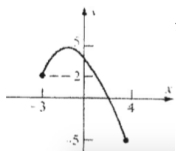
Remember, to make less than or equal to put <=. To make greater than or equal to put >=. For all real numbers put a capital R.
Identify the range of the graph in set builder notation. NO SPACES!
Remember, to make less than or equal to put <=. To make greater than or equal to put >=. For all real numbers put a capital R.
Identify the domain of the graph in set builder notation. NO SPACES!
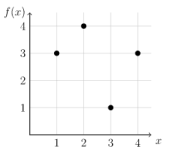
Remember, to make less than or equal to put <=. To make greater than or equal to put >=. For all real numbers put a capital R.
Identify the range of the graph in set builder notation. NO SPACES!
Remember, to make less than or equal to put <=. To make greater than or equal to put >=. For all real numbers put a capital R.
Determine the domain of each relation. NO SPACES!
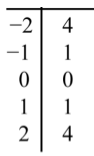
Hint: Think about what type of relation it is --- discrete or continuous?
Determine the range of each relation. NO SPACES!
Hint: Think about what type of relation it is --- discrete or continuous?
Determine the domain of each relation. NO SPACES!
Hint: Think about what type of relation it is --- discrete or continuous?
Determine the range of each relation. NO SPACES!
Hint: Think about what type of relation it is --- discrete or continuous?
Determine the domain of each relation. NO SPACES!
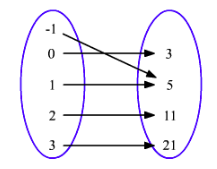
Hint: Think about what type of relation it is --- discrete or continuous?
Determine the range of each relation. NO SPACES!
Hint: Think about what type of relation it is --- discrete or continuous?
Decide if the following situation represents a discrete or continuous function?
Explain your reasoning for #35.
Remember, it will not tell you that you are correct. Once you submit it, it will show you a general correct answer. There are multiple ways to write the correct answer.
Decide if the following situation represents a discrete or continuous function?
Explain your reasoning for #37.
Remember, it will not tell you that you are correct. Once you submit it, it will show you a general correct answer. There are multiple ways to write the correct answer.
Decide if the following situation represents a discrete or continuous function?
Explain your reasoning to #39.
Remember, it will not tell you that you are correct. Once you submit it, it will show you a general correct answer. There are multiple ways to write the correct answer.
Decide if the following situation represents a discrete or continuous function?
Explain your reasoning to #41.
Remember, it will not tell you that you are correct. Once you submit it, it will show you a general correct answer. There are multiple ways to write the correct answer.