You're hiking in the mountains and grab a handful of snow to boil for a hot drink.
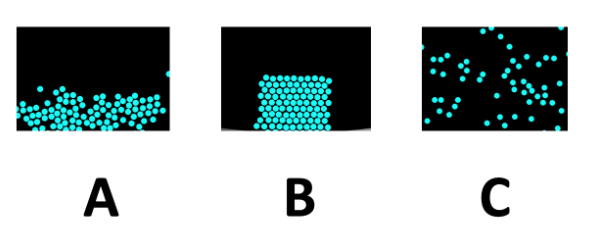
The pictures below represent each phase of the snow (snow, hot water, and steam).
1
Which picture represents liquid water?
Which picture represents liquid water?
1
1
What can you use on the quiz?
Your notes
Your brain
Not other people or the internet
You need to make sure you are answering questions in your own words. GoFormative will check your quiz against other students and the internet.
Standards
I can model and explain the motion and relative position of particles in each phase and how that is associated with energy.
I can model and explain what occurs during a phase change in terms of energy, motion, and relative position of particles.
I can identify and describe the inverse and proportional mathematical relationships between temperature, pressure, and volume of gases as well as describe what will happen to the particles of a gas when temperature, pressure, or volume is changed.
I can develop and use models to describe phenomena.
Draw a model of a SOLID. Use circles for particles and draw arrows to indicate kinetic energy.
List three properties of the SOLID you drew above.
You're hiking in the mountains and grab a handful of snow to boil for a hot drink.
The pictures below represent each phase of the snow (snow, hot water, and steam).
Which picture represents liquid water?
Global climate change is causing the oceans to warm. Along with warming, we have seen sea levels rise. Scientists expect that as the oceans continue to warm, the sea level will continue to rise.
Explain the connection between increasing ocean temperatures and rising sea levels.
You may find it helpful to use some terms from the word bank.
Constant, increase/decrease, particle, movement, faster/slower, volume, kinetic energy, spacing, expand, density
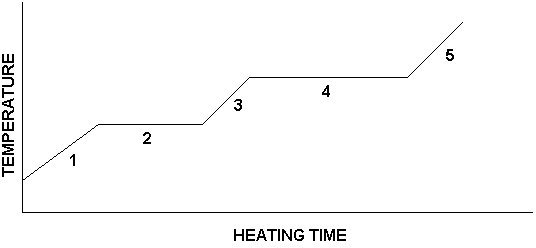
Section has liquid particles only.
Section is where vaporization occurs.
In sections and , kinetic energy is increasing.
Temperature during a phase change because the energy being added is causing the particles to . Kinetic energy is during a phase change.
Temperature is a measure of...
If temperature is held constant and you increase the volume of a gas, the pressure because the particles in the gas are .
Max wants to hide a balloon in the freezer to surprise his friend. Alle says the balloon will pop, but D’asha says the balloon will shrink in the freezer. Which evidence supports the correct claim?
Which reasoning supports the answer above?
Marie the Marine Biologist studies creatures from the deepest parts of the ocean, where the pressure underwater is incredibly high. Unfortunately, everytime she catches a deep sea creature, it 'explodes' as it is raised to the surface. What explains this?
When the creatures are brought to the surface...
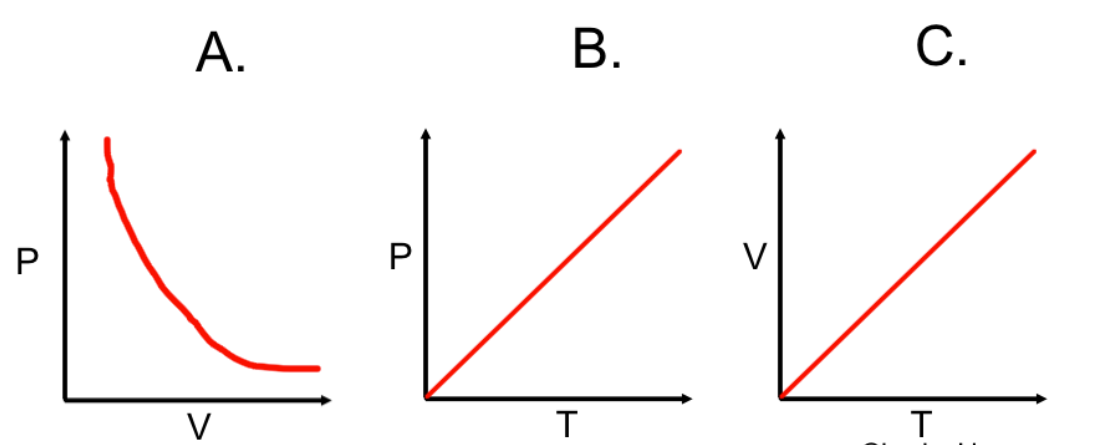
In which relationship(s) does one variable double if you double the other? (choose all that apply)
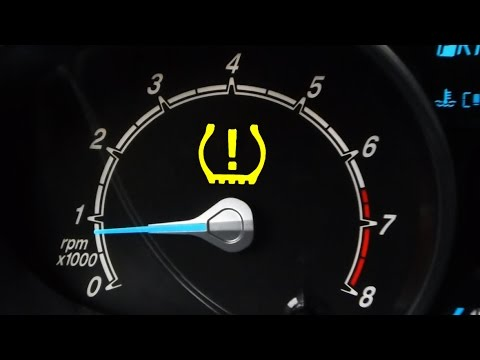
On very cold winter mornings, my car shows the low tire pressure warning light:
In the warmer afternoon, when I’m headed home, there is no warning light.
Why does the warning light turn on in the morning and not in the afternoon?
You may find it helpful to use some terms from the word bank.
Constant, increase/decrease, particle, movement, faster/slower, collisions, temperature, pressure, kinetic energy, spacing, expand/contract
On your Tanker model packet, fill in the final model page. Make sure to show/explain the following:
How molecules cause pressure
What the particles are doing inside and outside the tanker at every part (before, during, and after)
How the temperature, pressure, and volume of the particles are changing/not changing at every part
How changes in the volume of the particles affects the pressure
I have included the video if you would like to watch the it again.
Which picture represents particles that have low kinetic energy?
Which picture represents particles that are moving the fastest?