Lab: States of Matter
star
star
star
star
star
Last updated 7 months ago
21 Nsɛmmisa
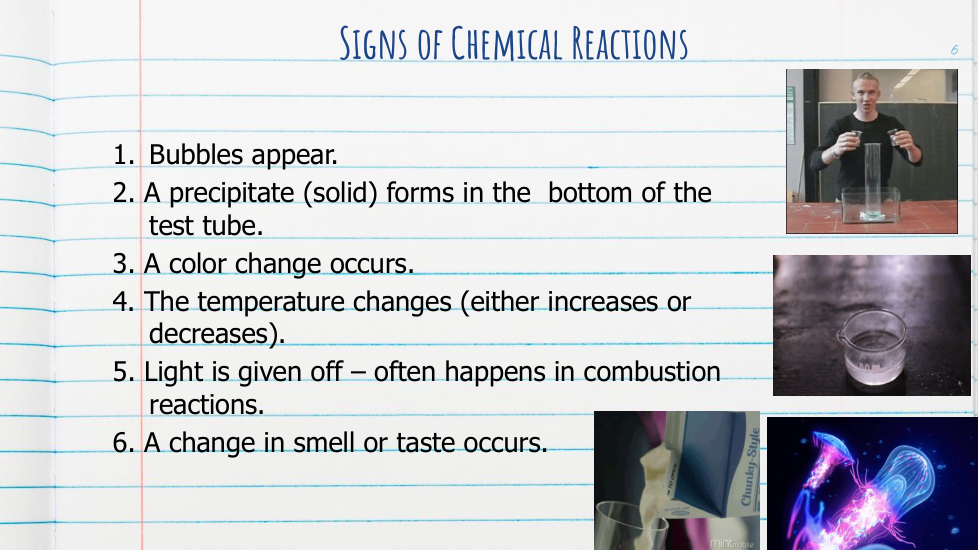
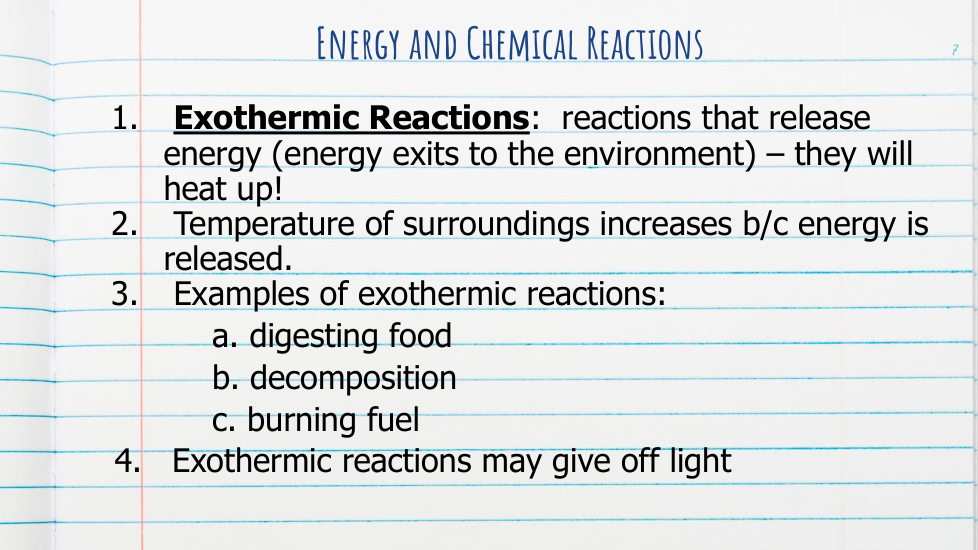
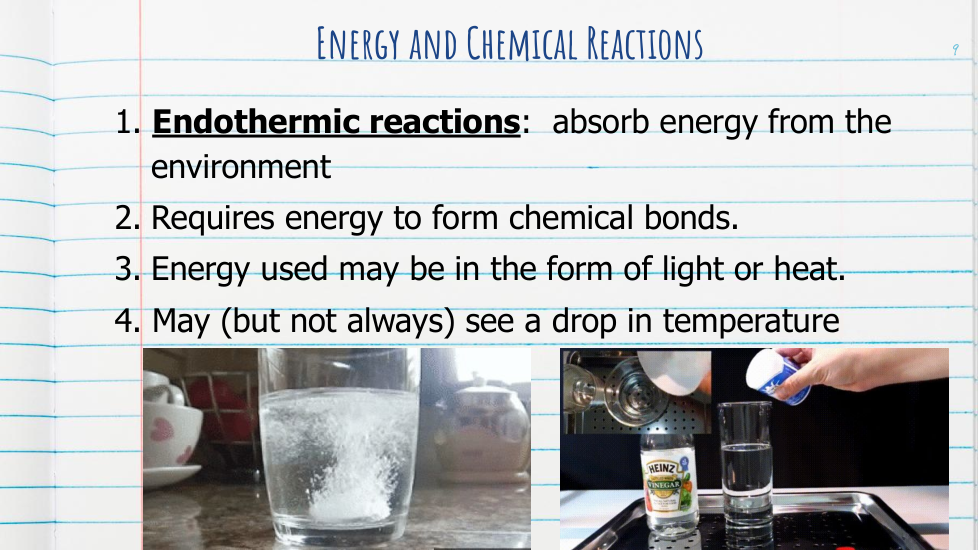
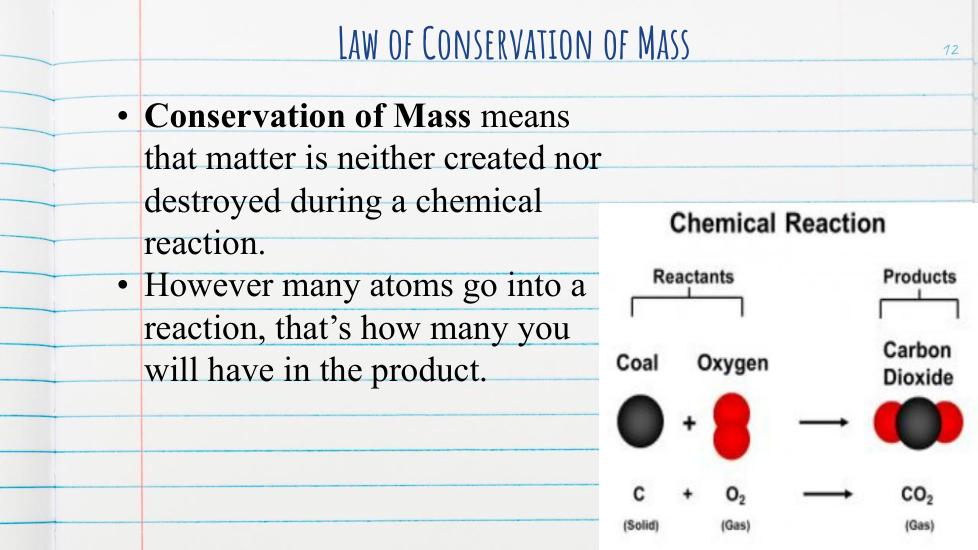
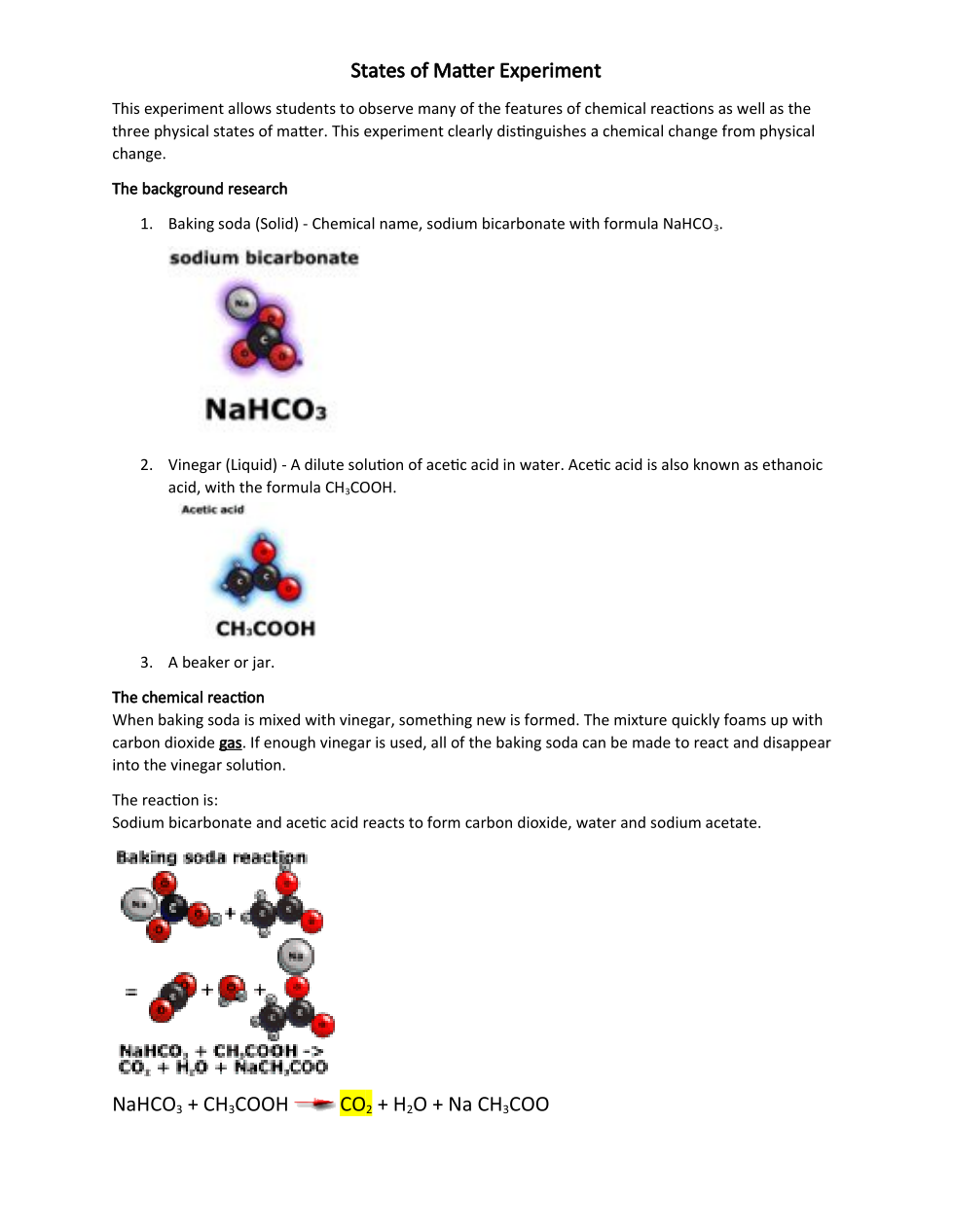
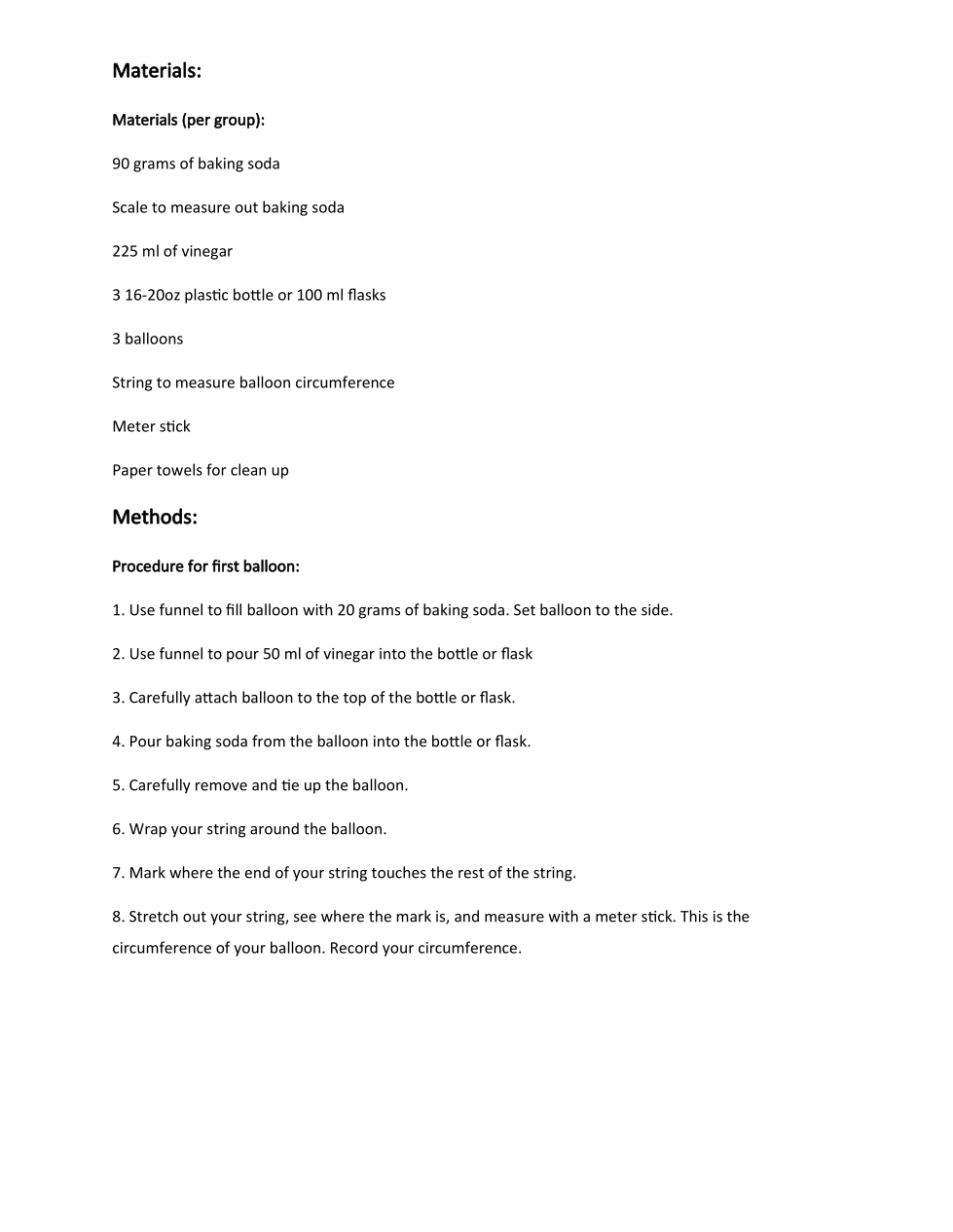
Complete the procedure for the first balloon then develop a hypothesis. When making your hypothesis, consider the Law of Conservation. What do you think will happen to the circumference of the balloon as you continue to add more reactants? (Remember to use an "if and then" statement.)
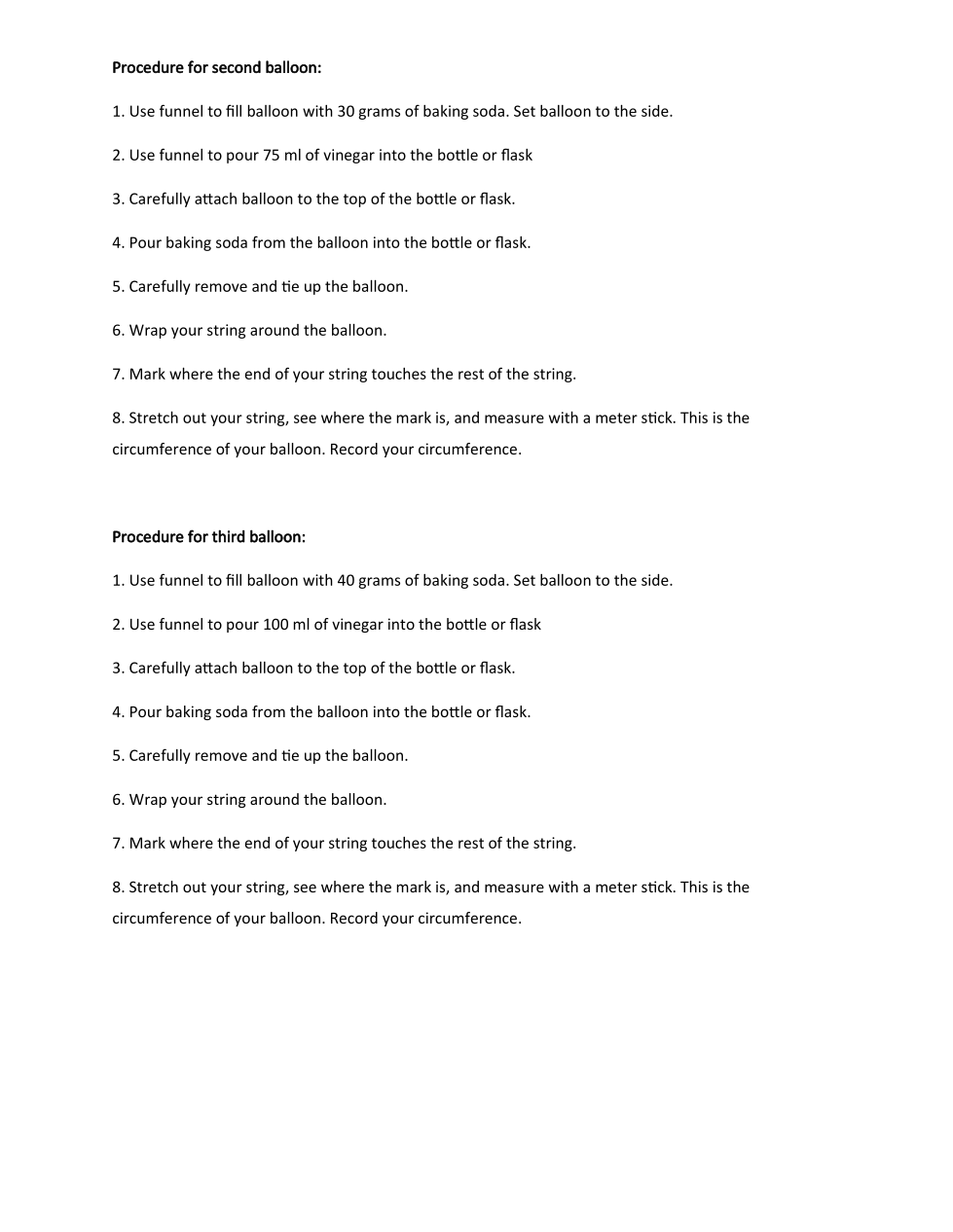
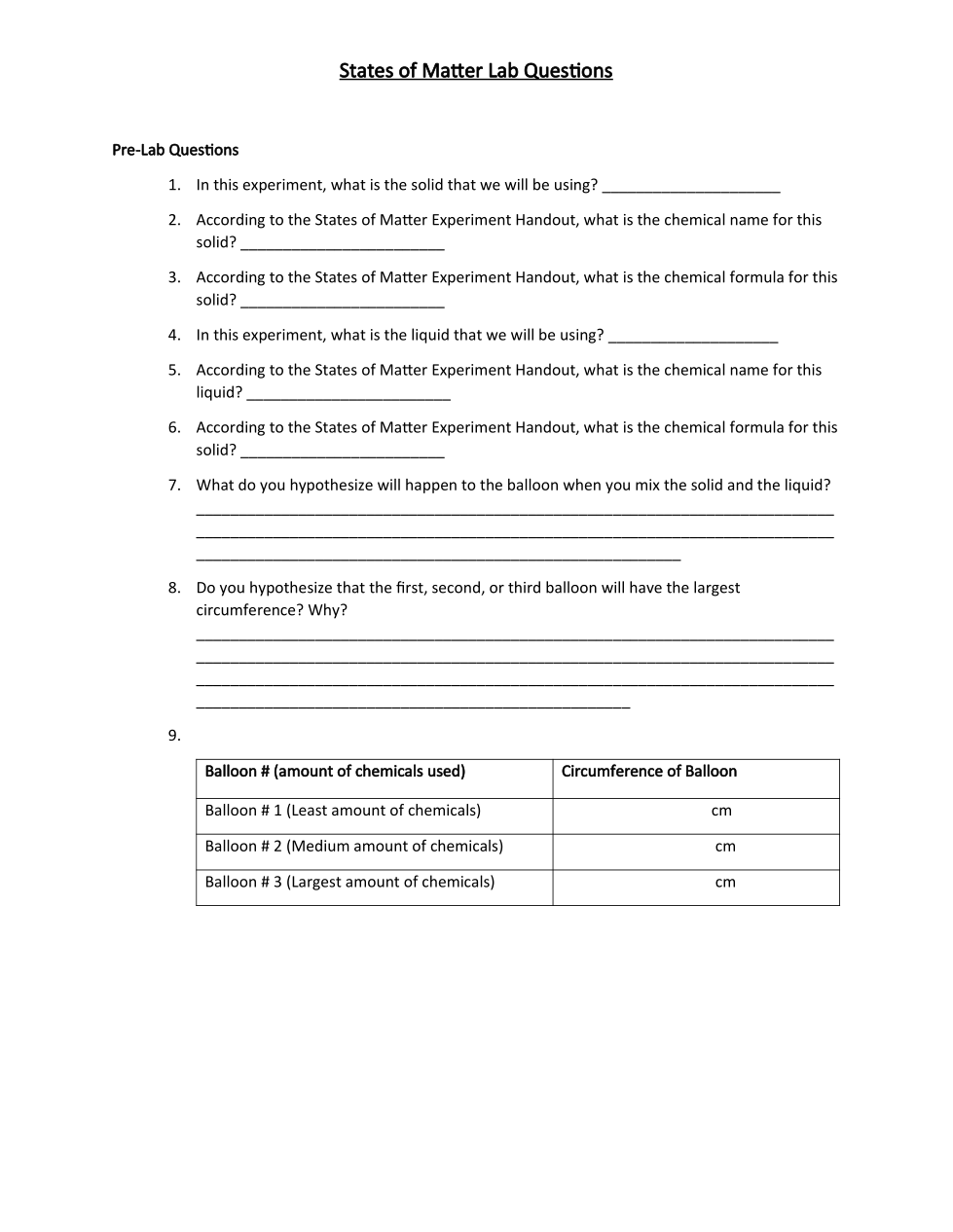
Fill in the balloon measurements in this table.
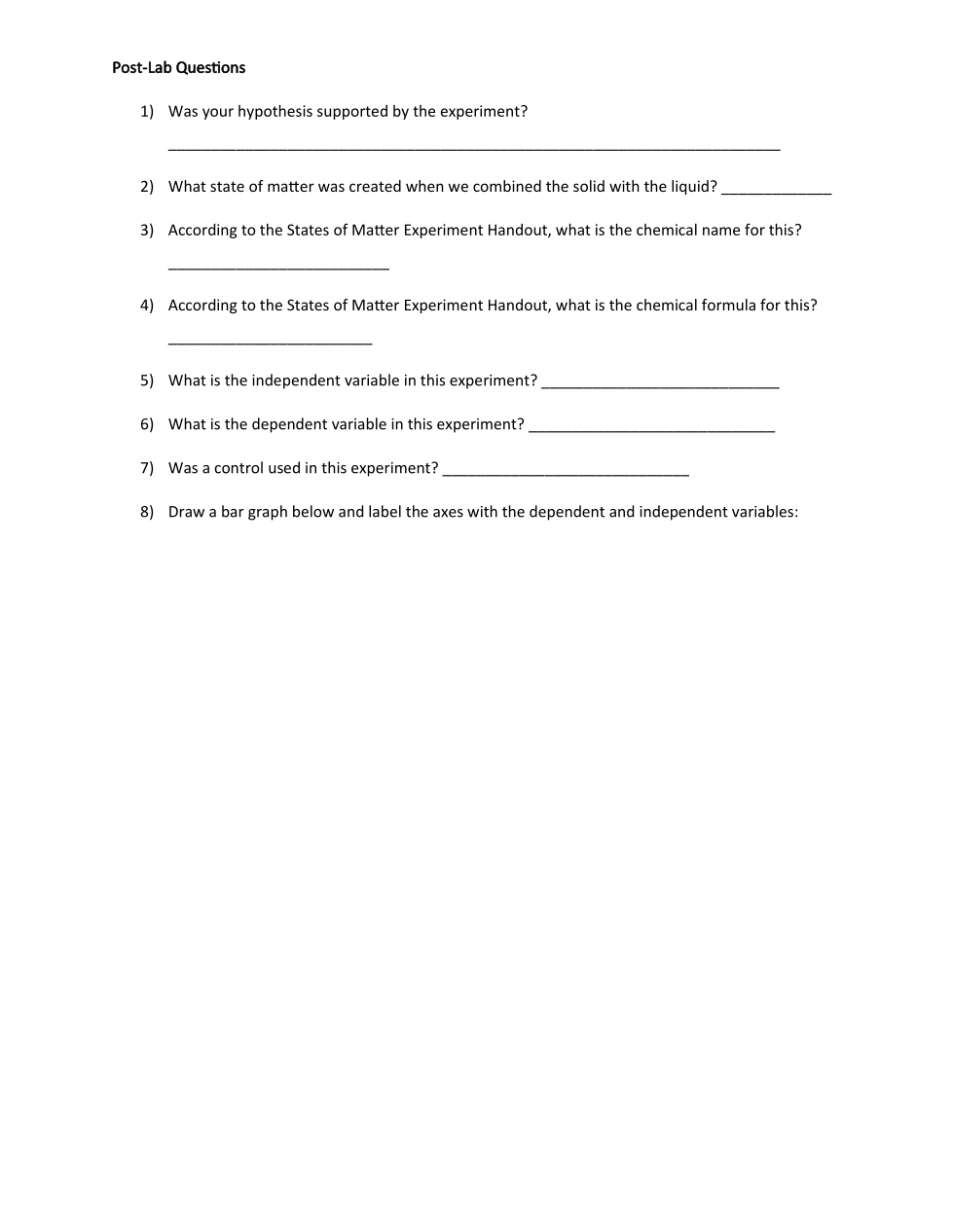
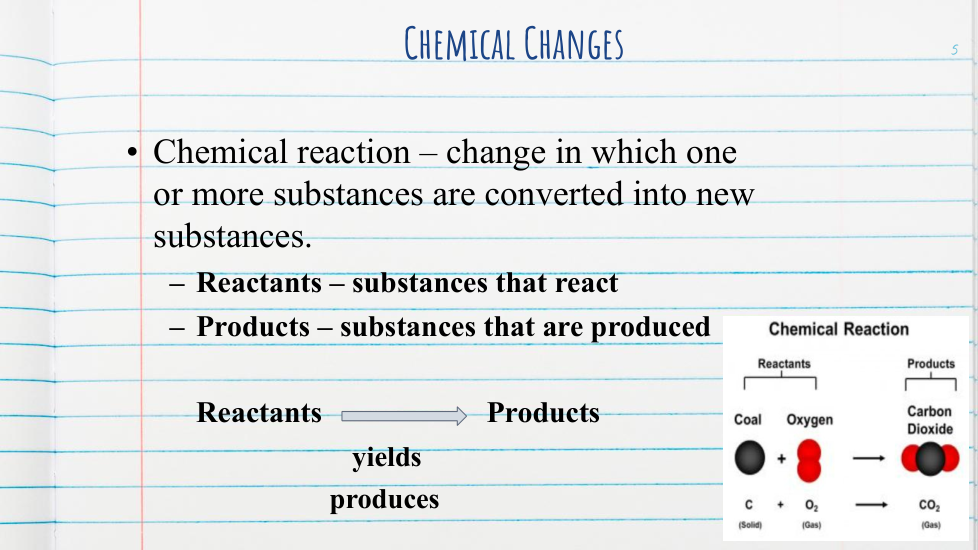
In this experiment, what is the solid that we will be using?
According to the States of Matter Experiment Handout, what is the chemical NAME for this solid?
According to the States of Matter Experiment Handout, what is the chemical FORMULA for this solid?
Choose the following that apply to solids
In this experiment, what is the liquid that we will be using?
According to the States of Matter Experiment Handout, what is the chemical NAME for this liquid?
According to the States of Matter Experiment Handout, what is the chemical FORMULA for this liquid?
Choose the following that applies to liquids
Was your hypothesis supported by the experiment?
What state of matter was created when we combined the solid with the liquid?
According to the States of Matter Experiment Handout, what is the chemical NAME for this?
According to the States of Matter Experiment Handout, what is the chemical FORMULA for this?
Choose the following that apply to gasses
What is the independent variable in this experiment?
What is the dependent variable in this experiment?
Was a control used in this experiment?
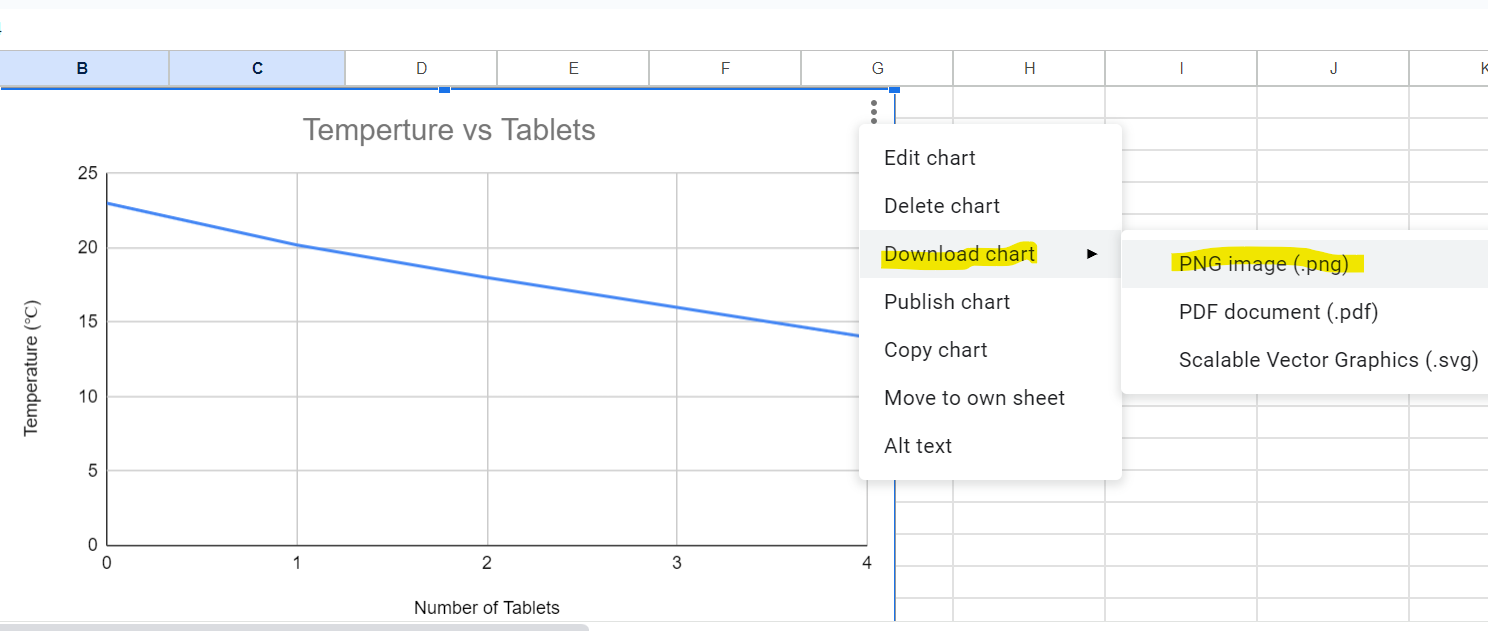
Create a graph in Google Sheets, download it as a PNG image, and attach it.
If you had a fourth balloon to which you added 50 grams of baking soda and 125 mL of vinegar, what do you predict the circumference of the fourth balloon would be?