Categorize each property as intensive or exstensive.
volume
density
mass
flammability
intensive property
extensive property
2 points
2
Question 6
6.
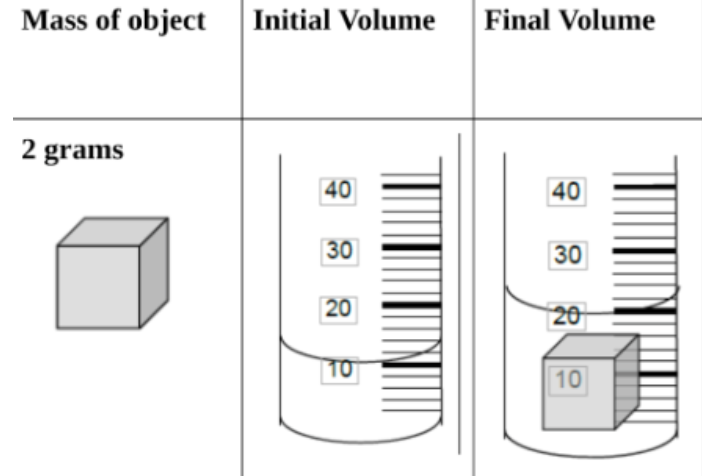
What is the density of an object with a mass of 17.11g and a volume of 100.21ml?
Round to 2 decimal places.
2 points
2
Question 7
7.
What is the mass of an object with a density of 21.88g/ml and a volume of 171ml?
Round to two decimal places.
2 points
2
Question 8
8.
What is the volume of an object with a density of 2.30g/ml and a mass of 1872.11g?
Round to two decimal places.
1 point
1
Question 9
9.
The law of conservation of mass states that matter cannot be
1 point
1
Question 10
10.
Smallest unit
3 points
3
Question 11
11.
Sample: Cornstarch + Water, settled
Select all that apply
3 points
3
Question 12
12.
Sample: Milk
Select all that apply
4 points
4
Question 13
13.
Heterogeneous or homogeneous?
salad dressing
tap water
sand and water
milk
heterogeneous
homogeneous
1 point
1
Question 14
14.
Baking soda and vinegar react and produce carbon dioxide, water, and sodium acetate. This is an example of a
1 point
1
Question 15
15.
Dry ice sublimating. This is an example of
8 points
8
Question 16
16.
Match the elements
Draggable item
arrow_right_alt
Corresponding Item
hydrogen
arrow_right_alt
calcium
Co
arrow_right_alt
carbon
Au
arrow_right_alt
O
Ca
arrow_right_alt
cobalt
C
arrow_right_alt
N
nitrogen
arrow_right_alt
H
oxygen
arrow_right_alt
zinc
Zn
arrow_right_alt
gold
4 points
4
Question 17
17.
boiling point
flammability
odor
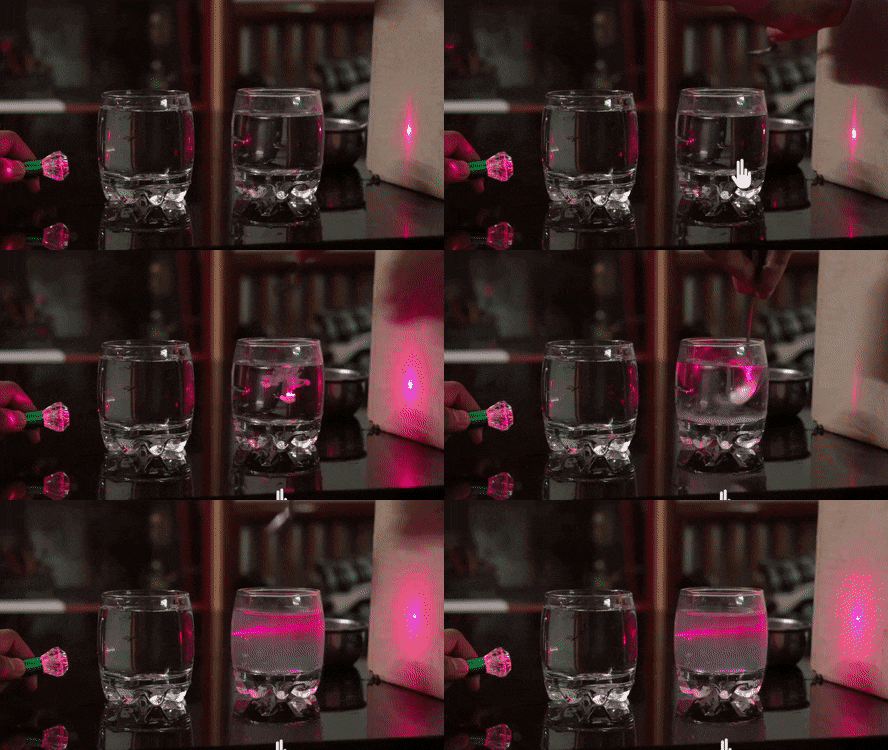
reactivity
Chemical Property
Physical Property
1 point
1
Question 18
18.
A __________ is made up of two or more atoms chemically bonded together.
1 point
1
Question 19
19.
1 point
1
Question 20
20.
Dependent Variable
1 point
1
Question 21
21.
Independent Variable
1 point
1
Question 22
22.
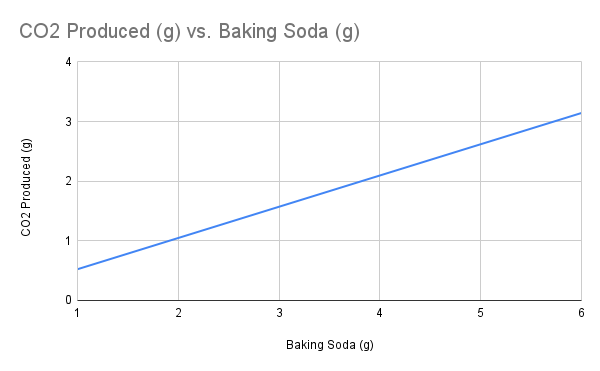
How much OO2 was produced from 4g of baking soda?
1 point
1
Question 23
23.
What is mixture A?
1 point
1
Question 24
24.
What is mixture B?
1 point
1
Question 25
25.
What is mixture C?
1 point
1
Question 26
26.
NaCl
1 point
1
Question 27
27.
A particle that is 300nm will form which type of mixture:
1 point
1
Question 28
28.
Which substance would be the heaviest for its size? Hint: Think about density.
Canola oil density - 0.92g/ml
Water - 1.00g/ml
Sand - 1.63g/ml
Ice - 0.92g/ml
Ping Pong Ball - 0.084g/ml
1 point
1
Question 29
29.
A small marble with a weight of 10g and a volume of 5ml is placed in a beaker containing all the substances listed to the left. Where will this object settle?
1 point
1
Question 30
30.
Unit for temperature?
1 point
1
Question 31
31.
Unit for volume?
1 point
1
Question 32
32.
Unit for n?
1 point
1
Question 33
33.
Which state of matter can easily be compressed?
5 points
5
Question 34
34.
Identify each as a property of a solid, liquid, or gas.
5 questions total. Scroll to see all.
Solid
Liquid
Gas
Definite volume, definite shape
Particles vibrate in place
Space between particles is large
Described as having "medium" energy
Interaction between molecules are ignored because there is so much kinetic energy
1 point
1
Question 35
35.
State of matter that is a ionized gas?
1 point
1
Question 36
36.
Liquid
1 point
1
Question 37
37.
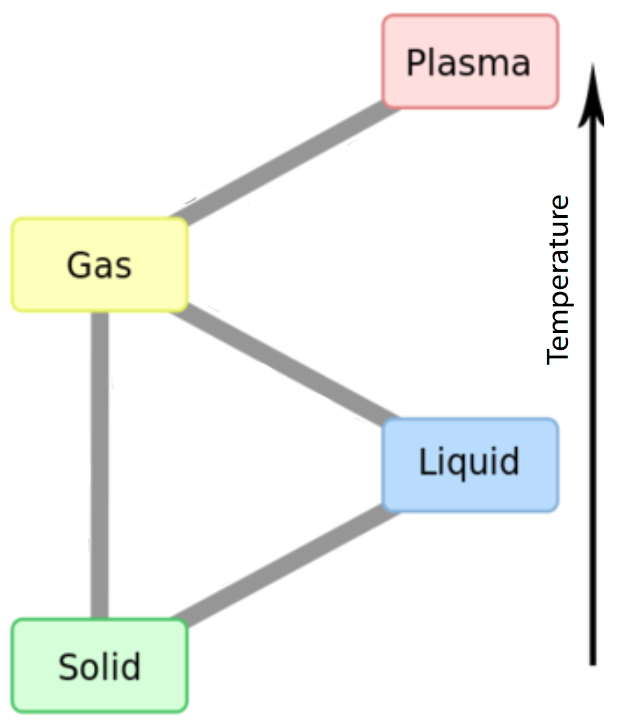
Gas to Plasma
1 point
1
Question 38
38.
Liquid to Solid
1 point
1
Question 39
39.
Solid to Gas
1 point
1
Question 40
40.
Gas to Liquid
1 point
1
Question 41
41.
Force that pulls particles together?
1 point
1
Question 42
42.
6.022x10²³ molecules
1 point
1
Question 43
43.
Energy in motion?
1 point
1
Question 44
44.
Matter changing states is a
1 point
1
Question 45
45.
Kinetic Theory of Matter
1 point
1
Question 46
46.
At what temperature does all particle motion stop?
1 point
1
Question 47
47.
0K is also known as
P1 = 7.82 atm
T1 = 202.01K
P2 = ?
T2 = 253.71K
1 point
1
Question 48
48.
What equation should you use to solve this problem?
1 point
1
Question 49
49.
What unit will the answer have?
1 point
1
Question 50
50.
What is P2?
V1 = 78.12L
T1 = 273.15K
V2 = ?
T2 = 373.15K
1 point
1
Question 51
51.
What equation should you use to solve this problem?
1 point
1
Question 52
52.
What unit will the answer have?
1 point
1
Question 53
53.
What is V2?
A gas is at a pressure of 174.18mmHg with a volume of 1.23L. If I compress the gas into 0.34L, what is the new pressure?
1 point
1
Question 54
54.
What equation should you use to solve this problem?
1 point
1
Question 55
55.
What unit will the answer have?
1 point
1
Question 56
56.
What is P2?
I produce a gas in lab that has a temperature of 295.15K. I know that the pressure is 1atm and that 3.42 moles were produced. What is the volume?
R = 0.0821 atmL/moleK
1 point
1
Question 57
57.
What equation should you use to solve this problem?
1 point
1
Question 58
58.
What unit will the answer have?
1 point
1
Question 59
59.
What is the volume?
6 points
6
Question 60
60.
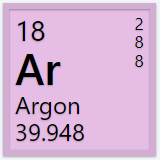
Argon (Ar)
protons - _______
neutrons - _______
electrons - _______
group - _______
period - _______
valence electrons - _______
1 point
1
Question 61
61.
An element's group determines
1 point
1
Question 62
62.
An element's period determines
3 points
3
Question 63
63.
Change in
protons
neutrons
electrons
ion
isotope
element
1 point
1
Question 64
64.
Which subatomic particle has the lowest mass?
1 point
1
Question 65
65.
What ion does Mg form?
1 point
1
Question 66
66.
What is a positive ion called?
1 point
1
Question 67
67.
Select the electron configuration of Lithium.
1 point
1
Question 68
68.
What charge do neutrons have?
3 points
3
Question 69
69.
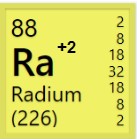
Ra+2
p+ = _______
n0 = _______
e- = _______
3 points
3
Question 70
70.
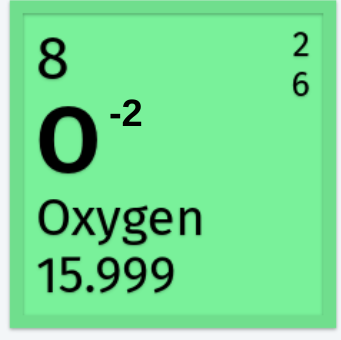
O-2
p+ = _______
n0 = _______
e- = _______
1 point
1
Question 71
71.
How do carbon-12 and carbon-14 differ?
3 points
3
Question 72
72.
Carbon-14
protons - _______
neutrons - _______
electrons - _______
2 points
2
Question 73
73.
Draw the electron dot symbol for Neon (Ne)
2 points
2
Question 74
74.
Draw the Lewis Structure of CH4
2 points
2
Question 75
75.
Draw the Lewis Structure of CH3F
2 points
2
Question 76
76.
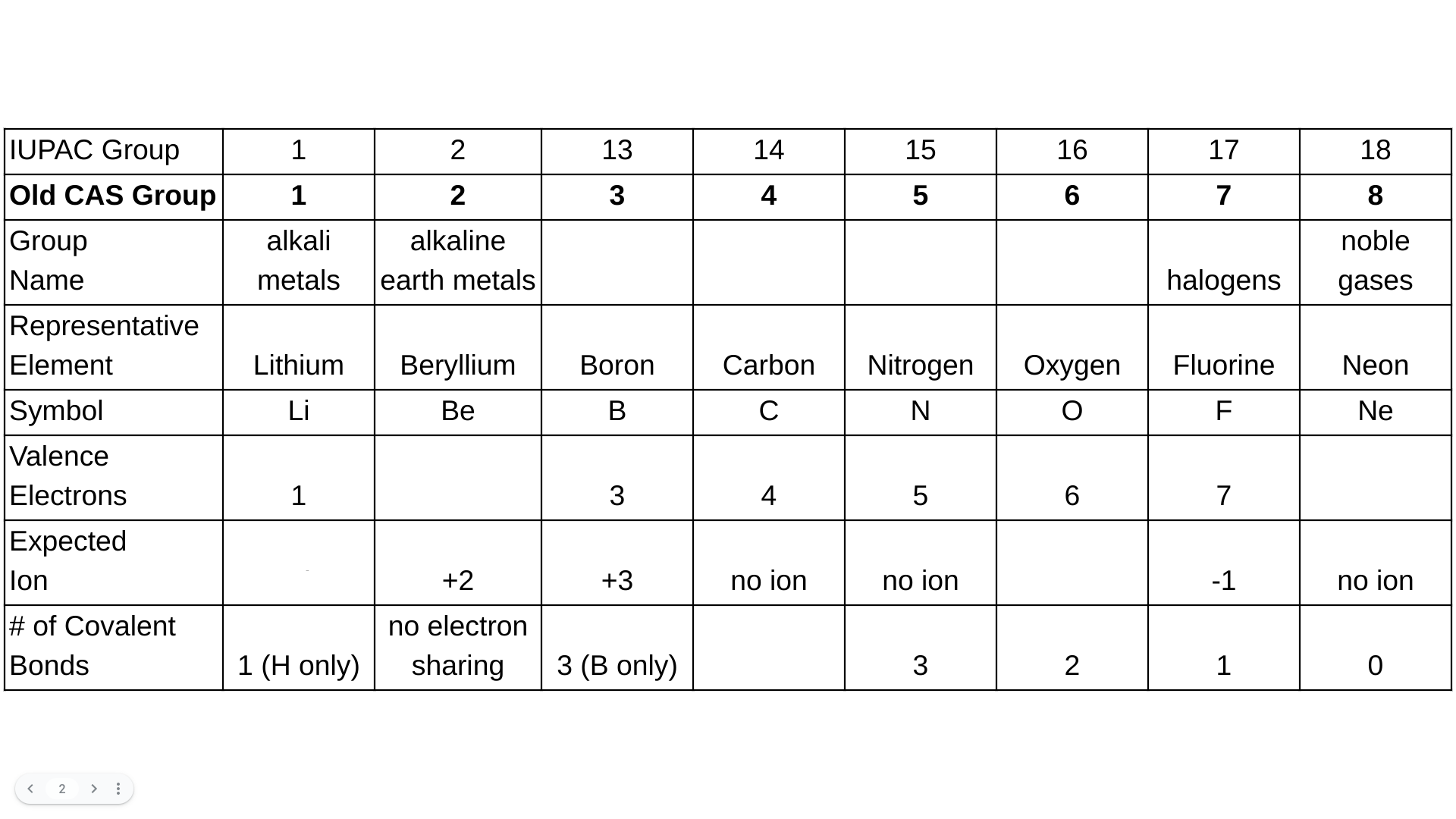
The atomic mass of each element is not a whole number because it is __________ of all __________.
5 points
5
Question 77
77.
Select the group for each description.
metal
metalloid
nonmetal
largest group of atoms
brittle
ductile and malleable
only contains 6 elements
most are gases
1 point
1
Question 78
78.
Which electron shell is the smallest?
What goes in each blank square?
1 point
1
Question 79
79.
1 point
1
Question 80
80.
1 point
1
Question 81
81.
1 point
1
Question 82
82.
1 point
1
Question 83
83.
1 point
1
Question 84
84.
How many elements can form diatomic molecules?
1 point
1
Question 85
85.
How many covalent bonds can bromine make?
6 points
6
Question 86
86.
Ionic Bond and Covalent Bond Properties
ionic bond
covalent bond
electrons are shared
ions attracted because of opposite charges
forms between a metal and nonmetal
forms between a cation and anion
forms between nonmetals
forms a molecular compound
Lynch Question Bank
1 point
1
Question 87
87.
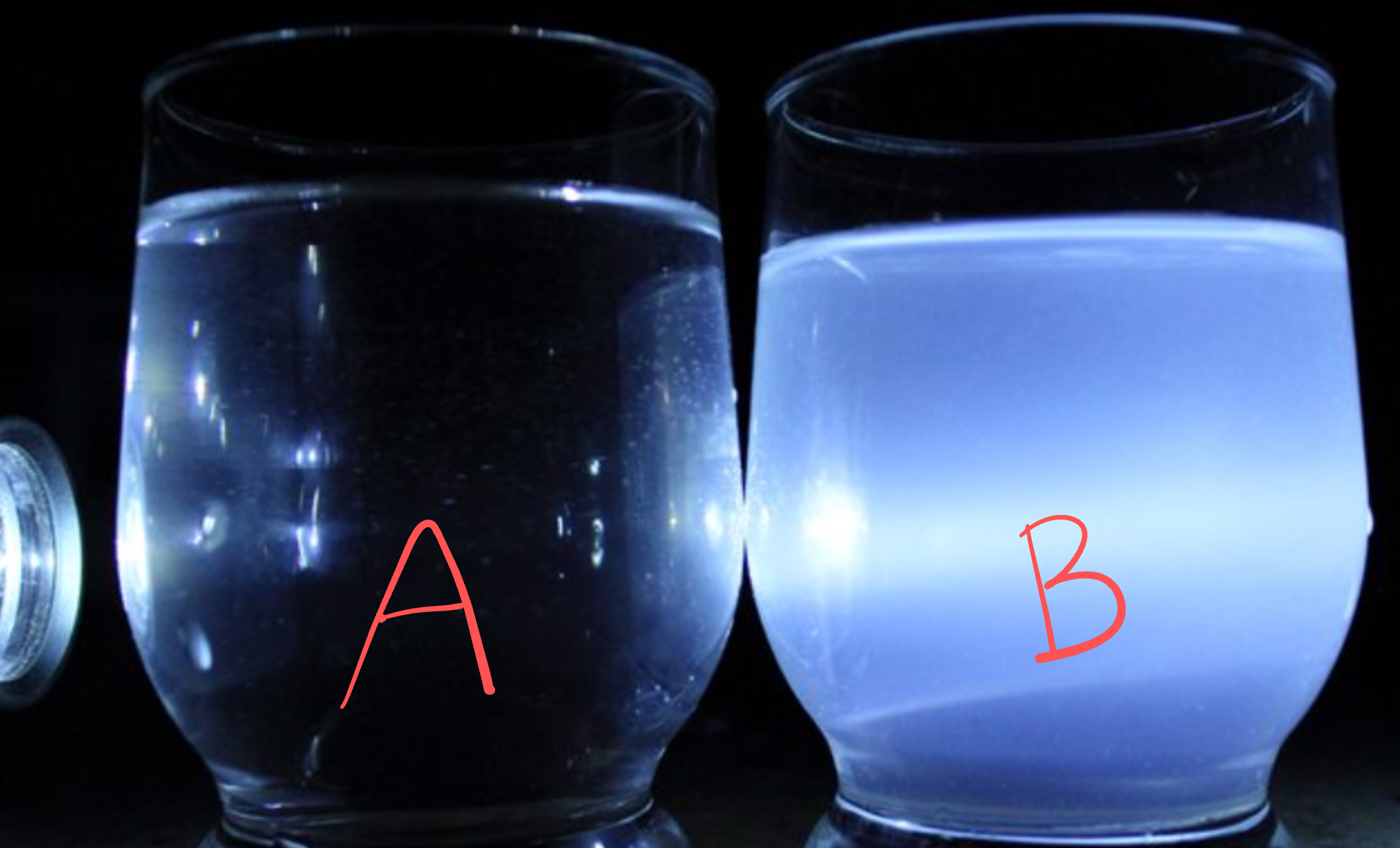
Glass A and Glass B are mixtures that don't settle out.
Select the correct Claim stating what type of Mixture is in Glass B.
Required
1 point
1
Question 88
88.
Glass A and Glass B are mixtures that don't settle out.
Write 2 EVIDENCE statements that support your claim from #1 regarding what type of Mixture is in Glass B.
that support your claim from # regarding what type of Mixture is in
(DO NOT WRITE THE CLAIM or the reasoning!)
2 points
2
Question 89
89.
A bottle of salad dressing must be shaken before it is poured onto a salad in order to evenly mix the particles. How can this salad dressing be classified?
Required
1 point
1
Question 90
90.
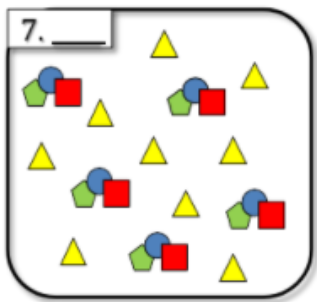
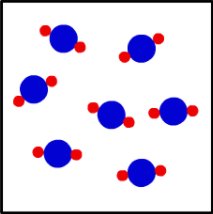
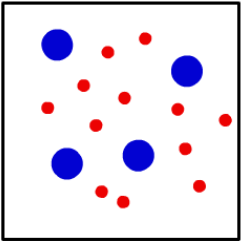
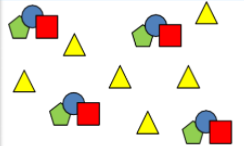
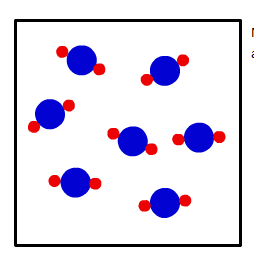
The particles in this image would best be described as a(n):
Required
1 point
1
Question 91
91.
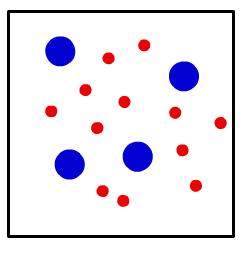
The particles in this image would best be described as:
Required
3 points
3
Question 92
92.
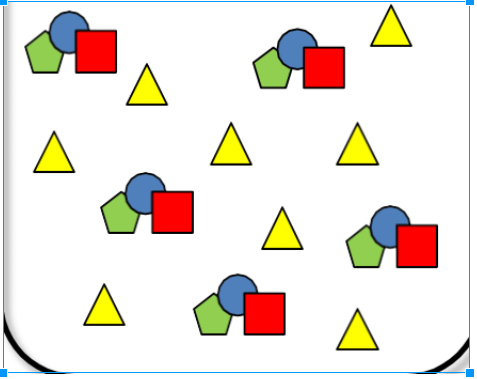
The particles in this image would best be described as:
Required
1 point
1
Question 93
93.
The best way to get the sugar out of a sugar-water solution is to ________.
Required
7 points
7
Question 94
94.
Classify each substance as either heterogeneous or homogeneous. (Be sure to classify all 6 substances)
chocolate chip ice cream
rice and beans
steel
oil and water
a glass of OJ
vinegar
Heterogeneous
Homogeneous
Required
0.5 points
0.5
Question 95
95.
Categorize the 6 substances.
Water
Orange Juice
Ketchup
Milk
Tea
Salad
Homogeneous Mixture
Heterogeneous Mixture
Pure Substance
Required
0.25 points
0.25
Question 96
96.
Categorize the 6 substances.
Water
Orange Juice
Ketchup
Milk
Tea
Salad
Compound
Suspension
Colloid
Solution
1 point
1
Question 97
97.
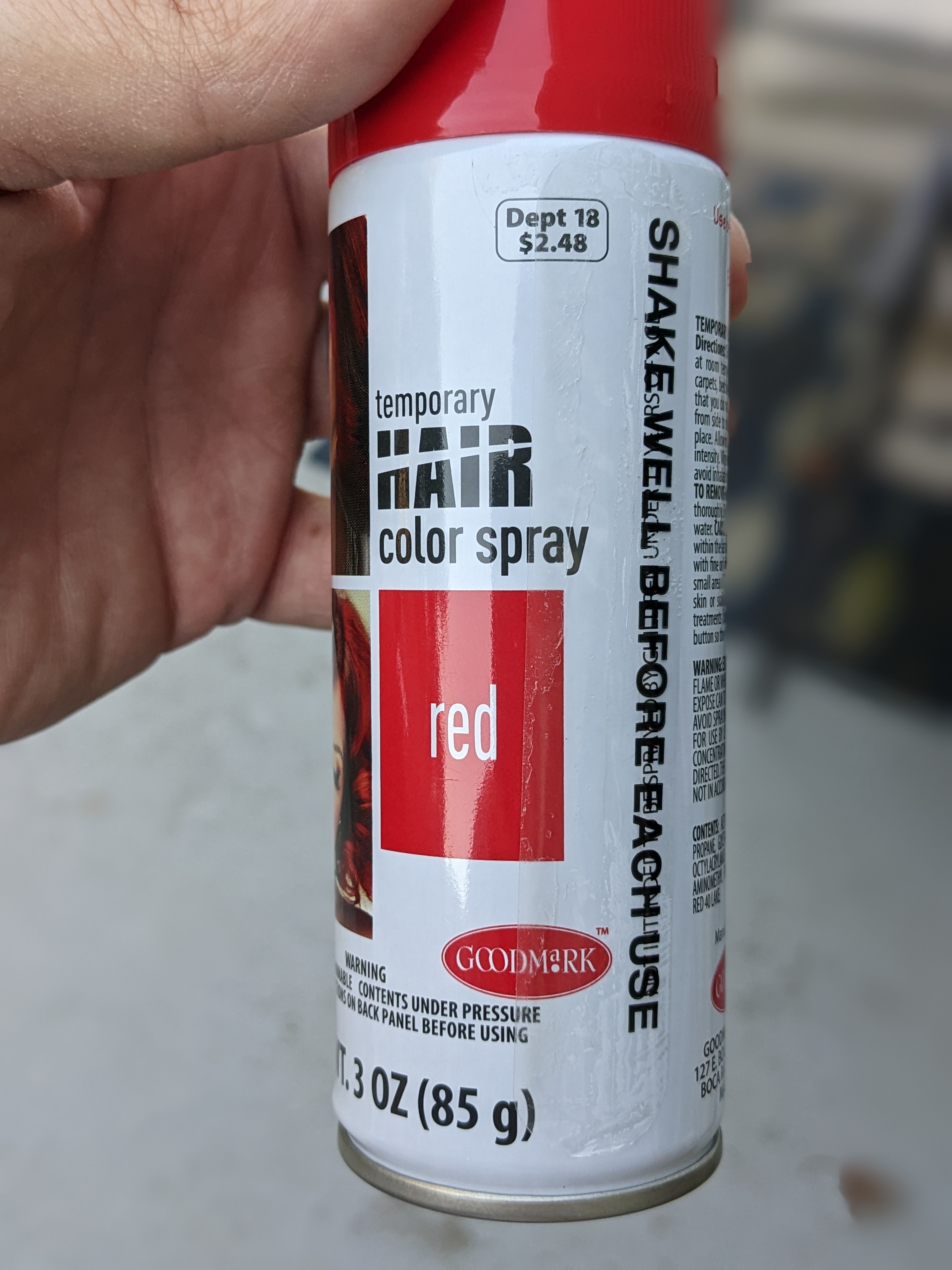
Based on this image, this colored hair spray is :
Select ALL that apply!
1 point
1
Question 98
98.
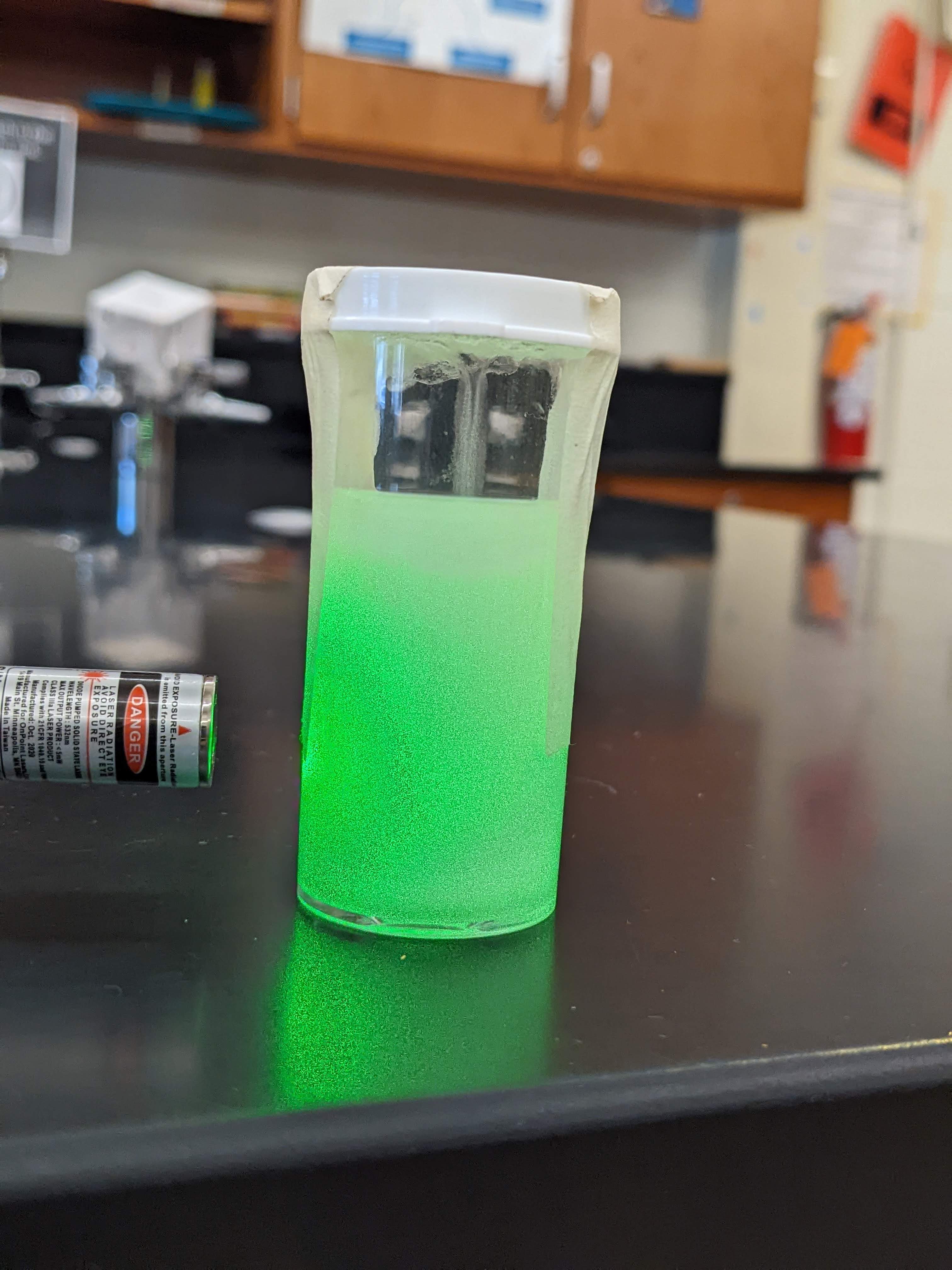
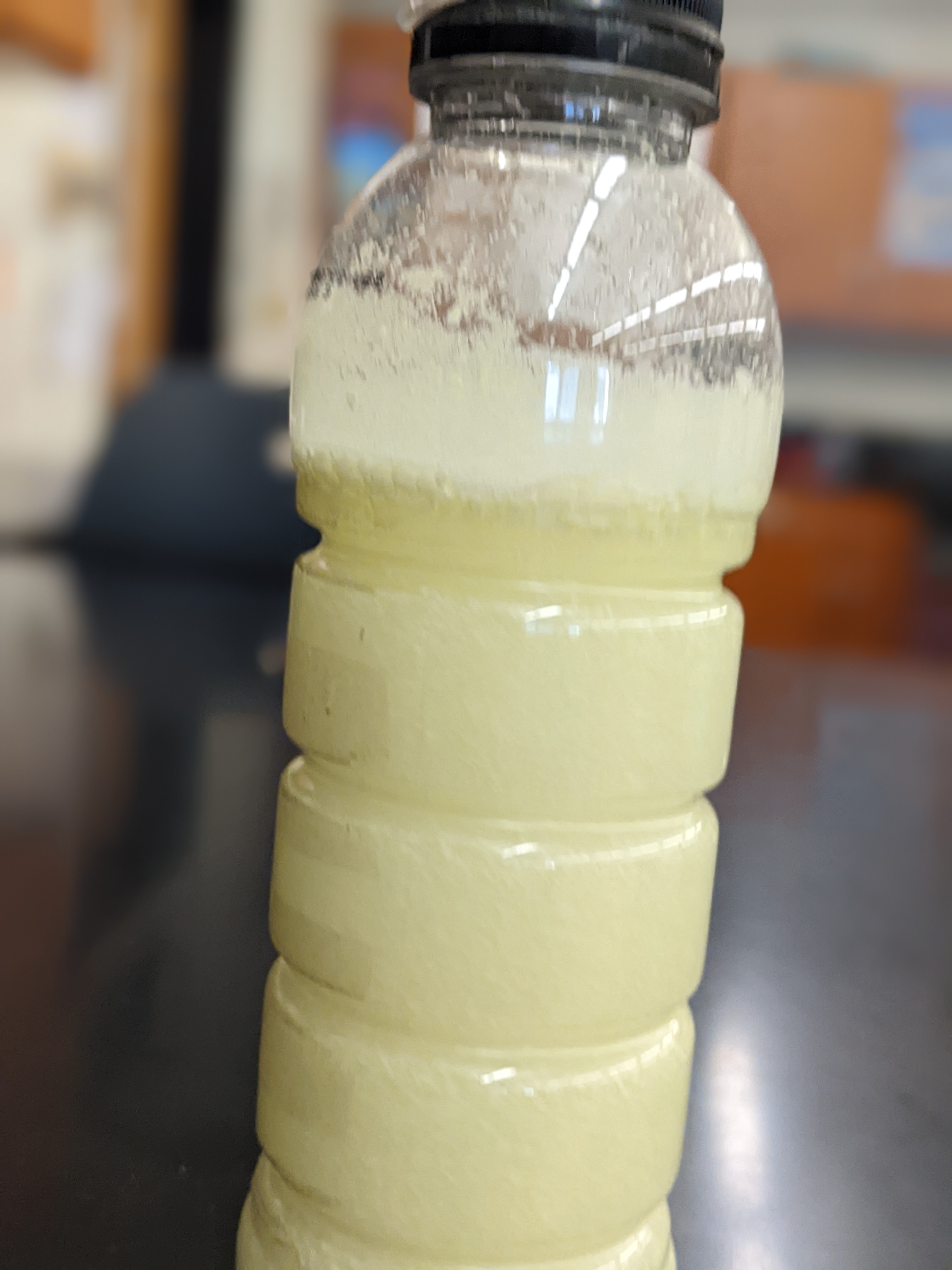
Look at the image below. Identify this mixture as a solution, colloid, or suspension.
Write your answer as a Claim.
1 point
1
Question 99
99.
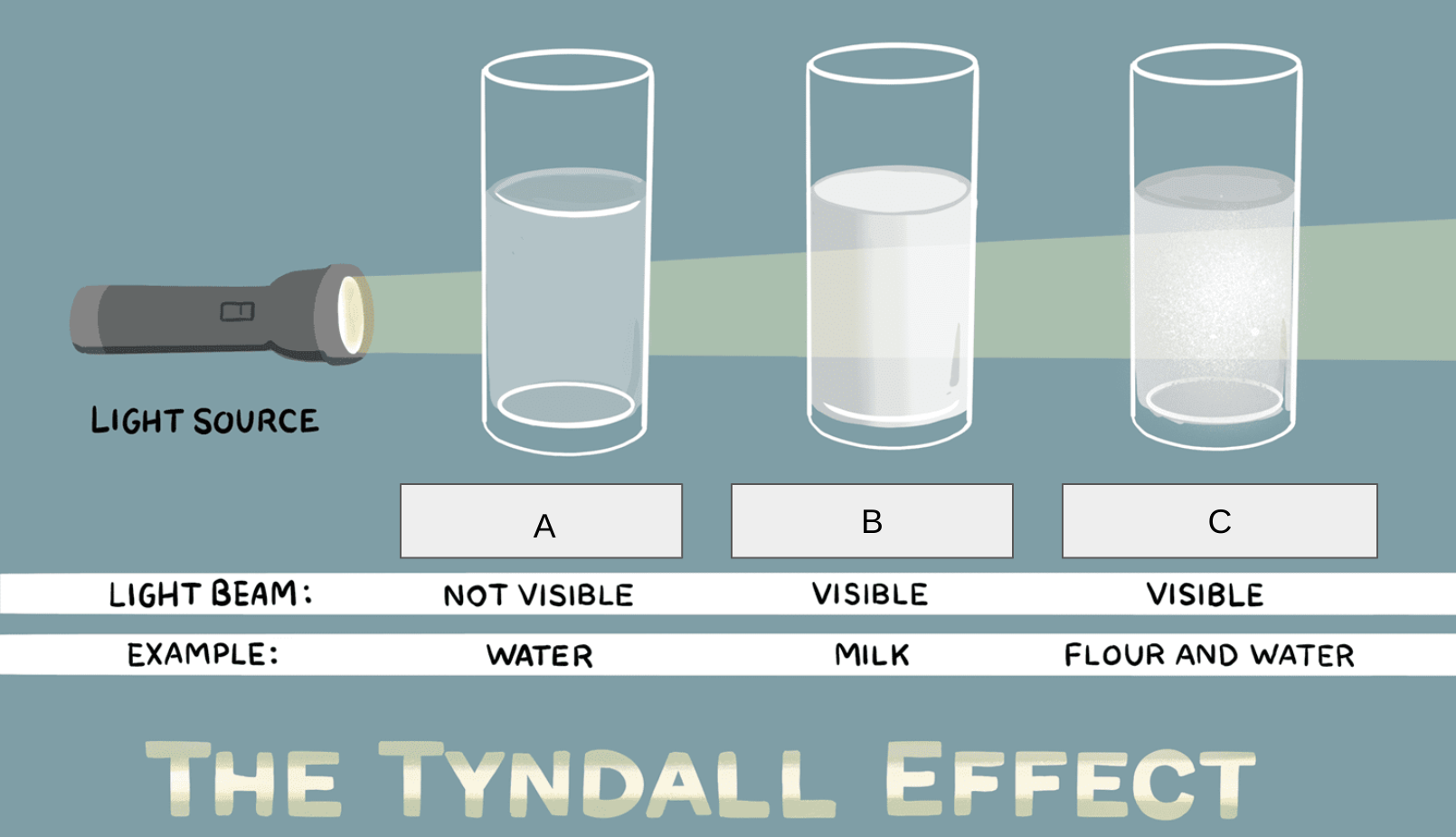
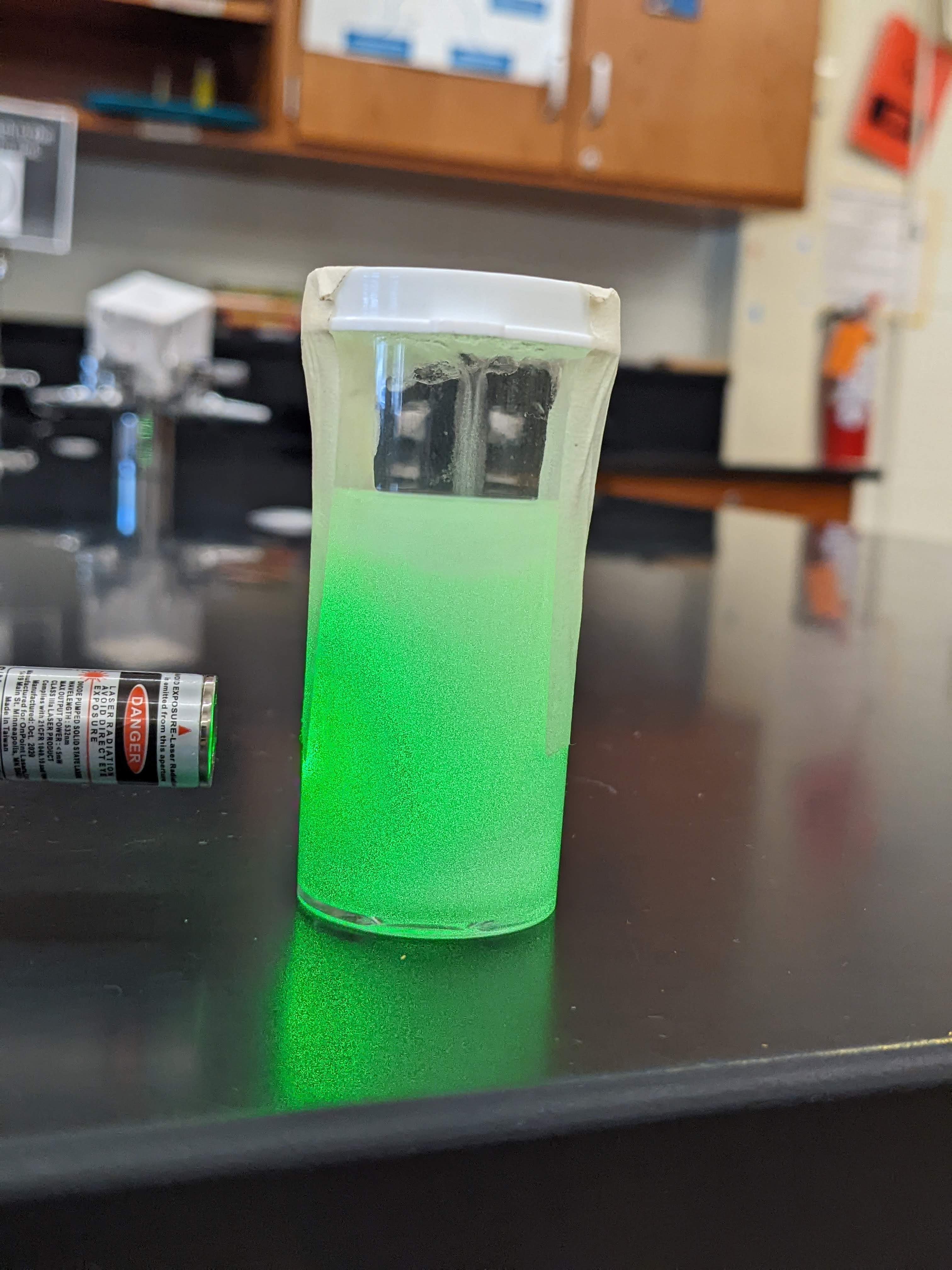
In the picture above a green laser shines into the substance.
Select 2 pieces of evidence to support your previous claim regarding the pictured substance.
1 point
1
Question 100
100.
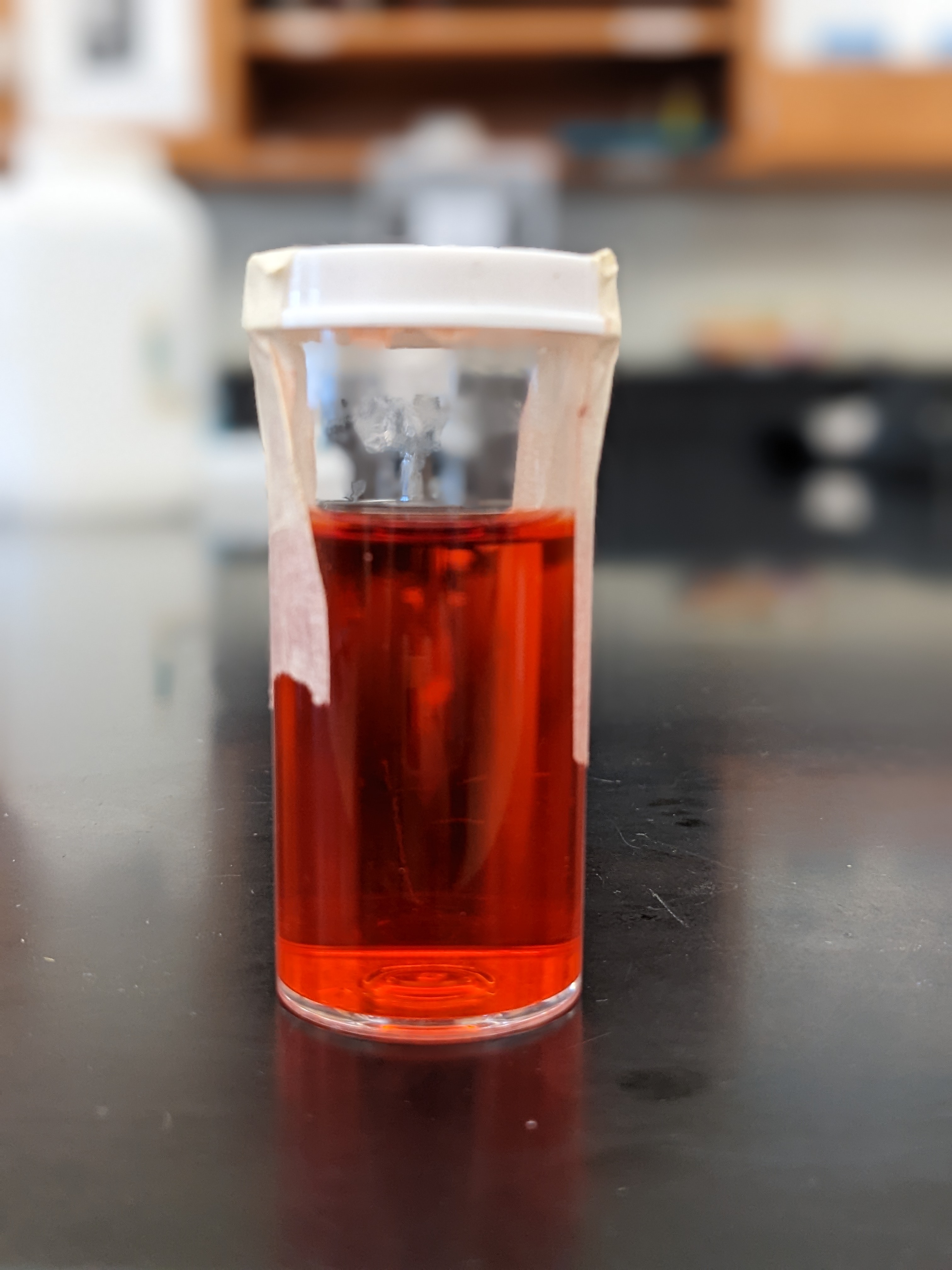
Based on the image, what type (or types) of mixture(s) could be created in the glass on the right?
Provide evidence for your claim. Can you definitively classify the mixture? If not, explain what further evidence you would need.
1 point
1
Question 101
101.
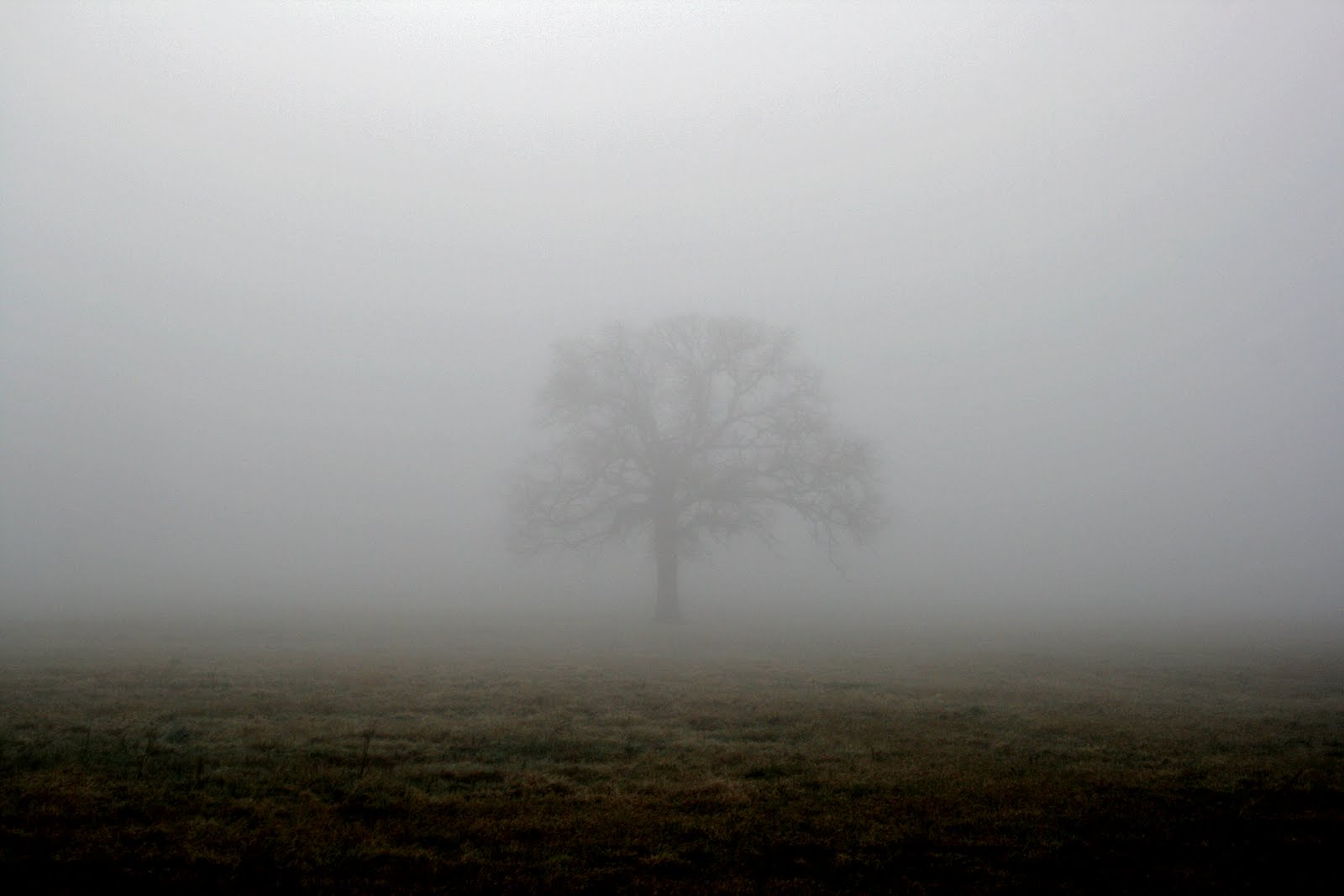
Mr. Stuart says the fog in the image above represents a solution.
Write 1 evidence statement, that would support the claim that this is NOT a solution.
(Write your evidence as if you were writing it in a CER. Write ONLY THE EVIDENCE).
1 point
1
Question 102
102.
Select ONLY the homogeneous mixtures below.
1 point
1
Question 103
103.
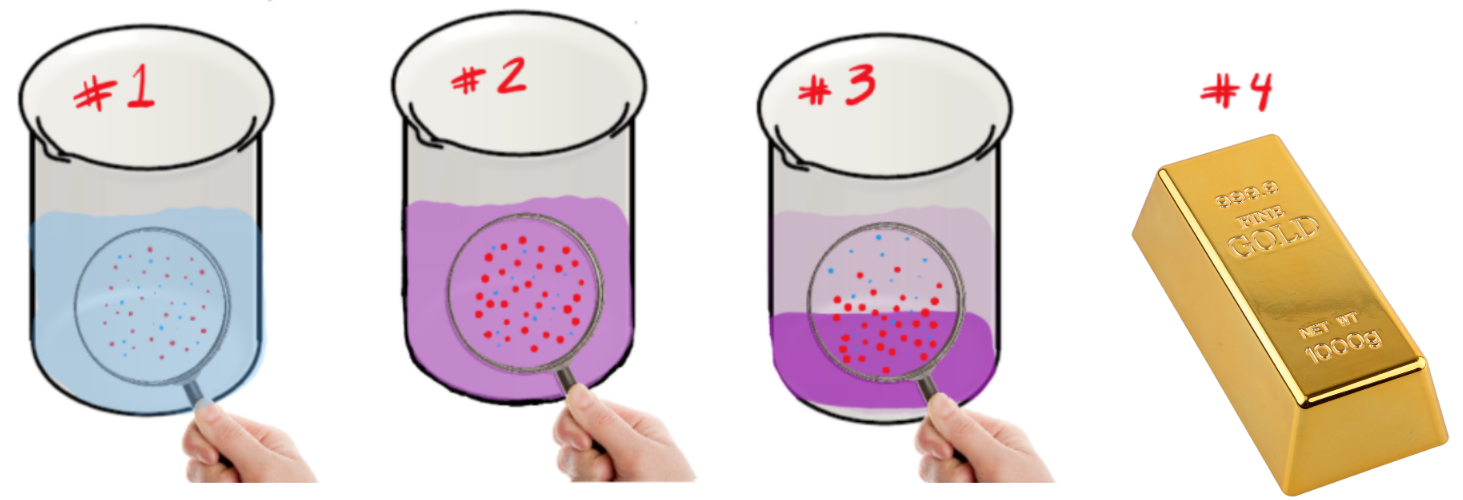
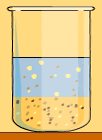
Drag the image labels below to the correct category.
(Each image is used once.)
Image 1
Image 2
Image 3
Image 4
Pure Substance
Solution
Colloid
Suspension
1 point
1
Question 104
104.
What could you do to make a solute (like salt) dissolve faster in water?
1 point
1
Question 105
105.
What type of mixture is this?
1 point
1
Question 106
106.
What type of mixture is this?
1 point
1
Question 107
107.
Move the image up or down to match the correct category.
(The images below are student images demonstrating the effect of light on Solutions, Suspensions, and Colloids)
Draggable item
arrow_right_alt
Corresponding Item
arrow_right_alt
Colloid
arrow_right_alt
Solution
arrow_right_alt
Suspension
1 point
1
Question 108
108.
Select ONLY the SUSPENSIONS below.
5 points
5
Question 109
109.
You find a mysterious liquid. All parts of the liquid appear the same, even after sitting for a week. You put the liquid in a centrifuge and it separates into 2 parts. You shine a light into the liquid and the liquid appears to glow.
Write a CER to support your claim regarding what type of substance you've found.
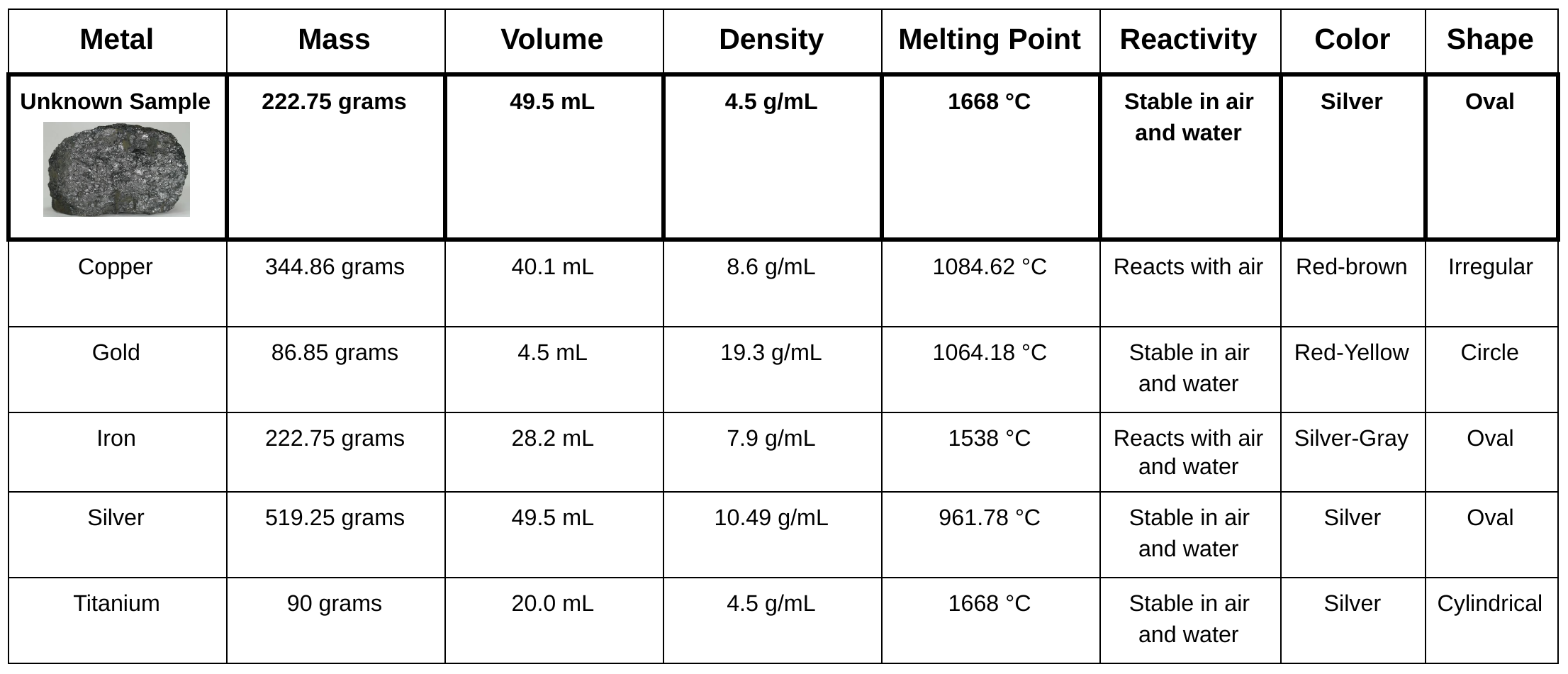
You need to identify an unknown sample of metal. Identify the sample by comparing your observations, to the known samples from your science teacher in the table above.
Make a claim identifying your metal and support it with 4 pieces of evidence. Finish your claim by providing reasoning.
2 points
2
Question 110
110.
Claim
2 points
2
Question 111
111.
Evidence₁
2 points
2
Question 112
112.
Evidence₂
2 points
2
Question 113
113.
Evidence₃
2 points
2
Question 114
114.
Evidence₄
4 points
4
Question 115
115.
Reasoning
Lock Question Bank
1 point
1
Question 116
116.
A bottle of salad dressing must be shaken before it is poured onto a salad in order to evenly mix the particles. How can this salad dressing be classified before it is shaken?
1 point
1
Question 117
117.
What am I?
1 point
1
Question 118
118.
What am I?
1 point
1
Question 119
119.
What am I?
1 point
1
Question 120
120.
The best way to get the sugar out of a sugar-water solution is to ________.
7 points
7
Question 121
121.
Classify each substance as either heterogeneous or homogeneous. (Be sure to classify all 7 substances)
vinegar
steel
lemonade
Chocolate chip ice cream
a glass of OJ, pulp-free
oil and water
rice and beans
Heterogeneous
Homogeneous
1 point
1
Question 122
122.
How does the amount of light affect the growth of a plant?
Identify the Independent Variable in the question above.
1 point
1
Question 123
123.
Mr. Beaker normally uses praise as a reward to train his dog. He wants to know the best way to train his dog, so he sets up an experiment to find out if there is a better way to get his dog to respond to commands. Identify the dependent variable.