Log in
Sign up for FREE
arrow_back
Library
Homeostasis Reading
By Katelyn Owens
star
star
star
star
star
Share
share
Last updated over 1 year ago
17 questions
Add this activity
1
2
3
4
5
6
7
zoom_in
1
Question 1
1.
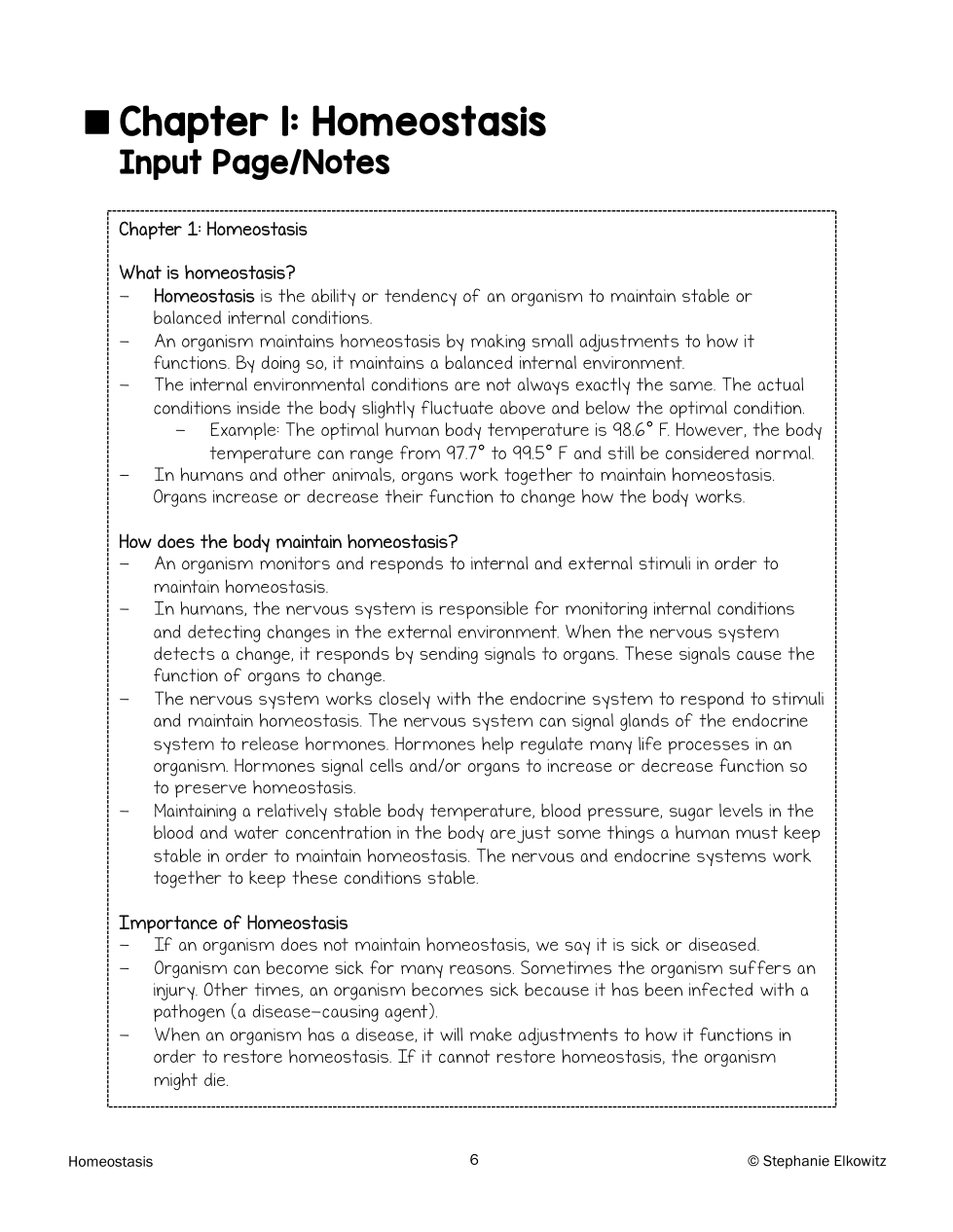
Define homeostasis
1
1
1
1
1
1
8
10
9
11
12
13
14
15
16
17
zoom_in
1
1
1
1
1
1
1
1
1
1
Question 2
2.
An organism maintains homeostasis byt making ______ adjustments
A. Large
B. Small
C. No
Question 3
3.
An organism maintains and responds to what type of stimuli
A. only internal
B. only external
C. both internal and external
Question 4
4.
What body system in humans is responsible for monitoring internal conditions and detecting changes?
A. Digestive
B. Skeletal
C. Endocrine
D. Nervous
Question 5
5.
What body system does the nervous system work closely with?
A. Digestive
B. Circulatory
C. Endocrine
D. Integumentary
Question 6
6.
Name one thing that humans must keep stable in order to maintain homeostasis.
Question 7
7.
What happens if an organism does not maintain homeostasis?
Question 8
8.
When temperature increases, what happens in the body?
A. muscles shiver to generate heat
B. glands in the skin secrete sweat and blood vessels dilate
C. breahing increases to help remove CO2 from the blood
D. the kidneys filter out excess water
Question 9
9.
Blood pH indicates how much ______ is in the blood.
A. oxygen
B. glucose
C. CO2
D. iron
Question 10
10.
When blood pH drops, what happens in the body
A. muscles shiver to generate heat
B. glands in the skin secrete sweat and blood vessels dilate
C. breahing increases to help remove CO2 from the blood
D. the kidneys filter out excess water
Question 11
11.
What is blood pressure?
A. how much blood is pumped in a minute
B. the pressure exerted by blood on the wall of blood vessels
C. how much water is in the blood
D. how much oxygen and carbon dioxide is in the blood
Question 12
12.
Blood pressure is mointored by
A. arteries
B. skin receptors
C. baroreceptors
D. neurons in the brain
Question 13
13.
What happens when blood pressure is too high?
A. the kidneys filter out excess water
B. heart rate slows and blood vessels dilate
C. muscles shiver to generate heat
D. glucose is moved into cells
Question 14
14.
What two organs are most important in maintaining water balance?
A. Skin and Brain
B. Brain and Blood Vessels
C. Kidney and Skin
D. Brain and Kidney
Question 15
15.
Blood sugar levels are maintained by what organ?
A. Liver
B. Pancreas
C. Stomach
D. Lungs
Question 16
16.
When blood sugars are high- such as after eating and digesting food- the pancreas releases ______ into the blood
A. Glucagon
B. CO2
C. Glucose
D. Insulin
Question 17
17.
When blood sugars are low the pancreas releases ______ into the blood
A. Glucagon
B. CO2
C. Glucose
D. Insulin