Sticky Tape Lab
star
star
star
star
star
Last updated almost 4 years ago
16 Nsɛmmisa
5
5

5
5
5
5
5
5
5
5
5
5
10
10
5
5
1. Take a 15 cm piece of transparent tape and make a handle on the end by folding under the first cm of tape, sticky side to sticky side. Place this tape on top of the lab table. This is the base tape.
2. Attach a second similarly prepared strip of tape onto the base tape. Label this tape “T” for top.
3. Repeat steps 1 and 2 so that you have two sets of base and top tapes.
4. Quickly peel the first of the T tapes from the base, and hang the T tape from the edge of the table.
5. Quickly peel the second of the T tapes from the base and slowly bring the second T tape near the hanging T tape.
Describe what you see from the interaction. (Complete sentences) <Include a picture below and use arrows to show the direction the tape moved in the picture.>
Does the interaction change with the distance between the tapes? (Complete sentences) <Include a picture of any changes with the interaction from #1.>
6. Repeat steps 1 through 3 above, but do not label the tapes yet. Place another 15 cm tape with handle on top of each of the tape sets. You now have two sets of 3-layer tapes.
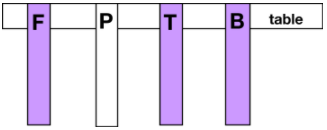
7. Label uppermost tape “T” for top, and the middle tape “B” for bottom.
8. Cut 2 pieces of paper, the same dimensions as the tapes, and hang one from the edge of the table. Label the hanging paper “P." Approach the hanging paper with the other piece of paper.
Describe what you see when the paper approaches the hanging piece of paper. (Complete sentences) <Include a picture of this interaction.>
Describe what you see when the foil approaches the hanging piece of foil. (Complete sentences)<Include a picture of this interaction.>
10. Peel one set of T and B tapes from its base tape, keeping the T and B tapes together. Quickly peel them apart.
11. Hang each strip next to the hanging paper and foil.
12. Repeat step 10 with the other set of tapes.
13. With a T tape hanging from one hand and a B tape hanging from the other, experiment by approaching each of the hanging tapes.
Describe and take a picture of hanging foil with the T in your hand. (Complete sentences)
Describe and take a picture of hanging paper with the T in your hand. (Complete sentences)
Describe and take a picture of hanging T tape with the T in your hand. (Complete sentences)
Describe and take a picture of hanging B tape with the T in your hand. (Complete sentences)
Describe and take a picture of hanging Foil with the B in your hand. (Complete sentences)
Describe and take a picture of hanging paper with the B in your hand. (Complete sentences)
Describe and take a picture of hanging T tape with the B in your hand. (Complete sentences)
Describe and take a picture of hanging B tape with the B in your hand. (Complete sentences)
From your observations, what evidence supports the claim that two distinct types of charges exist? (Complete sentences) <Use observations or pictures from your previous questions to support your answer.>
Account for these phenomena using the 'electron fluid' model of charge behavior by using your pictures and assigning charges to pieces of tape with charges in your report. Describe in words what tape has what charge and where it came from. (Complete sentences) <Use observations or pictures from your previous questions to support your answer.>
From your observations and interactions, what charge do you think the bottom tape had a positive/negative charge? (Complete sentences)
From your observations and interactions, what charge do you think the top tape had a positive/negative charge? (Complete sentences)