LW: Flex (3/2) Version B
star
star
star
star
star
Last updated about 3 years ago
8 Nsɛmmisa

0

0
0
0
0
0
0
2
Maya wonders which types of light could heat up a sheet of aluminum. The table below shows what happens when different types of light hit the aluminum.
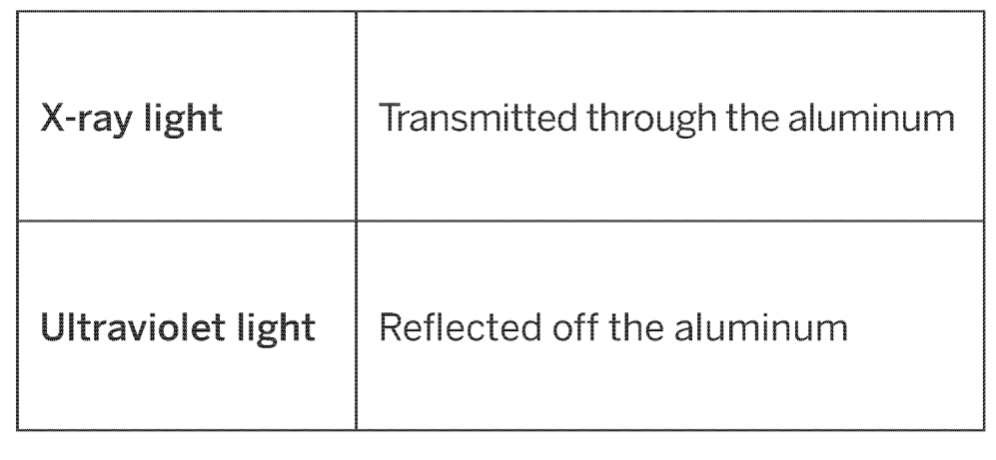
Explain why will neither type of light cause the aluminum to change/heat up?
"I do not think that either type of light will cause the aluminum to change because ... "
(think: what is the ONLY type of light interaction that can cause an object to change?")
Complete the guided notes below.
How does changing amplitude affect the way we will experience the three waves?
CFS:
Accurately identifies the differences in light sources
Accurately describes the relationship between wave properties and outcomes
What evidence do you have that Laser 2 is different from the type of light emitted by Laser 3?
CFS:
Accurately identifies the differences in light sources
Accurately describes the relationship between wave properties and outcomes
"I know that laser 2 is a different type of wave from laser 3 because ...
(think: what do you notice about wavelength or amplitude?)
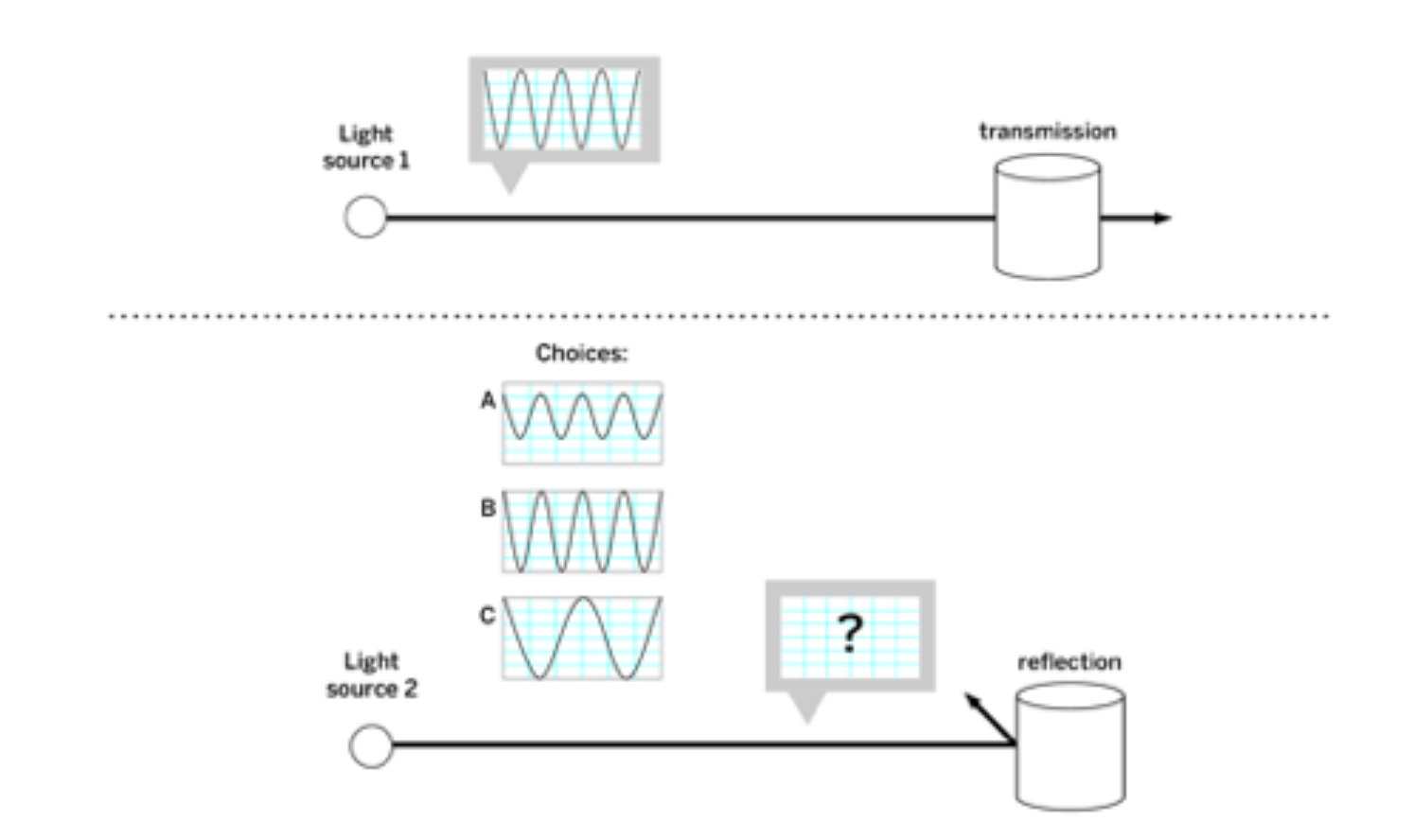
Why must the Lightsource 1 and 2 be different types of waves?
CFS:
Accurately identifies the differences in light sources
Accurately describes the relationship between wave properties and outcomes
How does changing amplitude AND wavelength affect the outcome of two waves?
CFS:
Accurately identifies the differences in light sources
Accurately describes the relationship between wave properties and outcomes
"Changing the amplitude of a wave changes the (type or intensity)
Changing the wavelength of a wave changes the (type or intensity)"
Which wave will reflect when it hits the cylinder in the question above. Explain.
CFS:
Accurately identifies the differences in light sources
Accurately describes the relationship between wave properties and outcomes
"Wave (2A OR 2B OR 2C) is most likely to cause the cylinder to change.
This is because ... "
(Think: Do you want to pick a wave that has a different wavelength or amplitude?)
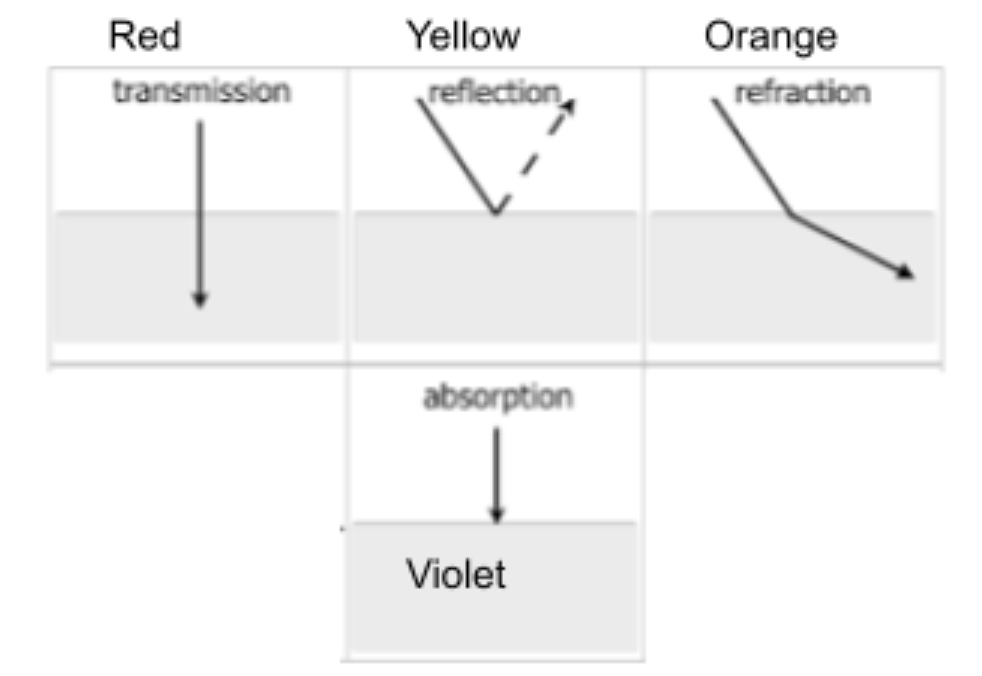
In an experiment Aidan is trying to identify how different types of color interact with different colors of paint. Below shows the 4 different ways light can interact with a material. Aidan wants the paint to last as long as possible without changing, fading.
Describe what evidence you can find to determine which colors would be best to use and which would be worst?
CFS:
Accurately identifies the differences in light sources
Accurately describes the relationship between wave properties and outcomes
"I think the best color(s) that will not change over time are ...
I think that the color that would chagne and fade over time is/are ... "
(Think: what is the only type of light interaction that can cause an object to change?)