FM: Lesson 1.2 (9/1) Version B
star
star
star
star
star
Last updated about 3 years ago
15 Nsɛmmisa

0
0

0
0
0
0
0
0
0
0
0
1
1
1
2
How can the motion of a soccer ball that is already moving change speed or direction?
An object that is already moving can . . .
How can the motion of a soccer ball that is NOT moving change speed or direction?
An object that is not already moving can...

Velocity: speed in a particular direction
What we are doing:
Exploring Changes in Motion:
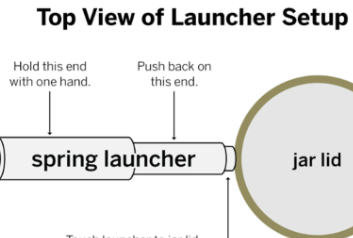
Use the materials on your tray to investigate the guiding question. Record your notes in the table below. One possible answer has been provided to help you get started.
Pre-lab hypothesis: How do forces affect velocity and motion?
"Forces can affect motion by …"
Independent Variable (IV):
The cause of the change/result
Dependent Variable (DV):
The effect based on the change
What relationship do you observe between force and distance?
Directional forces:
Using your knowledge that forces can change the speed or direction an object is moving answer the following questions below.
An object is hit with a force shown by the arrow, identify the direction the object will travel, or if it will speed up or slow down. Circle the best response


Why did the jar lid move different distances and velocities when the distance the spring launcher was pulled back changed?
CFS:
Accurately identifies applied forces by analyzing the movement of objects
Accurately describes how changing independent variables (force) impact the outcomes in testing


Draw an arrow on the correct line and in the correct direction that will indicate that a force is added to make Object A move slower or stop.
Why does Object A move stop when you applied a specific direction and amount of force rather than slow down or change direction?
CFS:
Accurately identifies applied forces by analyzing the movement of objects
Accurately describes how changing independent variables (force) impact the outcomes in testing