Preskoči na glavni sadržaj
Prijava
Sign up for FREE
arrow_back
Biblioteka

FM: Lesson 1.5a (9/22)

star
star
star
star
star
Posljednje ažuriranje about 3 years ago
13

Objective: SWBAT will be able to identify the direction and strength of different friction forces by analyzing the movement of objects

Do Now:

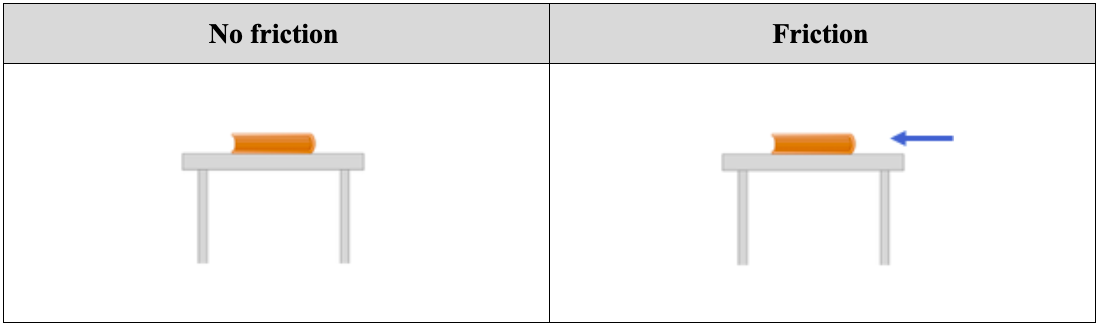
Imagine you push a book across an incredibly slippery surface. It slides right across because there is NO friction. Next, you push the same book across a rougher surface that exerts friction.

0
0

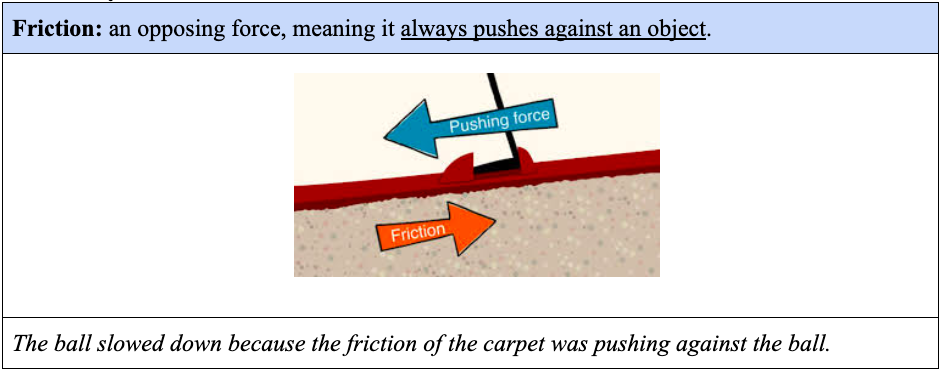
Guided Notes: Friction
0

Practice:

Use the launcher to exert different strength forces on the jar lids. Observe how the velocity and distance change in response to the same mass of jar lids. Review the steps below.

Pre-lab Questions:

Variables:

- Surface Friction

- Distance Traveled

"If I change __ (IV), then __ (DV) changes."

0
0
0

Data Analysis

0
0
0

Independent Practice:

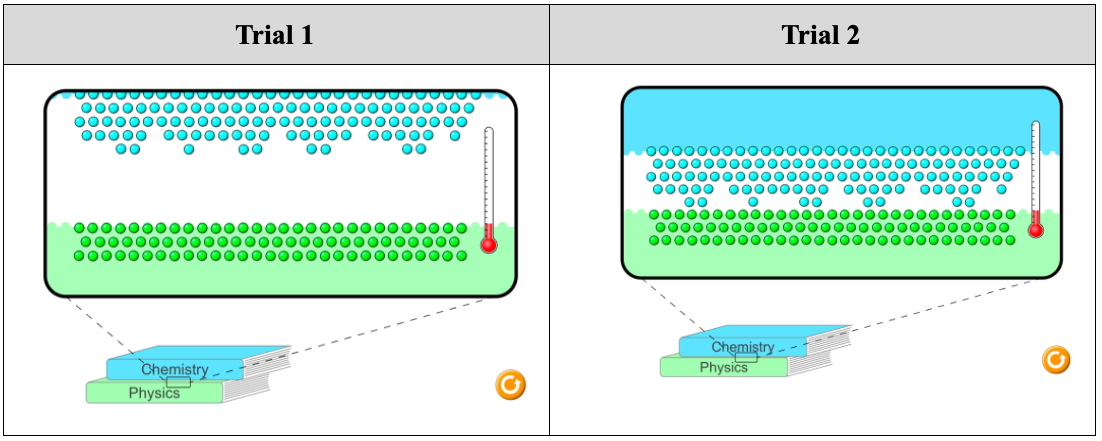
Analyze the two images below to determine the effect of friction.

3

Exit Ticket:
1
1
2
Pitanje 1
1.

Will the velocity of the book change as it moves across the surface with NO friction? Explain your answer.

Pitanje 2
2.

Will the velocity of the book change as it moves across the surface WITH friction? Explain your answer.

Pitanje 3
3.

Imagine you push a book across an incredibly slippery surface. It slides right across because there is NO friction. Next, you push the same book across a rougher surface that exerts friction.

How does the velocity of the book change as it moves across the surface WITH friction? Explain your answer using the direction of force.

Pitanje 4
4.

What will you change (the independent variable) in each test? ________________________

Pitanje 5
5.

What will you observe (the dependent variable) as a result of that change? __________________

Pitanje 6
6.

Complete the following data table by completing 6 different tests with the spring launcher. After each test record your data in the table below.

Pitanje 7
7.

Which jar lid surface allowed for the greatest distance of travel? (check one)

Pitanje 8
8.

How does friction impact the distance an object is able to travel?

CFS:

  • Accurately identifies changes in the dependent variable by analyzing the movement of objects

  • Accurately describes the relationship between distance traveled and friction forces

Pitanje 9
9.

Why do you think the jar lid slowed down and came to a stop rather than changing direction?

CFS:

  • Accurately identifies changes in the dependent variable by analyzing the movement of objects

  • Accurately describes the relationship between distance traveled and friction forces

Pitanje 10
10.

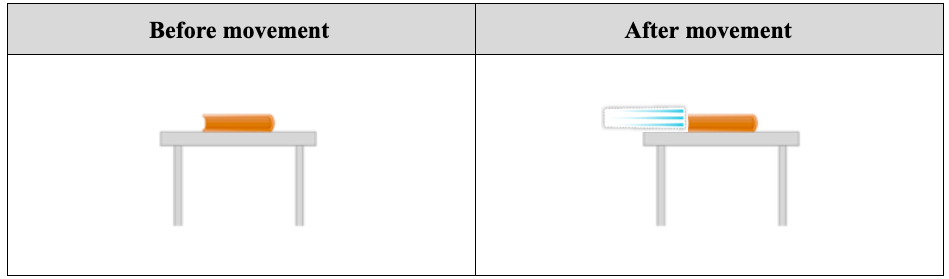
Compare the speed of each book as they slide off the table. If each receives the same applied force, which is likely to fall first? Explain.

CFS:

  • Accurately identifies changes in the dependent variable by analyzing the movement of objects

  • Accurately describes the relationship between distance traveled and friction forces

Pitanje 11
11.

What direction of force was applied to the book allowing it to move?

Pitanje 12
12.

What direction of force would need to be applied for it to go off the table to the left after it is in motion?

Pitanje 13
13.

Describe how friction force can be used to stop the book before it falls off the table without anyone touching it.

CFS:

  • Accurately identifies changes in the dependent variable by analyzing the movement of objects

  • Accurately describes the relationship between distance traveled and friction forces