FM: Lesson 3.4a (10.14) Version B
star
star
star
star
star
Last updated about 3 years ago
4 Nsɛmmisa

0

0
0
2
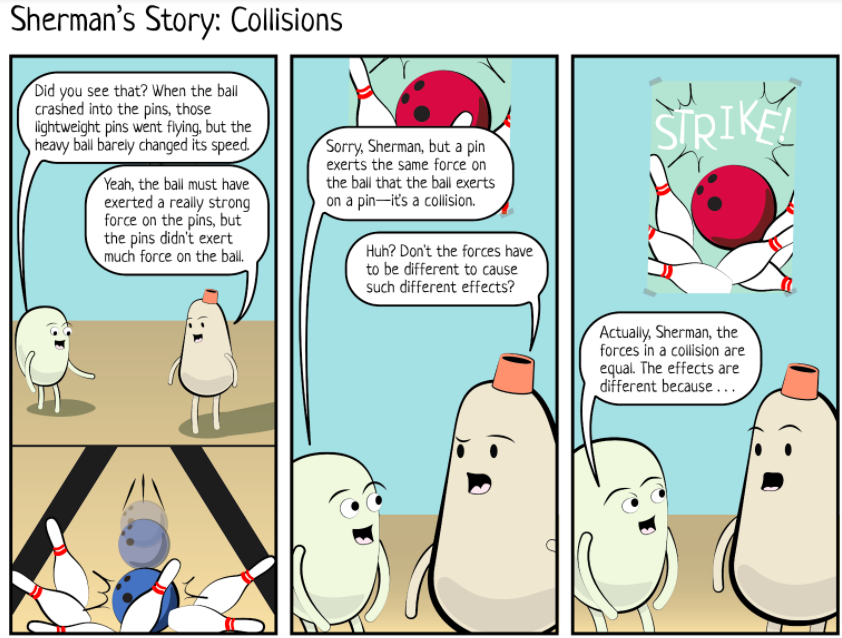
Why do colliding objects of unequal mass experience different acceleration? (think: F=ma)
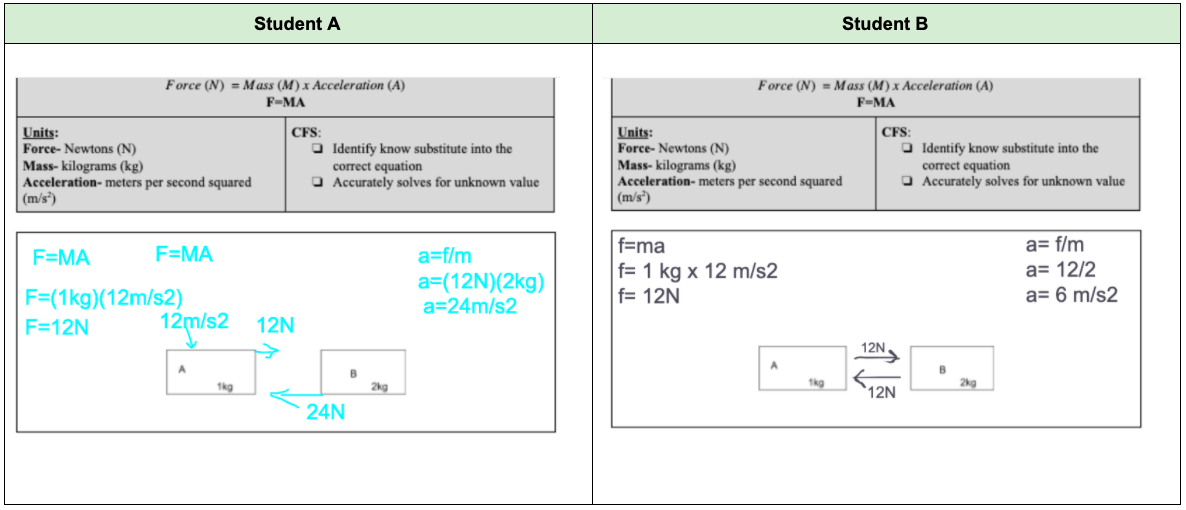
What did Student B do to correctly find the acceleation of 'B'?
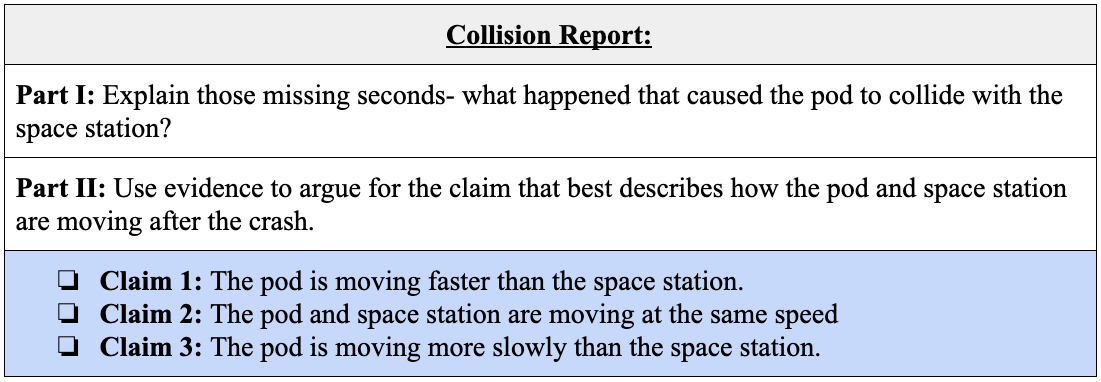
Part I:
In the first part, you will explain what happened to cause the pod to collide with the space station during the missing seconds. We’ve already agreed as a class that Claim 1 best describes what happened, but you’ll need to fully explain this to Dr. Gonzales, using evidence.
Part II:
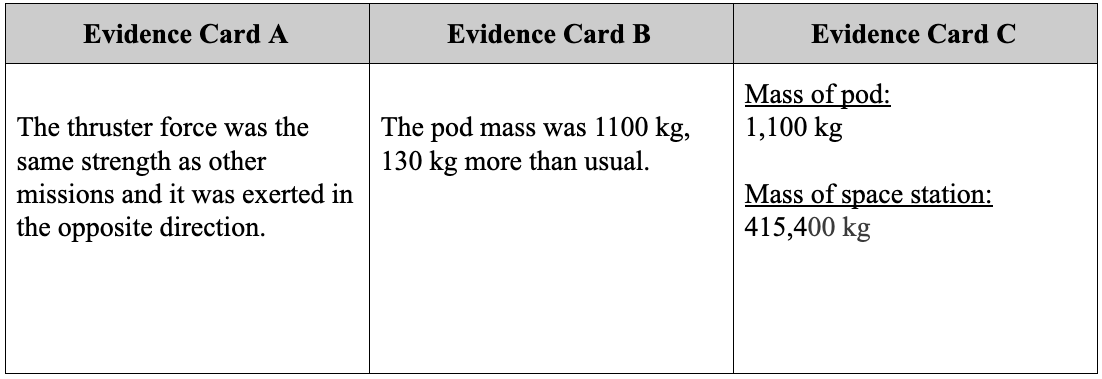
In the second part, you will explain the motion of the pod after they regained communication. The second part is focused on comparing the motion of the pod to the space station after the collision. It is an argument because you will be deciding which claim you feel is best supported by the new evidence.
Explain the motion of the pod after they regained communication. The writing part is focused on comparing the motion of the pod to the space station after the collision. It is an argument because you will be deciding which claim you feel is best supported by the new evidence.

In your final report to Dr. Gonzales, use evidence to explain what happened during the missing seconds and compare the pod’s motion to the space station's motion after the collision.
Use your completed Reasoning Tool, model, table, and suggested words and phrases to help with your explanations.

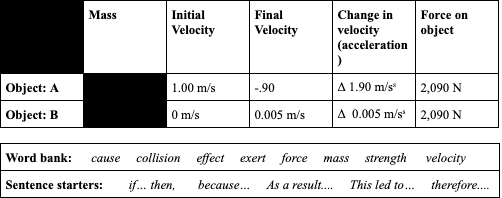
Why do you think Object A has such a greater acceleration than Object B?
CFS:
accurately identifies the changes to each object in a collision
accurately describes the relationship between force, mass and velocity in a collision
accurately identifies the strongest source of evidence from the scientific data