1
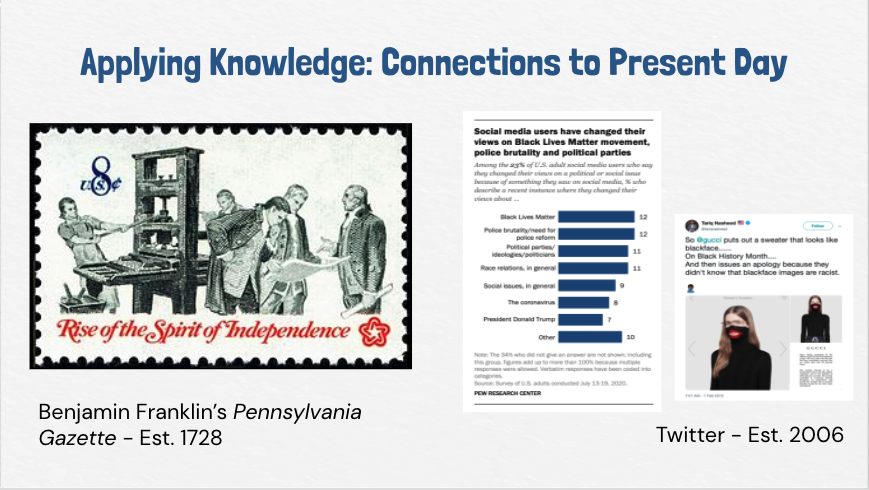
How is the Revolutionary spirit of the press reflected in our lives today?
How is the Revolutionary spirit of the press reflected in our lives today?
Content Objective: I will be able to make connections between a current event and an event from the American Revolution.
Standard Objective: I will be able to determine implicit relationships between and among individuals, events, or ideas.
Warm Up: Please answer the following questions based on your understanding of last night’s pre-work:
Content Objective: I will be able to make connections between a current event and an event from the American Revolution.
Standard Objective: I will be able to determine implicit relationships between and among individuals, events, or ideas.
Warm Up: Please answer the following questions based on your understanding of last night’s pre-work:
Please rate how well you understood last night's reading on a scale from 1 to 4. If you have any questions, drop them in the "Show Your Work" area.
Do you remember the Chicago Soda Tax of 2017? Why were Chicagoans so upset about a one-cent per ounce tax on soda and did you agree with them?
One interesting historical fact I learned from the pre-work is…
Building Knowledge Together: Follow along as our class goes over the notes!
The American Revolution arose from growing tensions between Great Britain and residents of its 13 North American colonies over the political and economic
After the French and Indian War, or Seven Years’ War (1756-1763), the British government raised new taxes in an attempt to pay for the expensive conflict, - most notably the Stamp Act of 1765, the Townshend Acts of 1767 and the Tea Act of 1773. Their attempt were met with heated protest among many colonists, who resented their lack of
Building Knowledge Together: Why did American colonists protest the new laws passed by the British Parliament?
Warm Up #2: In what ways do you have representation at Bulls? In what ways are you not represented?
How is the Revolutionary spirit of the press reflected in our lives today?
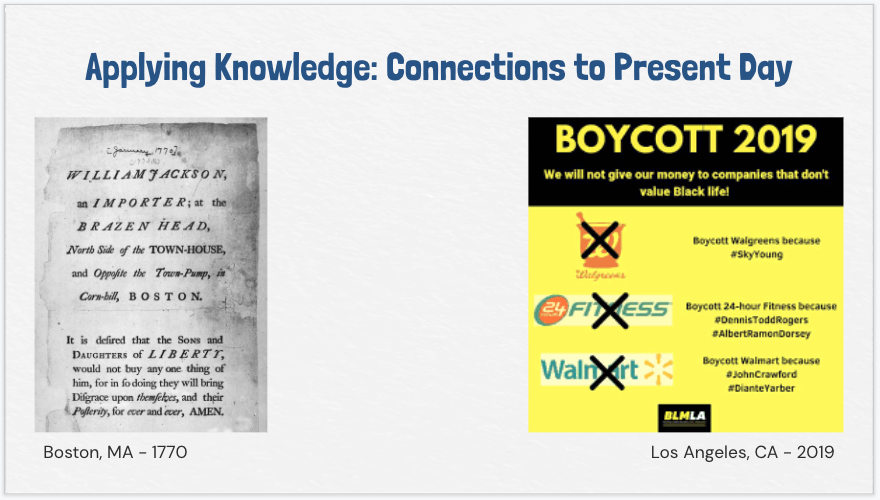
How is the Revolutionary spirit of boycotts reflected in our lives today?
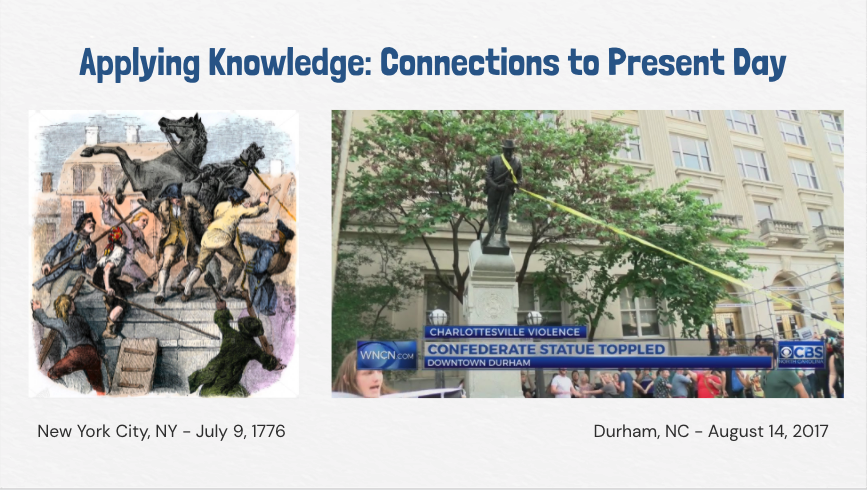
How is the spirit of the toppling statutes reflected in our lives today?
Exit Ticket: Have you learned about the American Revolution in the past? How did this activity change or add to your understanding of the American cause for independence?
Please evaluate how well you understood today’s lesson on a scale from 1 to 4: