1
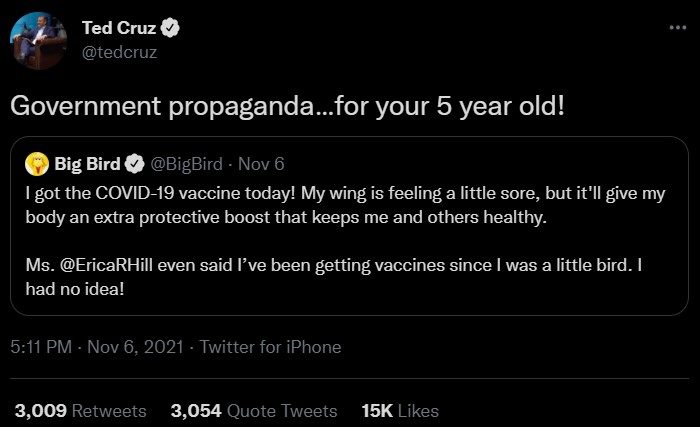
Why do you think Ted Cruz believes Big Bird's tweet is propaganda?
Why do you think Ted Cruz believes Big Bird's tweet is propaganda?
Content Objective: I will be able to compare the perspective of two different portrayals of the Boston Massacre.
Standard Objective: I will be able to determine the point of view or perspective from which an image is related.
Content Objective: I will be able to compare the perspective of two different portrayals of the Boston Massacre.
Standard Objective: I will be able to determine the point of view or perspective from which an image is related.
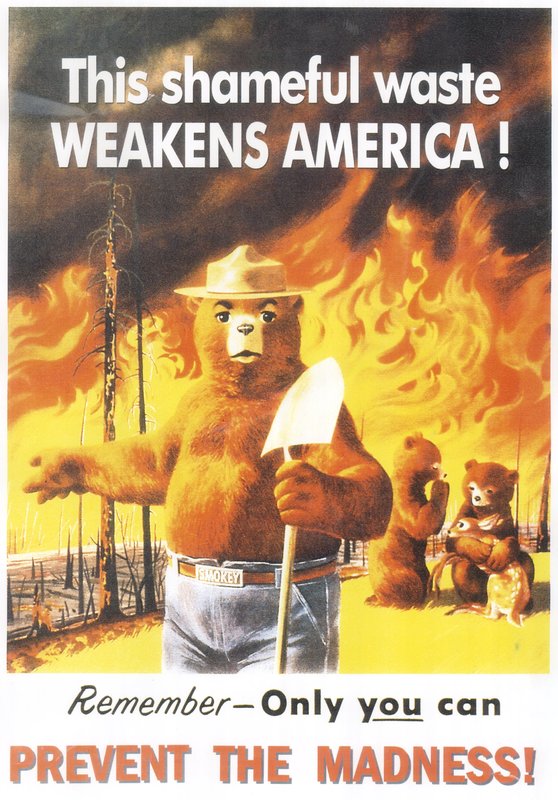
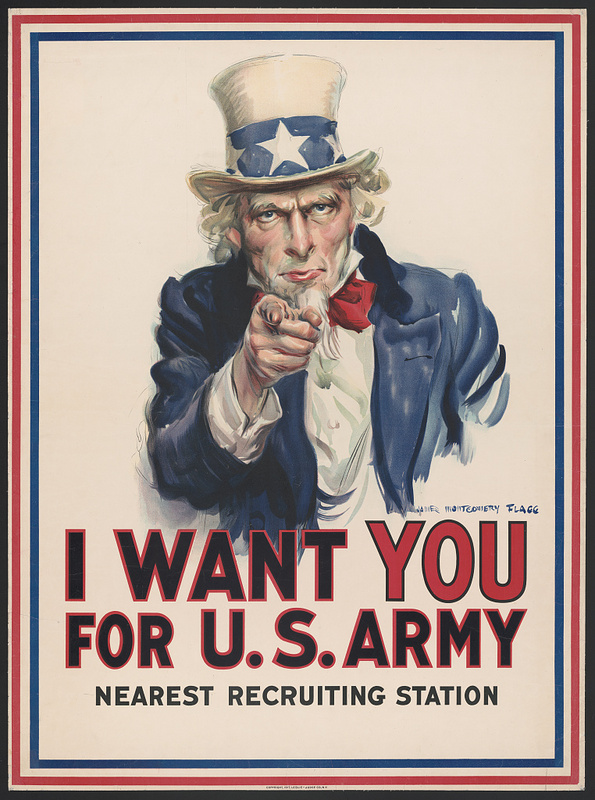
Have you heard of the term "propaganda" before?
Propaganda is information that is primarily used to influence an audience and promote a specific cause, which may or may not be objective. Propaganda can be found in news and journalism, government, advertising, entertainment, education, and activism. Simply put, propaganda is a communication tool to convince you to feel or act a certain way.
Why do you think Ted Cruz believes Big Bird's tweet is propaganda?
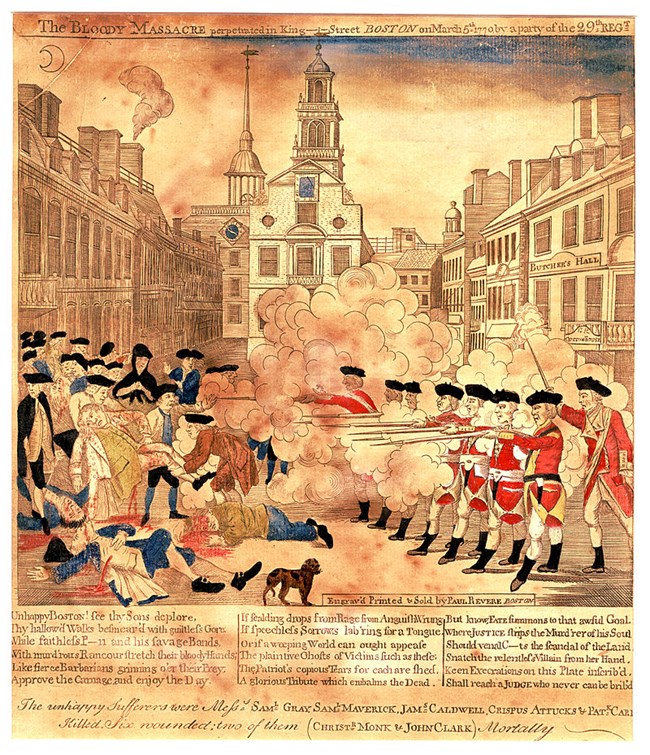
Circle any important details you notice in this engraving. What stands out most to you?
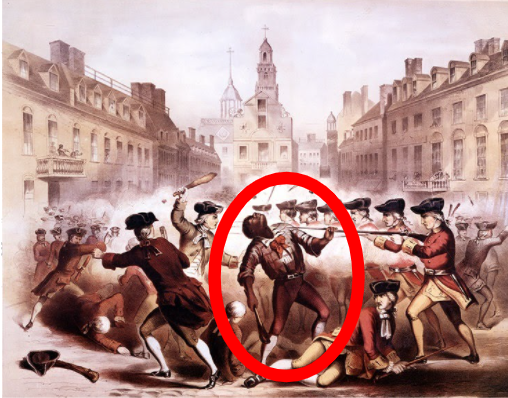
Do you think this painting is intended to be anti-colonist or anti-British propaganda? Why?
How does the language of "massacre" contribute to anti-British sentiment/feelings? Why not use a word like "accident?"
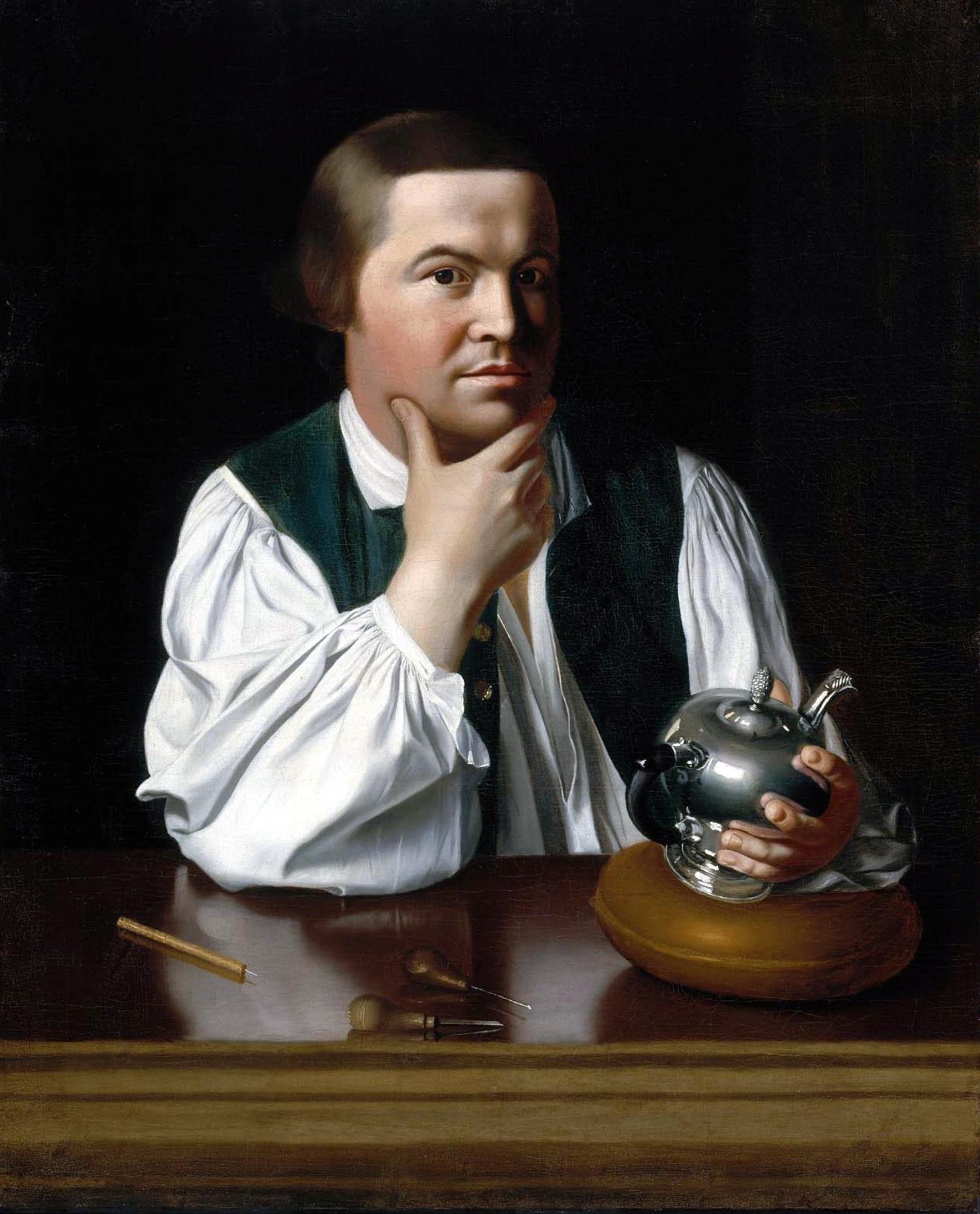
How does knowing that Paul Revere created the engraving further prove that this engraving is anti-British propaganda?

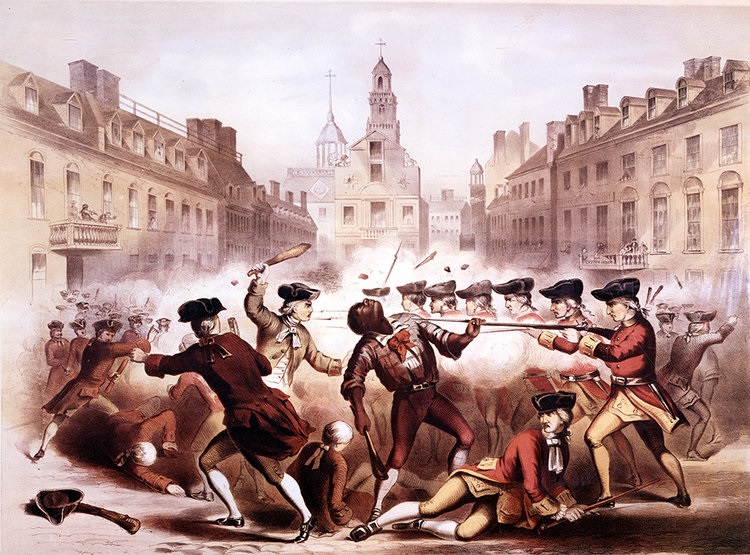
Circle any important details you notice in this painting.
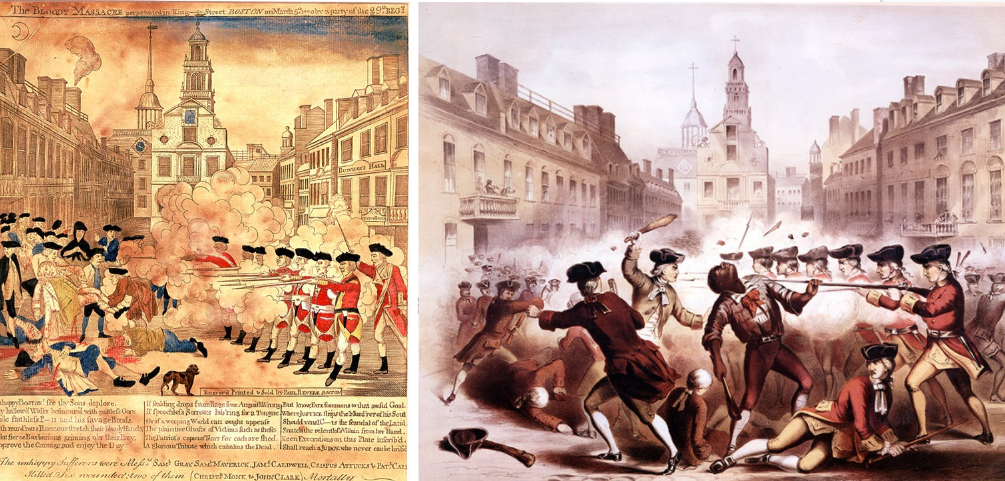
The person left out of Revere's engraving is Crispus Attucks, a mixed race man who was credited as the leader and instigator of the event. Both of these images are considered propaganda to help spread anti-British feelings across the 13 colonies. AND YET, why would Revere consciously choose to leave out such an important person in his engraving?
Take a guess! Why would Revere consciously choose to leave out such an important person in his engraving?
While both artists depict the British as evil, Paul Revere's omission of Attucks suggests that he believed that public awareness of a Black man’s important role in the Boston Massacre would have undermined the cause for independence. In other words, Revere believed that colonists would be less outraged over a Black man's death, than they would over a White man's.
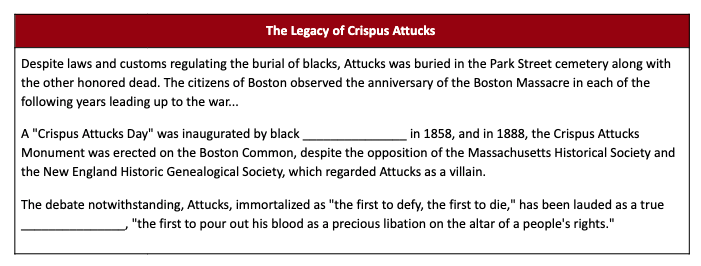
A martyr is...
Exit Ticket: How do you think Attucks's story represents a larger narrative of how Black men are depicted in American history?
Please evaluate how well you understood today’s lesson on a scale from 1 to 4: