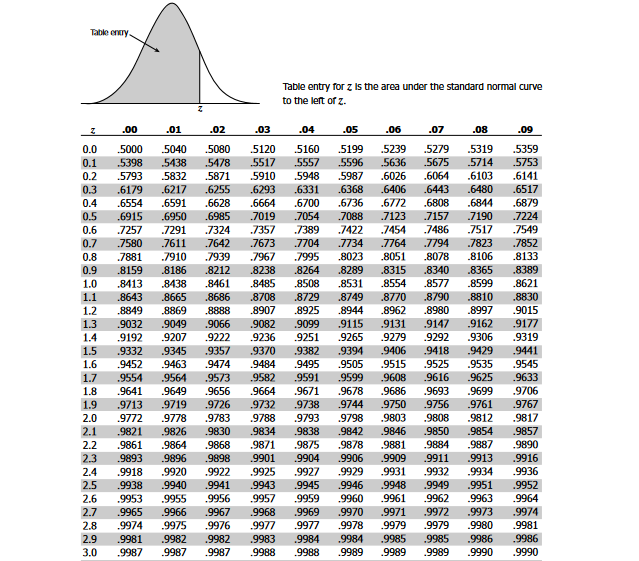
Mean and Standard Deviation Calculator.
Use POPULATION standard deviation.
https://www.desmos.com/scientific
N = size of the data (number of values)
z = z-score
margin of error (MOE) =
Mean and Standard Deviation Calculator.
Use POPULATION standard deviation.
https://www.desmos.com/scientific
N = size of the data (number of values)
z = z-score
margin of error (MOE) =
Mean and Standard Deviation Calculator.
Use POPULATION standard deviation.
https://www.desmos.com/scientific
N = size of the data (number of values)
z = z-score
margin of error (MOE) =
Categorize each description with the type of study it describes.
a student polls randomly selected peers to find out which sport they prefer
involves a researcher asking a randomly selected sample the same set of questions
in a clinical trial, a sample of patients receive a new blood pressure medication. Their blood pressures are measured and compared to a sample that did not receive medication.
involves a reasearcher measuring and making notes on a sample of the population
an employee records the number of shoppers who use plastic bags, and the number of shoppers who bring their own reusable bags
involves a researcher dividing a population into multiple groups, giving each different treatments, and measuring the resulting differences.
experiment
sample survey
observational study
Categorize each trait according to the type of data collection method.
does not generate new data, only collects data that is already there
can be tainted with bias unless carefully designed
gets more accurate results with larger samples
involve direct interaction between the analyst and the thing being studied
can be carried out without the sample knowing they are being studied
both surveys and observational studies
both observational studies and experiments
both experiments and surveys
all methods
Which TWO sampling methods involve the highest risk of bias?
Dave sits at a busy intersection and counts the number of cars that use their turn indicators, and the number of cars that don't.
What type of data collection is Dave using?
Andre asks his family members what toppings they like most on their pizza.
What type of data collection is Andre using?
Aliyah creates two different alloys for the new sword she will forge. She makes sample bars of each alloy and observes how they react to water, dirt, and other environmental contaminants. She measures the amount of corroded material after exposure to each contaminant, and compares the durability of each alloy.
What type of data collection is Aliyah using?
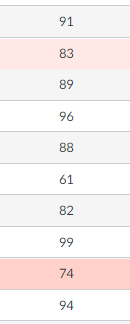
Use the data below to answer the following questions.
What is the mean of this data?
Enter your answer as a number rounded to the nearest tenth.
What is the standard deviation of this data?
Enter your answer as a number rounded to the nearest tenth.
A data value has a z-score of 0.18. According to the z-score, what percentage of population is below this value?
(That is, this z-score is greater than how much of the population?)
Use the data below to answer the following questions.
What is the mean of this data?
Enter your answer as a number rounded to the nearest tenth. (1 decimal place)
The standard deviation of the data is 16.41.
What is the z-score for the data value 31?
Enter your answer as a number rounded to the nearest tenth. (1 decimal place)
Would you expect more data to be above, or below the data value 31?
Use your answer from the previous problem and the z tables to justify. 1 point for correct answer, 1 point for correct and specific justification.
What is the margin of error for this set of data?
Enter your answer as a number rounded to the nearest tenth. (1 decimal place).
A number of students take a test. One student had a z-score of 1.50. What percentage of the class scored higher than the student with a z-score of 1.50?
(That is, this z-score is lower than how much of the population?)
Enter your answer as a percentage (no % sign) rounded to the nearest hundredth.
A data set has a size of 20, a mean of 17, and a standard deviation of 2.
If x is the population mean, what is the reasonable range of values for x implied by the margin of error?
As the sample size increases, the margin of error ______________.