Procedure
1. Begin the simulation by populating the habitat with 3 hares - spread throughout the square.
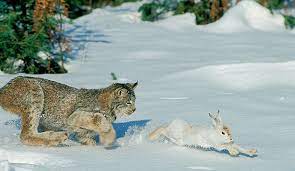
2. Drop the lynx into the square making an effort to capture (i.e., land on any portion of) as many hares as possible. In order to survive and reproduce, the lynx must capture at least three hares when tossed. With the hare population at this stage, lynx survival is virtually impossible. Remove any hares captured and enter the tallies for the first generation.
3. The hare population doubles between generations—multiply “Hares Remaining” by two and enter the resulting number in the “Number of Hares” column for the second generation. Place the required number of hares in the square. If no lynx survived the previous generation another moves into the area since there is now an open niche. Drop the newly recruited lynx — repeating step 2. Remove any captured hares and enter the new tallies.
4. If a lynx is successful it survives until the next generation and also produces offspring—(one per each three hares captured.) Drop a lynx square once for each lynx.
5. As the population builds it is important to separately tally each lynx’s kills, removing captured hares after each lynx is tossed. Determine lynx survival and reproduction using individual lynx capture numbers. Remember, lynx produce one offspring for each three hares captured. If a lynx captures seven hares, three lynx enter the next generation—the original lynx and two offspring. Individual lynx capture numbers should be tallied on a separate sheet of paper and only totals entered in the table.
6. If and when both populations are at zero, start again with 3 hares and 1 lynx. Carry the simulation through 20 generations. You will need to create a line graph using your data. I will show you how to do this if needed.