Describe how valence electrons are involved in ionic bonding.
Calculate the number of protons, neutrons, electrons, mass number and charge of an ion.
Predict the type of ion that an atom will form based on the atom’s location on the periodic table.
Predict how ions are "held" together in order to form an ionic bond.
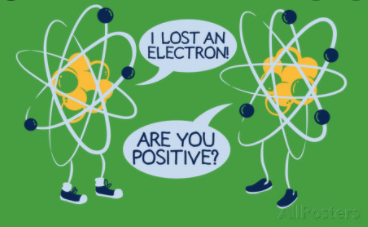
WHY?
When electrons are transferred between two atoms, those atoms are now considered an ion. Many atoms present in nature are not in their 'atom' form, but in their 'ion' form. The ion an atom forms is dependent on its number of valence electrons, and force of attraction between the nucleus and the electrons. In this part of the activity, you will determine what an ion is and how they are formed.
DIRECTIONS: Use the "Atom" screen on the simulation to answer questions 1-8.
If you'd like to have 'Build an Atom' open in a different window, click on the following link: Build an Atom
1 point
1
Question 1
1.
What is the difference between a neutral atom and an ion?
1 point
1
Question 2
2.
Using what you learned from the simulation, define the term 'ion' in your own words.
1 point
1
Question 3
3.
Use the simulation to build a stable, neutral He atom and the following stable ions: Li1+, Be2+, B3+. Draw the atoms or ions in the 'show your work' area, then identify the number of protons and electrons in the atom/ions. You need to click the stable/unstable box in the bottom right corner of the simulation.
(You may simply write the number of protons and neutrons in the nucleus, but please draw the electrons!)
2 electrons
5 protons
3 protons
5 electrons
4 electrons
3 electrons
4 protons
2 protons
Stable atom of helium (He)
Stable ion of lithium (Li1+)
Stable ion of beryllium (Be2+)
Stable ion of boron (B3+)
1 point
1
Question 4
4.
What do you notice about the number of electrons in Li1+, Be+2, B3+, and He?
1 point
1
Question 5
5.
Think about your answer to the previous question. Why do you think lithium always forms a +1 ion, beryllium always forms a +2 ion, and boron always forms a +3 ion?
1 point
1
Question 6
6.
Use the simulation to build a stable, neutral Ne atom and the following stable ions: F1-, O2-, N3-. Draw the atoms or ions in the 'show your work' area, then identify the number of protons and electrons in the atom/ions. You need to click the stable/unstable box in the bottom right corner of the simulation.
(You may simply write the number of protons and neutrons in the nucleus, but please draw the electrons!)
9 electrons
8 electrons
7 electrons
7 protons
8 protons
10 electrons
10 protons
9 protons
Stable atom of Ne
Stable atom of F (F1-)
Stable atom of O (O2-)
Stable atom of N (N3-)
1 point
1
Question 7
7.
What do you notice about the number of electrons in F1-, O2-, N3-, and Ne?
1 point
1
Question 8
8.
Think about your to the previous question. Why do you think fluorine always forms a -1 ion, oxygen always forms a -2 ion, and nitrogen always forms a -3 ion?
Optional: Did you struggle answering the past questions? Especially questions 5 & 8? Check out this video!
1 point
1
Question 9
9.
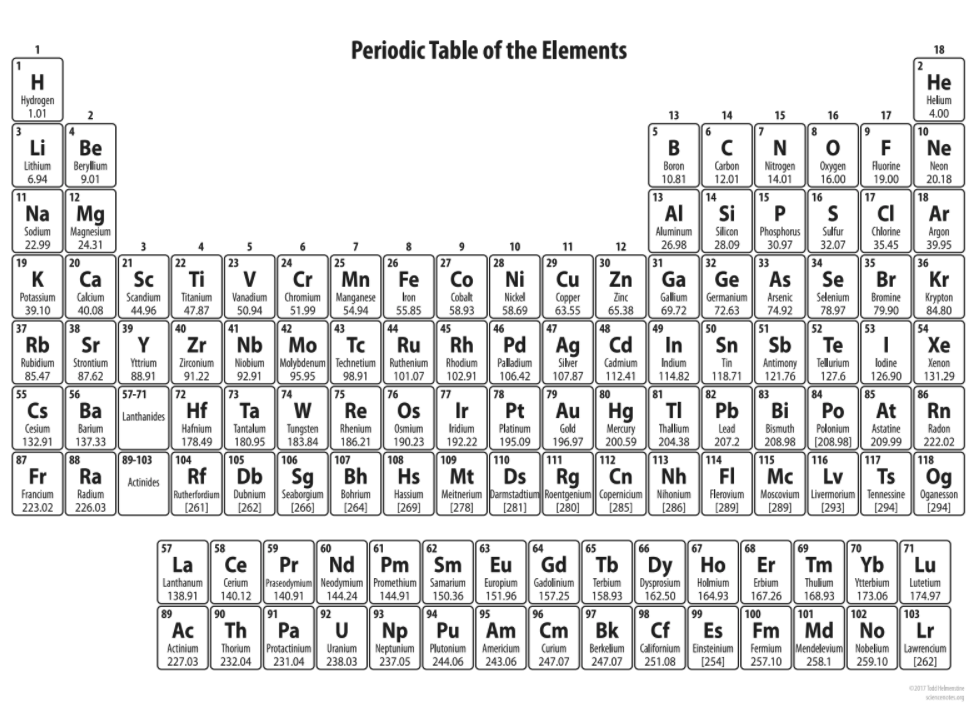
Using a Periodic Table, fill in the table in the "Show Your Work" box to demonstate how the ions listed form.
If you are not sure how to fill in the chart, check out this video!
Note: You do not need to draw the protons, you can just write the number of protons in the nucleus!
1 point
1
Question 10
10.
Consider the ions you analyzed in the previous question. How could you calculate the charge of an ion?
THINK! Focus on one of the ions from the previous question and use the formulas below to calculate the charge. The formula that equals the correct charge is the correct formula.
CHECK THIS OUT BEFORE MOVING ON!
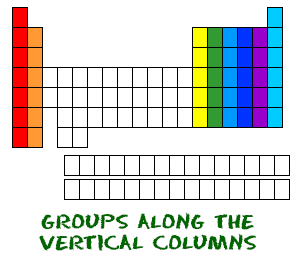
What is referred to as a "Group" on the Periodic Table:
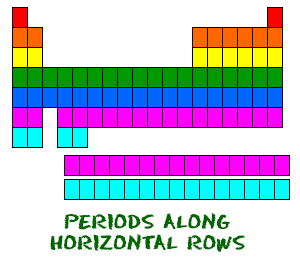
What is referred to as a "Period" on the Periodic Table:
1 point
1
Question 11
11.
Using a Periodic Table, complete the table in the "Show Your Work" box to summarize the patterns between the ions that form and the location of elements on the periodic table. The first row is done for you.
HINT:For the 'Will atom gain or lose electrons?' column, consider the number of electrons the atom has and the number of electrons that would need to be lost or gained in order to create an ion. For example, it is far easier for a lithium atom to lose one electron than it is to gain seven.
If you are not sure how to fill in the chart, check out this video!
Consider your answers to #11 as you answer questions 12-17.
1 point
1
Question 12
12.
What charge do group 1 elements form when they form ions?
1 point
1
Question 13
13.
What charge do group 2 elements form when they form ions?
1 point
1
Question 14
14.
What charge do group 13 elements form when they form ions?
1 point
1
Question 15
15.
What charge do group 15 elements form when they form ions?
1 point
1
Question 16
16.
What charge do group 16 elements form when they form ions?
1 point
1
Question 17
17.
What charge do group 17 elements form when they form ions?
1 point
1
Question 18
18.
Notice that you were not asked to determine the charges of ions formed with elements in Group 14. Why do you think this is?
1 point
1
Question 19
19.
Notice that you were not asked to determine the charges of ions formed with elements in Group 18. Why do you think this is?
1 point
1
Question 20
20.
Elements in groups 1, 2, and 13 often form cations, while elements in groups 15, 16, and 17 often form anions. Considering this, which of the following are the best definitions for cation and anion?
1 point
1
Question 21
21.
Consider what you learned in the last lesson about metals and nonmetals.
Which of the following statements about ions is correct?
If you are unsure of your previous answers, check out this video!
1 point
1
Question 22
22.
First, complete the table in the 'show your work' box. You must complete EVERY box, not just the colored boxes!
Next, match the colored boxes with the number that you wrote in the box.
Draggable item
arrow_right_alt
Corresponding Item
80
arrow_right_alt
79
arrow_right_alt
22
arrow_right_alt
cation
arrow_right_alt
19
arrow_right_alt
2+
arrow_right_alt
10
arrow_right_alt
anion
arrow_right_alt
36
arrow_right_alt
1 point
1
Question 23
23.
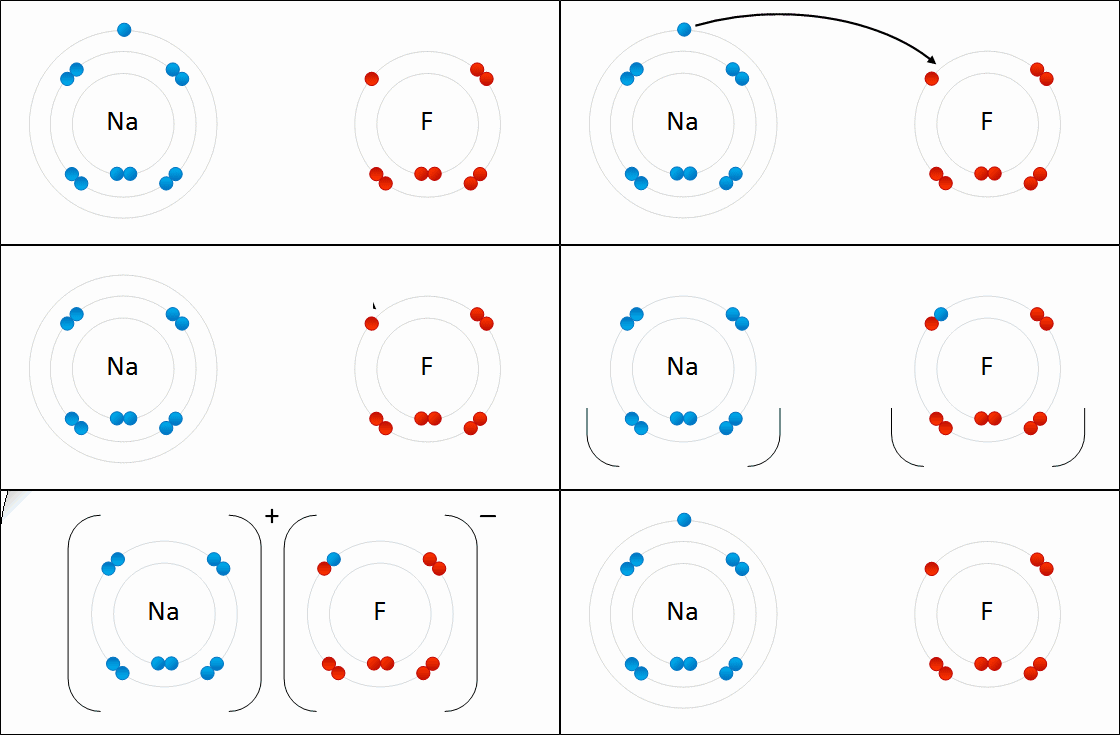
The animation below shows the steps involved in forming an ionic bond. (We'll be learning about these next!!)
Analyze the animation below. How are ions that form ionic bonds held together?
1 point
1
Question 24
24.
Explain why an ionic bond typically forms between a metal and a nonmetal.