Log in
Sign up for FREE
arrow_back
Library

Energy Test- TEST A

star
star
star
star
star
Last updated over 2 years ago
25 questions
1
1
1
1
1
1
1
1
1
1
1
1
1
1
1
1
1
1
1
1
1
1
1
1
1
Experimental Variable Questions: Correct answers to the questions in this section show mastery of the learning target below.
-I understand what experimental variables are and how to apply them.
Question 1
1.

Draggable itemarrow_right_altCorresponding Item
arrow_right_alt
arrow_right_alt
arrow_right_alt
Question 2
2.

Draggable itemarrow_right_altCorresponding Item
arrow_right_alt
arrow_right_alt
arrow_right_alt
Question 3
3.

Question 4
4.

Draggable itemarrow_right_altCorresponding Item
arrow_right_alt
arrow_right_alt
Question 5
5.

Energy Unit Test Part 1: Correct answers to the questions in this section show mastery of the learning targets below.
- I understand what energy is.
- I understand the difference between kinetic and potential energy.
Question 6
6.

Question 7
7.

Question 8
8.

Question 9
9.

Energy Unit Test Part 2: Correct answers to the questions in this section show mastery of the learning targets below.

- I understand how energy can be transferred from one object or system to another.
Question 10
10.

Question 11
11.

Question 12
12.

Question 13
13.

Question 14
14.

Question 15
15.

Question 16
16.

Question 17
17.

Energy Unit Test Part 3: Correct answers to the questions in this section show mastery of the learning targets below.

- I understand the relationship of kinetic energy to the mass of an object and the speed of an object.
Question 18
18.

Question 19
19.

Question 20
20.

Question 21
21.

Energy Unit Test Part 4: Correct answers to the questions in this section show mastery of the learning targets below.

- I understand what happens to the amount of potential energy stored in a system when the arrangement of objects interacting at a distance changes.
Question 22
22.

Question 23
23.

Question 24
24.

Question 25
25.

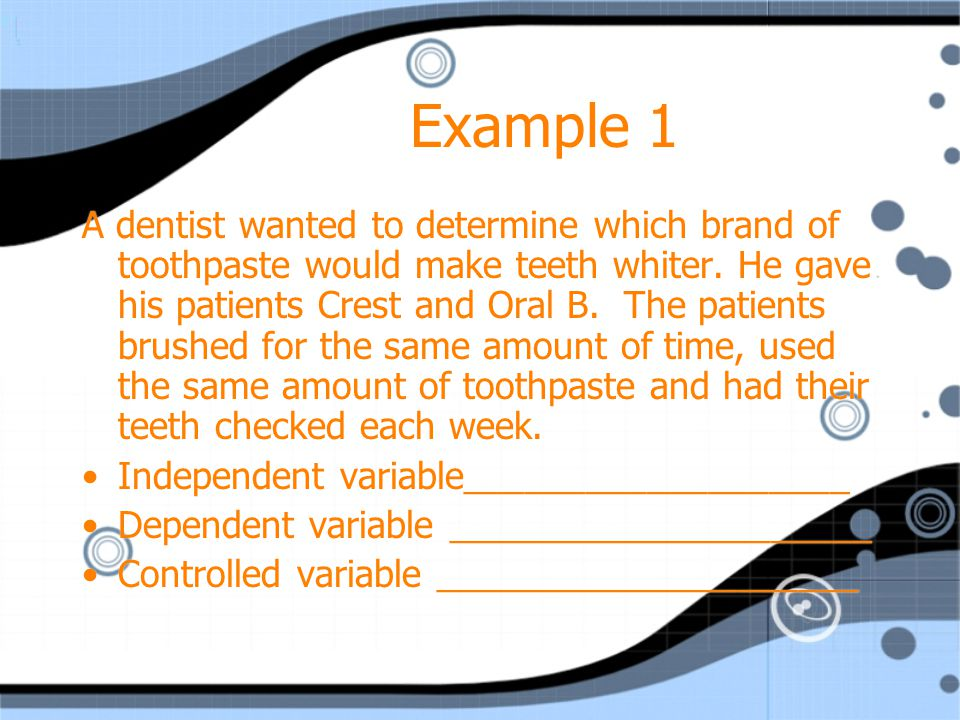
Constant
Brand of toothpaste
Independent Variable
How white your teeth can get
Dependent Variable
Brushing the same amount of time and using the same amount of toothpaste
You give four sunflowers different watering with either pure water or different concentrations of salt solutions. After a two-week period, the height of the sunflowers is measured.
Height of sunflowers
Independent Variable
Two week period
Dependent Variable
Different watering- water or different concentrations of salt water
Constant
Mosquito repellant is sprayed on one arm and the other arm is not sprayed. The number of mosquito bites is counted after 2 hours. What is the independent variable?
2 hours
Mosquito repellant versus no mosquito repellant
# of mosquito bites
Dependent variable
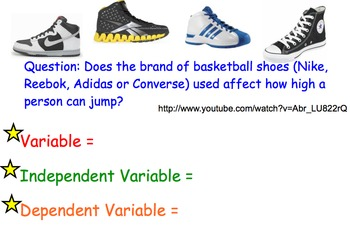
Type of Shoes
Independent variable
How high a person can jump
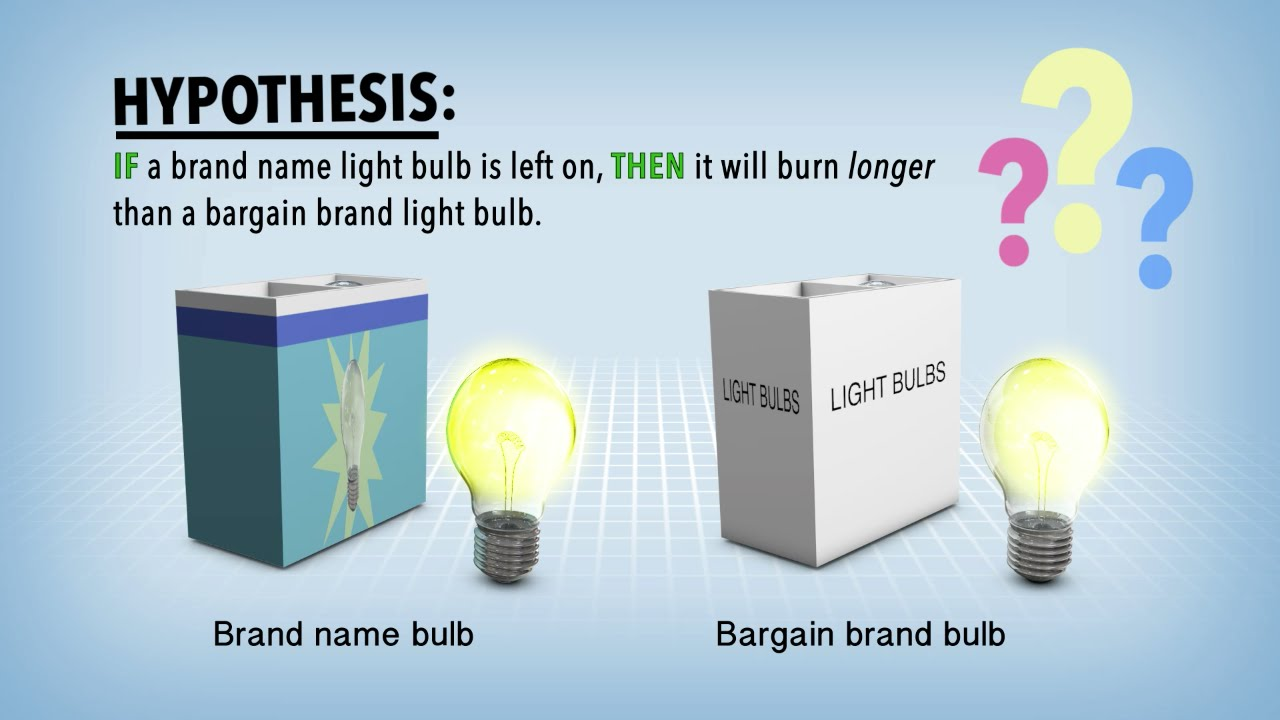
If the independent variable is the type of light bulb then which axis would you graph this on?
x-axis
y-axis
r-axis
w-axis
Which of the statements below is TRUE about energy (this means THREE of the statements below are FALSE, do not choose one of these FALSE statements).
Energy is the ability to cause change and do work.
Energy is something we can always see.
Energy is something that appears out of nowhere, and there is no such thing as a transfer of energy.
Energy on earth does not come from the sun in our solar system.

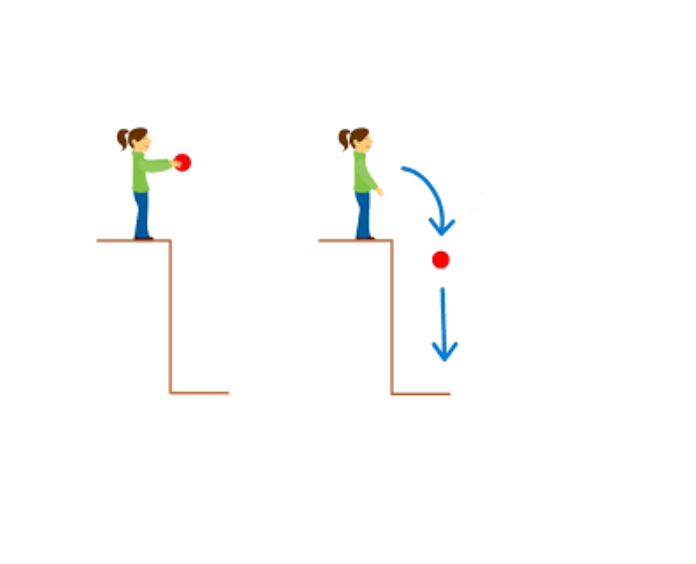
In the image above, which ball above best represents potential energy?
The ball the girl is holding.
The ball that has dropped and is moving toward the ground.
Which of the following BEST demonstrates kinetic energy?
Book resting on a shelf.
Bird in flight.
A car parked on the top of a hill.
Skateboard laying on the sidewalk not moving.

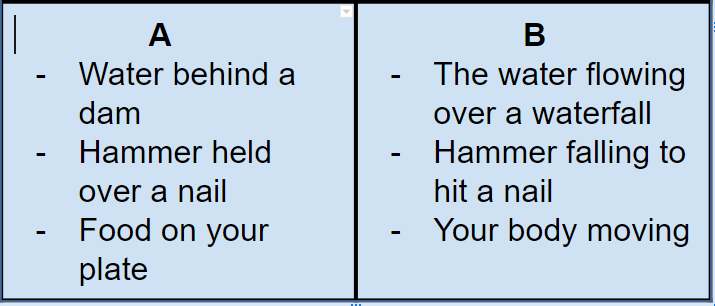
Do the examples in box A or box B represent kinetic energy?
A
B
Which of the statements below is a TRUE statement and best describes the Law of Conservation of Energy?
Energy can never be created nor destroyed. It can only be stored or transferred. An example might be a student eating a sandwich (stored chemical energy), and that energy transfers to kinetic energy so the student can run around on the football field after lunch.
Energy can be destroyed and created. It is not stored or transferred. An example may be a car that is able to create its own power out of nothing (it does not need fuel of any kind!).
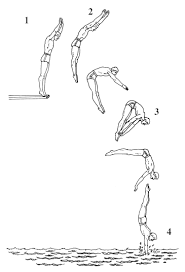
At which point does this diver have the MOST kinetic energy, and the LEAST potential energy?
1
2
3
4
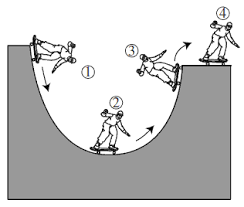
True or False: The skateboarder above has transferred potential energy to kinetic energy, and back to potential energy again in this image from point 1 to point 4. Also, this skateboarder has the same amount of TOTAL energy no matter which position he is on the ramp. *Hint: Remember Law of Conservation of Energy!*
True
False

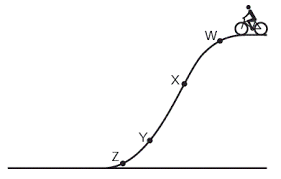
The diagram above represents a bicyclist at the top of a hill, with four points labeled W, X, Y, and Z.
From point W to point Z, how will this bicyclist tranfer their energy.
The bicyclist will transfer stored energy into energy of motion.
Internal energy will cause the bicyclist to move until the energy is gone and does not exist anymore.
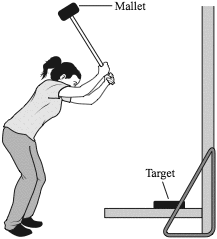
While playing a game at a fair, a person lifts a mallet above her head. She then lets the mallet fall toward a target, as shown below.


Which of the following statements describes an energy change that takes place as the person lifts the mallet and then lets it fall toward the target.
Kinetic energy is highest when the mallet is high above the woman's head.
Potential energy is the highest as the mallet strikes the target.
Kinetic energy converts to potential energy as the mallet falls toward the target.
Potential energy converts to kinetic energy as the mallet falls toward the target.
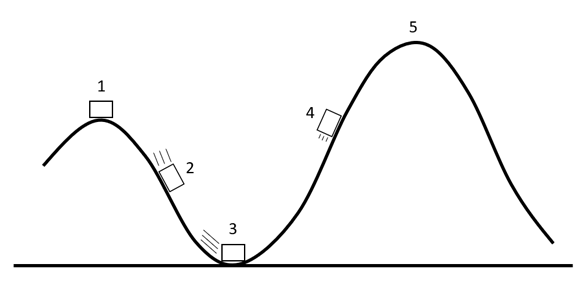
A rollercoaster moves on a roller coaster track through positions 1, 2, 3, 4, and 5. At what position will the roller coaster most likely have the greatest kinetic energy?
1
2
3
4
What happens to the kinetic energy and potential energy of a ball that is being held but then let go into a free fall?
Potential energy and kinetic energy both increase.
Potential energy and kinetic energy both decrease.
Potential energy decreases, and kinetic energy increases.
Potential energy increases, and kinetic energy decreases.
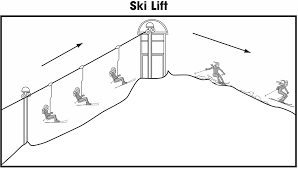
The picture below shows the different positions of a skier as she is lifted to the top of a slope and then skis down the other side.


Which statement best explains the change in the skier's kinetic and potential energy?
The skier loses potential energy and gains kinetic energy as she is lifted UP the slope.
The skier loses kinetic energy as she skis DOWN the slope. Her potential energy remains the same whether going up or down the slope.
The skier gains potential energy and loses kinetic energy as she goes UP the slope. She loses potential energy and gains kinetic energy as she skis DOWN the slope.
The skier loses potential energy and kinetic energy as she is lifted up the slope, and gains potential energy and kinetic energy as she skis down the slope.

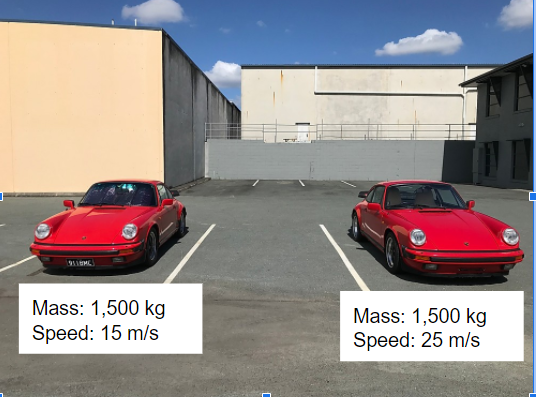
Two cars have the same exact mass. When the two cars begin traveling, one of the cars has a speed of 15 m/s, and the other car has a speed of 25 m/s. Which car has the greatest amount of kinetic energy?
The car that is traveling 15 m/s.
The car that is traveling 25 m/s
The faster an object moves, the ____________ kinetic energy it will have.
more
less
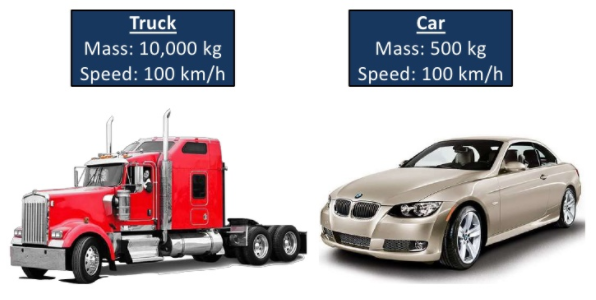
If two different objects are moving at the SAME speed, but are different masses, which of the objects below would have the greatest amount of kinetic energy?


Truck (10,000 kg)
Car (500 kg)
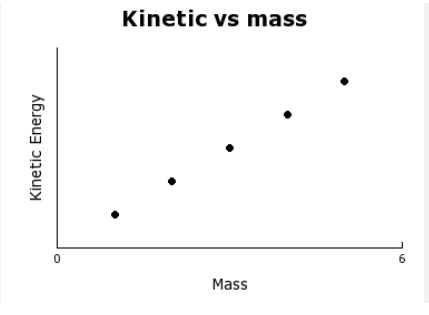
How would you describe the relationship between the mass of a car and its kinetic energy by looking at the graph below?


As the mass of a car increases, its kinetic energy increases.
As the mass of a car increases, its kinetic energy decreases.
There is no clear relationship between mass and kinetic energy.

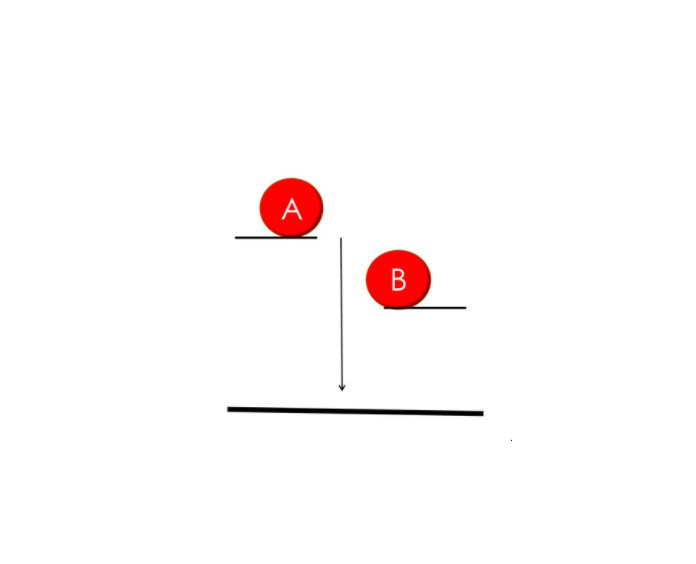
Which ball (A or B) has the most potential energy?
A
B
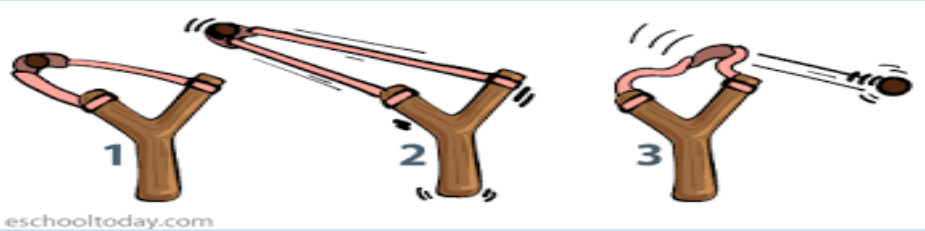
At which point would potential energy be the greatest?
Image 1- when the slingshot has not been stretched out fully.
Image 2- when the slingshot has been stretched out at its full distance.
Image 3- when the slingshot has no tension because the rock has been released.
The __________ something is the more energy it stores as potential energy.
higher up
lower
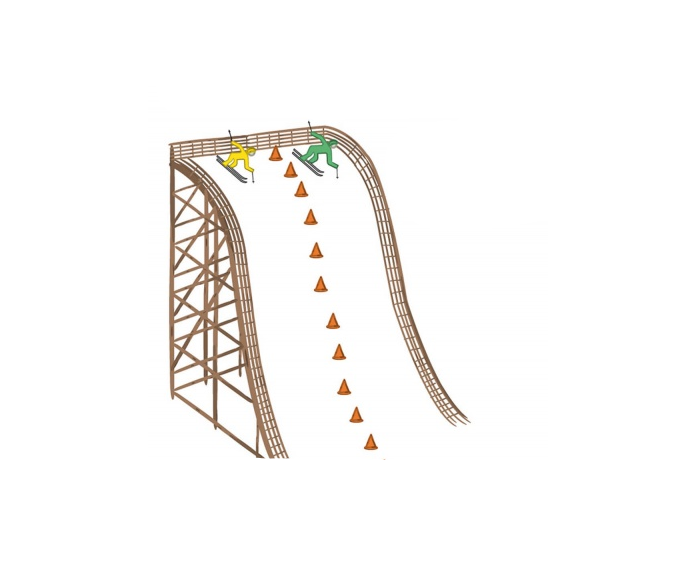
The green skier weighs MORE than the yellow skier. Which skier has the greatest amount of potential energy?
yellow skier who weighs less
green skier who weighs more