How do ideas, animals, and diseases spread around the globe?
How do ideas, animals, and diseases spread around the globe?
Students first examine how they celebrate Thanksgiving, then learn, respond, and discuss the history of the pilgrims/puritans. Students then move into the history of Native Americans, examining the how tribes view the holiday. Lastly students analyze why the Wampanog joined in the first feast and if they personally should change how they view and/or celebrate Thanksgiving.
How do ideas, animals, and diseases spread around the globe?
What do you associate with Thanksgiving? Write words or draw pictures.
What day is Thanksgiving celebrated in the United States?
Thanksgiving is one of the most important holidays in the United States and marks the beginning of the holiday season. It is typically a holiday for spending time with family, giving thanks, and feasting.
How do YOU celebrate Thanksgiving? Draw or write your answer.
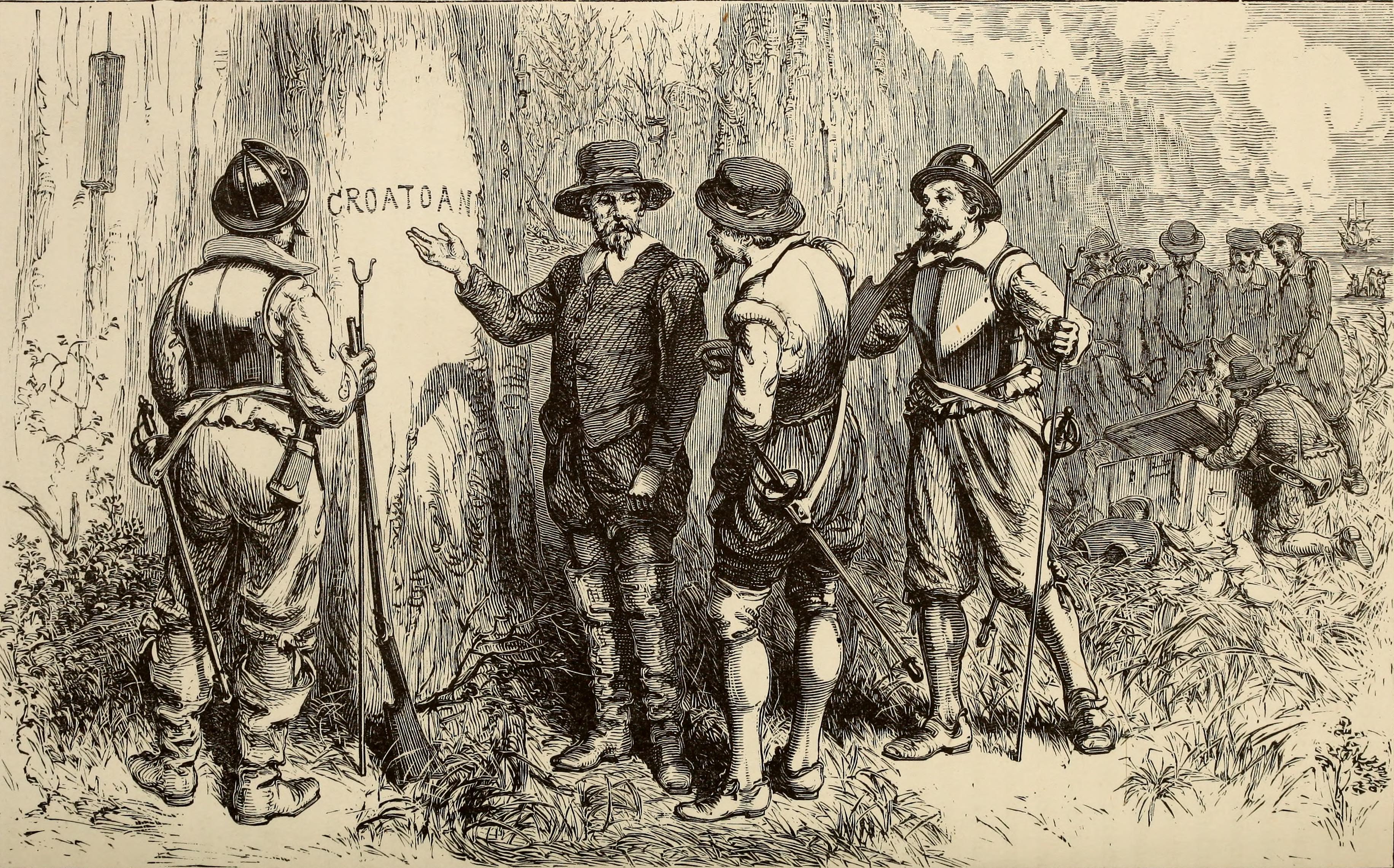
The story of Thanksgiving starts in Massachusetts in 1614. English explorers settled in Plymouth in 1620. The English had previously tried to establish a colony at Roanake (RIP) in North Carolina, but that attempt was....unsuccessful.
Look at the map. What states does it show? Find and circle the town of Plymouth.
What modern US state is Plymouth a part of?
In 1534, the King of England, Henry VIII, made changes to the church, and to the law, which were unpopular with some English people. The English who disagreed with him wanted a new government that followed their own religion. They also wanted more wealth. These were the English colonists who sailed aboard the Mayflower.
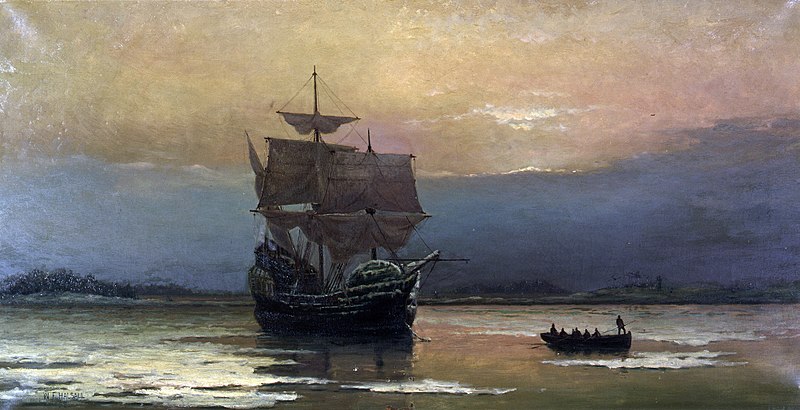
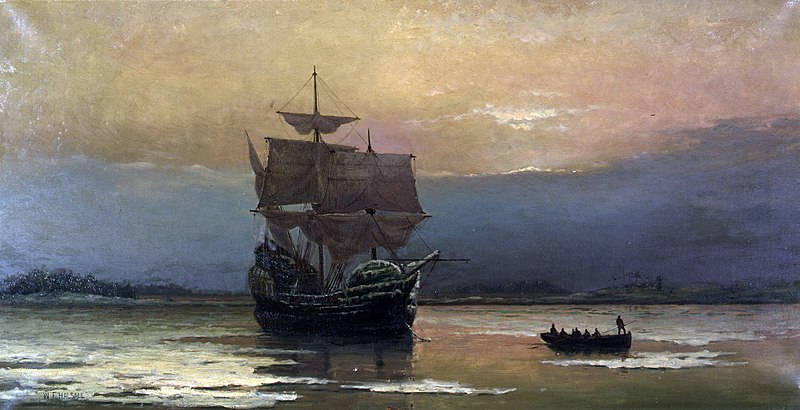
More than 30 million people can trace their ancestry to the 102 passengers and approximately 30 crew aboard the Mayflower when it landed in Plymouth Bay, Massachusetts, in the harsh winter of 1620.
On board were men, women and children from different walks of life across England and the city of Leiden in Holland.
The Mayflower passengers are listed after the below interactive map which shows where each of the Pilgrims originally came from and where they lived.
Click on the map’s pins to see information about each of the Mayflower passengers and crew. Click anywhere on the map to activate it and then zoom in to see the individual village and sometimes street level where people were born.
The blue points are Pilgrims and their servants, the green represents the paying passengers and their servants and the red is the crew.
https://www.mayflower400uk.org/education/mayflower-passengers-list-an-interactive-guide/
Choose at least two pins to examine on the interative map.
What story stands out to you?
Who was the passenger and what was their story on the Mayflower?
The Mayflower took 66 days to cross the Atlantic – a horrible crossing afflicted by winter storms and long bouts of seasickness – so bad that most could barely stand up during the voyage.
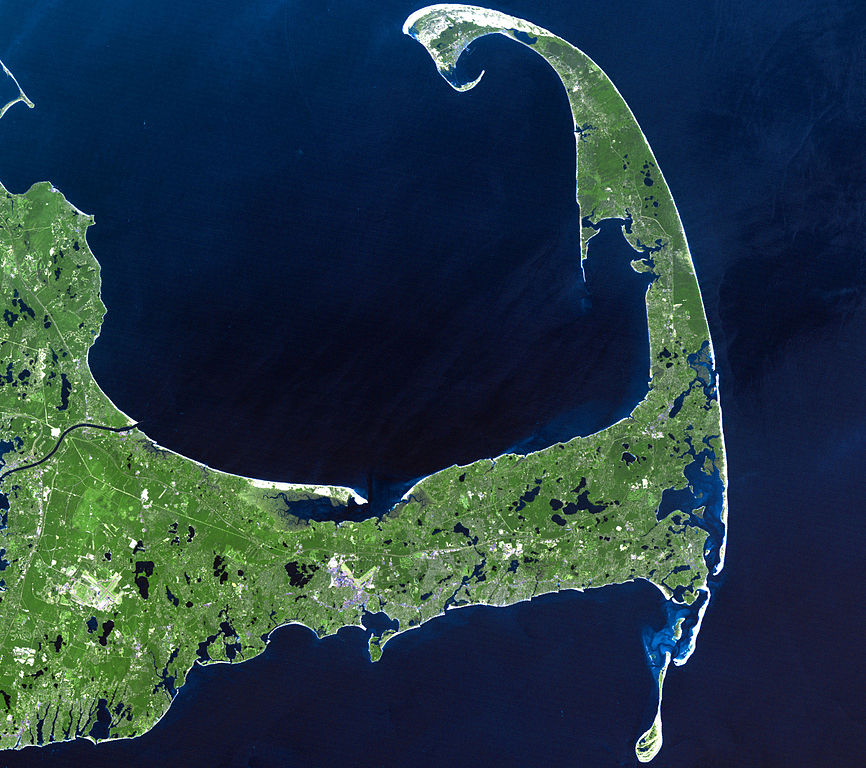
Due to bad weather and navigational challenges, the Mayflower reached Cape Cod, instead of their intended destination, Virginia. The Puritans decided it was safest to settle in Cape Cod rather than continue.
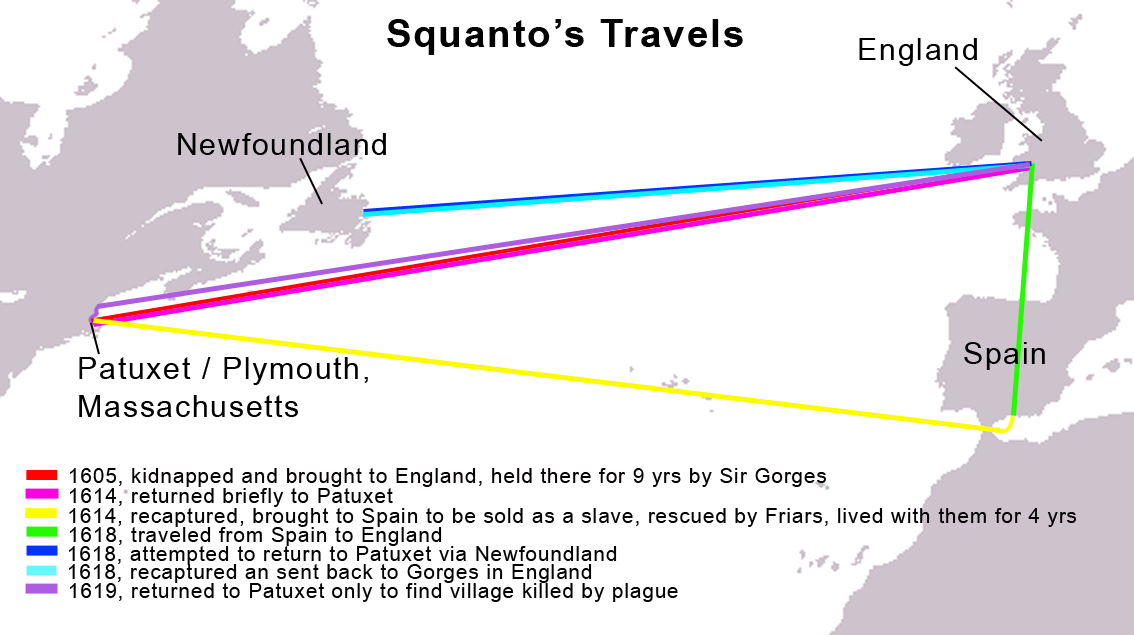
The Puritans found many advantages to the location they found, including a good harbor, fresh water, and farm fields. Before the Puritans arrived, this land had been home to the Patuxet tribe of the Wampanoag. But a few years earlier, some of the Patuxet had been kidnapped and taken away to England, and most of the others died from disease they caught from English kidnappers (probably smallpox). As a result, the Puritans found a good place to live and no army there defending it.
During the first winter, almost half of the Puritans died due to inadequate food and shelter. Then they were found by Squanto. He was a Paxtuxet who survived his kidnapping and escaped back from England to North American. Squanto helped the Purigans sign a treaty with the other Wampanoag tribes. Squanto and the other Wampanoag helped the Puritans find food.
Knowing more about Squanto's history why do you think he helped the Puritans?
What happened to Squanto before he met the Pilgrims?
With passengers and crew weakened by the voyage and weeks exploring Cape Cod, the Mayflower anchored in Plymouth harbor in late December 1620. After ferrying supplies to land, the Pilgrims began building a common house for shelter and to store their goods. The weather worsened, and exposure and infections took their toll. By the spring of 1621, about half of the Mayflower’s passengers and crew had died.
Do answer the next questions take a look at the two different websites for live webcams of Cape Cod.
https://www.pilgrim-monument.org/web-cam-3/
https://masswebcams.com/cape-cod-webcams/
If time allows: https://nebraskapublicmedia.pbslearningmedia.org/resource/americanexperience27p-soc-firstwinter/wgbh-americanexperience-the-pilgrims-the-first-winter/
Do you think it was a good idea to try to build a new colony in Massachusetts as winter was coming? Why or why not?
Do you think the Puritans could have survived without the help of Squanto and the other Wampanoag?
Edward Winslow
In spring, the surviving English planted the field that had belonged to the Patuxet. With Squanto and the Wampanoag's continued help, the Puritans were able to grow food. Around October, the Puritans had a three-day celebration to give thanks for their first harvest. Everything we know about that feast comes from this letter by an Englishman:
Who is listed as attending the feast?
Were the Wampanoag invited?
What did the Puritans use to celebrate?
Use at least two of the web sites below to find at least four food items that were on the menu for the first Thanksgiving
What did they eat?
https://www.history.com/topics/thanksgiving/first-thanksgiving-meal
https://www.smithsonianmag.com/history/what-was-on-the-menu-at-the-first-thanksgiving-511554/
https://newengland.com/today/food/special-occasions/thanksgiving/a-truly-traditional-thanksgiving-menu/
https://www.epicurious.com/holidays-events/the-real-story-of-the-first-thanksgiving-menu-recipes-article
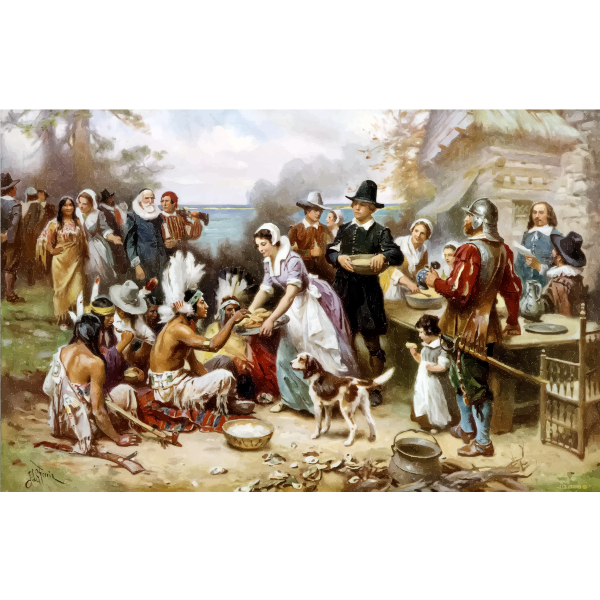
Traditional depictions of the first Thanksgiving feast show the Puritans and the Wampanoag socializing as friends. However, no one is sure if the Wampanoag people were actually invited, or if they arrived to investigae the gunfire. In any case, most historicans agree that these communities were never more than strategic allies against other, more violent tribes
Some native American groups protest Thanksgiving as a Day of Mourning. They claim that the arrival of European explorers and settlers is not a cause for celebration, because it began the ill treatment and deaths of millions of Native Americans. For them, Thanksgiving marks the beginning of a long period of violence and discrimination.
While these early years of settlement reflect strategic alliances between the English and the Wampanoag, it was only a few decades later the English and Wampanoag went to war. Many Wampanoag were killed or sold into slavery.
As we view and talk about this next section think about this question:
The Native Americans present at the original Thanksgiving were Wampanoag. Yet many American Indians tribes think of Thanksgiving as a sad day for all Native Americans. Why might that be?
If you need to refresh about the residential Native American Schools use the links below:
Canada: 751 unmarked graves found at residential school
Remains of more than 1,000 Indigenous children found at former residential schools in Canada
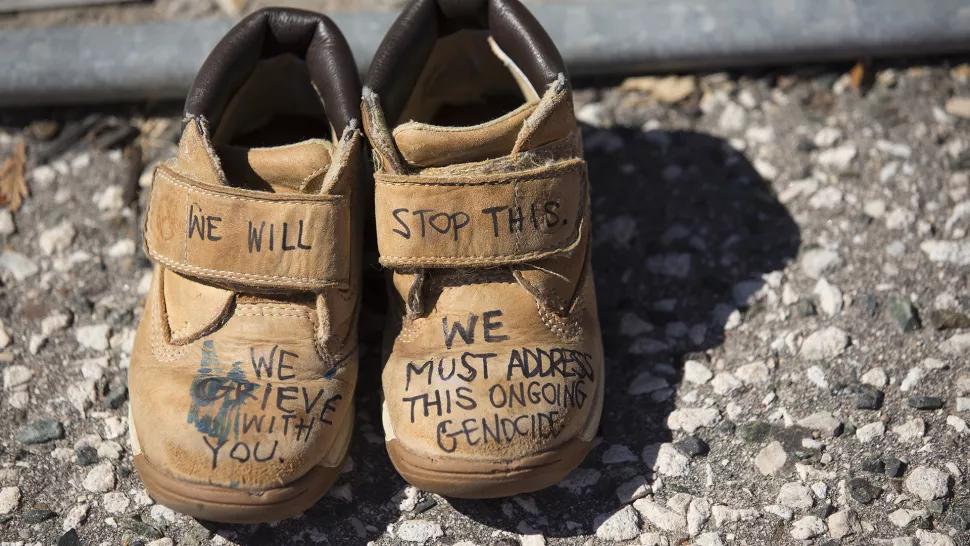
Think back to our discussions and news stories about the mass graves found at residential Native American schools in Canada.
What facts do you remember?
What stood out to you?
What does it make you feel?
The school was operated by the federal government between 1884 and 1934 and was known for brutal punishments and hard labour.
Researchers say they have identified more than 100 students who died at a harsh residential school for Native Americans in Genoa, Nebraska. The search for the cemetery where many are believed to be buried continues.
Find Genoa on the map of Nebraska and circle it. Look near Columbus.
This happened here, in our state. Genoa is 2 hours away from Omaha.
How does that change the way you feel about these types of schools, and the way the "students" were treated?"
What stood out to you as you read or listened? What is most shocking? What are you feeling?
On the following slide, we're going to explore a memorial site.
The Yontocket Indian Village Memorial is located in California. It marks the site of the Yontocket Massacre, where 500 Tolowa Indians were massacred by white American settlers in 1853, part of the ongoing California genocide aimed at ridding Native Americans from the westward expansion of settlers.
https://www.360cities.net/nl/image/yontocket
The Native Americans present at the original Thanksgiving were Wampanoag. Yet many American Indians tribes think of Thanksgiving as a sad day for all Native Americans. Why might that be?
Now you will watch a video in which Native Americans are asked to give their associations with the word Thanksgiving. After what you've learned today, think about why they may say some of these things.
Many of the Native American people in the video have negative associations with the holiday of Thanksgiving, but some of them also have positive ones. Why might this be? Should the ill treatment of Native Americans be included in the Thanksgiving story?
Why do you think the Wampanoag joined the Puritans' feast?
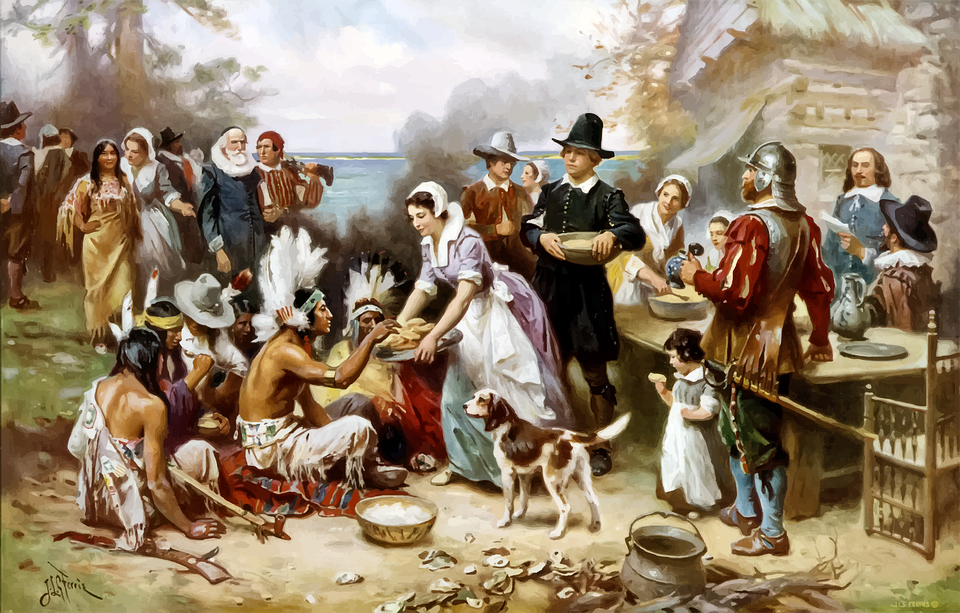
Is there anything you would change or add to the way that your community honors Thanksgiving?