1
BRCA genes prevent cancer tumors from forming.
BRCA genes prevent cancer tumors from forming.
What is a mutation and how can a mutation lead to cancer?
BRCA genes prevent cancer tumors from forming.
Everyone has two copies of the BRCA2 gene, one copy inherited from each parent. Even if a person inherits a BRCA2 mutation from one parent, they still have the normal copy of the BRCA2 gene from the other parent.
Cancer occurs when a second mutation happens that affects the normal copy of the gene, so the person no longer has a BRCA2 gene that works properly.
How many copies of the BRAC2 gene do people have?
Cancer occurs when a person has copy of the BRCA2 gene that works properly.
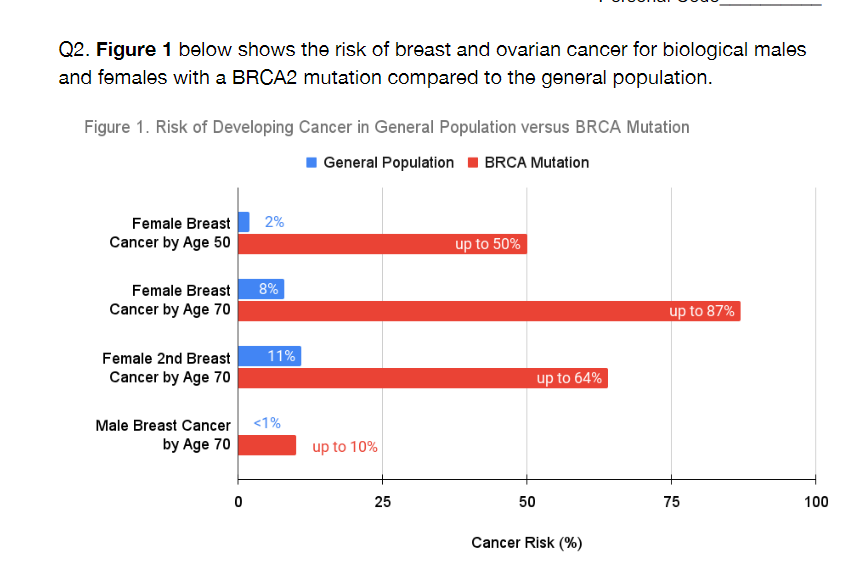
State one notice about Figure 1.
YOU MUST USE NUMBERS FROM THE GRAPH
By what percentage does the BRCA mutation increase the risk for developing breast cancer and/or ovarian cancer for increased female breast cancer risk by age 50?
By what percentage does the BRCA mutation increase the risk for developing breast cancer and/or ovarian cancer for increased female breast cancer risk by age 70?
By what percentage does the BRCA mutation increase the risk for developing breast cancer and/or ovarian cancer for increased female 2nd breast cancer risk by age 70?

According to the graph, how does the number of full-term pregnancies before the age of 30 affect a BRCA2 patient's breast cancer risk?
Make a claim and provide 2 pieces of evidence from the graph.
Beyonce has 3 children and her sister Solange has 1 child. According to the figure, Beyonce's risk for developing breast cancer is than her sister's chance.
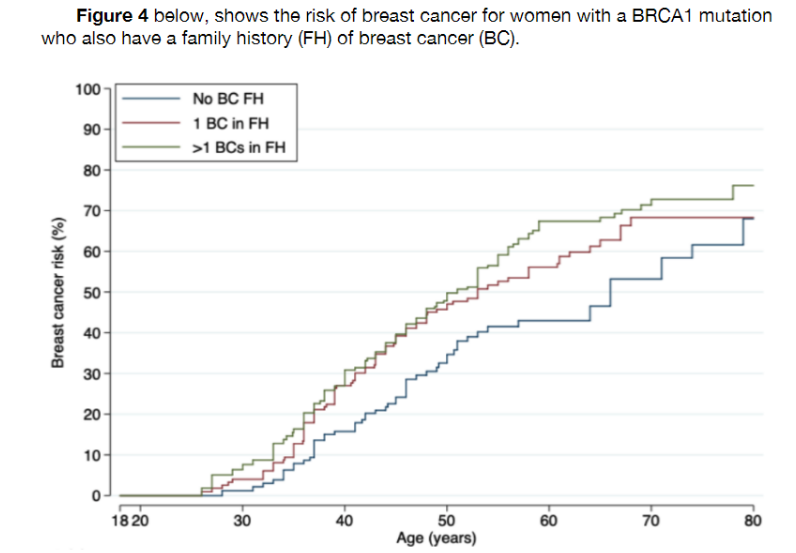
What age range does the risk of breast cancer increase the most when multiple family members have breast cancer?
Describe how mutated genes are passed through a family. Consider meiosis in your answer.
Why is it useful for patients who test positive for BRCA2 mutations to also see a genetic counselor and not just use the test results to make decisions? (In other words, why is knowing your genetic information not enough?
By what percentage does the BRCA mutation increase the risk for developing breast cancer and/or ovarian cancer for male breast cancer by age 70?