7th Grade: NewsELA: One of America’s last Indigenous birchbark canoe builders launches hunting boat
star
star
star
star
star
Last updated over 4 years ago
6 Nsɛmmisa
Read the article below. Answer the questions for each page.
1
RI.7.1
RI.7.2
Read the article below. Answer the questions for each page.
Read the paragraph from the introduction [paragraphs 1-6].
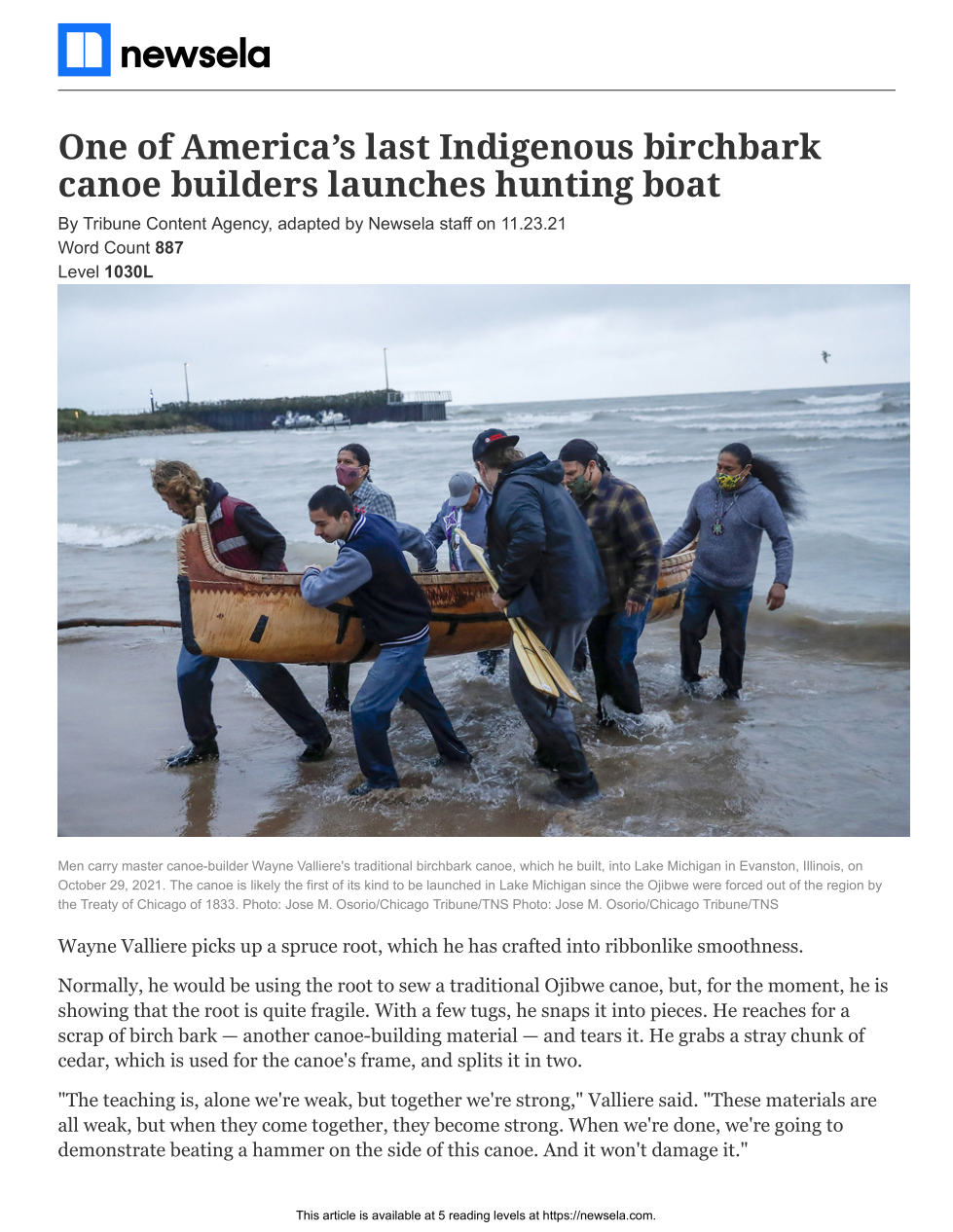
“The teaching is, alone we’re weak, but together we’re strong,” Valliere said. “These materials are all weak, but when they come together, they become strong. When we’re done, we’re going to demonstrate beating a hammer on the side of this canoe. And it won’t damage it.”
What conclusion is BEST supported by the paragraph?

According to the article, why was launching the birchbark canoe in Lake Michigan a significant event?

Which sentence from this section BEST explains a benefit of brichbark canoes?
Of the 500 Indigenous languages that were spoken in 1492, today only 150 survive.
The Ojibwe survived, thanks in part to their birchbark canoes that were useful for hunting and
fishing.
After 1833, many of the Ojibwe moved north to Michigan, Wisconsin and Minnesota.
What is the central idea of this text? Use at least one detail from the text to support your answer.
Using details from the section "Prophecy said to Move West", explain what the audience learns about the Ojibwe's beliefs and culture, and how it relates to the broader story of launching the canoe.
How did Gurneau affect the birchbark canoe?