1
1
1
1
1
1
1
1
1
1
1
1
1
1
1
1
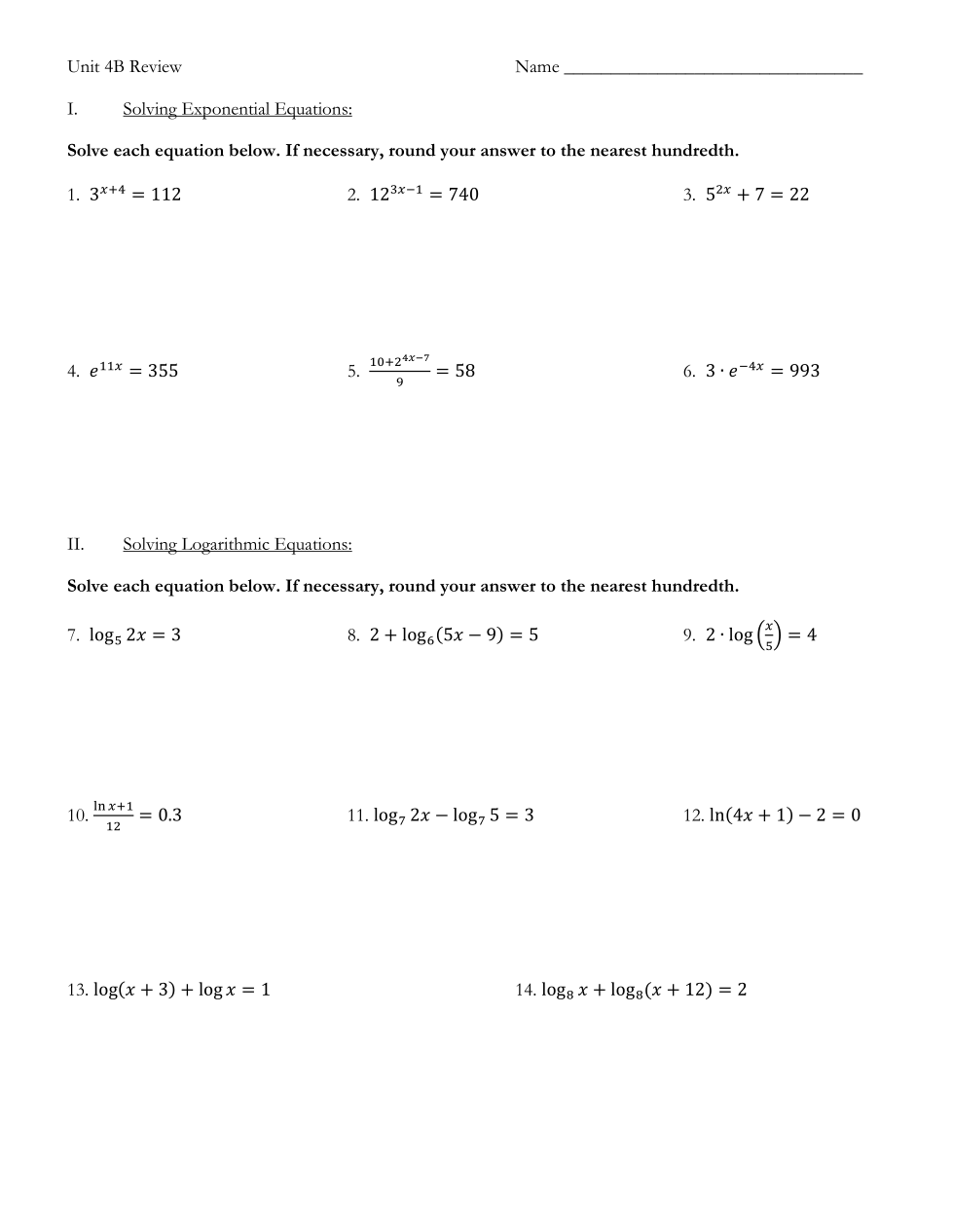
Solve (round to the nearest hundredth, if necessary): 3x+4 = 112.
Solve (round to the nearest hundredth, if necessary): 123x-1 = 740.
Solve (round to the nearest hundredth, if necessary): 52x + 7 = 22.
Solve (round to the nearest hundredth, if necessary): e11x = 355.
Solve (round to the nearest hundredth, if necessary):
Solve (round to the nearest hundredth, if necessary):
Solve (round to the nearest hundredth, if necessary):
Solve (round to the nearest hundredth, if necessary):
Solve (round to the nearest hundredth, if necessary):
Solve (round to the nearest hundredth, if necessary):
Solve (round to the nearest hundredth, if necessary):
Solve (round to the nearest hundredth, if necessary):
What is the extraneous solution to this equation?
What is the actual solution to this equation?
What is the extraneous solution to this equation?
What is the actual solution to this equation?
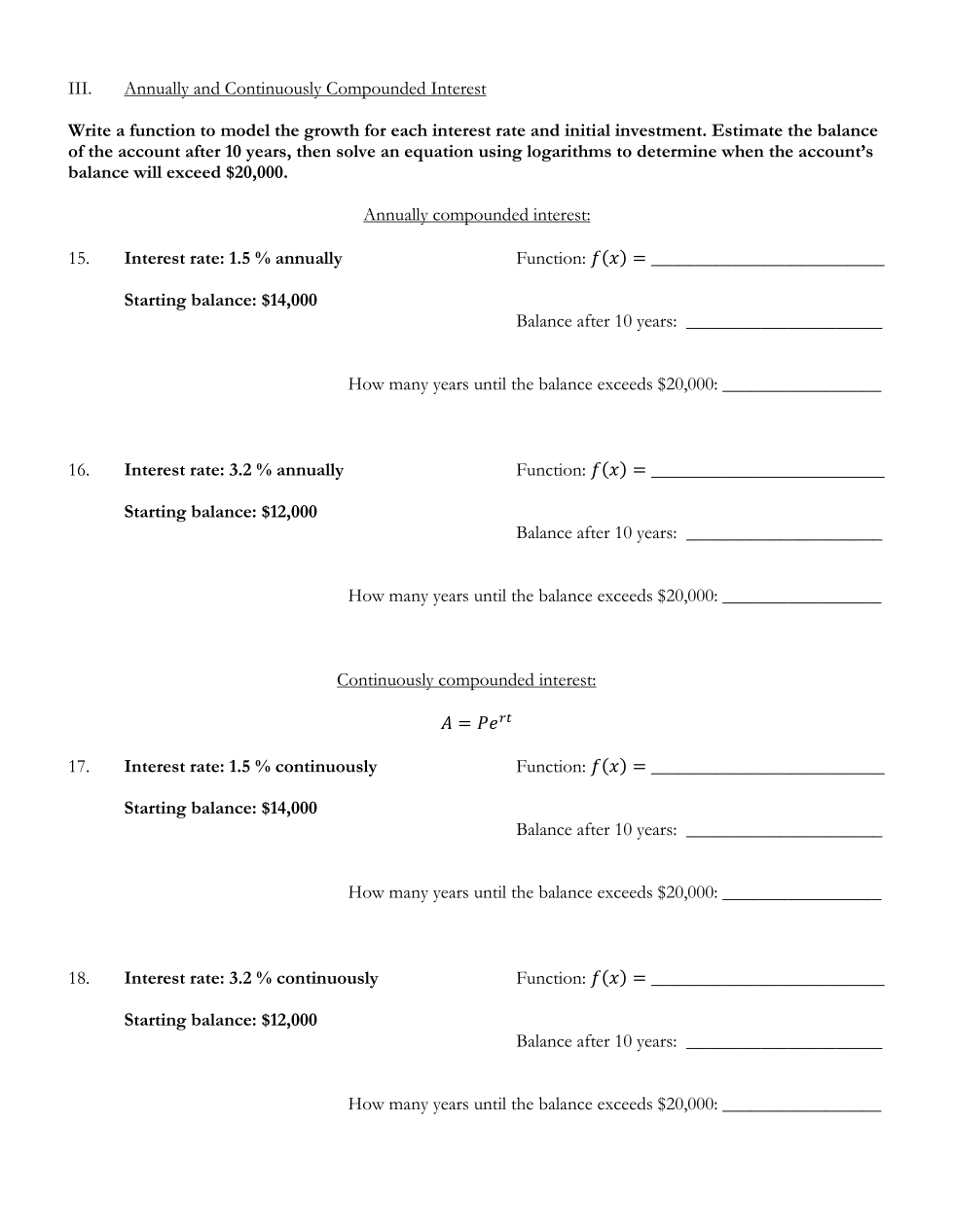
Write a function to model a $14000 investment at 1.5% interest, compounded annually.
What is the balance of a $14000 investment at 1.5% interest, compounded annually, after 10 years?
How many years until a $14000 investment at 1.5% interest, compounded annually, exceeds $20,000?
Write a function to model a $12000 investment at 3.2% interest, compounded annually.
What is the balance of a $12000 investment at 3.2% interest, compounded annually, after 10 years?
How many years until a $12000 investment at 3.2% interest, compounded annually, exceeds $20,000?
Write a function to model a $14000 investment at 1.5% interest, compounded continuously. (Use x as your variable.)
What is the balance of a $14000 investment at 1.5% interest, compounded continuously, after 10 years?
How many years until a $14000 investment at 1.5% interest, compounded continuously, exceeds $20,000?
Write a function to model a $12000 investment at 3.2% interest, compounded continuously. (Use x as your variable.)
What is the balance of a $12000 investment at 3.2% interest, compounded continuously, after 10 years?
How many years until a $12000 investment at 3.2% interest, compounded continuously, exceeds $20,000?
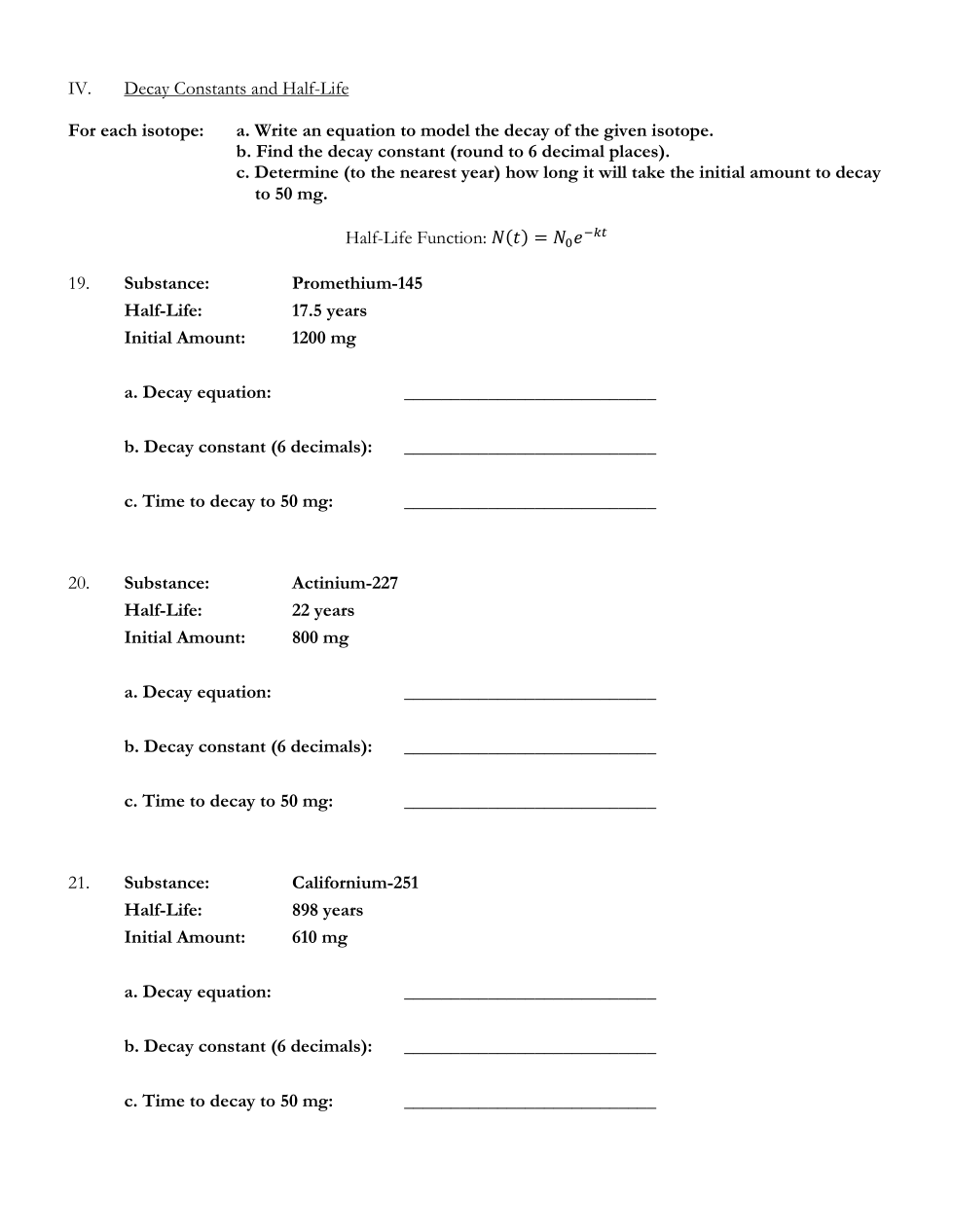
Write a decay equation that models the decay of Promethium-145, with a half-life of 17.5 years and an initial amount of 1200mg.
What is the decay constant for Promethium-145? Round to 6 decimal places.
How many years would it take for 1200 mg of Promethium-145 to decay to 50 mg?
Write a decay equation that models the decay of Actinium-227, with a half-life of 22 years and an initial amount of 800mg.
What is the decay constant for Actinium-227? Round to 6 decimal places.
How many years would it take for 800 mg of Actinium-227 to decay to 50 mg?
Write a decay equation that models the decay of Californium-251, with a half-life of 898 years and an initial amount of 610mg.
What is the decay constant for Californium-251? Round to 6 decimal places.
How many years would it take for 610 mg of Californium-251 to decay to 50 mg?