4-6 Practice
star
star
star
star
star
Last updated over 3 years ago
27 Nsɛmmisa
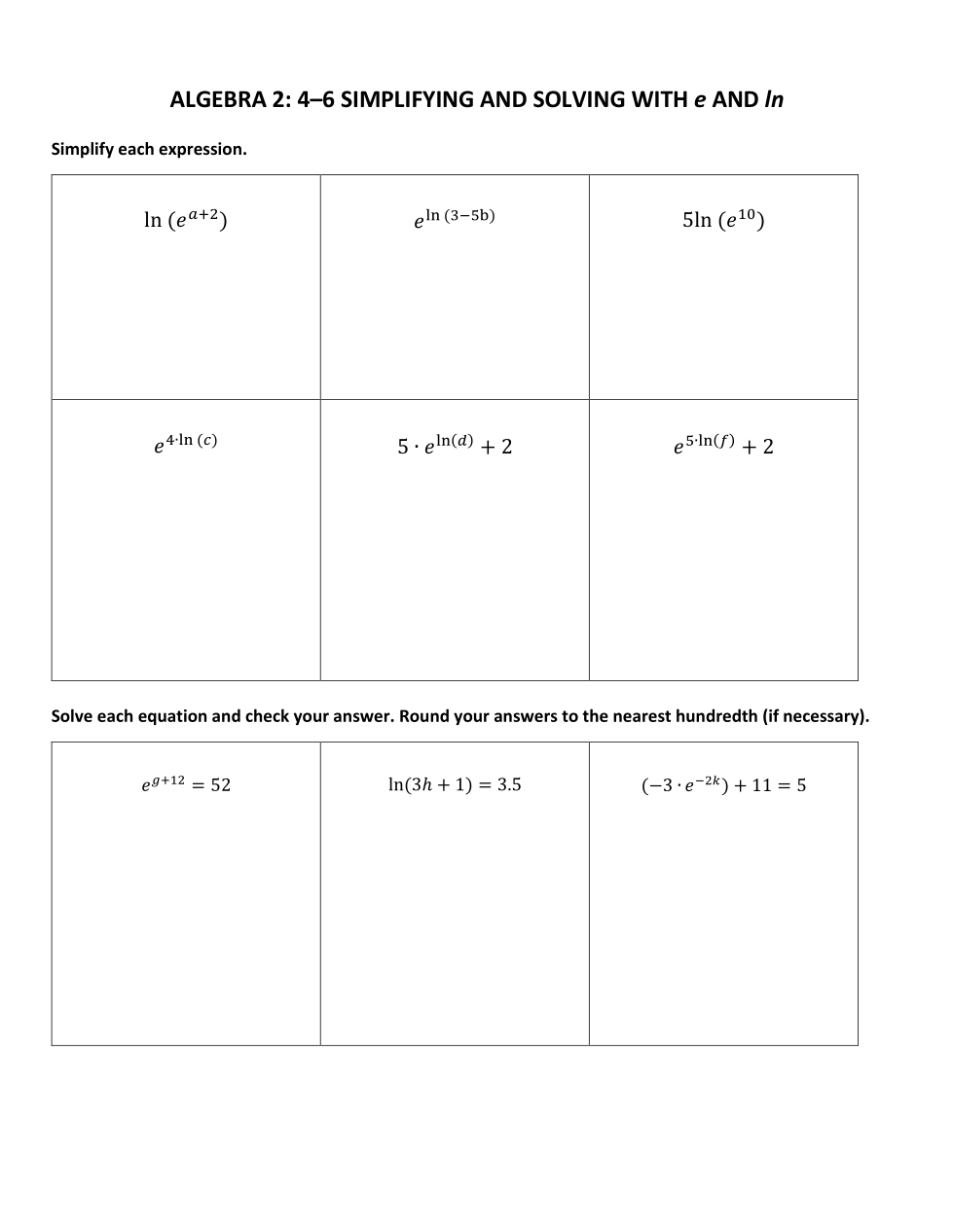
Simplify: ln (ea+2)
Simplify: eln (3-5b)
Simplify: 5ln (e10)
Simplify: e4ln (c)
Simplify: 5.eln(d) + 2
Simplify: e5ln (f) + 2
Solve (round to the nearest hundredth): eg+12 = 52
Solve (round to the nearest hundredth): ln (3h + 1) = 3.5
Solve (round to the nearest hundredth): (-3.e-2k) + 11 = 5
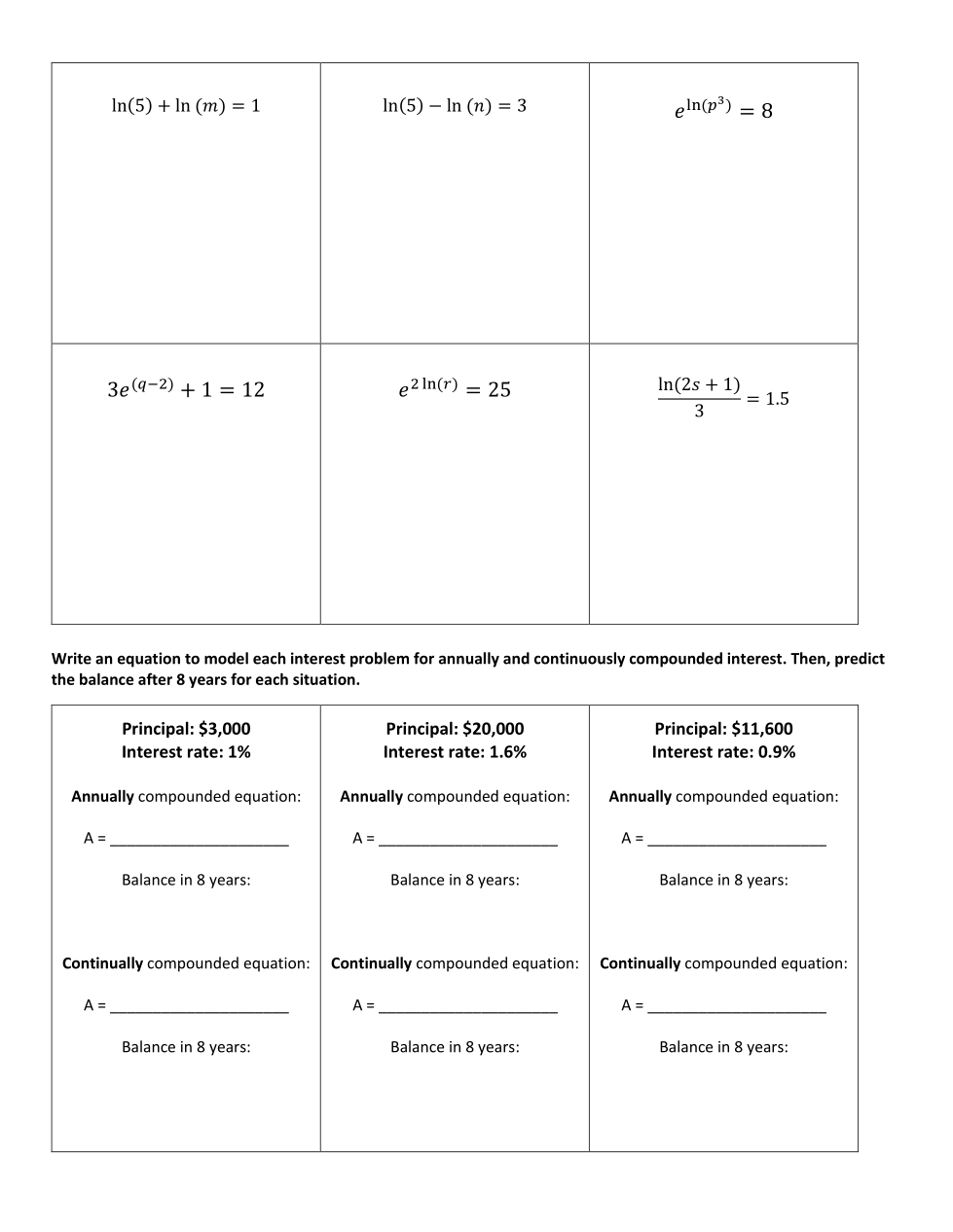
Solve (round to the nearest hundredth): ln(5) + ln(m) = 1
Solve (round to the nearest hundredth): ln(5) - ln(n) = 3
Solve (round to the nearest hundredth):
Solve (round to the nearest hundredth):
Solve (round to the nearest hundredth):
Solve (round to the nearest hundredth):
Write an equation to model the growth of a $3000 investment with a 1% interest rate, compounded annually. (Use x for your variable.)
What's the balance after 8 years?
Write an equation to model the growth of a $3000 investment with a 1% interest rate, compounded continuously. (Use x for your variable.)
What's the balance after 8 years?
Write an equation to model the growth of a $20000 investment with a 1.6% interest rate, compounded annually. (Use x for your variable.)
What's the balance after 8 years?
Write an equation to model the growth of a $20000 investment with a 1.6% interest rate, compounded continuously. (Use x for your variable.)
What's the balance after 8 years?
Write an equation to model the growth of a $11600 investment with a 0.9% interest rate, compounded annually. (Use x for your variable.)
What's the balance after 8 years?
Write an equation to model the growth of a $11600 investment with a 0.9% interest rate, compounded continuously. (Use x for your variable.)
What's the balance after 8 years?