Log in
Sign up for FREE
arrow_back
Library

12/6 Meat Production Methods

star
star
star
star
star
Last updated 12 months ago
22 questions
1
1
1
1
1
1
1
1
1
1
1
1
1
1
1
1
1
1
1
1
1
1
Question 1
1.

How did they create synthetic meat?

Question 2
2.

What is the largest beef producer in the world?

70% of the land devoted to agriculture on the planet is devoted to meat production.  That's almost a third of the entire surface area.

Question 3
3.

Question 4
4.

Question 5
5.

Question 6
6.

What is the problem with a stream going near the lagoon?

Question 7
7.

It takes about 2,500 gallons of water to produce a bushel of corn.  And if an animal eats 50 bushels of corn in its time in the feedlot, we're looking at about 125,000 gallons of water per animal, under the industrial model.

Question 8
8.

Question 9
9.

Question 10
10.

How do the chickens sanitize the fields?

Question 11
11.

Question 12
12.

Question 13
13.

Question 14
14.

Go HERE

Question 15
15.

Question 16
16.

Question 17
17.

Question 18
18.

Question 19
19.

Question 20
20.

Question 21
21.

Question 22
22.

We try to make meat as _______ as possible
Expensive
Healthy
Cheap
In North Carolina, the ______ outnumber people
Pigs
Chickens
Cows
Birds
The reddish lagoons are
Hog feces and urine
Wastewater treatment plants
Swimming pools
The Ogalla aquifer
Is losing water as fast as it is being replenished
Is losing water faster than it is being replenished
Is refilling water faster than it is being replenished
So when it comes to those industrial-scale feedlots, the majority of the water is used to:
Producing corn to feed the animals
Producing water for animals to drink
Producing corn to feed humans
On a sustainable farm, the cows are followed by ______.
Goats
Pigs
Chickens
Cows
California is running out of
Food
People
Meat
Water
How has the Lake Success changed in just one year?
Increased by triple
Increased by double
Reduced down to almost nothing
Reduced by half its size
The North China Plain, around the Himalayas, northwestern India, Bangladesh, Middle East, southern South America around Argentina all have what in common?
Average rain for the year
Floods and too much rain
Drought and lack of rain
What step of the water cycle creates the "air river" in the Amazon Rainforest?
Infiltration
Transpiration
Precipitation
Condensation
What is a benefit (positive) of free range grazing?
They create overgrazing when too many animals feed on a particular area of land
They tend to be free from antibiotics and other chemicals found in feedlots
It causes desertification
It requires large areas of land and is more expensive for consumers
What is a drawback (negative) of free range grazing?
They tend to be free from antibiotics and other chemicals found in feedlots
It causes desertification
They create overgrazing when too many animals feed on a particular area of land
It requires large areas of land and is more expensive for consumers
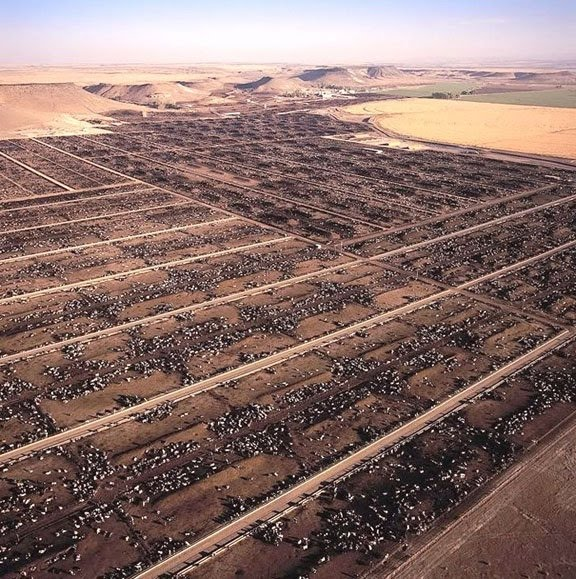
What is a concentrated animal feeding operation (CAFO)?
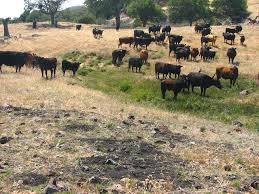
A large pasture where animals are allowed to graze freely around and are not contained within a small area
A synthetic (man-made) type of meat that is created in a lab
A feedlot where animals are crowded into a small area and fed grains
What is a benefit (positive) of CAFOs?
They tend to be free from antibiotics and other chemicals
Animals are quickly raised for slaughter and are less expensive
They generate a large amount of organic waste that can be used as fertilizer
It causes desertification
What is a drawback (negative) of CAFOs?
They tend to be free from antibiotics and other chemicals
Animals are quickly raised for slaughter and are less expensive
It causes desertification
They generate a large amount of organic waste that can contaminate ground and surface water
What is overgrazing?

When not enough animals feed on an area which causes overgrowth of vegetation
When a perfect amount of animals feed on an area and they coevolve together
When too many animals feed on an area which causes loss of vegetation and soil erosion
Meat production is less efficient than agriculture; it takes approximately _____ times more land to produce the same amount of calories from meat as from plants.
10
20
100
50
Reducing the amount of meat consumption could reduce (MORE THAN ONE!)
Oxygen
N2O
Methane (CH4)
CO2
Growth hormones
Use of antibiotics