Log in
Sign up for FREE
arrow_back
Library

Unit 3 Test: Cellular Division and Differentiation

star
star
star
star
star
Last updated over 3 years ago
9 questions
10
10
DOK.SCI.1
10
DOK.SCI.1
10
DOK.SCI.1
10
DOK.SCI.1
10
DOK.SCI.2
HS-SEP-2.c
10
DOK.SCI.2
15
DOK.SCI.3
HS-LS1-4
15
DOK.SCI.4
HS-LS1-4
HS-SEP-2.c
Question 1
1.

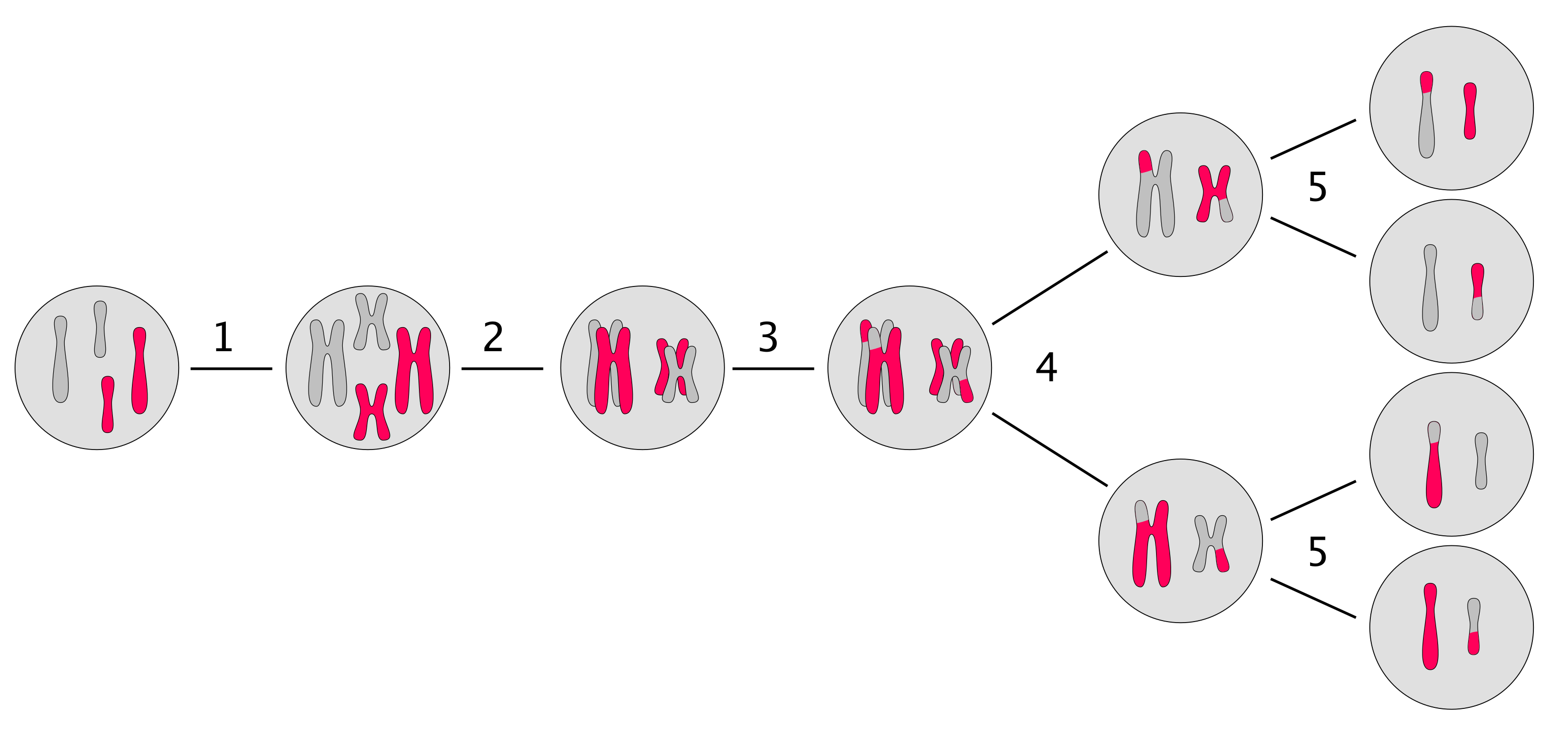
Compare and Contrast Mitosis and Meiosis

Question 2
2.

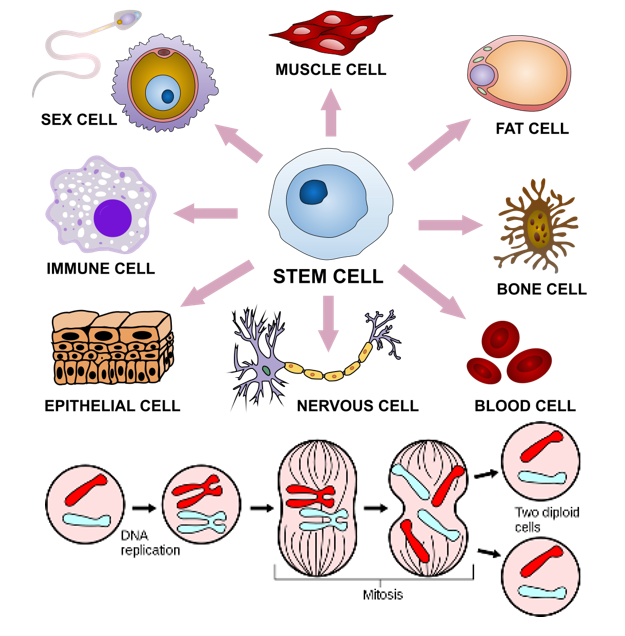
The process of cell modification from a generalized cell to one that performs a specific task is called:

Question 3
3.

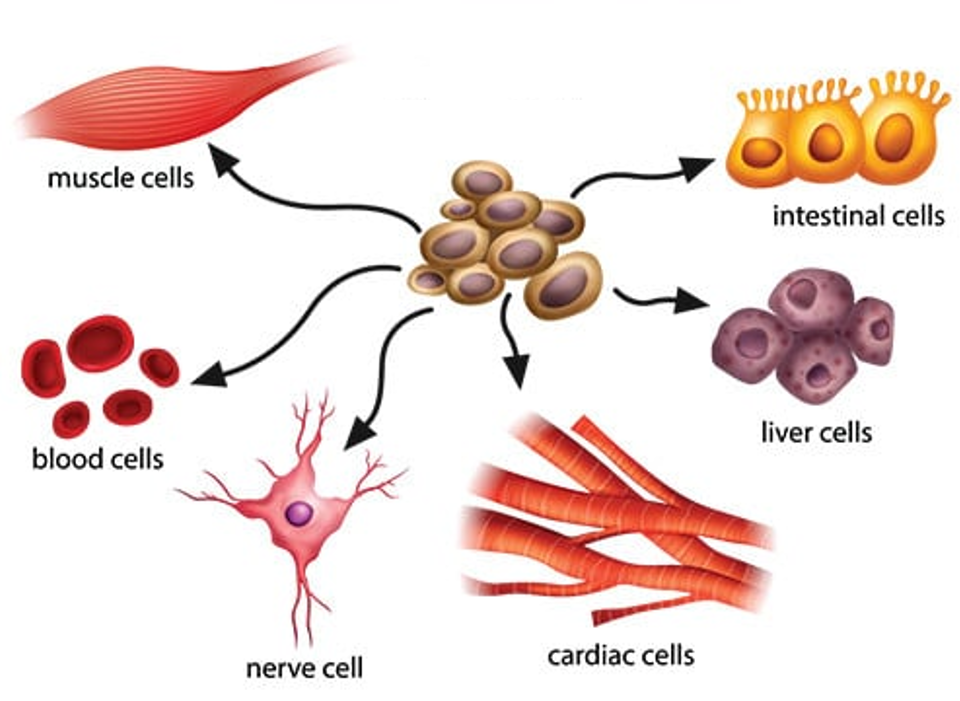
Cells of an undifferentiated type that are capable of becoming specialized are called:

Question 4
4.

What type of organisms have differentiated cells?

Question 5
5.

Because of mitosis, all cells have _____________ DNA (except for sex cells).

Question 6
6.

Use the Image Below:
What process is happening in this model?

Watch this video and then answer the questions below.
If the embedded video is not working for you, please use this link: https://www.youtube.com/watch?v=1Qfmkd6C8u8
Question 7
7.

What is the most essential element in bone marrow?

Question 8
8.

If a cancerous mutation occurs in a stem cell in the bone marrow, what process does the stem cell go through that would cause the differentiated cells it produces to also be cancerous?

Question 9
9.

Consider:
How do mitosis and cell differentiation work together to produce and maintain a complex organism?
The rubric below shows point breakdown. Please be sure to include both of the roles - the role of mitosis and the role of cellular differentiation- in producing and maintaining complex organisms. Use the model to support your answer.

Occurs in body cells
Occurs in sex cells
Produces 2 diploid daughter cells
Produces 4 haploid daughter cells
Daughter cells are genetically identical to parent cells
Daughter cells are genetically different from parent cells
Produces new cells
Undergo DNA replication
Starts with a diploid parent cell
Mitosis
Both
Meiosis