Unit 1 Test: Cellular Respiration
star
star
star
star
star
Last updated about 4 years ago
7 Nsɛmmisa

25
15
DOK.SCI.1
10
DOK.SCI.1
10
DOK.SCI.2
15
DOK.SCI.3
HS-LS1-7
15
DOK.SCI.4
HS-LS1-7
10
DOK.SCI.1
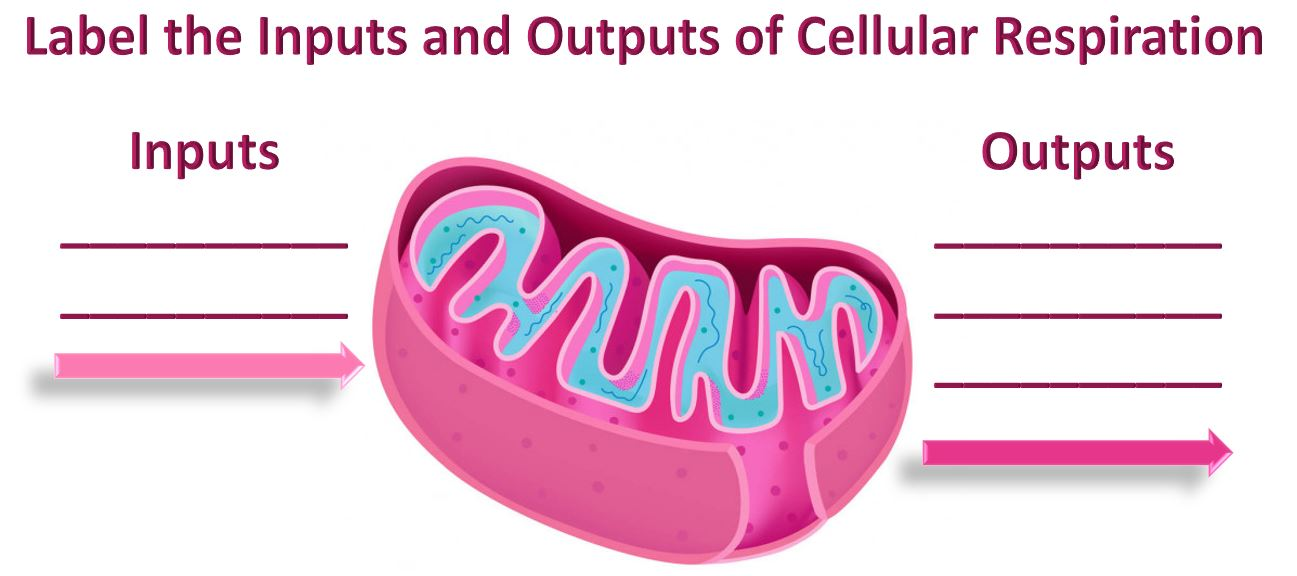
Carbon Dioxide
Energy (ATP)
Glucose
Oxygen
Water
Inputs
Outputs
Which elements are present in glucose/sugar?
Cellular respiration occurs in the
Which types of organisms can perform cellular respiration?
Compare and Contrast:
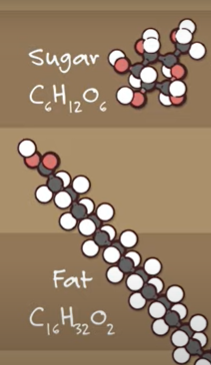
How are the molecules of Sugar and Fat Similar?
How are the molecules of Sugar and Fat Different?
Hints:
What are the similarities and differences between sugars and fats molecules? (Be specific and reference the molecules/model below)
DO NOT answer with nutritional information!!!!
Compare molecules C6H12O6 (Sugar/Glucose) and C16H32O2 (Fat/Lipids)
The answer is not found directly in the video. The video only provides supporting information.
C= one carbon atom. C6 = 6 carbon atoms in the molecule
H = one hydrogen atom. H12 = 12 hydrogen atoms in the molecule
O = one oxygen atom. O6 = 6 oxygen atoms in the molecule
Provide Evidence when Given a Claim:
Given Claim: Animals who burn primarily lipids (fats) need more oxygen to obtain chemical energy than an animal that primarily burns glucose (sugar).
Provide evidence: Why would this occur?
What do you know about Cellular Respiration's inputs and outputs?
How do the molecules compare? How do the balanced chemical equations compare?
Your evidence should include numbers.
Tips: think about how the molecules are different. (question 5)
Look at the difference between lipids (fats) and glucose (sugars) and the differences in the balanced chemical equations.
The equation for Cellular Respiration burning Glucose/Sugar is:
C6H12O6 + 6O2 --> 6CO2 +6H2O + ATP
The equation for Cellular Respiration burning Lipids/fats is:
C16H32O2 + 23O2 --> 16CO2 + 16H2O + ATP
The answer is not found directly in the video. The video provides supporting information
How did the highlander mice obtain more oxygen than the lowlander mice?
This information is found directly in the video