The Atomic Mass
star
star
star
star
star
Last updated over 1 year ago
15 Nsɛmmisa
5
2
3
1
2
3

1
1
1
1
1
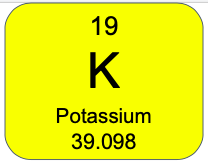
A) The atomic number is the number of protons in an elements nucleus. How many protons does Potassium have based on the picture below?
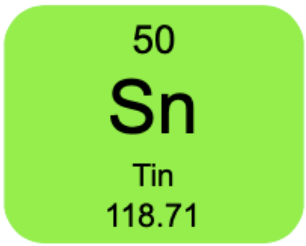
B) Below is the correct element square for tin. Why does tin have an element symbol of Sn?
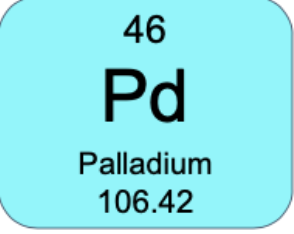
C) What is the atomic mass for palladium?
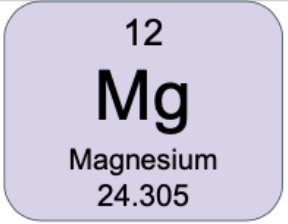
D) What is the atomic number of Mg? What is the atomic mass of magnesium (Mg)?
Below is the element square for an element Mr. Guesno just made chickenium. But Mr. Guesno incorrectly labled the element symbol as cH
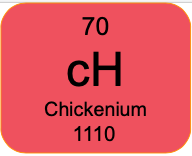
A) Help Mr. Guesno re-write cH in the correct way that it should appear in the element square.
Below is the element square for francium. But the designer of this element square incorrectly labeled the element symbol as fr
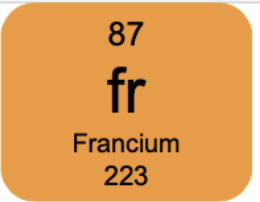
B) Re-write fr in the correct way that it should appear in the element square.
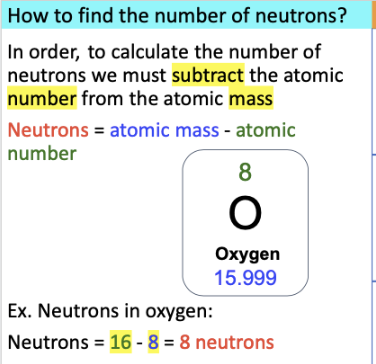
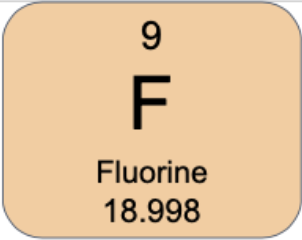
A) How many neutrons are there in fluorine (F)?
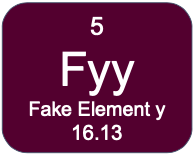
B) How many neutrons are there in Fake Element y (Fyy)?
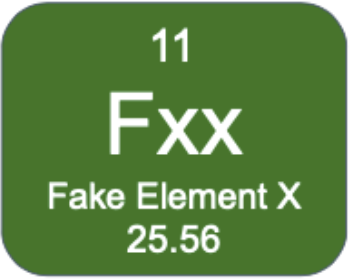
C How many neutrons are there in Fake Element x (Fxx)?
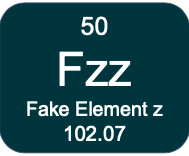
How many neutrons are there in Fake Element z (Fzz)?
Neutrons =
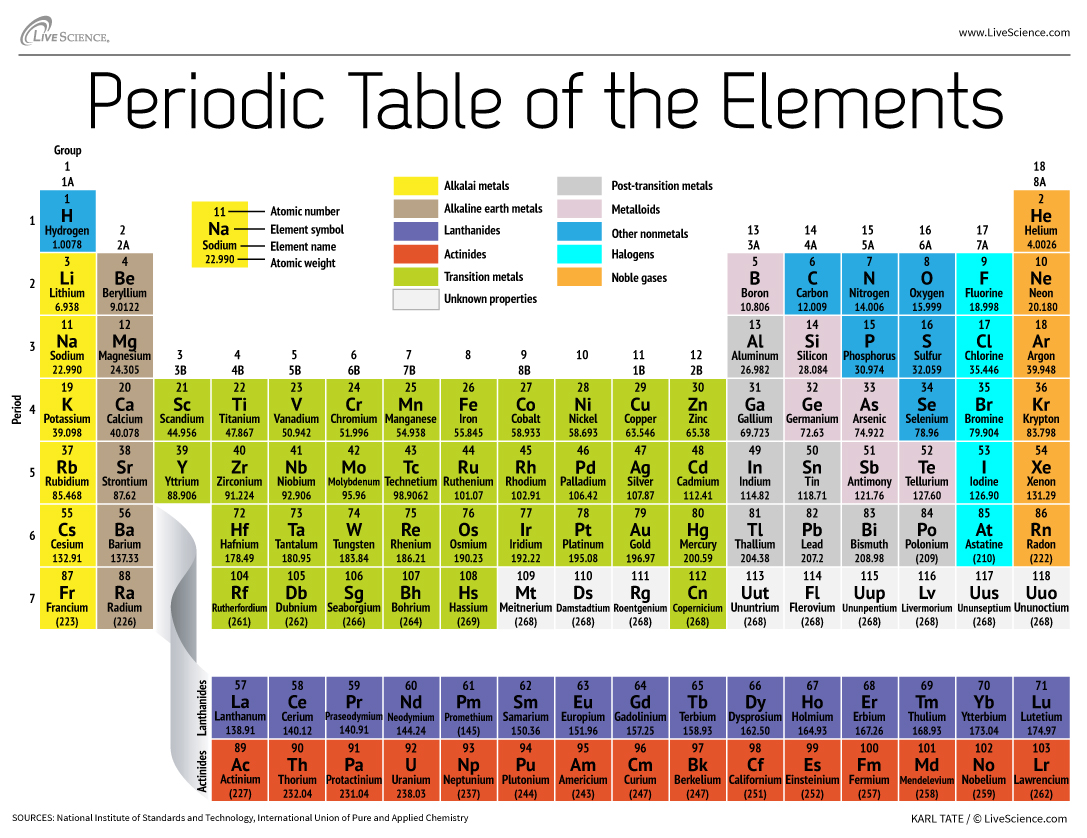
A) Using the periodic table above, which element has only 10 protons?
B) Using the periodic table above, if you added 4 protons to the nucleus of Oxygen what would the element become?
C) Using the periodic table above, which element has only 6 neutrons?
Click on the 'Isotopes' tab in the simulation below. Use the simulation to answer questions 4-11.
(If you'd like to have the simulation open in another tab, visit Isotopes and Atomic Mass PhET)
Build an atom of Hydrogen-1, Hydrogen-2, and Hydrogen-3.
What does the number (-1, -2, or -3) in the isotope name represent (hint: what does adding neutrons effect at a glance)?
Build a Hydrogen-1 isotope. Click between the 'Mass Number' and 'Atomic Mass (amu)' options on the scale. Do the same thing but by building a Hydrogen-2 isotope.
Match the numbers below.
| Draggable item | arrow_right_alt | Corresponding Item |
|---|---|---|
Atomic mass of Hydrogen-2 | arrow_right_alt | 1 |
Mass number of Hydrogen-2 | arrow_right_alt | 1.00783 |
Mass number of Hydrogen-1 | arrow_right_alt | 2 |
Atomic mass of Hydrogen-1 | arrow_right_alt | 2.01410 |
Next, click on 'Boron' on the periodic table. Build an isotope of Boron-9, Boron-10, and Boron-11. Click between the 'Mass Number and 'Atomic Mass (amu)' options on the scale.
Match the numbers below
| Draggable item | arrow_right_alt | Corresponding Item |
|---|---|---|
Atomic mass of Boron-10 | arrow_right_alt | 9 |
Mass number of Boron-11 | arrow_right_alt | 10 |
Atomic mass of Boron-11 | arrow_right_alt | 11 |
Mass number of Boron-9 | arrow_right_alt | 11.00931 |
Mass number of Boron-10 | arrow_right_alt | 10.01294 |
Keep your 'Boron' isotope open. Click on the 'Abundance in Nature' tab.
Which of the following isotopes of Boron are present in nature?
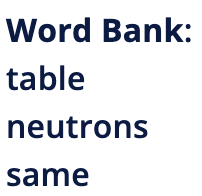
Isotopes are 2 or more types of atoms that have the
A) Isotope =
B) The number of protons in the nucleus is called the
C) The sum (or addition) of the # of protons and neutrons in the nucleus is called the atoms
Isotopes of sodium