Use the Diagram to answer the following questions.
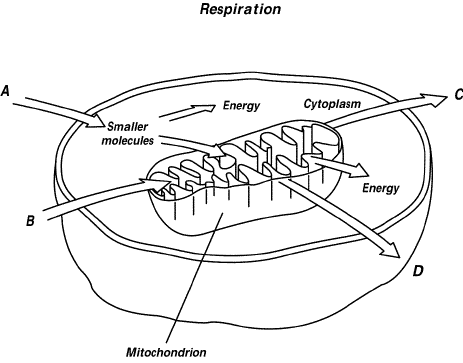
Identify A and B which are the raw materials for Cellular Respiration.
Use the Diagram to answer the following questions.
Identify A and B which are the raw materials for Cellular Respiration.
What are the products of photosynthesis?
How does photosynthesis benefit heterotrophs?
Under which of the following conditions is lactic acid fermentation most likely to occur?
What are the raw materials of photosynthesis?
Which of the following is not true about the products of photosynthesis?
The main characteristic of the first stage of photosynthesis is
Plants make their own food using energy that comes from the
Almost all living things depend on the process of
The energy- releasing process that does not require
Plants use energy from the Sun to produce carbon dioxide and sugars.
Photosynthesis and respiration form a cycle that keeps the levels of water and carbon dioxide fairly constant in the atmosphere.
When muscle cells run low on oxygen, lactic acid fermentation takes place.
Light energy is written on the left side of the equation to show that it is used in the reaction.
Cellulose is one of the sugars produced by photosynthesis.
The green pigment that absorbs light energy is called chlorophyll.
Explain the following statement: Photosynthesis and respiration are opposite processes.
Where does photosynthesis generally occur?
Name the organelle tht helps plants carry out photosynthesis.
Which type of fermentation occurs in yeast?
Where in the cell does the second stage of cellular respiration take place?
In what ways are cellular respiration and fermentation alike? in what ways are they different?
Use the Diagram to answer the following questions.
Identify A and B which are the raw materials for Cellular Respiration.
Using the Diagram for Cellular Respiration from question 25, Identify C and D which are the products of cellular respiration.