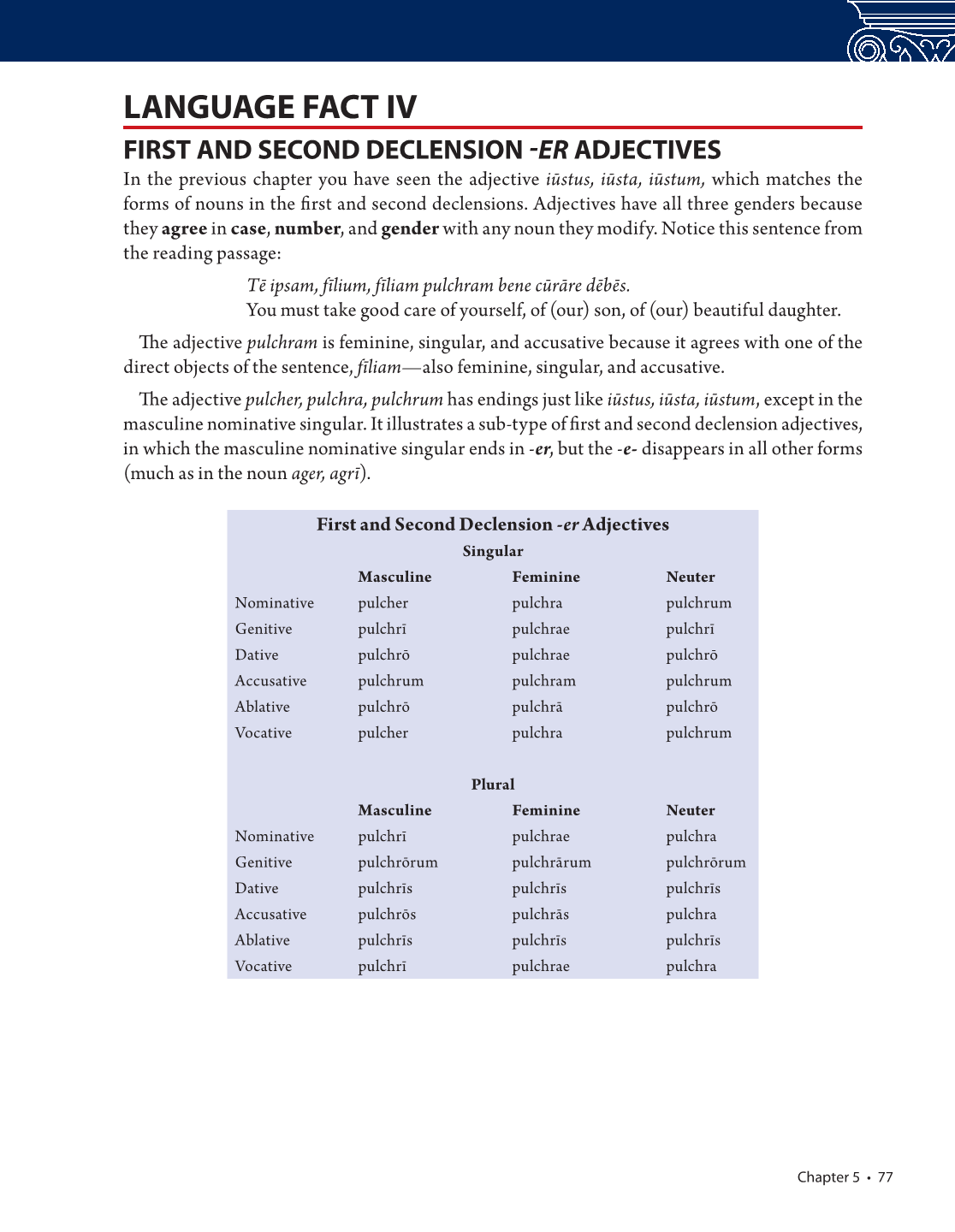
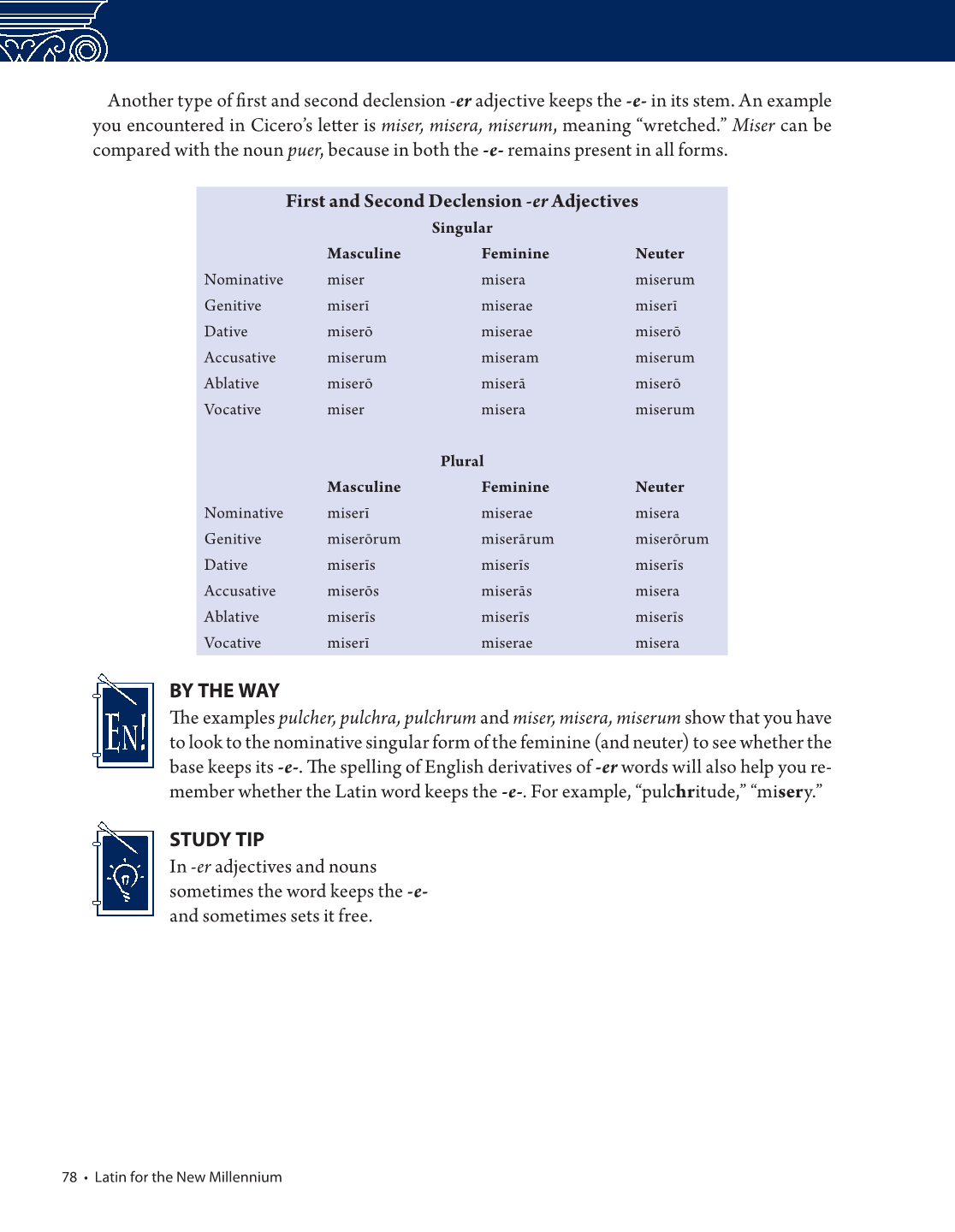
Make the adjective agree with the noun and translate the new phrase.
Example: cōnsilia (malus)
cōnsilia mala
For 1st and 2nd declension nouns and adjectives, the endings of the noun and the adjective will be indentical UNLESS it is a first declension masculine noun.
In such cases the noun will look like it has a feminine ending but the adjective will use the masculine 2nd declension ending.
When translating, don’t forget to indicate the case of the name with an appropriate preposition, if necessary.
1. lacrimīs (miser)
New phrase (adjective noun agreement):
Translation:
2. viam (longus)
New phrase (adjective noun agreement):
Translation:
3. āthlētārum (pulcher)
New phrase (adjective noun agreement):
Translation:
4. virō (iūstus)
New phrase (adjective noun agreement):
Translation:
5. poētā (armātus)
New phrase (adjective noun agreement):
Translation:
6. patriā (pulcher)
New phrase (adjective noun agreement):
Translation:
7. vinculōrum (miser)
New phrase (adjective noun agreement):
Translation:
8. puerī (miser)
New phrase (adjective noun agreement):
Translation:
9. familiīs (bonus)
New phrase (adjective noun agreement):
Translation:
10. animus (māgnus)
New phrase (adjective noun agreement):
Translation: