1
1
1
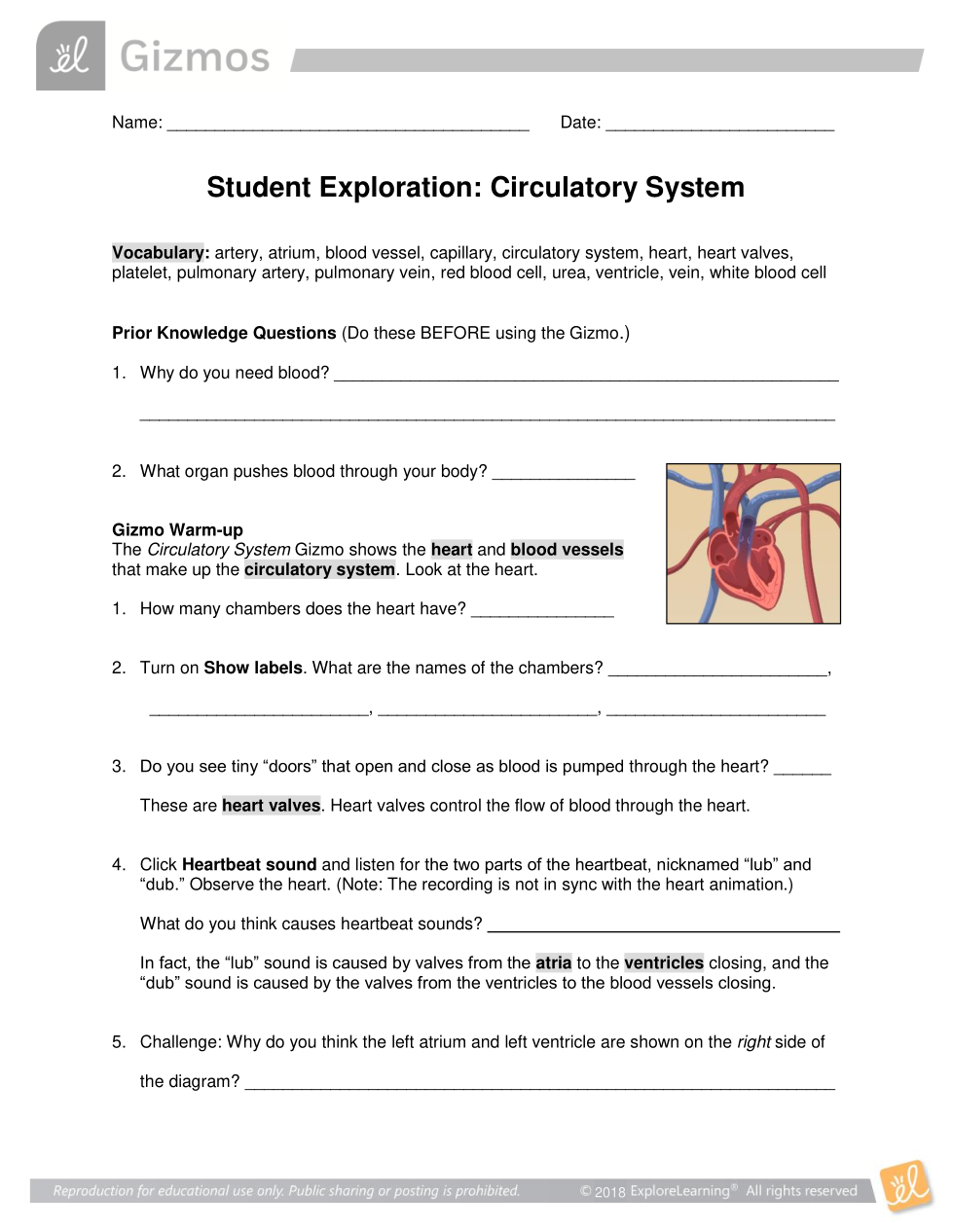
How many chambers does the heart have?
(This answer should be a number, no words)
How many chambers does the heart have?
(This answer should be a number, no words)
1
1
2
2
How many chambers does the heart have?
(This answer should be a number, no words)

Why do you need blood?
*Answer in a complete sentence*
What organ pushes blood through the body
Turn on Show labels. What are the names of the chambers?
*spell them correctly*
Do you see tiny “doors” that open and close as blood is pumped through the heart? ______
These are heart valves. Heart valves control the flow of blood through the heart.
Click Heartbeat sound and listen for the two parts of the heartbeat, nicknamed “lub” and “dub.” Observe the heart. In fact, the “lub” sound is caused by valves from the atria to the ventricles closing, and the “dub” sound is caused by the valves from the ventricles to the blood vessels closing. (Note: The recording is not in sync with the heart animation.)
What causes heart beat sounds?
*Answer in a complete sentence*
Why do you think the left atrium and left ventricle are shown on the right side of the diagram?
*Must answer in complete sentences*
Label the four chambers of the heart on the diagram. Then draw arrows to show the direction that blood flows through the heart.
Which order does the blood flow through the heart?
Left Ventricle
Right Ventricle
Right Atrium
Left Atrium
Where does blood from the right ventricle go?
Where does blood from the left ventricle go? Don't put the Aorta as your answer. Where does the Aorta take the blood? (don't list the organs, just use a general term)
What is the concentration of oxygen in this sample?
What is the concentration of carbon dioxide in this sample?
What is the concentration of oxygen in this sample?
What is the concentration of carbon dioxide in this sample?
Draw conclusions: Between the right ventricle and the left atrium, blood goes through the lungs. Based on the data you have collected, what happens in the lungs?
*Answer in complete sentences*
Observe: Click Play and watch the blood after it leaves the left ventricle. What are some places that blood goes after leaving the heart?
Compare: The Gizmo shows three types of blood vessels. Arteries carry blood away from the heart, capillaries are small vessels that carry blood to body cells, and veins carry blood back to the heart. Locate examples of arteries, veins, and capillaries.
Use the syringe to take blood samples from several different veins and arteries.
Which type of blood vessel usually carries oxygen rich blood?
Which type of blood vessel usually carries oxygen-poor blood?
In which type of blood vessel is oxygen released into body cells?
How is the blood from the pulmonary arteries different from the blood in other arteries?
How is the blood in the pulmonary veins different from blood in other veins?
How is the circulatory system similar to a road-and-highway system?
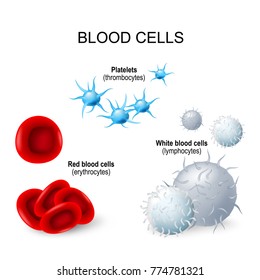
Match the blood cell with the correct description.
| Draggable item | arrow_right_alt | Corresponding Item |
|---|---|---|
White Blood Cell | arrow_right_alt | Carries oxygen |
Platelets | arrow_right_alt | Fights disease and infections |
Red Blood Cell | arrow_right_alt | Cell fragments that helps your blood clot . |
What's in your blood?
Take a blood sample from any blood vessel using the syringe.
Click the camera icon to take a Gizmo snapshot, and then paste your snapshot into the show your work box.
Click the camera icon to take a Gizmo snapshot, and then paste your snapshot into the show your work box.
Find and label a red blood cell, platelet, and white blood cell in your blood sample.
Collect data: Blood carries many vital substances. Four of these are listed above the Microscopic view. Oxygen and sugar are needed by all body cells. Carbon dioxide and urea are waste products. What are the concentrations of each substance in this sample?
Write it in the table in the show your work box.
Where does sugar enter the blood?
(find an organ with high sugar levels)
How can you tell where sugar enters the blood?
Where is sugar removed from the blood?
How can you tell?
Where does urea enter the blood? (which organ)
*This will be where the urea levels are the highest*
Where is urea removed from the blood? (which organ)