LNM1 Ch 5 Study Guide
star
star
star
star
star
Last updated 7 months ago
51 Nsɛmmisa
1
1
1
1
1
1
1
1
1
1
1
1
10
1
1
1
1
1
1
1
1
1
1
1
1
1
1
1
1
1
1
1
1
1
1
1
1
1
1
1
1
1
1
1
1
1
1
1
1
1
1

STVBEEV could be a complete letter.
STVBEEV stands for Sī tū valēs, bene est; ego valeō.
The abbreviation STVBEEVwould be used by Romans
Which letter in the abbreviation STVBEEV stands for the adverb meaning “well?”

Cicero never wrote a letter to his wife.
Cicero’s wife was Tullia.
Terentia was the wife of
How many children did Cicero have?
According to the story, Cicero
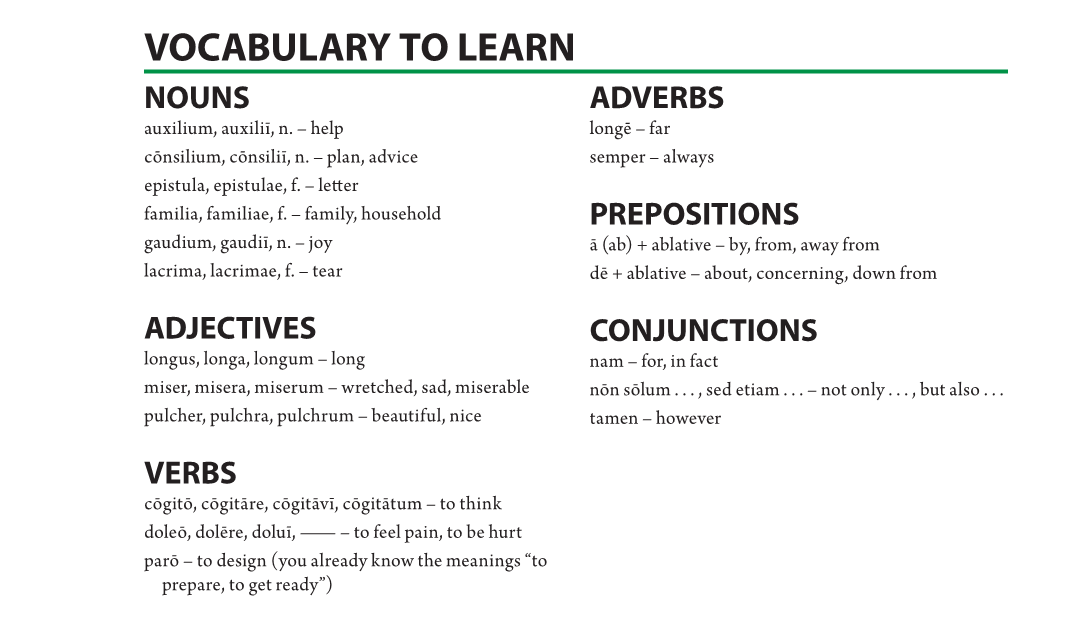
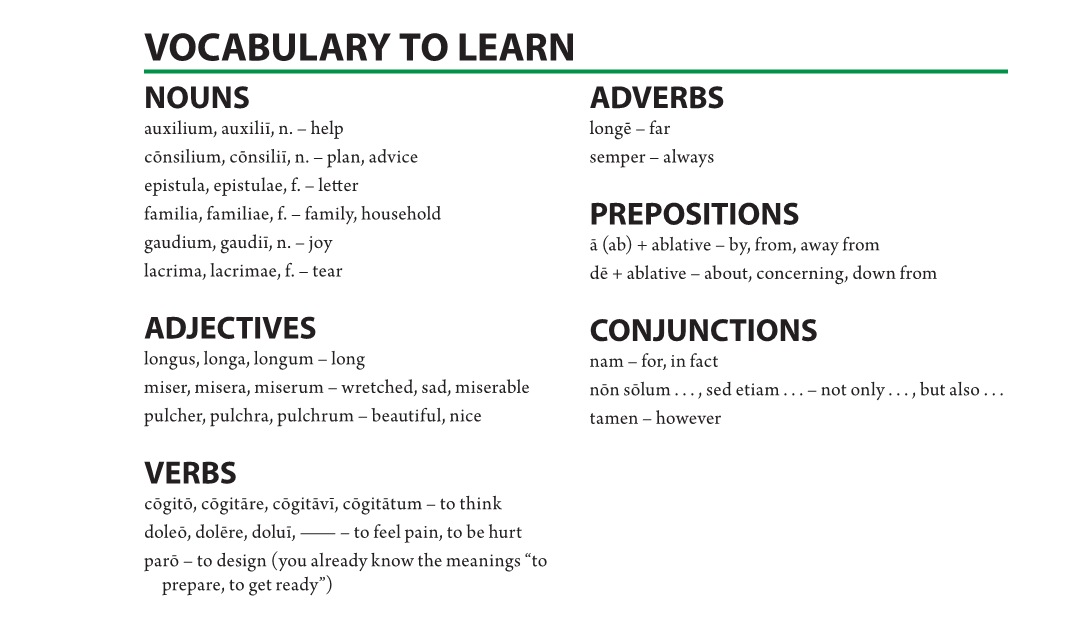
The adjective pulcher, pulchra, pulchrum means “beautiful.”
The verb cōgitō means “to think.”
The preposition ā/ab takes the accusative case.
| Draggable item | arrow_right_alt | Corresponding Item |
|---|---|---|
Fīlia ā tē cūrātur. | arrow_right_alt | The story is being told. |
patria pulchra | arrow_right_alt | The daughter is being cared for by you. |
Auxilium darī dēbet. | arrow_right_alt | beautiful country |
āthlētārum miserōrum | arrow_right_alt | by/with the distinguished poet |
Terra ā nautā vidētur. | arrow_right_alt | of the wretched athletes |
poētā praeclārō | arrow_right_alt | the good women |
Animus est miser. | arrow_right_alt | I expect beautiful rewards. |
fēminās bonās | arrow_right_alt | The mind is sad. |
Praemia pulchra exspectō. | arrow_right_alt | Help ought to be given. |
Fābula nārrātur. | arrow_right_alt | Land is seen by the sailor. |

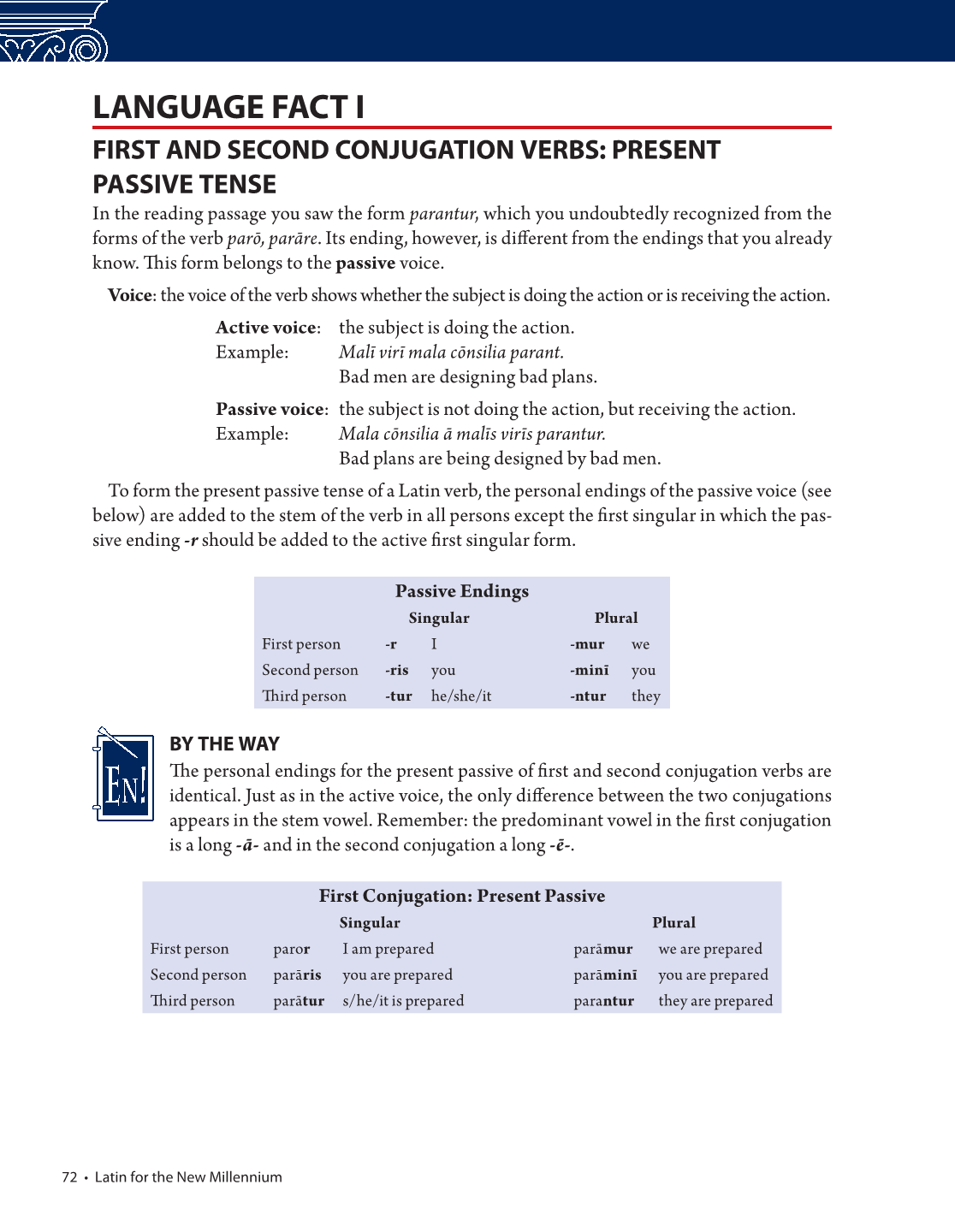
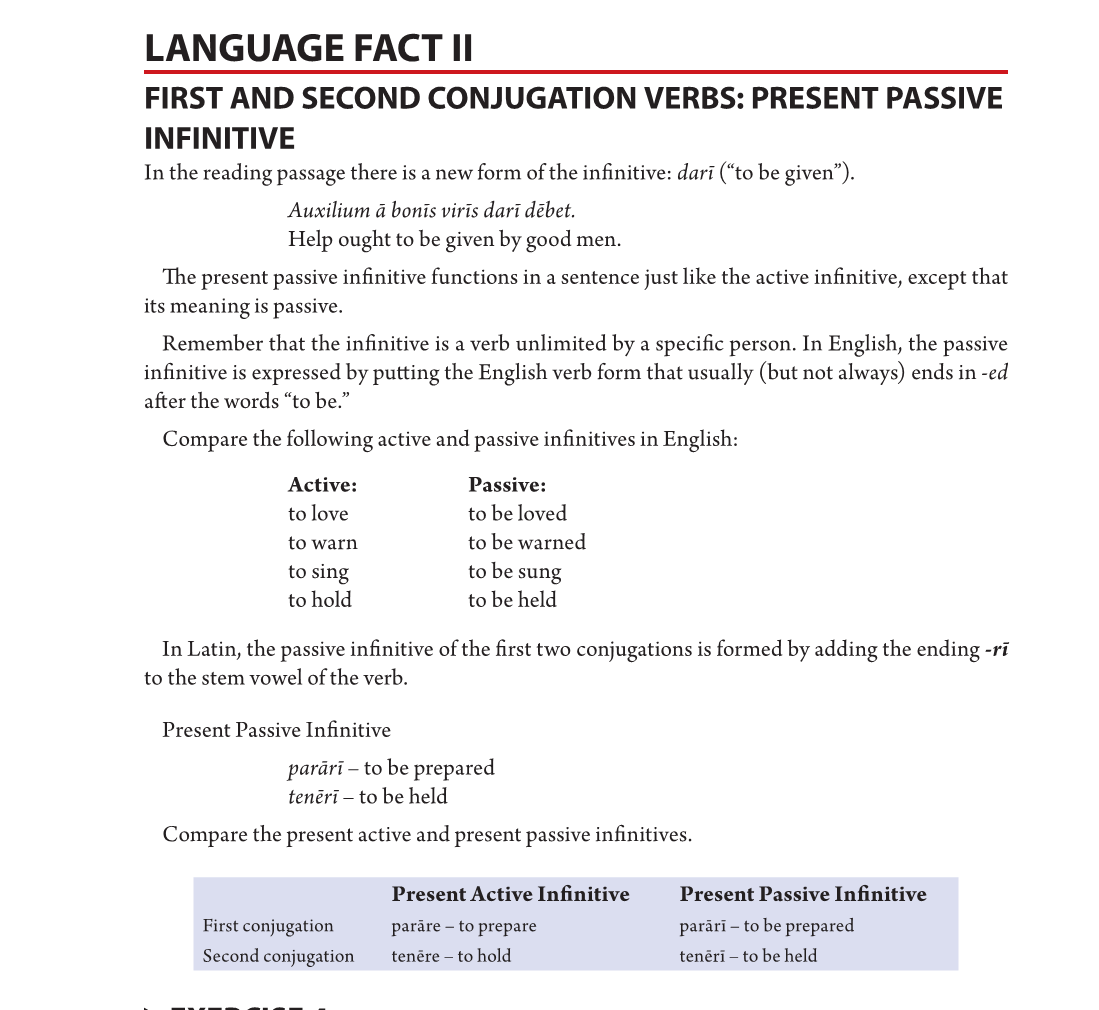
The passive infinitive is translated by using the “–ed” form of a verb after the words “to be.”


Adjectives have all three genders.

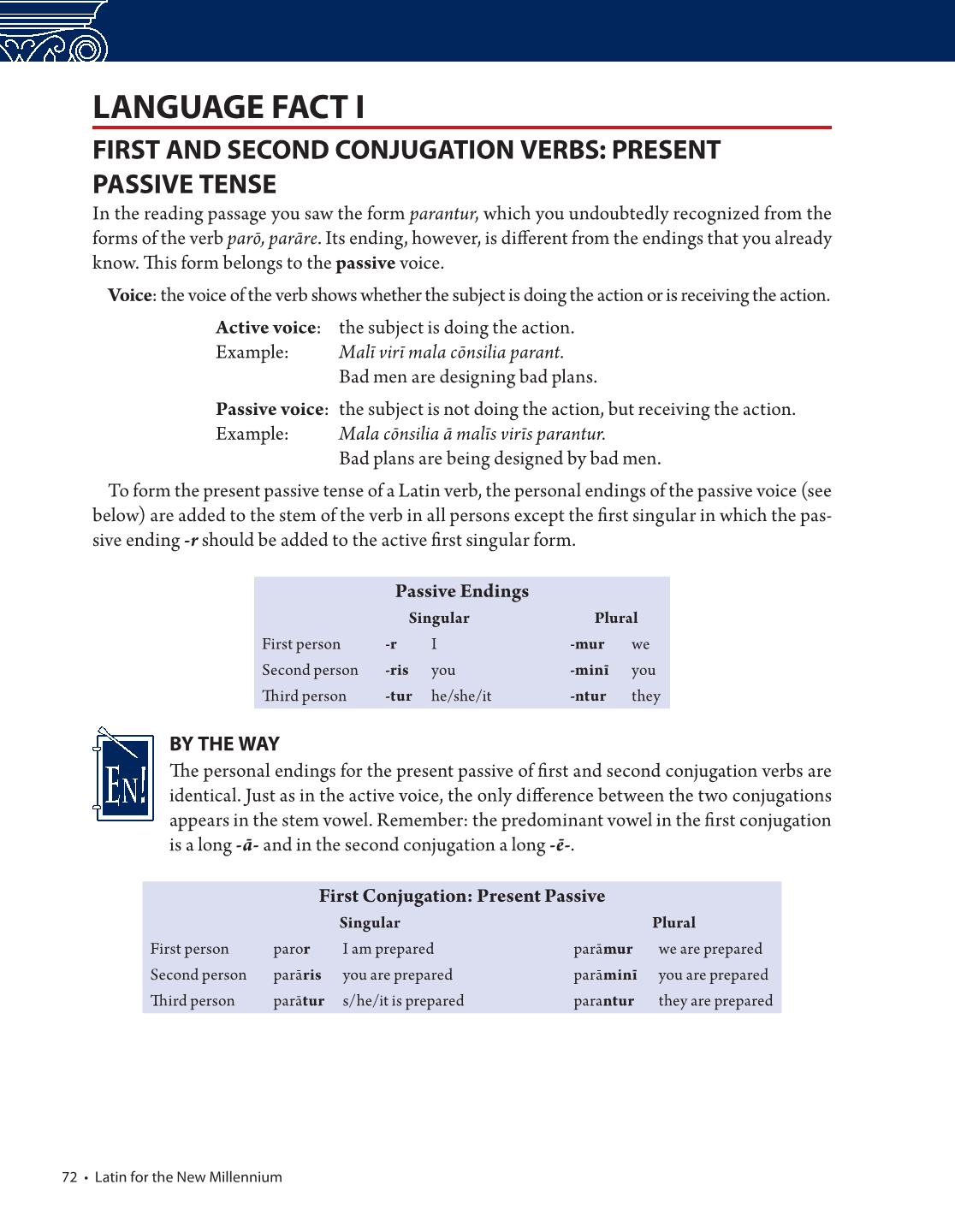
Passive voice is when the subject is receiving the action.
Which of the following is in the passive voice?
In a Latin sentence containing a passive verb,
Choose the ending that does NOT belong on the basis of number.
Choose the verb form which does NOT belong on the basis of voice.
On which principal part is the present passive verb based?
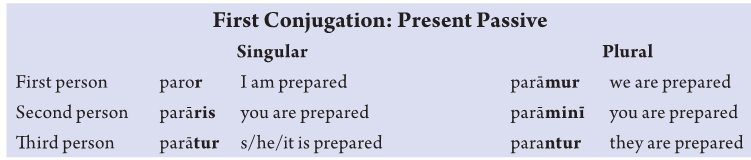
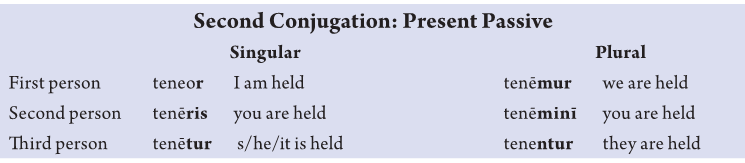
How do the present passive forms of the first and second conjugations differ?
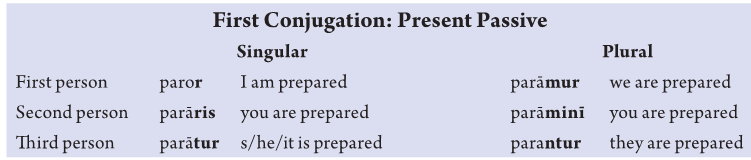
Where is the stem vowel of the first conjugation absent in the present passive?
Which of the following can NOT be nominative?
Which of the following can NOT be plural?
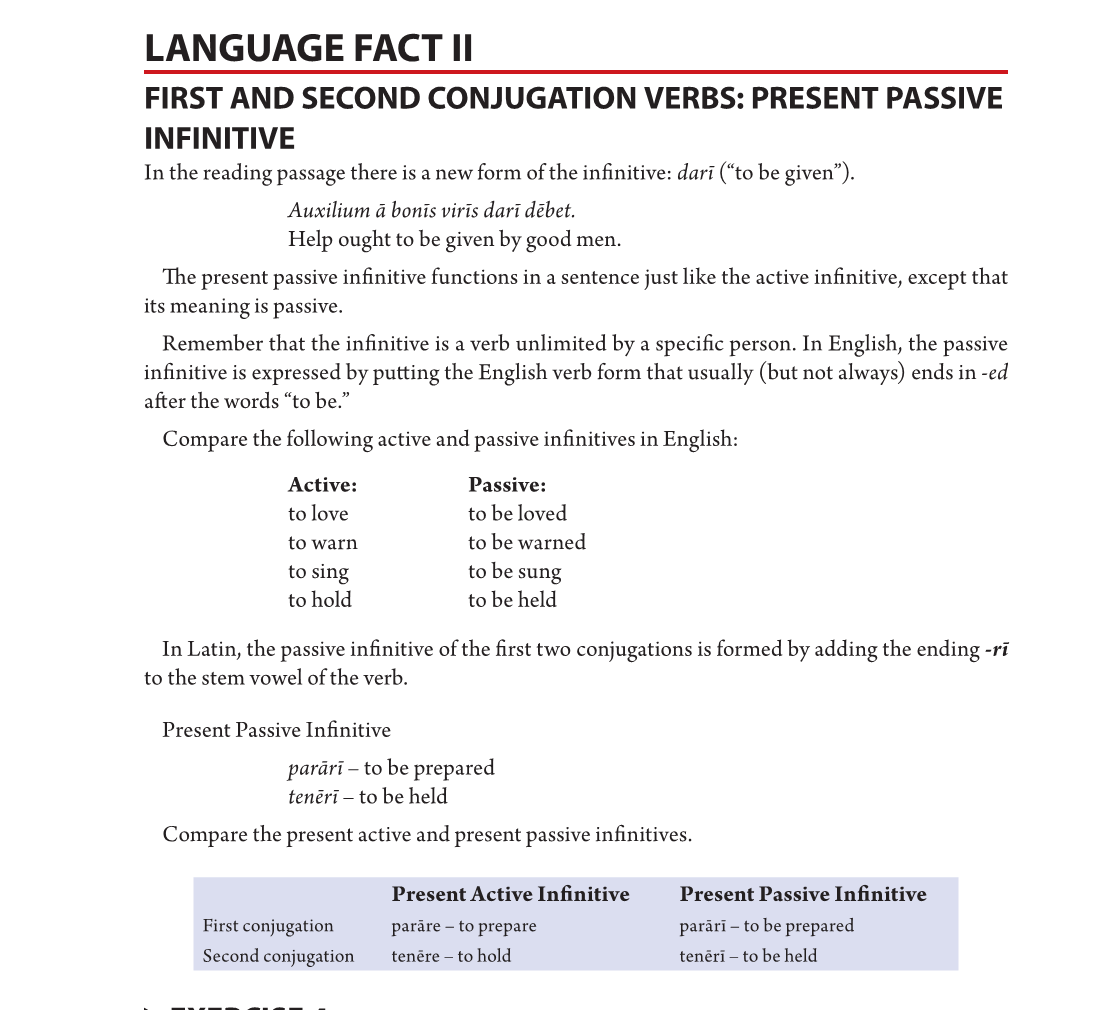
A present passive infinitive always ends with the letter
Which of the following does NOT belong grammatically?
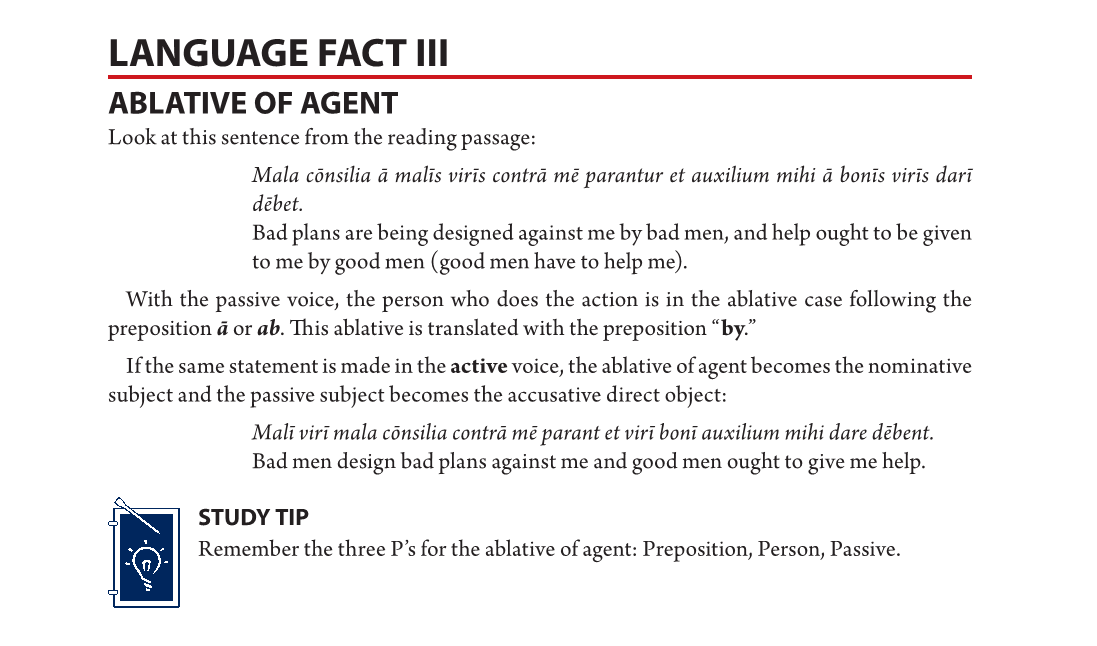
What preposition is used with an ablative of agent?
Which of the following does NOT have to occur in a sentence to have an ablative of agent?
Which of the following sentences would need an ablative of agent when translated into Latin?
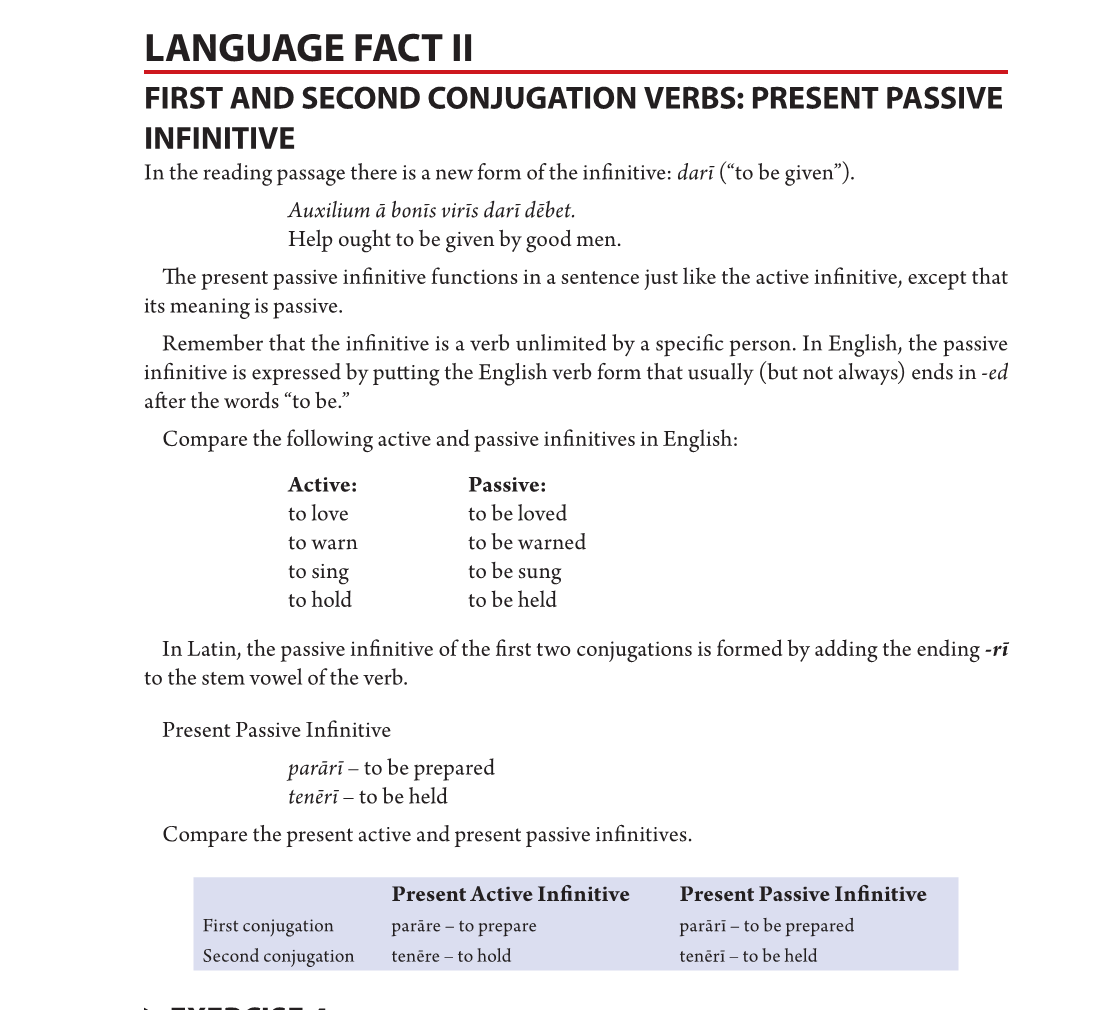
Which of the following is a passive infinitive?
When an active verb in a sentence is changed to the passive form, the direct object becomes
Which of the following is NOT passive?
Nōn sōlum puerī praemia darī dēbent sed etiam puellae.
Vipsania owes (her) brother a long letter.
The sailors are waiting for (their) beautiful daughters.
he is being held
Which of the following does NOT belong grammatically?
Susan was known for her lachrymosity.
What is the meaning of the word from which we derive “auxiliary”?
Which of the following could be described as sempiternal?
The principal noticed that the students were cogitating during a test as she passed by the classroom window.
It is easy to see that the Italian famiglia and the French famille are derived from the Latin word meaning
Epistle is a more formal word for
Anna was known at school for her pulchritude.
Mark had a dolorous look on his face when
What is the meaning of cōnsilium?

The English word “magistrate” is derived from the Latin word meaning, among other things,
Which of the following is NOT derived from medicus?
What would be a custōs pūblicus in modern society?
In the Roman world a negōtiātor was a